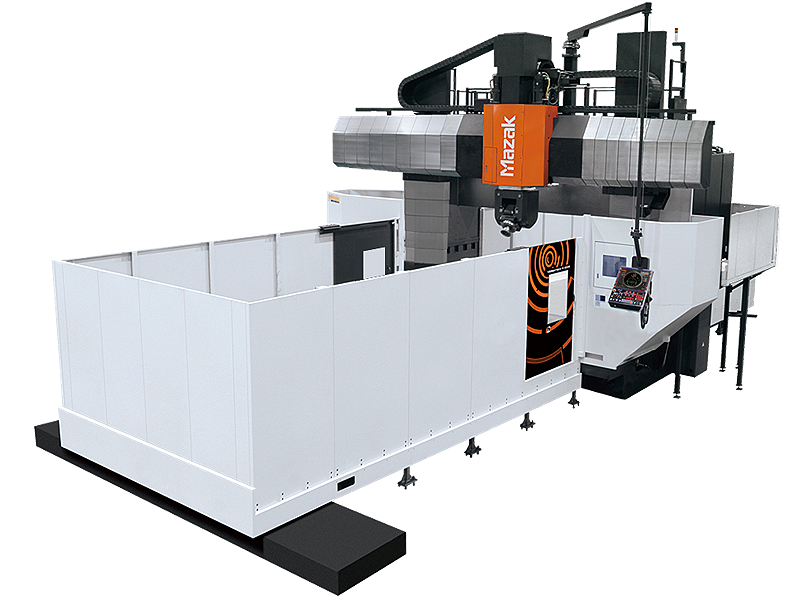
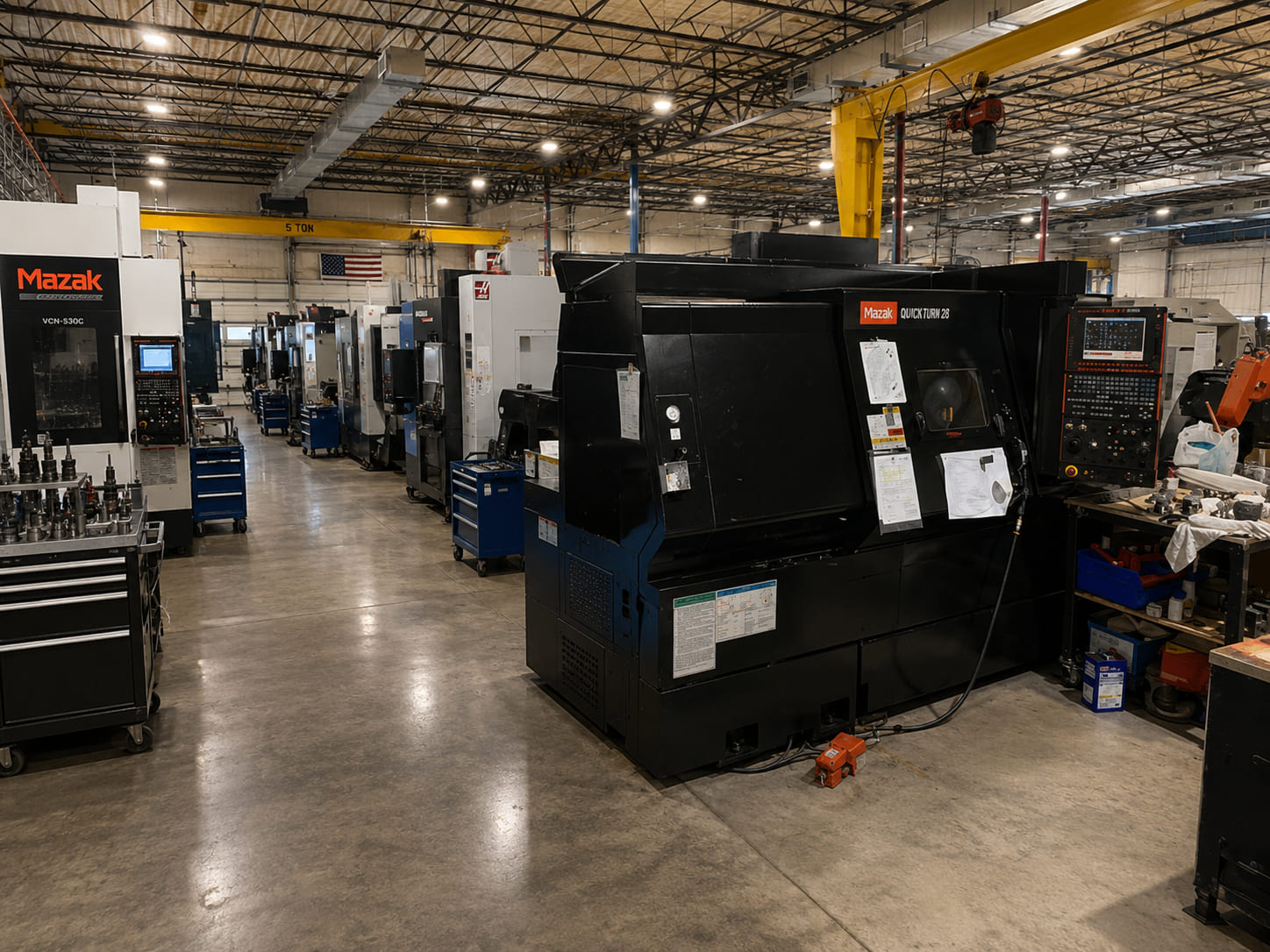
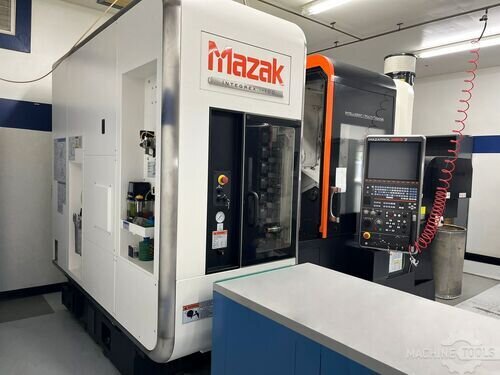
The Mazak VERSATECH V-100N/240 is an ultra-large double-column (gantry-type) 5-axis machining center designed for machining extremely large and heavy components with high precision and efficiency. As part of Mazak’s VERSATECH series, it is engineered for industries such as aerospace, energy, shipbuilding, and heavy equipment manufacturing, where large-scale machining and process integration are critical. The machine features a rigid double-column structure with an extended column span, providing exceptional stability and the ability to handle oversized workpieces.
The V-100N/240 offers a very large table size of approximately 5000 mm × 2100 mm with a load capacity of around 43,000 kg or more, making it suitable for extremely heavy and long components. It is equipped with a powerful CAT 50 spindle, typically running at 8,000 rpm, with optional high-speed or high-torque configurations depending on application requirements.
A key feature of the machine is its multi-position spindle head, which allows vertical, horizontal, and angular machining without manual head changes, significantly reducing setup time and non-cutting time. Optional simultaneous 5-axis capability with B- and C-axis movements enables complex geometries to be machined in a single setup. Overall, the VERSATECH V-100N/240 is built for maximum capacity, precision, and productivity in large-part machining environments.
MAZAK VERSATECH V-100N/240SPECIFICATIONS
MAZAK VERSATECH V-100N/240 – AXIS
Number of Axes: 5 (X, Y, Z, W, B/C)
Axis Configuration: Double-column, multi-face machining center
Simultaneous Control: Optional full 5-axis simultaneous
B-Axis Rotation: ±100° (optional head)
C-Axis Rotation: 360° continuous (optional)
MAZAK VERSATECH V-100N/240 – AXIS TRAVELS
X-Axis Travel: Approx. 6,000 mm
Y-Axis Travel: Approx. 3,600 mm
Z-Axis Travel: Approx. 700 mm
W-Axis Travel: Quill-type (varies by configuration)
Thermal Stability: Oil-cooled ball screws for accuracy
MAZAK VERSATECH V-100N/240 – CONTROL SYSTEM
CNC Control: Mazatrol SmoothX
Programming: Conversational + EIA/ISO
Features: 5-axis machining optimization
Compensation: 3D volumetric error compensation
Interface: Advanced smart control
MAZAK VERSATECH V-100N/240 – POWER & AIR REQUIREMENTS
Power Requirement: Approx. 100–150 kVA
Voltage: 3-phase industrial supply
Air Requirement: Clean, dry compressed air
Air Pressure: Approx. 5–7 bar
MAZAK VERSATECH V-100N/240 – DIMENSIONS
Machine Footprint: Extremely large gantry-type machine
Structure: Double-column design
Construction: Heavy-duty cast structure
Accessibility: Large open work area
Installation: Requires reinforced foundation
MAZAK VERSATECH V-100N/240 – GENERAL INFORMATION
Machine Type: 5-axis double-column machining center
Capability: Multi-face and complex surface machining
Design Focus: Large-part productivity and precision
Advantage: Reduced setups with multi-surface machining
Ideal For: Very large and complex components
INDUSTRIES THAT USE MAZAK VERSATECH V-100N/240
Aerospace
Energy
Heavy Equipment
Oil & Gas
Industrial Machinery
TYPICAL PARTS MAZAK VERSATECH V-100N/240 CAN PRODUCE
Large aerospace structural parts
Turbine and generator housings
Heavy machine bases
Large molds and dies
Energy sector components
WHY CHOOSE MAZAK VERSATECH V-100N/240
Designed for ultra-large workpieces
True 5-axis capability for complex geometries
Extremely high load capacity
Reduced setup time and improved productivity
Ideal for heavy-duty, high-precision machining
WHY BUY USED MAZAK VERSATECH V-100N/240
Buying a used Mazak VERSATECH V-100N/240 is a strategic investment for manufacturers requiring ultra-large machining capability without the extremely high cost of a new machine. These machines are designed for heavy-duty applications and long operational life, making them highly durable and capable of maintaining performance over many years when properly maintained.
One of the most important factors when evaluating a used V-100N/240 is cutting time rather than just age. Machines used in heavy industries such as energy, shipbuilding, or large-scale fabrication often accumulate very high cutting hours due to long machining cycles and demanding materials. This can lead to wear in critical components such as the spindle, guideways, and structural elements, potentially requiring refurbishment. These machines are typically priced lower but may involve higher maintenance costs.
Conversely, machines used in low-volume production or specialized applications tend to have lower cutting hours and better preserved accuracy, making them more valuable despite being older. Another key advantage is that many used machines come equipped with expensive options such as 5-axis heads, high-torque spindles, and automation systems like PALLETECH, which significantly enhance productivity and would be costly if purchased new.
Overall, a used VERSATECH V-100N/240 offers unmatched size, capability, and cost efficiency for large-scale machining operations.
HOW MUCH DOES A USED MAZAK VERSATECH V-100N/240COST?
The cost of a used Mazak VERSATECH V-100N/240 varies significantly depending on year of manufacture, configuration, and most importantly, cutting hours. Due to its ultra-large size and specialized application, pricing is typically higher than most standard 5-axis machines.
For machines comparable to early large gantry systems (pre-2000), prices generally range from $200,000 to $400,000, though availability is limited and these machines usually have very high cutting hours and outdated control systems.
For machines built between 2000 and 2010, prices typically range from $400,000 to $900,000 depending on condition, spindle configuration, and included features such as 5-axis heads or turning tables. Machines with lower cutting hours, upgraded controls, or recent rebuilds command higher prices within this range.
For newer machines from 2010 to 2025, prices generally range from $900,000 to $3,000,000 or more. Machines equipped with advanced Mazatrol Smooth controls, high-torque spindle options, large-capacity tool magazines, and automation systems such as PALLETECH or large pallet systems are priced at the top end due to their high productivity and capability.
Cutting hours remain the most critical pricing factor. Low-hour machines command premium pricing, while heavily used machines are discounted due to potential refurbishment costs, particularly for spindle systems, guideways, and major structural components.