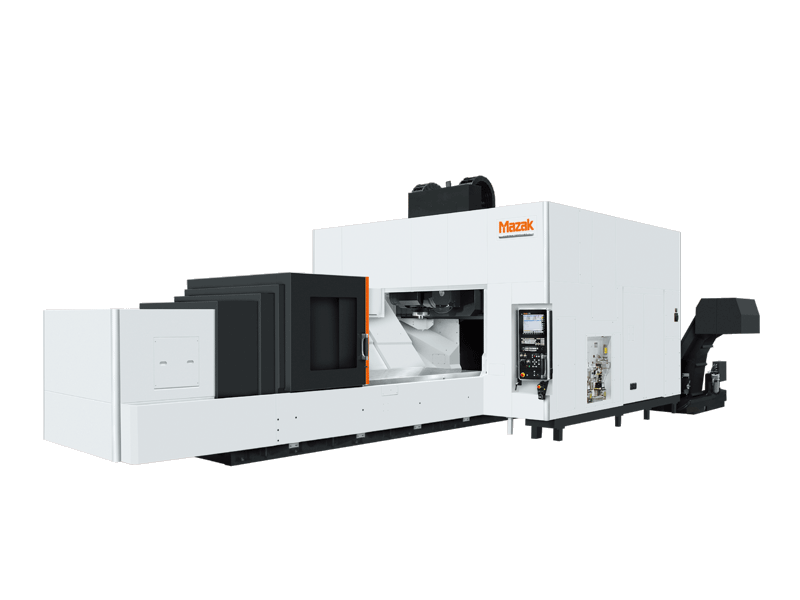
The Mazak VORTEX 1400/160-II is a large-capacity simultaneous 5-axis vertical machining center designed for machining complex and heavy components with high precision. It belongs to Mazak’s earlier VORTEX series and is known for its rigid double-column (gantry-type) construction, which provides excellent stability and minimizes vibration during heavy-duty cutting operations. This design makes it particularly suitable for industries such as aerospace, energy, and heavy equipment manufacturing.
The machine features a trunnion-style rotary table that enables full 5-axis machining, allowing complex multi-surface parts to be completed in a single setup. It typically offers a pallet size of around 1600 mm × 1400 mm and can handle large workpieces with diameters exceeding 1600 mm and substantial weight capacity. A BT50 spindle with a standard speed of approximately 10,000 rpm provides strong torque for machining tough materials such as steel, titanium, and alloys.
The VORTEX 1400/160-II is equipped with Mazak’s MAZATROL control system, offering user-friendly programming and reliable performance. It also supports a large tool magazine capacity, typically ranging from 40 to 120 tools, depending on configuration. Overall, the machine delivers a strong combination of size, rigidity, and 5-axis capability for demanding large-part machining applications.
MAZAK VORTEX 1400/160-IISPECIFICATIONS
MAZAK VORTEX 1400/160-II – AXIS
Number of Axes: 5 (X, Y, Z, A, B)
Axis Configuration: Double-column vertical machining center
Simultaneous Control: Full 5-axis simultaneous machining
A-Axis: ±40° spindle tilt
B-Axis: ±40° spindle tilt
MAZAK VORTEX 1400/160-II – AXIS TRAVELS
X-Axis Travel: Approx. 4,200 mm
Y-Axis Travel: Approx. 1,400 mm
Z-Axis Travel: Approx. 610 mm
A-Axis Travel: ±40°
B-Axis Travel: ±40°
MAZAK VORTEX 1400/160-II – CAPACITY
Maximum Workpiece Length: Approx. 4,000 mm
Maximum Workpiece Width: Approx. 1,480 mm
Maximum Workpiece Height: Approx. 735 mm
Table Size: Approx. 4,000 mm × 1,250 mm
Maximum Workpiece Weight: Approx. 5,000 kg (varies by setup)
MAZAK VORTEX 1400/160-II – SPINDLE
Spindle Speed: Up to 10,000 RPM
Optional Spindle: Up to 18,000 RPM high-speed spindle
MAZAK VORTEX 1400/160-II – POWER & AIR REQUIREMENTS
Power Requirement: Approx. 50–75 kVA
Voltage: 3-phase industrial power
Air Requirement: Clean, dry compressed air
Air Pressure: Approx. 5–7 bar
MAZAK VORTEX 1400/160-II – DIMENSIONS
Machine Footprint: Large gantry-type structure
Structure: Double-column design
Construction: High rigidity casting
Installation: Requires heavy-duty foundation
MAZAK VORTEX 1400/160-II – GENERAL INFORMATION
Machine Type: 5-axis vertical machining center
Capability: Large part multi-surface machining
Design Focus: Aerospace structural components
Advantage: Large table + tilting spindle flexibility
Special Feature: Roller gear cam for high torque transmission
INDUSTRIES THAT USE MAZAK VORTEX 1400/160-II
Aerospace
Defense
Energy
Automotive
Heavy Manufacturing
TYPICAL PARTS MAZAK VORTEX 1400/160-II CAN PRODUCE
Aircraft structural components
Wing ribs and spars
Large aluminum panels
Aerospace frames
Heavy-duty molds and dies
WHY CHOOSE MAZAK VORTEX 1400/160-II
Large machining envelope for oversized parts
True 5-axis simultaneous machining
High rigidity double-column structure
Tilt-rotary spindle for complex geometries
Ideal for aerospace and large component manufacturing
WHY BUY USED MAZAK VORTEX 1400/160-II
Buying a used Mazak VORTEX 1400/160-II is a practical investment for manufacturers needing large-capacity 5-axis machining at a significantly lower cost than newer models. These machines are built for durability and heavy-duty performance, making them capable of maintaining accuracy and reliability over long periods when properly maintained.
One of the most important factors when evaluating a used VORTEX 1400/160-II is cutting time rather than just the manufacturing year. Machines used in industries such as aerospace and energy often accumulate high spindle hours due to long machining cycles and challenging materials. This can lead to wear in key components such as the spindle, rotary axes, and guideways, potentially requiring refurbishment. Machines with higher cutting hours are typically more affordable but may involve higher maintenance costs.
Conversely, machines used in low-volume production, toolroom environments, or prototype applications often have lower cutting hours and better preserved accuracy, making them more desirable even if older. Another advantage is that many used machines come equipped with valuable options such as large tool magazines, pallet changers, and upgraded control systems, which enhance productivity.
Overall, a used VORTEX 1400/160-II offers excellent value, combining large capacity, strong performance, and cost efficiency for demanding machining operations.
HOW MUCH DOES A USED MAZAK VORTEX 1400/160-IICOST?
The cost of a used Mazak VORTEX 1400/160-II varies depending on year of manufacture, configuration, and most importantly, cutting hours. As an earlier-generation large 5-axis machine, units may be found across a wider age range compared to newer VORTEX models.
For machines manufactured before 2000, prices generally range from $120,000 to $250,000, depending on condition and control system. These machines typically have high cutting hours and may require refurbishment or control upgrades.
For machines built between 2000 and 2010, prices typically range from $250,000 to $500,000 depending on condition, spindle configuration, and included features. Machines with lower cutting hours, upgraded controls, or recent maintenance command higher prices within this range.
For machines from 2010 to 2025 (including well-maintained later models and retrofitted units), prices generally range from $500,000 to $900,000 or more. Machines equipped with enhanced control systems, large tool capacity, and automation options are priced at the higher end due to improved productivity.
Cutting hours remain the most critical pricing factor. Low-hour machines with good maintenance history command premium pricing, while heavily used machines are discounted due to potential refurbishment costs, particularly for spindle systems, rotary axes, and structural components.