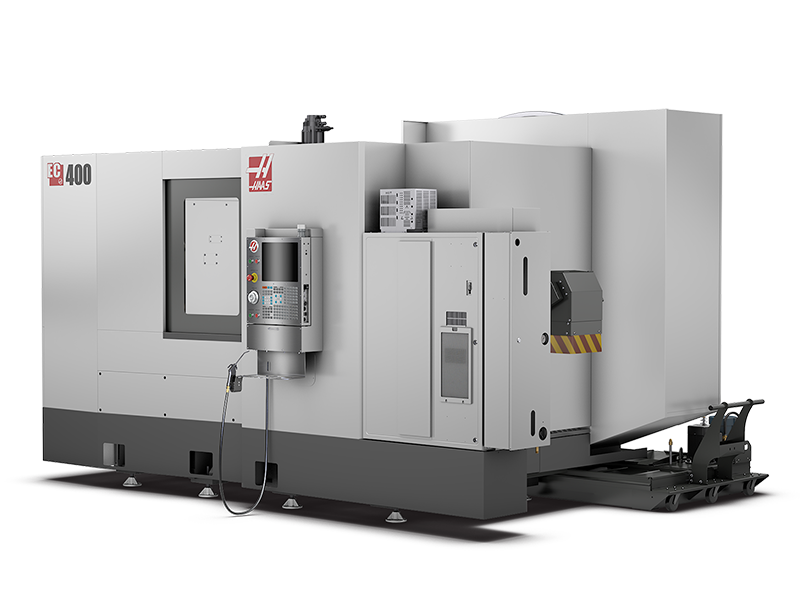
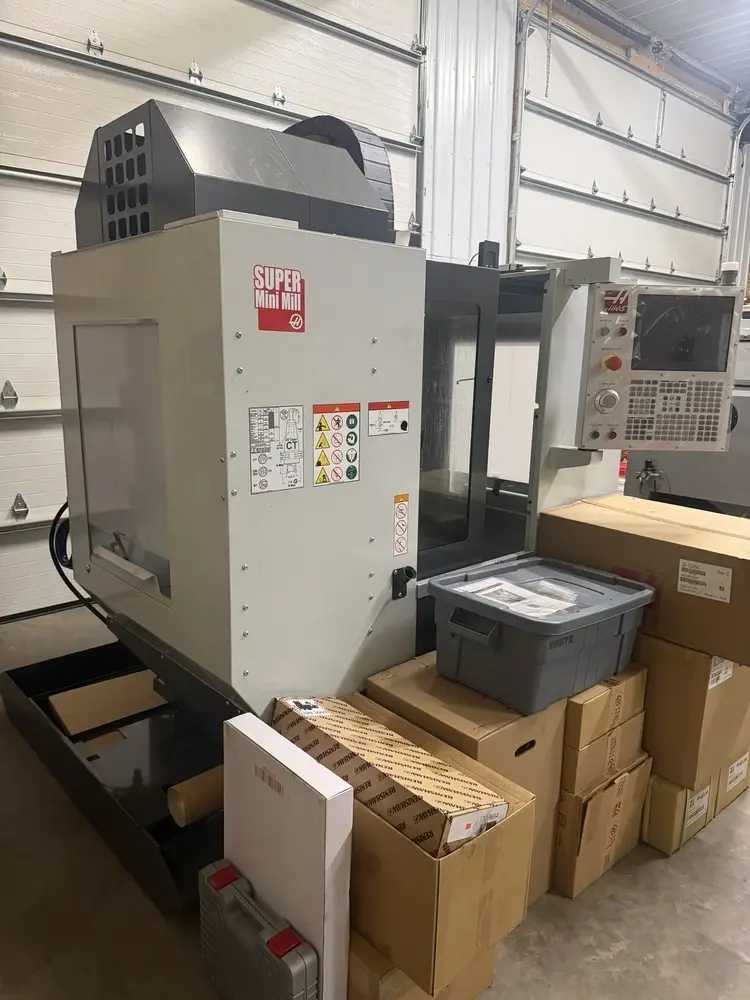
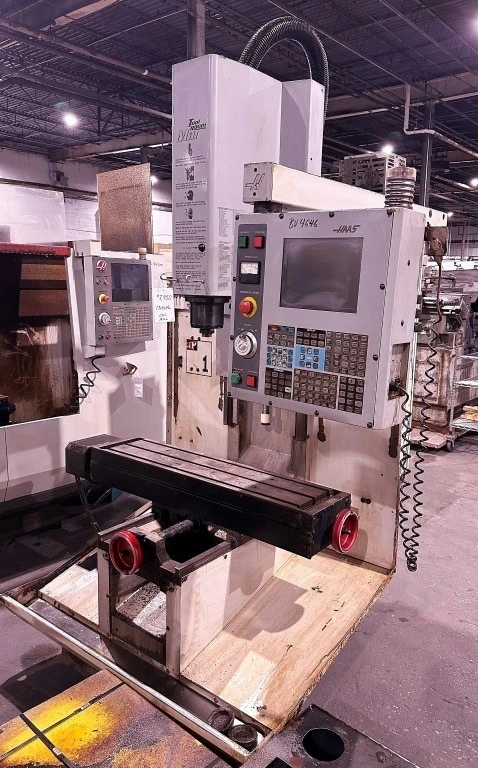
The used Haas EC-400 is a horizontal machining center designed for efficient multi-sided machining, strong chip evacuation, and production-oriented workflow on medium-size parts. It is commonly used for castings, housings, valve bodies, manifolds, brackets, and fixture-based precision components that require machining on multiple faces with consistent repeatability. This model is often selected by manufacturers that need a practical horizontal platform for repeat production, reduced setup time, and improved spindle utilization.
This machine is well suited for milling, drilling, tapping, boring, and multi-face machining on prismatic parts. The horizontal spindle layout helps chips fall away from the cutting area more effectively than many vertical machines, which is especially useful in deeper-pocket machining and longer production cycles. The EC-400 is often used where shops want to improve throughput, reduce part handling, and support pallet-based production on a wide range of machined components.
When evaluating a used Haas EC-400, buyers should inspect spindle condition, pallet changer operation, axis motion, tool changer wear, coolant system, chip conveyor function, machine geometry, and overall maintenance history. Since these machines are often used in production settings, actual condition can vary significantly based on workload and upkeep. A clean and properly maintained used EC-400 can be a very strong asset for shops needing dependable horizontal machining capability.
HAAS EC-400SPECIFICATIONS
HAAS EC-400 – CAPACITY
Machine Type: Horizontal Machining Center
Designed for Medium-Size Workpieces
Suitable for Multi-Sided Machining
Good for Fixture-Based Production
Built for Repeat Manufacturing Environments
Verify Exact Capacity by Machine Year
HAAS EC-400 – SPINDLE
Designed for Production Milling
Good for Drilling, Tapping, and Boring
Suitable for General Multi-Face Machining
Built for Stable Material Removal
Performance Depends on Condition and Setup
Inspect Spindle and Drive System Carefully
HAAS EC-400 – TOOLING SETUP
Automatic Tool Changer Configuration
Built for Multi-Tool Production Programs
Suitable for Fixture-Based Workflows
Tool Capacity May Vary by Machine
Toolchanger Condition Is Important
Inspect Included Tooling and Options
HAAS EC-400 – FEEDRATES & APPLICATION
Suitable for Production Machining
Good for Multi-Sided Part Processing
Useful for Castings and Prismatic Components
Supports Repeat Jobs and Fixture Work
Performance Depends on Material and Tooling
Best for Stable Production Environments
HAAS EC-400 – COOLANT & CHIP MANAGEMENT
Horizontal Layout Supports Better Chip Evacuation
Good for Deep Cavities and Longer Cycles
Coolant and Chip Systems May Vary by Machine
Conveyor Condition Should Be Inspected
Tank and Pump Performance Matter
Clean Chip Management Supports Reliability
HAAS EC-400 – CONTROL SYSTEM
CNC Control: Haas Control
User-Friendly Production Interface
Good for Multi-Sided Machining Applications
Supports Flexible Program Management
Later Machines May Include Updated Controls
Control Condition Is Important on Used Machines
HAAS EC-400 – POWER & AIR REQUIREMENTS
Power Requirement: 3 Phase
Common Voltage: 220 VAC or 440 VAC
Air Requirement Depends on Configuration
Stable Utility Supply Recommended
Verify Installation Requirements Before Purchase
Confirm Exact Machine-Specific Utilities
HAAS EC-400 — GENERAL INFORMATION
Machine Type: CNC Horizontal Machining Center
Series: EC Series
Built for Multi-Sided Production Machining
Suitable for Fixture-Based Manufacturing
Good for Medium-Size Precision Components
Designed for Improved Chip Removal
Practical Horizontal Platform for Repeat Work
INDUSTRIES THAT USE HAAS EC-400
Aerospace
Automotive
General Manufacturing
Medical Device
Energy
Contract Machining
TYPICAL PARTS HAAS EC-400 CAN PRODUCE
Housings
Valve Bodies
Manifolds
Brackets
Castings
Precision Blocks
WHY CHOOSE HAAS EC-400
Better Chip Evacuation Than Many Vertical Machines
Good for Multi-Sided Production Work
Suitable for Fixture-Based Manufacturing
Practical Horizontal Machining Solution
Strong Platform for Repeat Jobs
Strong Used Value for Production Environments
WHY BUY USED HAAS EC-400
Buying a used Haas EC-400 can be a smart option for shops that want a horizontal machining center with better chip control and more efficient multi-sided machining than a typical vertical machining center. One of the biggest advantages is the horizontal layout, which helps improve chip evacuation and supports more stable cutting in many repeat-production applications.
Another key benefit is productivity. A used EC-400 is well suited for palletized workflows, fixture-based machining, and jobs where reducing setup changes can improve efficiency. It is often a strong choice for shops machining families of parts, repeat orders, or cast and prismatic components that need multiple operations completed with good consistency.
A used EC-400 can also offer strong value compared with the cost of a new horizontal machining center. For buyers that need a practical production machine with flexible capability and reliable multi-face machining performance, this model can be an economical way to expand shop capacity.
HOW MUCH DOES A USED HAAS EC-400COST?
The price of a used Haas EC-400 depends on machine year, spindle condition, pallet changer health, tool changer condition, control generation, hours, included options, overall wear, and maintenance history. Machines with lower hours, cleaner condition, and stronger service records generally command better resale values than heavily used production units.
For machines built before 2010, used Haas EC-400 pricing may range roughly from $40,000 to $85,000, depending on age, condition, and included equipment. For machines built from 2010 to 2018, pricing often falls between $75,000 and $145,000, with cleaner and better-equipped machines selling toward the upper end.
For machines built from 2018 to 2025, used Haas EC-400 machines commonly range from $130,000 to $230,000, and late-model examples with lower hours, probing, chip management options, and strong maintenance history may sell above that range. Final pricing depends on actual machine condition, configuration, and production readiness.