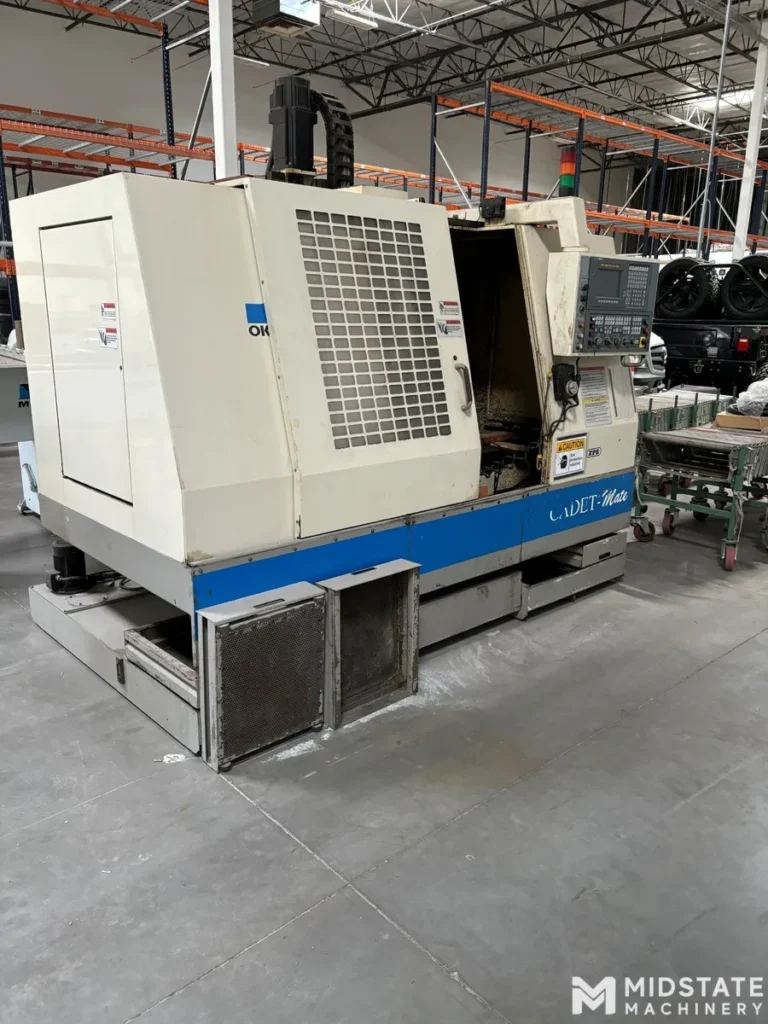
OKUMA CADET MATE
USED OKUMA CADET MATE
The OKUMA CADET MATE is a compact yet highly capable vertical machining center designed for manufacturers seeking reliability, precision, and long-term durability. Introduced during the late 1990s, the Cadet Mate series quickly gained popularity among job shops, toolmakers, automotive suppliers, and general manufacturing companies due to its rigid construction, user-friendly control system, and proven machining performance. The machine was engineered to provide the quality and dependability associated with Okuma while maintaining an economical footprint suitable for smaller production environments.
Built around a heavy-duty cast-iron frame, the Cadet Mate delivers excellent vibration dampening and machining stability. The machine is capable of handling a wide variety of materials including aluminum, steel, stainless steel, cast iron, brass, and engineering plastics. Its robust design allows operators to perform drilling, tapping, contouring, pocket milling, and general production machining with consistent accuracy and repeatability.
A major advantage of the Cadet Mate is the renowned Okuma OSP control system. Most machines were equipped with the OSP 700M control, providing conversational programming and advanced machining functionality. Many operators continue to value the OSP platform for its reliability and flexibility in both manual programming and CAM-generated applications.
The machine’s 40″ × 20″ × 20″ travel configuration provides ample capacity for a wide range of parts while maintaining a compact footprint. Combined with a CAT 40 spindle, automatic tool changer, and high rapid traverse rates, the Cadet Mate remains a productive and cost-effective machining solution for many manufacturers.
OKUMA CADET MATE – AXIS
| SPECIFICATION | DETAILS |
|---|---|
| Axis Configuration | 3-Axis Vertical Machining Center |
| X-Axis Travel | 40″ |
| Y-Axis Travel | 20″ |
| Z-Axis Travel | 20″ |
| Rapid Traverse Rate | Up to 787 IPM |
| Guideway Type | Box Ways / Linear Ways (varies by machine) |
OKUMA CADET MATE – AXIS TRAVELS / WORK ENVELOPE
| SPECIFICATION | DETAILS |
|---|---|
| X-Axis Capacity | 40″ |
| Y-Axis Capacity | 20″ |
| Z-Axis Capacity | 20″ |
| Spindle Nose to Table | 7.8″ – 27.8″ |
| Work Envelope | Medium-Part Production Machining |
OKUMA CADET MATE – TABLE
| SPECIFICATION | DETAILS |
|---|---|
| Table Length | 47.2″ |
| Table Width | 20.1″ |
| Maximum Table Load | 1,100 lbs (approx.) |
| T-Slot Configuration | Standard T-Slots |
| Table Construction | Precision Ground Cast Iron |
OKUMA CADET MATE – SPINDLE
| SPECIFICATION | DETAILS |
|---|---|
| Maximum Spindle Speed | 8,000 RPM |
| Spindle Motor Power | 15 HP |
| Spindle Taper | CAT 40 |
| Spindle Type | Belt-Driven |
| Spindle Orientation | Programmable |
OKUMA CADET MATE – TOOL CHANGER
| SPECIFICATION | DETAILS |
|---|---|
| Tool Capacity | 20 Tools |
| Tool Changer Type | Automatic Tool Changer |
| Tool Selection | Random Access |
| Maximum Tool Weight | 17.6 lbs |
| Maximum Tool Length | 11.8″ |
OKUMA CADET MATE – CONTROL SYSTEM
| SPECIFICATION | DETAILS |
|---|---|
| CNC Control | Okuma OSP 700M |
| Programming Capability | Conversational & G-Code |
| Rigid Tapping | Yes |
| Program Storage | Standard OSP Memory |
| Communication | RS-232 Interface |
OKUMA CADET MATE – COOLANT / CHIP MANAGEMENT
| SPECIFICATION | DETAILS |
|---|---|
| Coolant System | Flood Coolant |
| Chip Removal | Chip Pan / Optional Conveyor |
| Lubrication System | Automatic |
| Washdown System | Available |
| Production Capability | Continuous Operation |
OKUMA CADET MATE – POWER REQUIREMENTS
| SPECIFICATION | DETAILS |
|---|---|
| Voltage Requirement | 220V – 240V |
| Electrical Supply | 3 Phase |
| Air Requirement | 80 PSI |
| Power Consumption | Approx. 18 kVA |
| Installation Type | Industrial Manufacturing Facility |
OKUMA CADET MATE – DIMENSIONS
| SPECIFICATION | DETAILS |
|---|---|
| Machine Length | Approx. 112″ |
| Machine Width | Approx. 88″ |
| Machine Height | Approx. 108″ |
| Approximate Weight | 10,000 – 13,000 lbs |
| Floor Space Requirement | Medium Footprint |
OKUMA CADET MATE – GENERAL INFORMATION
| SPECIFICATION | DETAILS |
|---|---|
| Manufacturer | Okuma Corporation |
| Model | Cadet Mate |
| Machine Type | Vertical Machining Center |
| CNC Control | OSP 700M |
| Country of Manufacture | Japan |
INDUSTRIES THAT USE OKUMA CADET MATE
| INDUSTRY | APPLICATIONS |
|---|---|
| Automotive | Production Components |
| Aerospace | Structural Parts |
| Tool & Die | Tooling & Fixtures |
| Medical | Precision Components |
| Energy | Mechanical Parts |
| General Manufacturing | Job Shop Production |
TYPICAL PARTS OKUMA CADET MATE CAN PRODUCE
| PART TYPE | DESCRIPTION |
|---|---|
| Fixture Plates | Manufacturing Tooling |
| Hydraulic Manifolds | Fluid Control Components |
| Machine Components | Precision Mechanical Parts |
| Aerospace Brackets | Structural Components |
| Mold Components | Tooling Applications |
| Prototype Parts | Product Development |
WHY CHOOSE OKUMA CADET MATE
| FEATURE | BENEFIT |
|---|---|
| OSP 700M Control | Reliable Programming Platform |
| 40″ X-Axis Travel | Versatile Part Capacity |
| CAT 40 Spindle | Widely Available Tooling |
| Heavy Cast Construction | Excellent Rigidity |
| 20-Tool Magazine | Improved Productivity |
| Okuma Reliability | Long Service Life |
WHY BUY USED OKUMA CADET MATE
A used OKUMA CADET MATE remains an attractive option for manufacturers looking to add dependable CNC machining capacity without the cost of a newer machining center. Okuma built the Cadet Mate with durability as a primary objective, and many machines continue to operate productively decades after installation.
One of the machine’s strongest advantages is its rigidity. The heavy cast construction and proven spindle design make it suitable for both roughing and finishing operations across a wide range of materials. Unlike many lightweight machining centers of the same era, the Cadet Mate was designed for industrial production environments where reliability and uptime were critical.
The OSP 700M control system remains highly respected among machinists. Users often praise Okuma controls for their programming flexibility and conversational capabilities, making the machine suitable for both experienced programmers and shop-floor operators. Community discussions continue to highlight the durability and capability of older Okuma machining centers when properly maintained.
Another major benefit is affordability. Compared to modern machining centers, a used Cadet Mate can often provide substantial machining capacity at a significantly lower investment. Parts availability, service support, and a large installed machine base continue to make ownership practical for many shops.
For job shops, prototype manufacturers, educational facilities, and production machining operations seeking dependable performance, the OKUMA CADET MATE remains a proven and economical CNC machining solution.
HOW MUCH DOES A USED OKUMA CADET MATE COST?
The value of a used OKUMA CADET MATE depends on machine condition, spindle hours, maintenance history, tooling inventory, control configuration, and installed options. Machines equipped with chip conveyors, rigid tapping, additional memory, probing systems, and extensive tooling packages generally command higher resale values.
Buyers typically inspect spindle condition, axis backlash, machine geometry, lubrication systems, tool changer operation, and control functionality before determining market value. Machines with documented service histories and lower operating hours often achieve premium pricing.
A used OKUMA CADET MATE commonly sells within an estimated range of $8,000 to $30,000, depending on condition, age, tooling, and overall machine configuration. Well-maintained machines equipped with desirable options and substantial tooling inventories may command prices toward the upper end of the range.
Even after accounting for transportation, rigging, installation, and maintenance expenses, the OKUMA CADET MATE continues to provide excellent value by delivering reliable CNC machining capability, proven Okuma engineering, and long-term durability at a fraction of the cost of a comparable new machining center.
Related Products
-
OKUMA - GENOS L250II
VIEW MACHINE -
OKUMA - MULTUS B550 W2000
VIEW MACHINE -
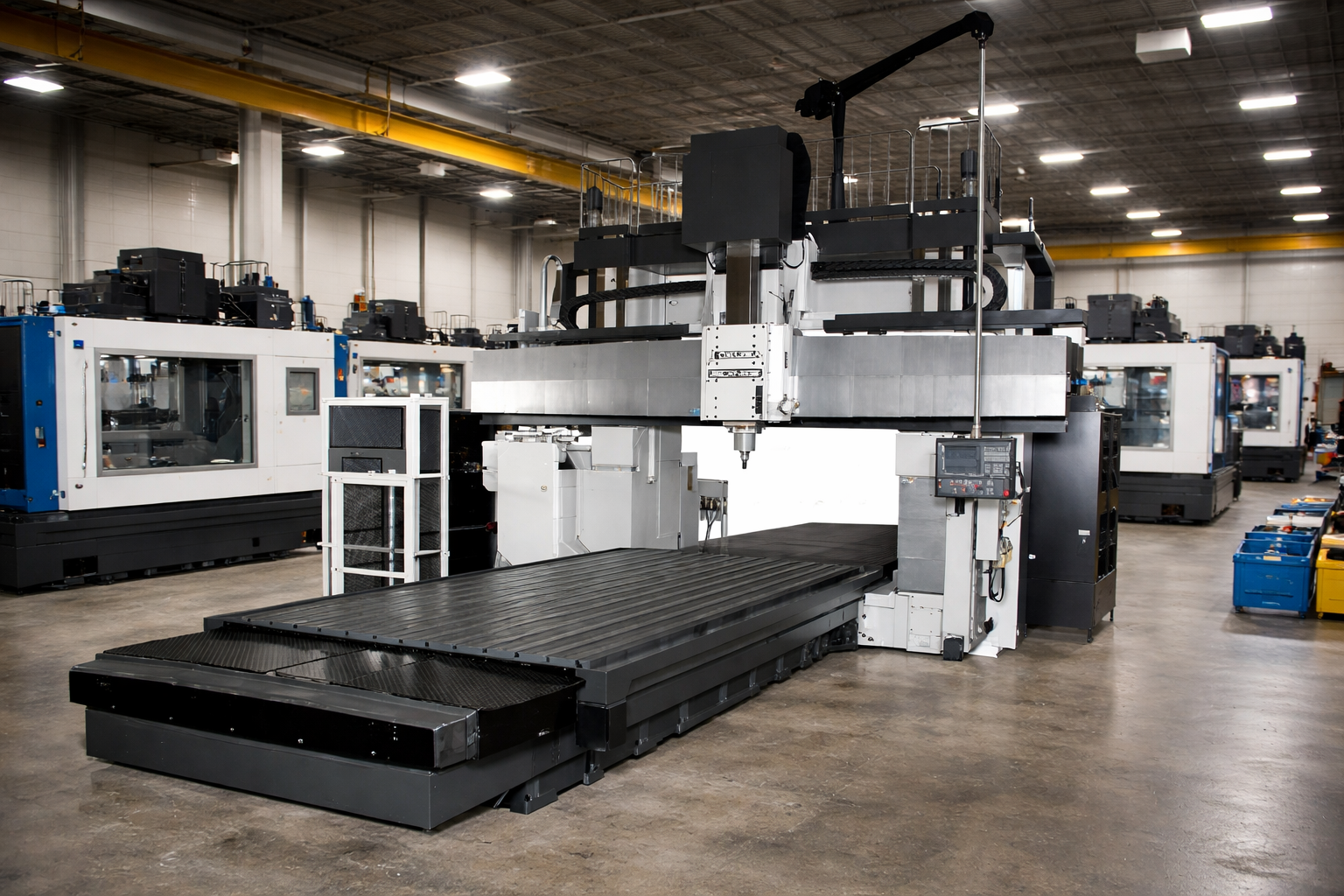
OKUMA - MCR-BIII
VIEW MACHINE -
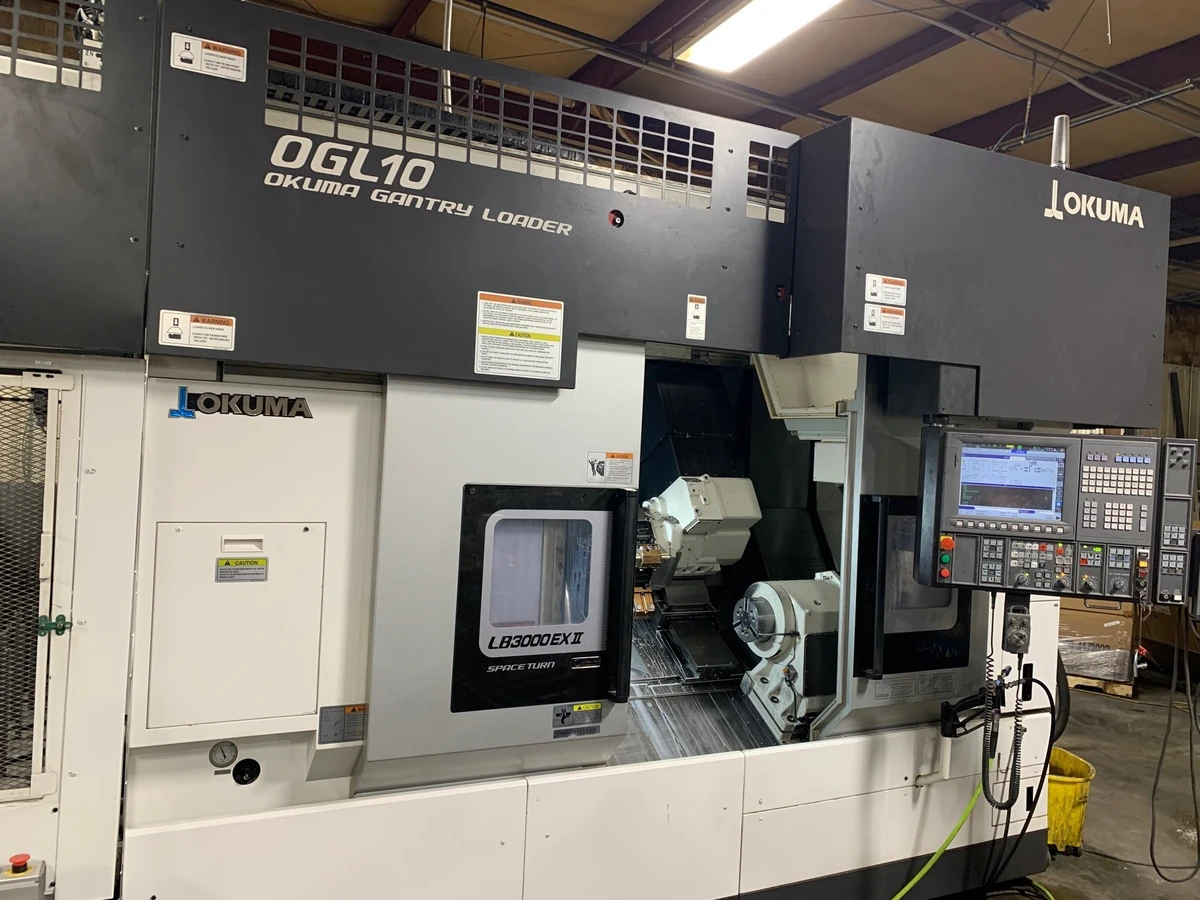
OKUMA - LB-3000MYW
VIEW MACHINE