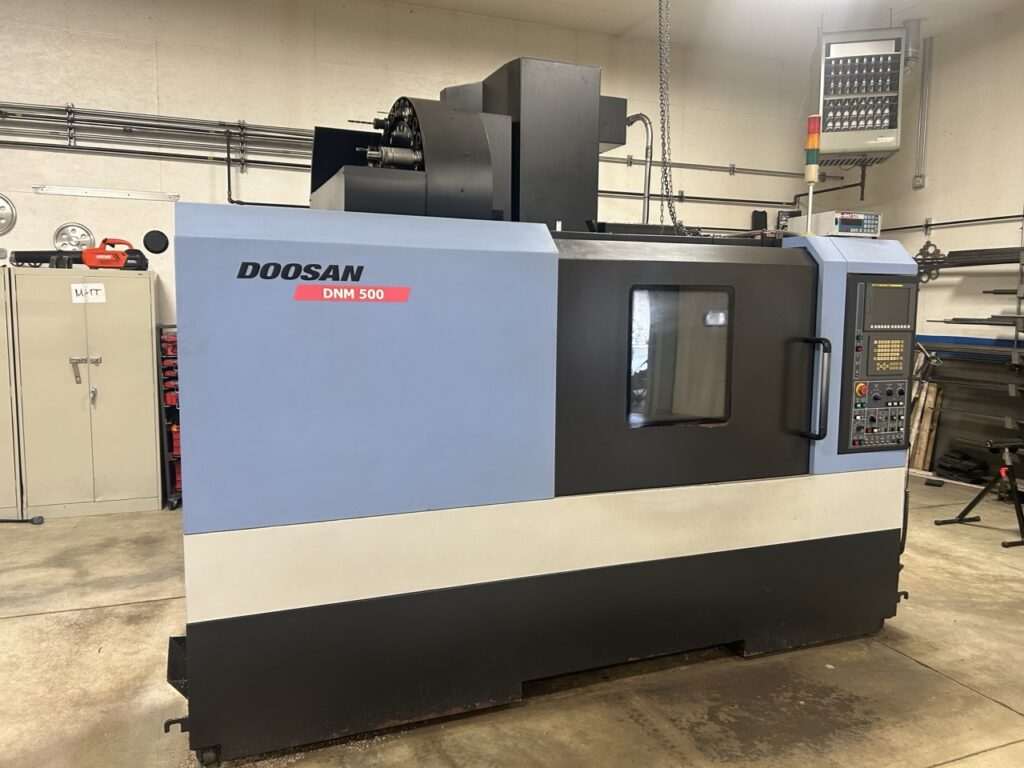
USED DOOSAN DNM 500 – 2009
The DOOSAN DNM 500 – 2009 is a CNC vertical machining center designed for precision milling, drilling, boring, tapping, and general-purpose metalworking applications. Manufactured by Doosan Infracore, the DNM series was developed to serve machine shops and production facilities that require a versatile machining platform for a wide range of industrial components. The DNM 500 is suitable for job shops, general engineering businesses, and manufacturers looking to produce accurate parts without investing in a larger machining center.
The machine’s three-axis configuration supports a variety of machining operations, including face milling, pocket milling, contouring, drilling, and threaded-hole production. Depending on the installed configuration, DNM-series machines may feature a CAT 40 spindle, an automatic tool changer, a CNC control from the Fanuc family, and coolant and chip-management equipment. Exact specifications for a 2009 machine should be verified against its nameplate and original documentation, as equipment packages and model specifications can vary.
A used 2009 DOOSAN DNM 500 can be an economical choice for manufacturers looking to add CNC machining capacity while managing their equipment budget. Its general-purpose machining capabilities make it useful for producing brackets, plates, housings, fixtures, and mechanical components. The value of a particular machine depends on its spindle condition, axis accuracy, control system, tool changer, maintenance history, and included accessories.
DOOSAN DNM 500 – AXIS
| Specification | Details |
|---|---|
| Machine Type | CNC Vertical Machining Center |
| Axis Configuration | 3-axis standard |
| X-Axis Travel | Approx. 1,020 mm / 40.2 inches, subject to configuration |
| Y-Axis Travel | Approx. 540 mm / 21.3 inches, subject to configuration |
| Z-Axis Travel | Approx. 510 mm / 20.1 inches, subject to configuration |
| Additional Axis | Fourth-axis rotary table may be installed as an option |
| Axis Drive System | CNC servo-driven axes |
| CNC Control | Verify the installed control on the individual machine |
| Machining Capability | Milling, drilling, boring, and tapping |
The three-axis configuration allows the DOOSAN DNM 500 to perform a broad range of machining operations on components that fit within its working envelope. The X, Y, and Z axes provide movement across the workpiece, allowing operators to machine flat surfaces, pockets, slots, holes, and profiles.
A suitable fourth-axis rotary table may expand the machine’s capabilities by allowing additional faces to be machined with fewer manual repositioning steps. However, rotary-axis compatibility depends on the installed hardware, control functions, wiring, and software options.
When purchasing a used machine, buyers should verify the actual axis travels and inspect the servo drives, ball screws, guideways, and feedback systems. Consistent axis movement and repeatable positioning are important for maintaining dimensional accuracy during production.
DOOSAN DNM 500 – AXIS TRAVELS / WORK ENVELOPE
| Specification | Details |
|---|---|
| X-Axis Travel | Approx. 1,020 mm / 40.2 inches |
| Y-Axis Travel | Approx. 540 mm / 21.3 inches |
| Z-Axis Travel | Approx. 510 mm / 20.1 inches |
| Table Dimensions | Verify against the machine’s original specifications |
| Spindle-to-Table Clearance | Configuration dependent |
| Maximum Table Load | Confirm from the original specification sheet |
| Work Envelope | Suitable for small and medium-sized industrial components |
| Fixture Clearance | Depends on workpiece height, tooling, and workholding |
The work envelope determines the size of components that can be machined while maintaining adequate clearance for tools, fixtures, and workholding equipment. The DNM 500’s travel range can support many common manufacturing applications, including machining housings, brackets, mounting plates, blocks, and industrial fixtures.
Buyers should assess the usable work envelope rather than relying only on the published axis travels. Tall fixtures, long tools, rotary tables, and complex workpieces can reduce the available clearance. It is also important to confirm that the machine can accommodate the dimensions and weight of the parts planned for production.
For a used 2009 machine, inspect the axis movement throughout the full travel range. Backlash, uneven movement, excessive noise, or inconsistent positioning may indicate mechanical wear or maintenance requirements. A positioning test and machining demonstration can help establish whether the machine meets the required accuracy.
DOOSAN DNM 500 – TABLE / WORKHOLDING
| Specification | Details |
|---|---|
| Table Type | Fixed machining table |
| Table Dimensions | Verify the exact dimensions for the individual machine |
| Maximum Table Load | Confirm from the machine documentation |
| T-Slots | Verify slot size, spacing, and quantity |
| Standard Workholding | Machine vises, clamps, and suitable fixtures |
| Optional Workholding | Rotary table or specialized fixture systems, depending on configuration |
| Typical Applications | Plates, brackets, housings, blocks, and industrial components |
The machining table provides a stable surface for securing workpieces during milling, drilling, and other machining operations. Suitable workholding can help maintain part accuracy, minimize vibration, and reduce setup time when producing repeat components.
The exact table dimensions and maximum load should be confirmed before purchase. These specifications determine whether the machine can accommodate the intended workpieces and fixtures safely.
Inspect the table surface for damage, corrosion, deep tool marks, and signs of previous collisions. Check the T-slots and verify that the table is compatible with the vises, clamps, and fixtures used in the shop. If a rotary table is included, confirm its condition, mounting arrangement, control compatibility, and the availability of all required accessories.
DOOSAN DNM 500 – SPINDLE
| Specification | Details |
|---|---|
| Spindle Type | CNC milling spindle |
| Spindle Taper | Verify the installed configuration; CAT 40 is common on DNM-series machines |
| Maximum Spindle Speed | Configuration dependent |
| Spindle Motor Power | Verify the machine’s nameplate and specification sheet |
| Spindle Drive | Depends on the installed spindle package |
| Machining Operations | Milling, drilling, boring, and tapping |
| Through-Spindle Coolant | Optional or configuration dependent |
| Spindle Cooling | Verify the installed cooling system |
The spindle is one of the most important components to assess when purchasing a used DOOSAN DNM 500. Its speed, motor power, taper, and cooling arrangement affect the machine’s ability to perform different machining operations efficiently. A suitable spindle configuration can support a range of applications, from general milling and drilling to more demanding cutting operations.
CAT 40 tooling is commonly associated with DNM-series vertical machining centers, but buyers should verify the taper on the actual machine before purchasing toolholders or accessories. Spindle speed and power ratings can also vary by configuration.
During inspection, check for unusual noise, vibration, overheating, toolholder runout, taper damage, and inconsistent operation at different speeds. Review maintenance records and ask whether the spindle has previously been rebuilt or replaced. Spindle repairs can significantly affect the total cost of acquiring an older CNC machining center.
DOOSAN DNM 500 – TOOL CHANGER
| Specification | Details |
|---|---|
| Tool Changer Type | Automatic tool changer |
| Tool Magazine Capacity | Verify the installed magazine capacity |
| Toolholder Type | Confirm the spindle taper |
| Tool Selection | CNC-controlled automatic tool changes |
| Tool Length Limits | Verify from the machine manual |
| Tool Diameter Limits | Depends on tool arrangement and magazine configuration |
| Tool Weight Limits | Confirm from the original specifications |
The automatic tool changer allows the DOOSAN DNM 500 to switch between cutting tools during a program without requiring the operator to change each tool manually. This is useful when a component requires several operations, such as face milling, drilling, tapping, boring, and finishing.
Tool magazine capacity should be confirmed on the individual machine rather than assumed from the model name. Buyers should test multiple tool changes and inspect the magazine pockets, grippers, indexing mechanism, and tool-retention components for wear or damage.
It is also important to confirm that the toolholders and retention knobs are compatible with the installed spindle. A machine with a functioning automatic tool changer and a useful collection of tooling can offer better practical value than a machine that requires significant additional investment before production.
DOOSAN DNM 500 – CONTROL SYSTEM
| Specification | Details |
|---|---|
| CNC Control | Verify the exact control installed on the 2009 machine |
| Control Manufacturer | Confirm from the control panel and documentation |
| Programming | CNC part programming using supported functions |
| Coordinate Systems | Depends on the installed control |
| Rigid Tapping | Verify the installed option and functionality |
| Program Storage | Depends on control version and memory configuration |
| Communication | Check available interfaces and supported program-transfer methods |
| Diagnostics | Depends on the installed control and software |
The CNC control manages axis movement, spindle operation, tool changes, and the machine’s auxiliary functions. The exact control model is important when evaluating a used 2009 DNM 500 because software functions, communication options, and service requirements can vary.
Buyers should check the display, keypad, operator panel, emergency-stop circuit, alarm history, and program storage. The machine should home correctly, move smoothly through all axes, complete tool changes, and execute a test program without recurring faults.
Compatibility with the shop’s CAD/CAM software and program-transfer workflow should also be assessed. Availability of manuals, parameter backups, electrical drawings, and qualified service support can make a significant difference to long-term ownership and maintenance costs.
DOOSAN DNM 500 – COOLANT / CHIP MANAGEMENT
| Specification | Details |
|---|---|
| Coolant System | Flood coolant, depending on configuration |
| Coolant Tank | Verify capacity and condition |
| Coolant Pump | Inspect operation and delivery |
| Chip Removal | Confirm whether an auger or chip conveyor is installed |
| Through-Spindle Coolant | Optional; verify the installed equipment |
| Coolant Filtration | Depends on the installed system |
| Enclosure | Inspect doors, windows, seals, and interlocks |
| Mist Collection | Optional or externally installed |
The coolant system helps control cutting temperatures, improve tool life, and maintain surface quality. Effective chip removal is also important because accumulated chips can interfere with cutting, workholding, and coolant delivery.
Equipment such as chip conveyors, high-pressure coolant systems, and through-spindle coolant should be verified individually, as not every used machine will include these options.
Inspect the coolant tank for corrosion, sludge, and accumulated chips. Test the pump and check hoses, nozzles, filters, and seals for leaks or blockages. If a chip conveyor or auger is installed, operate it and check for unusual noise, damaged components, or discharge problems.
DOOSAN DNM 500 – POWER REQUIREMENTS
| Specification | Details |
|---|---|
| Electrical Supply | Verify the individual machine’s nameplate |
| Voltage | Configuration dependent |
| Phase | Industrial three-phase power |
| Frequency | Confirm from the electrical documentation |
| Current Requirement | Verify from the machine’s electrical specifications |
| Transformer | Determine whether one is installed or required |
| Compressed Air | Confirm requirements for the installed configuration |
| Electrical Inspection | Recommended before installation and commissioning |
The electrical requirements of a used DNM 500 should be confirmed before transportation and installation. The required voltage and current depend on the installed spindle, servo drives, control system, coolant equipment, and auxiliary options.
A qualified electrician should inspect the electrical cabinet, wiring, grounding, drives, and safety circuits. If the machine was previously installed in a facility with a different electrical standard, a suitable transformer or other electrical work may be necessary.
Buyers should also confirm compressed-air requirements and ensure that the intended installation site can support the machine’s power demand and auxiliary systems.
DOOSAN DNM 500 – DIMENSIONS / WEIGHT
| Specification | Details |
|---|---|
| Overall Dimensions | Verify from the individual machine’s layout drawing |
| Overall Length | Configuration dependent |
| Overall Width | Configuration dependent |
| Overall Height | Configuration dependent |
| Machine Weight | Verify from the original specifications or nameplate |
| Installation Space | Allow clearance for operation and maintenance |
| Foundation | Confirm floor loading and installation requirements |
| Transportation | Professional machinery rigging recommended |
The overall dimensions and weight determine the requirements for transportation, unloading, installation, and floor planning. Accessories such as a chip conveyor, transformer, rotary table, or additional guarding can affect the final shipping configuration.
Before purchasing, obtain the machine layout drawing and verify access through doors, aisles, and loading areas. Confirm that the floor can support the machine and that suitable lifting equipment is available. The total installation budget should include rigging, transport, electrical work, leveling, and commissioning.
DOOSAN DNM 500 – GENERAL INFORMATION
| Specification | Details |
|---|---|
| Manufacturer | Doosan Infracore |
| Model | DNM 500 |
| Year | 2009 |
| Machine Category | CNC Vertical Machining Center |
| Standard Axis Configuration | 3-axis |
| X-Axis Travel | Approx. 1,020 mm, subject to configuration |
| Y-Axis Travel | Approx. 540 mm, subject to configuration |
| Z-Axis Travel | Approx. 510 mm, subject to configuration |
| Spindle Taper | Verify the installed configuration |
| Automatic Tool Changer | Capacity depends on the installed magazine |
| CNC Control | Verify the individual machine’s control model |
| Typical Applications | Milling, drilling, boring, tapping, and general machining |
The DOOSAN DNM 500 is a general-purpose vertical machining center designed for manufacturers that need flexible CNC machining capability for industrial components. Its three-axis configuration and automatic tool-changing capability can support a wide range of jobs in general engineering, automotive-related manufacturing, industrial machinery, and job-shop environments.
The specifications in this section are preliminary reference values where indicated. Because the machine is from 2009, the actual control, spindle, tool changer, axis travels, table dimensions, and installed options should be verified against the specific machine and its documentation before purchase.
INDUSTRIES THAT USE THE DOOSAN DNM 500
The DOOSAN DNM 500 can serve a variety of manufacturing environments where its work envelope, spindle capability, and condition match the intended applications.
- General Engineering: Machining brackets, mounting plates, blocks, fixtures, and mechanical components.
- Automotive Manufacturing: Producing suitable housings, mounting components, tooling, and replacement parts.
- Industrial Machinery: Manufacturing machine brackets, bearing supports, and equipment housings.
- Tool and Die Shops: Producing fixture details, tooling components, and suitable mold-related parts.
- Job Shops: Handling custom orders, prototypes, and small-to-medium production runs.
- Maintenance and Repair: Manufacturing replacement components and modifying existing parts.
- Prototype Manufacturing: Producing trial components before larger production runs.
- Education and Training: Supporting CNC programming and machining instruction where the machine is appropriately maintained.
TYPICAL PARTS MACHINED ON A DOOSAN DNM 500
| Part Type | Typical Machining Operations |
|---|---|
| Mounting Plates | Face milling, drilling, tapping, and pocketing |
| Machine Brackets | Contouring, slotting, drilling, and finishing |
| Aluminum Housings | Pocket milling, profiling, and threaded-hole machining |
| Industrial Fixtures | Milling, boring, and precision hole machining |
| Bearing Supports | Face milling, drilling, and boring |
| Mechanical Blocks | Surface machining, pocketing, and tapping |
| Tooling Components | Profile milling, drilling, and finishing |
| Custom Components | CNC milling based on part drawings |
| Replacement Parts | Milling, drilling, and dimensional correction |
The DNM 500 is useful for components that fit within its verified work envelope and can be secured properly on the table. With suitable tooling and workholding, multiple machining operations can be completed in one setup, helping reduce manual handling and improve repeatability.
Actual machining accuracy and surface finish depend on the condition of the machine, cutting tools, material, workholding, programming, and inspection methods. A test cut is recommended when dimensional performance is important.
WHY CHOOSE THE DOOSAN DNM 500?
The DOOSAN DNM 500 is worth considering for manufacturers who need a versatile CNC vertical machining center for everyday milling and drilling work. Its three-axis configuration supports a wide range of components, while an automatic tool changer can reduce manual tool changes during multi-operation jobs.
Key advantages include:
- Versatile machining capability: Suitable for milling, drilling, boring, and tapping.
- Flexible production: Can support prototypes, custom components, and repeat production jobs.
- Automatic tool changing: Helps reduce manual intervention during machining cycles.
- Workholding flexibility: Suitable for vises, clamps, fixture plates, and compatible rotary tables.
- Broad industrial applications: Useful for general engineering and many job-shop requirements.
- Potentially lower acquisition cost: A used machine may cost substantially less than a comparable new system.
- Expandable capability: Additional equipment may increase flexibility when compatible with the installed control.
The practical benefits depend on the condition of the individual machine and the options it includes. Buyers should evaluate the spindle, axis accuracy, control, tool changer, and service history before determining whether a particular unit is suitable for production.
WHY BUY A USED DOOSAN DNM 500 – 2009?
Purchasing a used DOOSAN DNM 500 can help a manufacturer increase machining capacity without the capital investment required for a new CNC vertical machining center. It may be suitable for small and medium-sized manufacturers, job shops, prototype facilities, and industrial maintenance departments that need a flexible machine for a variety of components.
A used machine may also include useful accessories such as toolholders, a machine vise, coolant equipment, probing equipment, or a chip conveyor. These items can reduce setup costs when they are functional and included in the sale.
Before purchasing, buyers should:
- Request a powered inspection and a machining demonstration.
- Test the spindle across its available speed range.
- Check spindle noise, vibration, temperature, and toolholder runout.
- Test all axes for smooth movement, backlash, and repeatability.
- Operate the automatic tool changer through several tool changes.
- Verify the CNC control, display, program storage, and alarm history.
- Inspect coolant pumps, chip-removal equipment, and lubrication systems.
- Review maintenance records and previous spindle, drive, or control repairs.
- Confirm the installed spindle taper, tool magazine capacity, and electrical requirements.
- Verify which tooling, accessories, manuals, and options are included.
- Budget for transportation, rigging, installation, and any required repairs.
For a machine manufactured in 2009, demonstrated performance and maintenance history are more important than age alone. A comprehensive inspection can help identify likely repair costs and establish whether the machine is ready to return to productive service.
HOW MUCH DOES A USED DOOSAN DNM 500 – 2009 COST?
The price of a used DOOSAN DNM 500 depends on the machine’s mechanical condition, spindle health, control system, tool changer, accessories, location, and whether it is ready for production. Since verified current listings and completed sales for this exact model-year combination have not been established here, the following figures should be treated as broad budgeting estimates rather than confirmed market prices.
| Condition | Indicative Budget Range (USD) |
|---|---|
| As-is, untested, or requiring repairs | $5,000–$12,000 |
| Operational but showing wear or maintenance needs | $10,000–$20,000 |
| Good working condition with a successful inspection | $18,000–$30,000 |
| Very good condition with useful options and tooling | $25,000–$35,000+ |
These estimates are intended for preliminary budgeting only. Actual asking prices and completed transaction values can differ, and the final price should reflect the machine’s verified configuration and condition.
FACTORS THAT AFFECT USED DOOSAN DNM 500 PRICING
- Spindle condition: Noise, vibration, overheating, and repair history can significantly affect value.
- Axis accuracy: Backlash, repeatability, and positioning performance determine suitability for precision work.
- Control system: A functioning control, display, and drive system reduce commissioning risk.
- Tool changer: A reliable automatic tool changer can save repair costs and production time.
- Installed options: Probing, rotary-axis capability, coolant equipment, and chip conveyors may add value.
- Included tooling: Toolholders, vises, clamps, and fixtures can reduce the initial setup investment.
- Maintenance history: Documented service and repairs help buyers estimate future expenses.
- Installation costs: Freight, rigging, electrical work, and commissioning add to the total investment.
IS A USED DOOSAN DNM 500 WORTH BUYING?
A used DOOSAN DNM 500 – 2009 can be a worthwhile investment for a shop that needs a versatile CNC vertical machining center for general-purpose manufacturing. Its three-axis configuration and automatic tool-changing capability can support a wide range of industrial machining jobs.
Before committing, calculate the total cost of acquisition, including transportation, installation, tooling, maintenance, and any required repairs. A machine with a low asking price may become expensive if it needs major spindle, control, or axis work.
The best purchase is the machine that provides reliable performance for the intended jobs at a realistic total ownership cost. Verify the exact configuration, inspect the machine under power, and base the decision on its demonstrated condition rather than age or asking price alone.
Related Products
-
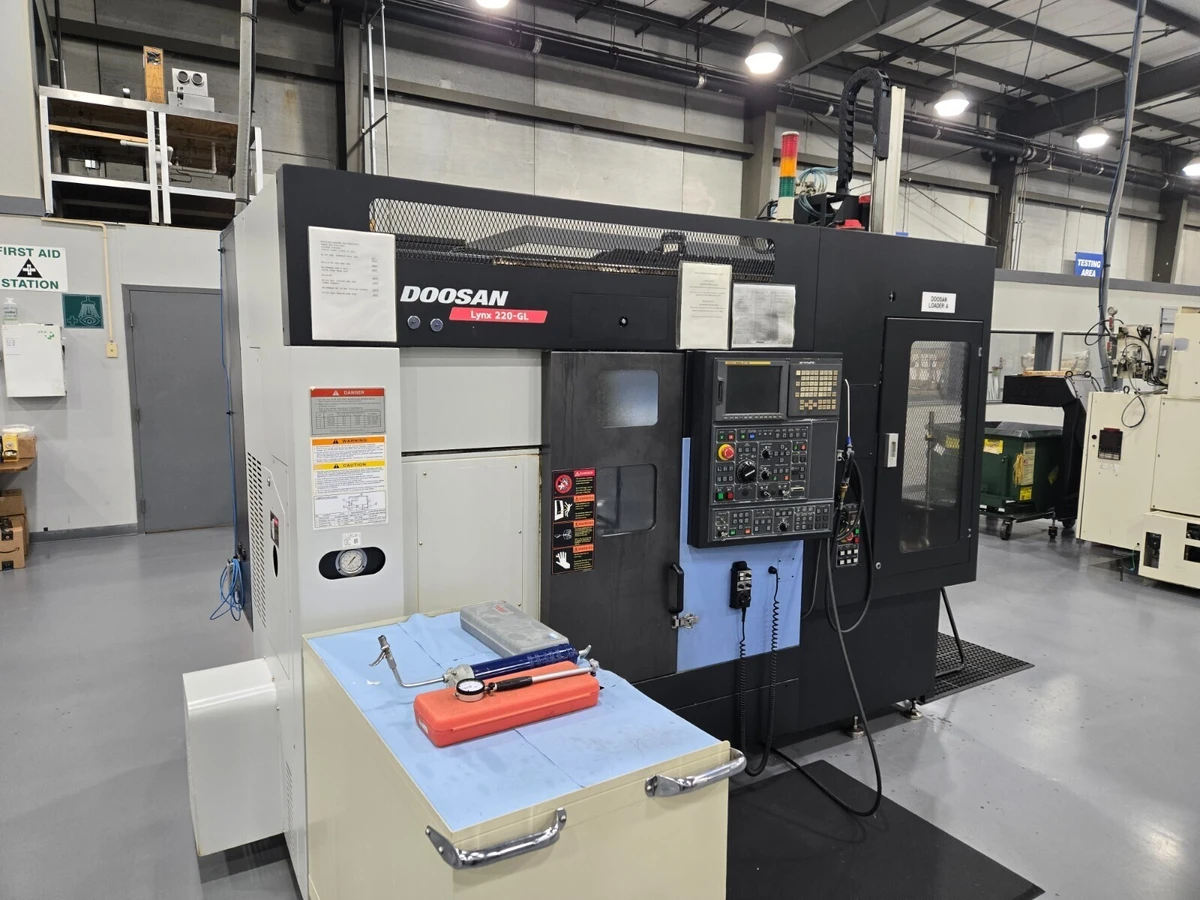
DOOSAN - LYNX 220 GL
VIEW MACHINE -
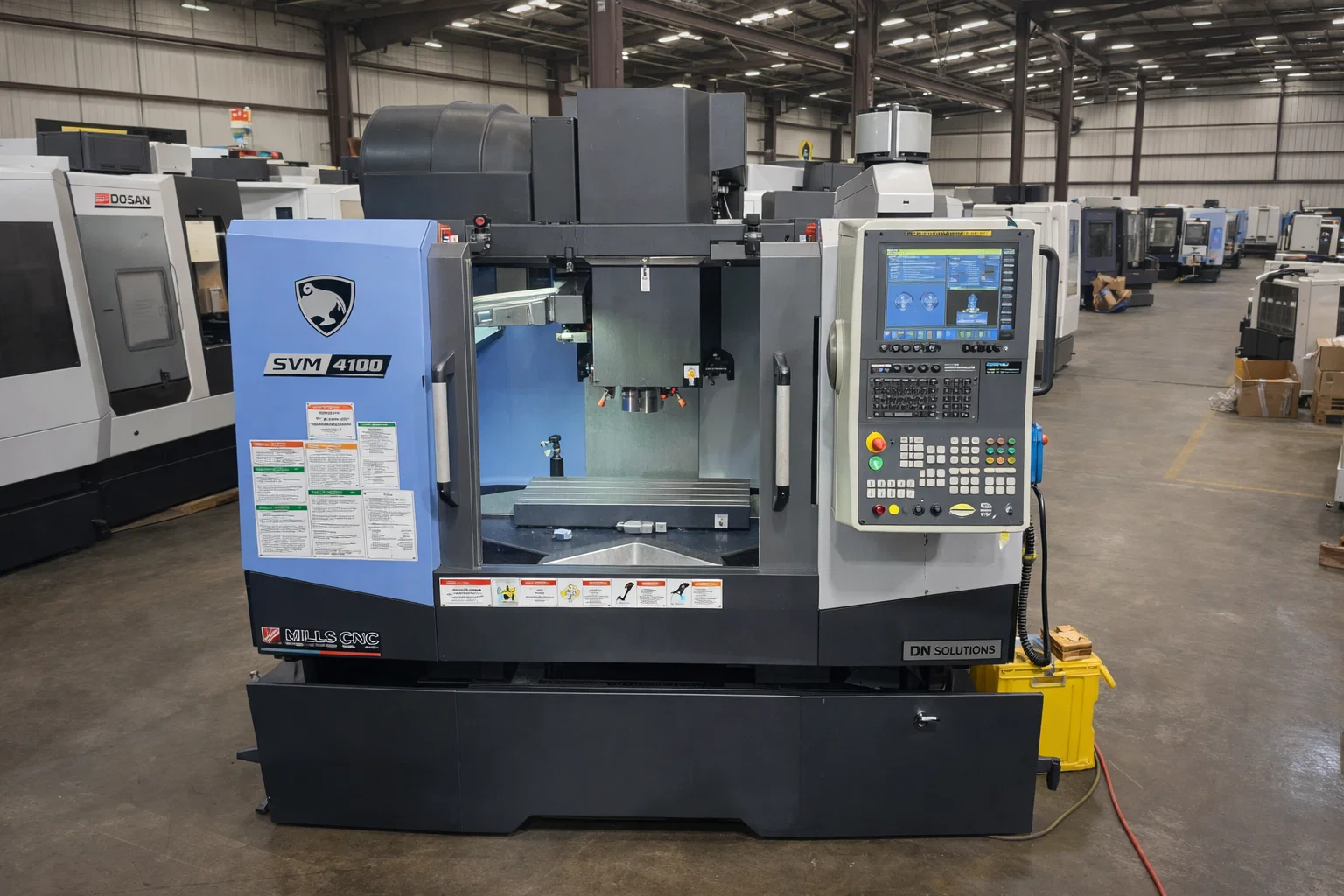
DOOSAN - SVM4100
VIEW MACHINE -
DOOSAN - LYNX 2100LYB
VIEW MACHINE -
DOOSAN - HMC 500
VIEW MACHINE