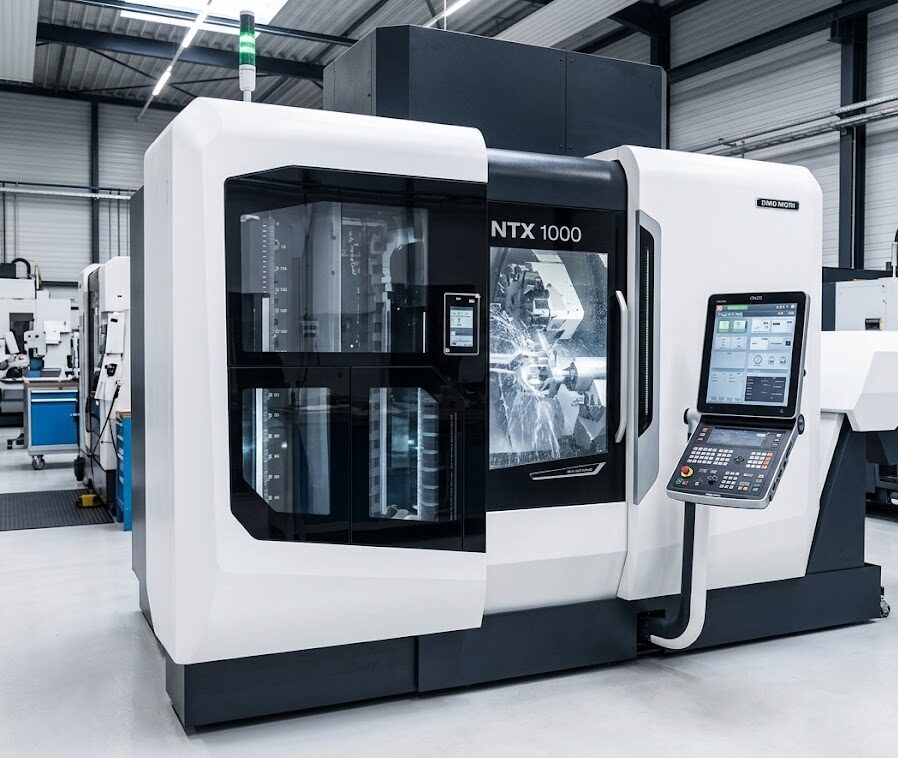
USED DMG MORI NTX 1000 – 2009
The 2009 DMG MORI NTX 1000 is a highly versatile CNC mill-turn machining center designed to perform complete multi-tasking operations in a single setup. Combining advanced turning, milling, drilling, tapping, and simultaneous 5-axis machining capabilities, the NTX 1000 enables manufacturers to produce complex precision components with exceptional accuracy while significantly reducing setup times and secondary operations. Built with DMG MORI’s renowned engineering quality, the machine remains a popular choice for shops seeking maximum productivity and machining flexibility.
The NTX 1000 features a rigid machine structure, integrated B-axis milling spindle, high-speed main spindle, sub-spindle, and automatic tool changer, allowing complete machining from raw bar stock or billets to finished parts. By eliminating multiple machine setups, manufacturers can improve dimensional accuracy, shorten production cycles, and reduce labor costs. The machine is capable of simultaneous turning and milling operations, making it ideal for producing highly intricate components that require multiple machining processes.
Equipped with the MORI SEIKI MAPPS III control on many 2009 models, the NTX 1000 offers an intuitive programming environment, advanced tool management, and high-speed data processing for efficient production. Depending on the machine configuration, it may include Y-axis machining, full C-axis interpolation, automatic tool measurement, spindle synchronization, and high-pressure through-tool coolant systems for improved chip evacuation and extended tool life.
The 2009 DMG MORI NTX 1000 is widely used across the aerospace, medical, automotive, energy, defense, electronics, and precision engineering industries. Typical applications include medical implants, aerospace fittings, hydraulic components, precision shafts, turbine parts, valve bodies, connectors, transmission components, and complex prototypes requiring complete machining in one cycle. The machine delivers excellent surface finishes and maintains tight tolerances even during demanding production runs.
Purchasing a used 2009 DMG MORI NTX 1000 provides manufacturers with access to premium mill-turn technology at a substantially lower investment than purchasing new equipment. DMG MORI machines are recognized worldwide for their durability, long operational life, and exceptional machining performance, making the NTX 1000 one of the most sought-after multi-tasking CNC machines on the used market. Properly maintained machines continue to provide reliable performance, high productivity, and consistent precision, making them an outstanding investment for machine shops looking to expand complex machining capabilities.
DMG MORI NTX 1000 – 2009 SPECIFICATIONS
Axis
| Specification | Value |
|---|---|
| Machine Type | CNC Mill-Turn Machining Center |
| Controlled Axes | Up to 9 Axes (configuration dependent) |
| X-Axis | Yes |
| Y-Axis | Yes |
| Z-Axis | Yes |
| B-Axis | ±120° Milling Spindle |
| C-Axis | Main & Sub Spindle |
| Sub Spindle | Standard |
Travels / Work Envelope
| Specification | Value |
|---|---|
| X-Axis Travel | 24.4 in (620 mm) |
| Y-Axis Travel | 12.2 in (310 mm) |
| Z-Axis Travel | 60.2 in (1,530 mm) |
| B-Axis Rotation | ±120° |
| Maximum Turning Length | Approx. 60 in (1,524 mm) |
Table / Workholding
| Specification | Value |
|---|---|
| Maximum Turning Diameter | 14.8 in (370 mm) |
| Maximum Swing Diameter | Approx. 20.5 in (520 mm) |
| Main Chuck Size | 6–8 in (configuration dependent) |
| Bar Capacity | Approx. 2.6 in (65 mm) |
Spindle
| Specification | Value |
|---|---|
| Main Spindle Speed | Up to 5,000 RPM |
| Sub Spindle Speed | Up to 5,000 RPM |
| Milling Spindle Speed | Up to 12,000 RPM |
| Milling Spindle Taper | HSK-A63 |
| Main Spindle Motor | Approx. 25 HP (18.5 kW) |
Tool Changer
| Specification | Value |
|---|---|
| Tool Magazine Capacity | 38 Tools (larger options available) |
| Tool Change Type | Automatic |
| Maximum Tool Length | Approx. 15.7 in (400 mm) |
| Maximum Tool Weight | Approx. 17.6 lbs (8 kg) |
CNC Control
| Specification | Value |
|---|---|
| CNC Control | MORI SEIKI MAPPS III |
| Programming | ISO G-Code |
| Network Capability | Ethernet / USB / DNC |
Coolant / Chip Management
| Specification | Value |
|---|---|
| Coolant System | Flood & Through-Spindle Coolant |
| High-Pressure Coolant | Available |
| Chip Removal | Automatic Chip Conveyor |
| Coolant Filtration | Standard |
Power Requirements
| Specification | Value |
|---|---|
| Electrical Supply | 400–480V, 3-Phase |
| Connected Load | Approx. 45–60 kVA |
| Pneumatic Supply | 87 PSI (6 bar) |
Dimensions
| Specification | Value |
|---|---|
| Floor Space | Approx. 173 × 110 in (4,400 × 2,800 mm) |
| Machine Height | Approx. 118 in (3,000 mm) |
| Machine Weight | Approx. 22,000 lbs (10,000 kg) |
General Information
| Specification | Value |
|---|---|
| Manufacturer | DMG MORI |
| Model | NTX 1000 |
| Year | 2009 |
| Machine Category | CNC Mill-Turn Machining Center |
| Materials Machined | Aluminum, Steel, Stainless Steel, Titanium, Inconel, Brass, Plastics |
| Typical Applications | Aerospace Components, Medical Parts, Hydraulic Fittings, Shafts, Valve Bodies, Precision Turned Components |
HOW MUCH DOES A USED DMG MORI NTX 1000 – 2009 COST?
The price of a used 2009 DMG MORI NTX 1000 typically ranges from $180,000 to $350,000 USD, depending on its overall condition, spindle hours, tooling package, machine specifications, and included options. Machines equipped with features such as a larger tool magazine, high-pressure through-spindle coolant, automatic tool measurement, bar feeder compatibility, or advanced probing systems generally command higher prices. Service history, maintenance records, and whether the machine has been rebuilt or factory-maintained also play a significant role in determining market value.
When evaluating a used NTX 1000, buyers should consider not only the purchase price but also the machine’s maintenance condition, available accessories, control version, and installation costs. A well-maintained DMG MORI NTX 1000 can provide many years of reliable, high-precision production, making it an excellent investment for manufacturers seeking advanced mill-turn capabilities at a lower cost than purchasing a new machine.
DMG MORI NTX 1000 VS DMG MORI DMU 70 – WHICH ONE TO BUY?
Choosing between the DMG MORI NTX 1000 and the DMG MORI DMU 70 depends primarily on whether your production is centered around turned components or prismatic 5-axis milling. Although both are premium multi-axis CNC machines from DMG MORI, they are built for entirely different manufacturing applications. The NTX 1000 is a multitasking turn-mill center capable of combining turning, milling, drilling, tapping, and 5-axis machining in a single setup, while the DMU 70 is a dedicated 5-axis machining center designed for high-precision milling of complex parts. The NTX 1000 features a direct-drive B-axis, integrated turning spindle, optional counter spindle, and process integration technologies that allow complete machining in one machine.
If your business manufactures shafts, valves, hydraulic fittings, medical implants, aerospace components, or precision turned parts, the NTX 1000 is the superior investment. By eliminating multiple setups and secondary operations, it reduces cycle times, improves accuracy, and lowers labor costs. Its multitasking capability also makes lights-out automation easier to implement.
The DMU 70 is better suited for mold making, dies, turbine blades, structural aerospace components, and complex prismatic workpieces requiring continuous 5-axis milling. It delivers exceptional surface finish, high-speed machining performance, and outstanding positional accuracy for intricate milling operations.
If most of your work begins with round bar stock and requires both turning and milling, the DMG MORI NTX 1000 offers significantly greater productivity. However, if your production focuses primarily on complex milled components without major turning operations, the DMU 70 remains the more efficient and economical choice. Selecting the correct machine ultimately depends on the type of parts you manufacture and your long-term production strategy.
DMG MORI NTX 1000 MAIN SPINDLE NOT TURNING – CAUSES AND TROUBLESHOOTING
A main spindle that refuses to rotate on the DMG MORI NTX 1000 can immediately interrupt production. Fortunately, spindle problems are often caused by safety conditions, electrical faults, control parameters, or programming issues rather than complete spindle failure. A structured troubleshooting process can quickly identify the source of the problem while preventing unnecessary repairs.
Start by checking the CNC control for active alarms. Emergency stop activation, open safety doors, lubrication warnings, spindle drive alarms, hydraulic pressure faults, or servo errors can automatically disable spindle rotation. The NTX 1000 continuously monitors machine status and prevents spindle movement whenever a critical condition exists.
Next, inspect the spindle drive system. Loose electrical connections, damaged encoder cables, blown fuses, faulty spindle amplifiers, or overloaded spindle motors can prevent the spindle from starting. Verify that hydraulic pressure, lubrication flow, coolant systems, and pneumatic supplies are operating correctly, since these support systems are essential for safe spindle operation.
Review the CNC program carefully. Missing spindle start commands, incorrect M-codes, improper spindle speed settings, interrupted tool change cycles, or synchronization errors between the main spindle and counter spindle can prevent spindle rotation. Following maintenance or battery replacement, spindle parameters or machine referencing may also require verification.
If the spindle attempts to rotate but immediately stops, inspect for mechanical issues such as seized spindle bearings, damaged spindle taper, excessive toolholder clamping force, or workpiece interference. Excessive vibration, abnormal spindle noise, or overheating usually indicate bearing wear or internal mechanical damage.
Routine preventive maintenance, proper lubrication, clean cooling systems, and regular spindle inspections greatly reduce unexpected failures. If spindle alarms remain active after completing basic checks, advanced diagnostics by a qualified DMG MORI service technician are recommended to prevent further machine damage.
DMG MORI NTX 1000 MAINTENANCE AND PREVENTIVE CARE GUIDE
The DMG MORI NTX 1000 combines turning and 5-axis milling into one highly sophisticated multitasking machine. Because of its integrated machining capabilities, preventive maintenance is critical for maintaining accuracy, maximizing spindle life, and minimizing costly production downtime. Consistent maintenance also helps preserve the machine’s thermal stability, positioning accuracy, and long-term reliability.
Daily maintenance should begin with removing chips from the machining area, spindle taper, B-axis, and tool magazine. Operators should inspect coolant levels, coolant concentration, lubrication oil, hydraulic pressure, and pneumatic systems before beginning production. Tool holders, collets, chucks, and spindle interfaces should also be cleaned to ensure accurate machining.
Weekly maintenance should include cleaning electrical cabinet filters, inspecting coolant pumps, chip conveyors, spindle air purge systems, automatic lubrication units, and coolant filtration equipment. Tool changer operation should be verified to ensure reliable automatic tool exchanges during unattended machining. Proper cleaning around the B-axis and turning spindle helps maintain positioning accuracy and smooth machine movement.
Monthly inspections should focus on spindle condition, rotary B-axis calibration, linear guideways, ball screws, encoder cables, electrical connections, hydraulic systems, and thermal compensation performance. Coolant tanks should be cleaned regularly to prevent bacterial growth and contamination that can affect machining quality.
Additional preventive care includes monitoring spindle vibration, checking backlash, inspecting spindle bearings, replacing worn filters, and maintaining cooling systems for both spindle and servo drives. Shops that follow a structured preventive maintenance program typically experience longer spindle life, higher machining accuracy, improved surface finish, fewer unexpected breakdowns, and lower overall operating costs. The NTX 1000 is designed for continuous high-precision production, but its long-term performance depends heavily on disciplined maintenance practices.
FAQ
What is the DMG MORI NTX 1000?
The DMG MORI NTX 1000 is a high-performance multitasking CNC turn-mill center that combines turning, milling, drilling, tapping, and simultaneous 5-axis machining within a single machine. It features a high-rigidity machine structure, direct-drive B-axis, integrated milling spindle, optional counter spindle, advanced automation capabilities, and CELOS/MAPPS control systems. The machine is widely used for manufacturing complex precision components in the aerospace, medical, automotive, energy, tooling, and general precision engineering industries.
What are the most common problems with the DMG MORI NTX 1000?
Common problems include main spindle alarms, counter spindle synchronization issues, B-axis calibration errors, automatic tool changer faults, encoder alarms, hydraulic pressure warnings, lubrication system faults, coolant contamination, thermal compensation errors, servo drive alarms, and occasional tool measurement or probe calibration issues. Most of these problems can be prevented through regular preventive maintenance, scheduled machine calibration, clean coolant management, proper lubrication, and routine inspection of electrical and mechanical systems.
Related Products
-
DMG MORI - NH 4000
VIEW MACHINE -
DMG MORI - NLX 2500
VIEW MACHINE -
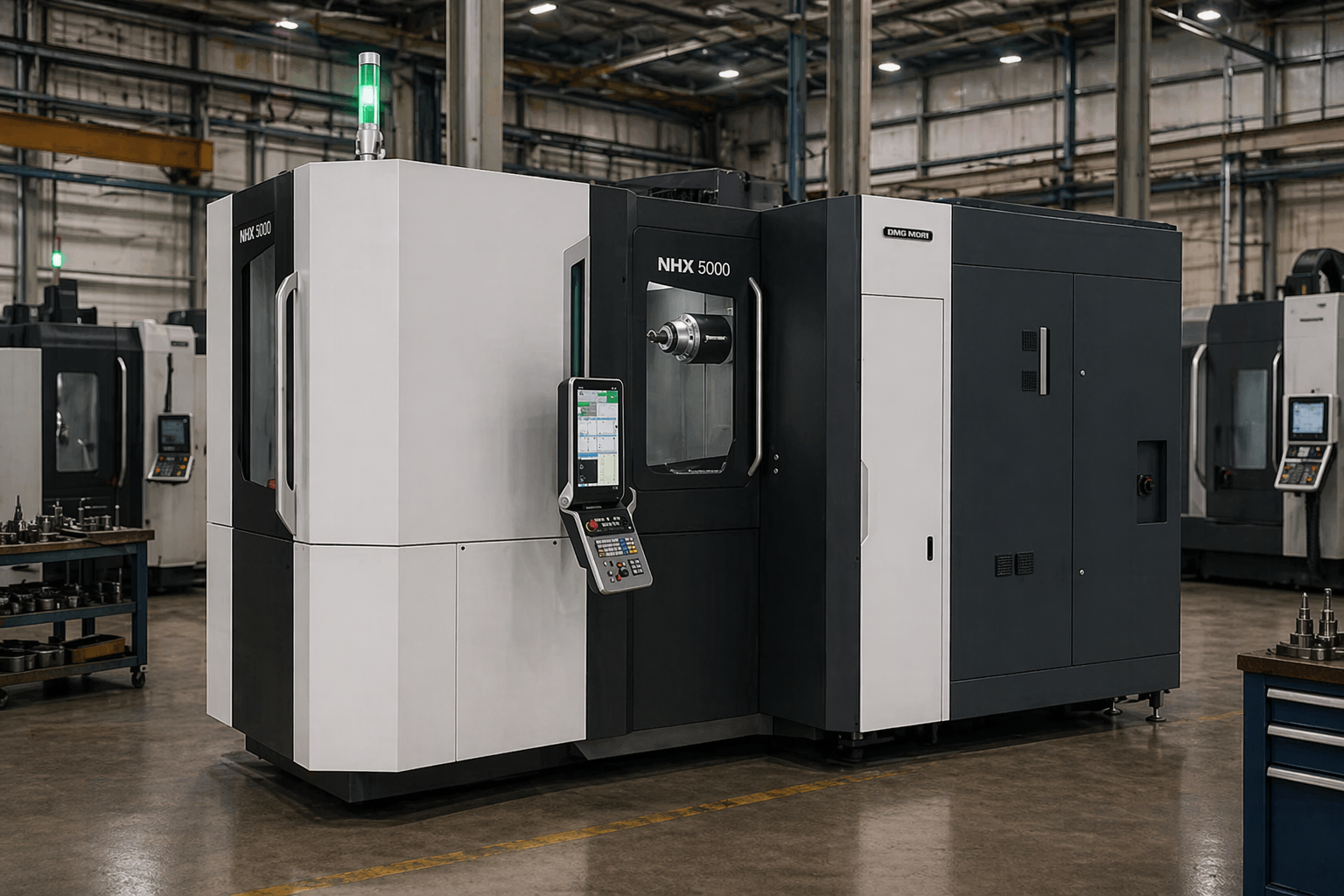
DMG MORI - NHX 5000 4th Generation
VIEW MACHINE -
DMG MORI - NLX-1500SY/500
VIEW MACHINE