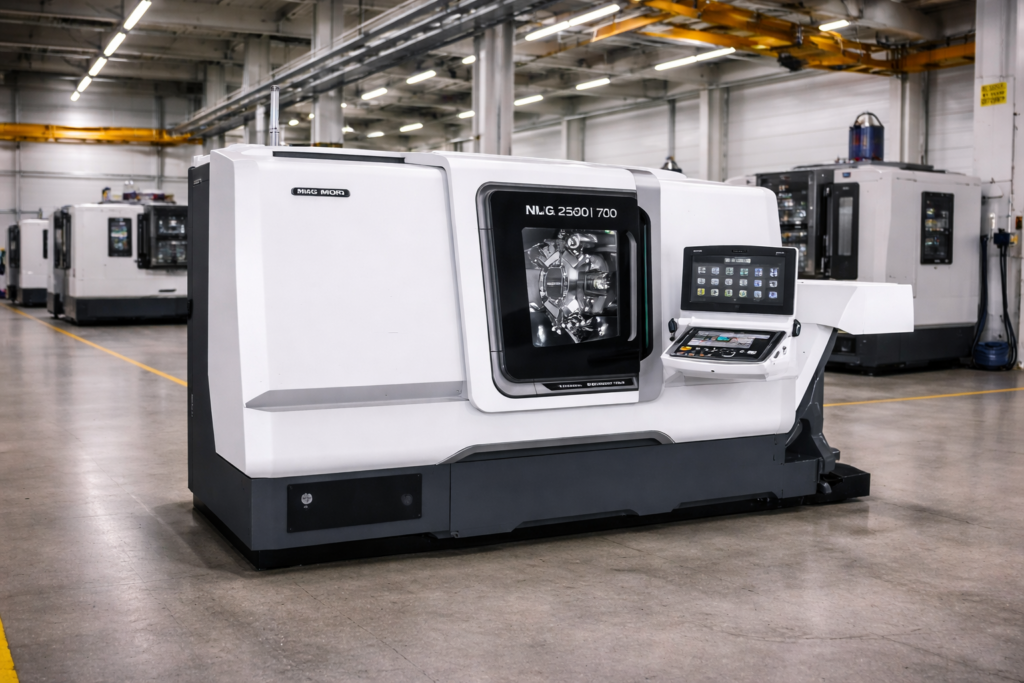
USED DMG MORI NLX 2500
The DMG MORI NLX 2500 is a high-performance CNC turning center designed for medium-sized components, positioned within the premium NLX series known for rigidity, thermal stability, and advanced mill-turn capability. It is widely used in industries such as automotive, aerospace, medical, and general engineering where precision, reliability, and continuous production are critical.
The machine supports a maximum workpiece diameter of approximately 460 mm and a turning length of up to 1,255 mm, depending on configuration (500, 700, or 1250 variants). It also offers a bar capacity of up to 90 mm, making it suitable for both chucking and bar-fed production. These specifications allow it to handle a wide range of components including shafts, flanges, housings, and precision turned parts.
A defining feature of the NLX 2500 is its box guideway construction on all axes (X, Y, Z), which provides superior rigidity and vibration damping compared to linear guide machines. This results in better surface finish and accuracy, especially during long cutting cycles or when machining difficult materials.
The machine is equipped with a BMT (Built-in Motor Turret), enabling high-speed milling operations up to 10,000 rpm. A Y-axis (typically ±100 mm travel) allows off-center machining, enabling full complete machining in a single setup and improving cutting time efficiency.
Thermal stability is another major advantage, achieved through controlled cooling systems that minimize thermal displacement and maintain consistent accuracy. The machine is equipped with DMG MORI’s MAPPS control system along with the CELOS interface, offering advanced programming, simulation, and digital integration capabilities.
Designed for high cutting time utilization, the NLX 2500 supports automation systems such as gantry loaders, robotic handling, and bar feeders, making it suitable for both batch production and lights-out manufacturing.
DMG MORI NLX 2500 SPECIFICATIONS
| DMG MORI NLX 2500 – AXIS |
|---|
| X-Axis |
| Z-Axis |
| Y-Axis (Optional ±50 mm Capability) |
| C-Axis (Main Spindle) |
| Optional Sub-Spindle |
| Simultaneous Multi-Axis Machining |
| DMG MORI NLX 2500 – AXIS TRAVELS |
|---|
| X-Axis Travel: 260 mm |
| Y-Axis Travel: ±50 mm |
| Z-Axis Travel: Up to 1,300 mm (varies by model) |
| DMG MORI NLX 2500 – CAPACITY |
|---|
| Maximum Turning Diameter: 366 mm |
| Maximum Turning Length: Up to 1,250 mm |
| Maximum Bar Capacity: 80 mm |
| DMG MORI NLX 2500 – SPINDLE |
|---|
| Main Spindle Speed: Up to 4,000 rpm |
| Main Spindle Power: Approx. 22–26 kW |
| Main Spindle Torque: Up to 450 Nm |
| Optional Sub-Spindle Speed: Up to 4,000 rpm |
| Built-in Motor Spindle |
| DMG MORI NLX 2500 – TABLE |
|---|
| Machine Type: Slant Bed CNC Turning Center |
| Structure: Thermo-Friendly Concept |
| Guideways: Box Guideways |
| Heavy-Duty Construction |
| DMG MORI NLX 2500 – TOOL TURRET |
|---|
| Turret Type: VDI 30 / BMT (Optional) |
| Number of Tool Stations: 12 |
| Live Tool Speed: Up to 6,000 rpm |
| High-Speed Indexing |
| Milling Capability |
| DMG MORI NLX 2500 – FEEDRATES |
|---|
| Rapid Traverse X-Axis: Approx. 30 m/min |
| Rapid Traverse Z-Axis: Approx. 30 m/min |
| Y-Axis Rapid: Approx. 10 m/min |
| High Productivity Feed Rates |
| DMG MORI NLX 2500 – COOLANT & CHIP MANAGEMENT |
|---|
| High-Pressure Coolant System |
| Chip Conveyor: Optional |
| Efficient Chip Removal |
| Flood and Through-Tool Coolant |
| DMG MORI NLX 2500 – CONTROL SYSTEM |
|---|
| CNC Control: DMG MORI MAPPS V / MAPPS VI |
| Interface: CELOS |
| Conversational Programming |
| Smart Manufacturing Ready |
| DMG MORI NLX 2500 – POWER & AIR REQUIREMENTS |
|---|
| Power Supply: 3-Phase AC |
| Energy Efficient Design |
| Air Requirement: 5–7 bar |
| Stable Power Consumption |
| DMG MORI NLX 2500 – DIMENSIONS |
|---|
| Machine Length: Approx. 3,500–4,200 mm |
| Machine Width: Approx. 2,000–2,300 mm |
| Machine Height: Approx. 2,100–2,300 mm |
| Machine Weight: Approx. 6,500–9,000 kg |
| DMG MORI NLX 2500 – GENERAL INFORMATION |
|---|
| Machine Type: High-Performance CNC Turning Center |
| Series: NLX Series |
| Designed for Medium to Large Parts |
| High Accuracy and Thermal Stability |
| Suitable for Heavy Cutting Applications |
| INDUSTRIES THAT USE DMG MORI NLX 2500 |
|---|
| Automotive |
| Aerospace |
| Oil & Gas |
| Heavy Engineering |
| Industrial Equipment |
| TYPICAL PARTS DMG MORI NLX 2500 CAN PRODUCE |
|---|
| Long Shafts |
| Hydraulic Cylinders |
| Flanges |
| Pump Components |
| Threaded Parts |
| WHY CHOOSE DMG MORI NLX 2500 |
|---|
| Higher Bar Capacity Than NLX 2000 |
| Longer Turning Length for Large Parts |
| Robust Build for Heavy Machining |
| Multi-Tasking with Live Tooling |
| Excellent Precision and Reliability |
WHY BUY USED DMG MORI NLX 2500
Buying a used DMG MORI NLX 2500 is a highly practical decision for manufacturers looking to acquire premium turning capability at a lower cost. Machines in the NLX series are engineered with high rigidity, box guideways, and advanced thermal control systems, allowing them to maintain accuracy and performance over long operational lifespans when properly maintained.
One of the biggest advantages of purchasing used is cost efficiency. A new NLX 2500 with Y-axis, live tooling, and automation can represent a significant capital investment. A used machine provides access to the same high-end capabilities—rigid construction, multi-axis machining, and high-speed milling—at a fraction of the cost, making it ideal for expanding production capacity.
Cutting time (spindle hours) is the most critical factor when evaluating a used NLX 2500. Machines with lower cutting hours generally retain better spindle accuracy, turret performance, and guideway condition. Because these machines are often used for continuous production, higher-hour units may show wear in critical areas such as spindle bearings, turret indexing systems, and Y-axis components.
Another advantage is process capability. The NLX 2500 is designed for complete machining, allowing turning, milling, drilling, and even advanced operations like gear cutting within a single setup. Even in used condition, this significantly reduces setup time and improves workflow efficiency, especially for complex parts.
Additionally, DMG MORI’s global service network and strong spare parts availability reduce the risks associated with buying used equipment. Support for controls, software, and mechanical components remains widely accessible.
From a financial standpoint, buying used enables faster return on investment. Lower upfront cost combined with high cutting time utilization ensures that a used NLX 2500 can quickly contribute to productivity and profitability.
HOW MUCH DOES A USED DMG MORI NLX 2500 COST?
The cost of a used DMG MORI NLX 2500 depends on manufacturing year, configuration (Y-axis, counter spindle, turret type), condition, and most importantly, cutting time (spindle hours). As a premium mid-size turning center, it typically commands a higher price than entry-level CNC lathes but remains more affordable than large multitasking machines.
Machines built before 2000 (or earlier-generation CNC turning centers with similar capacity) generally range from $15,000 to $45,000. These machines are the most affordable but may include outdated controls and higher wear levels. Cutting time is especially important—machines with high spindle hours may require refurbishment or spindle servicing.
Models produced between 2000 and 2010 typically range from $45,000 to $110,000. This segment often provides the best balance between price and performance, offering improved control systems, better spindle technology, and enhanced rigidity. Units with low to moderate cutting time are particularly desirable, as they can deliver reliable accuracy with manageable maintenance costs.
Machines from 2010 to 2025 generally range from $110,000 to $250,000 or more, depending on configuration and automation integration. Machines equipped with full Y-axis capability, counter spindle, high-speed BMT turret, and robotic automation command premium prices due to their increased flexibility and productivity.
Cutting time remains the most important pricing factor. A newer machine with excessive spindle hours—especially one used in continuous production—may be less valuable than an older unit with minimal use. Buyers should carefully evaluate spindle condition, turret wear, guideway condition, and maintenance history to determine true market value and ensure long-term operational reliability.
Related Products
-
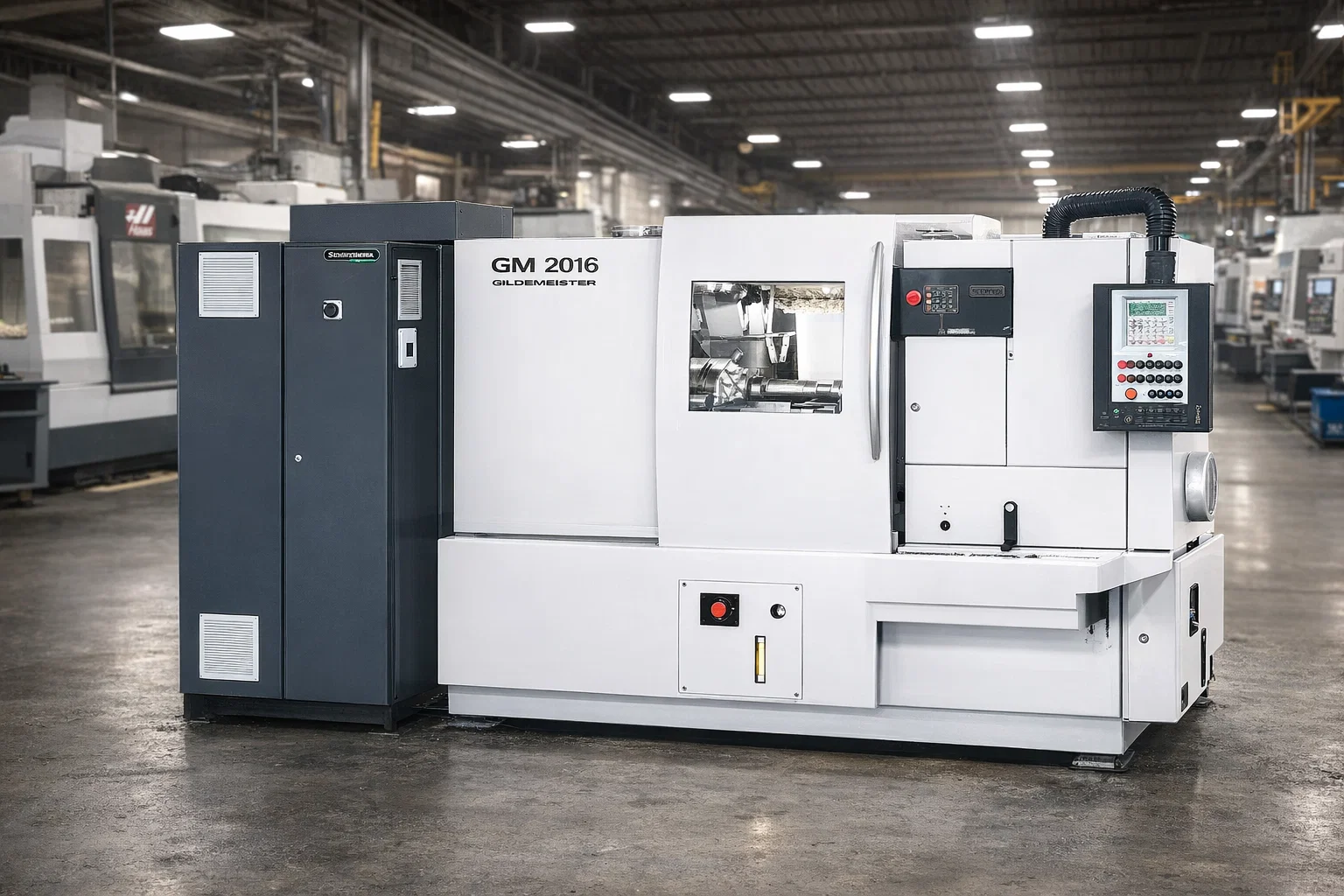
DMG MORI - GM 20-6
VIEW MACHINE -
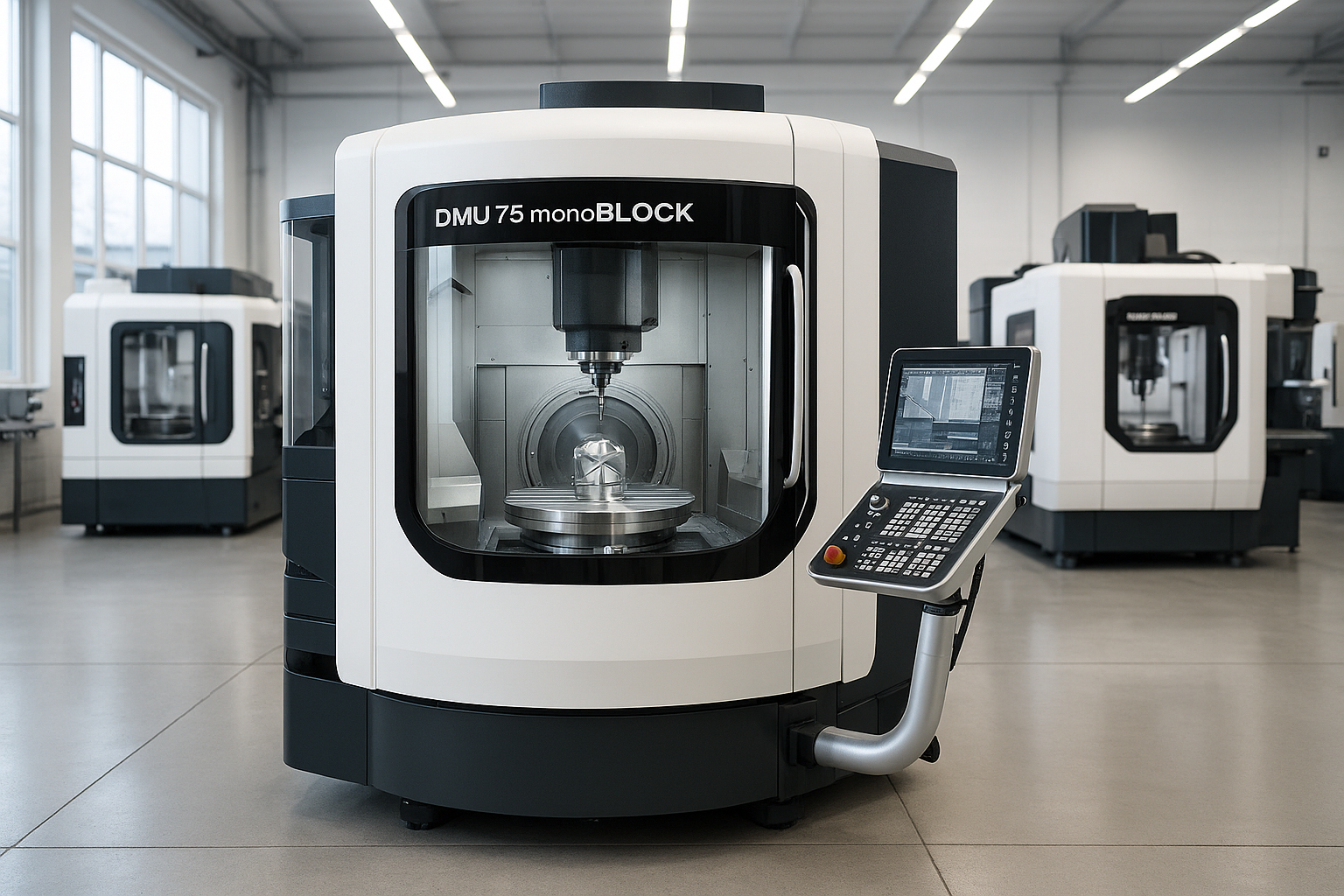
DMG MORI - DMU 75 MONOBLOCK
VIEW MACHINE -
DMG MORI - DMF 300|8 (FD, linear)
VIEW MACHINE -
DMG MORI - NVG-7LH
VIEW MACHINE