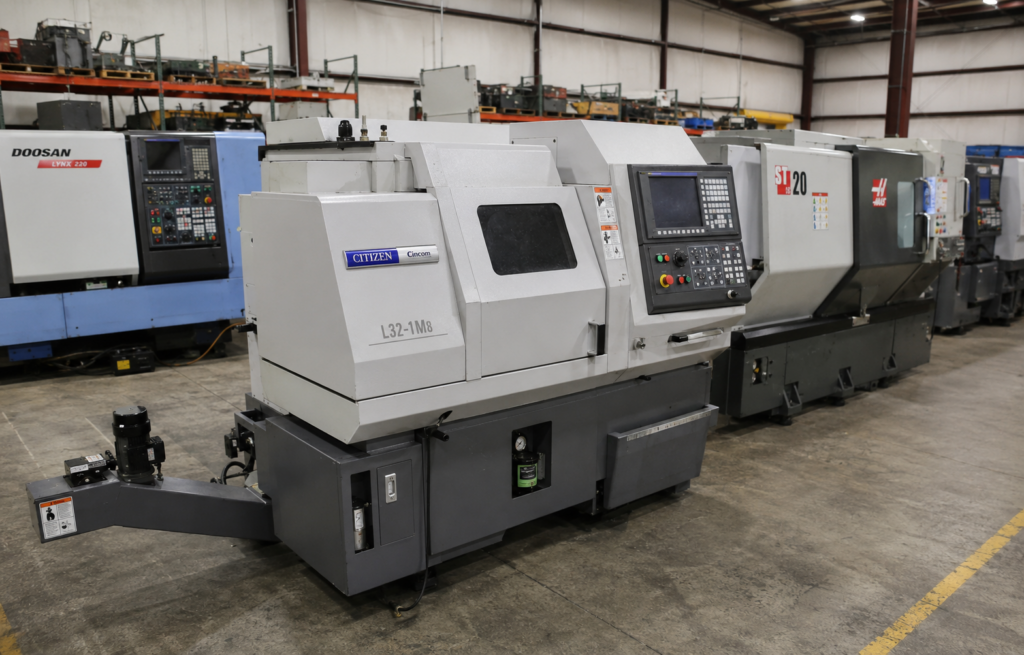
CITIZEN CINCOM L32-1M8 – 2015
USED CITIZEN CINCOM L32-1M8
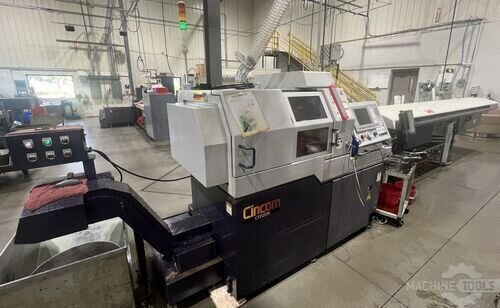
The Citizen Cincom L32-1M8 is a high-performance Swiss-type CNC lathe designed for precision machining of complex, small-diameter components in high-volume production environments. Built by Citizen Machinery, one of the world’s leading manufacturers of Swiss turning centers, the L32-1M8 combines exceptional accuracy, advanced multi-axis machining, and efficient bar-fed production capabilities. It is widely recognized for its ability to produce intricate parts with minimal setup time while maintaining outstanding dimensional consistency.
The Cincom L32-1M8 is designed for manufacturers that require complete machining in a single setup. Equipped with a main spindle, sub-spindle, and multiple live tooling stations, the machine can perform turning, milling, drilling, tapping, threading, cross machining, and back-working operations without transferring parts to secondary equipment. This significantly reduces cycle times while improving part accuracy and production efficiency.
One of the standout features of the L32-1M8 is its simultaneous multi-axis capability, allowing several machining operations to occur at the same time. The guide bushing design provides exceptional rigidity when machining long, slender workpieces, making it ideal for industries where precision and surface finish are critical. Depending on the machine configuration, operators can machine bar stock up to approximately 32 mm (1.25 inches) in diameter while maintaining excellent repeatability during continuous production.
Manufacturers in the medical, aerospace, electronics, automotive, defense, fluid control, and precision engineering industries frequently rely on the Citizen Cincom L32-1M8 for demanding production applications. Typical parts produced include surgical instruments, orthopedic implants, hydraulic fittings, precision shafts, electrical connectors, threaded fasteners, aerospace bushings, valve components, sensor housings, watch components, and other high-precision turned parts.
Purchasing a used Citizen Cincom L32-1M8 allows manufacturers to acquire advanced Swiss machining technology at a significantly lower investment than buying new equipment. Citizen machines are well known for their durability, long service life, and dependable performance, making them highly desirable in the used CNC machine market. Many pre-owned machines remain capable of maintaining tight tolerances and high production rates after years of operation when properly maintained. For machine shops seeking increased productivity, reduced secondary operations, and reliable precision machining, the used Citizen Cincom L32-1M8 remains one of the most sought-after Swiss-type CNC lathes available.
CITIZEN CINCOM L32-1M8 SPECIFICATIONS
Axis
| Specification | Value |
|---|---|
| Machine Type | Swiss-Type CNC Lathe |
| Controlled Axes | Up to 8 Axes |
| Main Spindle | Yes |
| Sub Spindle | Yes |
| Simultaneous Machining | Yes |
| Live Tooling | Yes |
Travels / Work Envelope
| Specification | Value |
|---|---|
| Maximum Bar Capacity | 1.26 in (32 mm) |
| Maximum Turning Length | Approx. 12.6 in (320 mm) with guide bushing |
| Guide Bushing | Standard |
| Guide Bushingless Operation | Available (configuration dependent) |
Table
| Specification | Value |
|---|---|
| Workholding | Collet System |
| Bar Feed Compatibility | Automatic Bar Feeder |
| Maximum Finished Part Diameter | 1.26 in (32 mm) |
Spindle
| Specification | Value |
|---|---|
| Main Spindle Speed | Up to 8,000 RPM |
| Sub Spindle Speed | Up to 8,000 RPM |
| Main Spindle Motor | Approx. 10 HP (7.5 kW) |
| Sub Spindle Motor | Approx. 5 HP (3.7 kW) |
| C-Axis | Standard on Main and Sub Spindles |
Tool Changer
| Specification | Value |
|---|---|
| Turning Tool Stations | Up to 10 |
| Live Tool Stations | Up to 8 |
| Back Working Stations | Available |
| Rotary Live Tools | Standard |
| Tooling Configuration | Modular Multi-Tool Layout |
CNC Control
| Specification | Value |
|---|---|
| CNC Control | Mitsubishi Meldas CNC (varies by configuration) |
| Programming | ISO G-Code |
| Conversational Programming | Supported (control dependent) |
| Networking | Ethernet/RS-232 (configuration dependent) |
Coolant / Chip Management
| Specification | Value |
|---|---|
| Coolant System | High-Pressure Flood Coolant |
| Coolant Tank | Integrated |
| Chip Removal | Automatic Chip Conveyor |
| Coolant Filtration | Standard |
Power Requirements
| Specification | Value |
|---|---|
| Electrical Supply | 200–220 VAC, 3-Phase |
| Connected Load | Approx. 20–25 kVA |
| Air Supply | 70–100 PSI (0.5–0.7 MPa) |
Dimensions
| Specification | Value |
|---|---|
| Floor Space | Approx. 104 × 58 in (2,640 × 1,470 mm) |
| Machine Height | Approx. 76 in (1,930 mm) |
| Machine Weight | Approx. 8,800 lbs (4,000 kg) |
General Information
| Specification | Value |
|---|---|
| Manufacturer | Citizen Machinery |
| Model | Cincom L32-1M8 |
| Machine Category | Swiss-Type CNC Lathe |
| Machining Capability | Turning, Milling, Drilling, Tapping, Threading, Cross Machining, Back Working |
| Primary Industries | Medical, Aerospace, Automotive, Electronics, Defense, Fluid Power |
| Typical Applications | Precision Shafts, Medical Components, Connectors, Bushings, Valve Parts, Hydraulic Fittings, Fasteners |
CITIZEN CINCOM L32-1M8 VS CITIZEN CINCOM L32-1M10 – WHICH ONE TO BUY?
Choosing between the Citizen Cincom L32-1M8 and the Citizen Cincom L32-1M10 depends on the complexity of the parts you manufacture, production volume, and future machining requirements. Both machines belong to the highly regarded L32 series of Swiss-type CNC sliding headstock lathes and share the same maximum machining diameter, spindle capacity, and overall machine platform. They are designed for precision machining in industries such as medical, aerospace, electronics, automotive, and hydraulic component manufacturing.
The L32-1M8 is an excellent choice for shops producing medium to high-volume components with standard turning, drilling, tapping, and milling operations. It offers impressive productivity while maintaining lower acquisition and maintenance costs. For manufacturers producing shafts, pins, connectors, bushings, and precision fasteners, the L32-1M8 delivers outstanding reliability and excellent return on investment.
The L32-1M10 is better suited for manufacturers producing highly complex components requiring additional live tooling, greater machining flexibility, and reduced secondary operations. The expanded tooling configuration allows more machining processes to be completed in one setup, reducing cycle times and improving consistency. Although the initial investment is higher, the additional tooling capabilities can significantly increase productivity for complicated parts.
If your production consists primarily of simple or moderately complex components, the L32-1M8 offers excellent value. However, if your business regularly machines intricate medical, aerospace, or hydraulic parts with multiple cross-holes, angled features, or extensive milling, the L32-1M10 provides greater long-term flexibility. Shops planning future growth often prefer the L32-1M10 because of its expanded machining capabilities and improved process efficiency.
CITIZEN CINCOM L32-1M8 SPINDLE NOT TURNING – CAUSES AND TROUBLESHOOTING
A spindle that refuses to rotate on the Citizen Cincom L32-1M8 can bring production to an immediate halt. Fortunately, most spindle issues originate from electrical, safety, or parameter-related problems rather than complete spindle failure. A systematic troubleshooting approach helps identify the root cause while minimizing downtime.
Begin by checking whether the machine has active alarms. Emergency stop activation, open machine doors, servo alarms, lubrication warnings, or spindle amplifier faults can prevent spindle operation. Verify that all safety interlocks are satisfied before attempting to restart the spindle.
Next, inspect the spindle drive system. Faulty spindle amplifiers, overloaded drives, blown fuses, damaged encoder cables, or loose electrical connections can interrupt spindle movement. Operators should also confirm that hydraulic pressure, pneumatic supply, and lubrication systems are operating within specification, as low pressure may disable spindle functions.
Review the CNC program and machine parameters. Incorrect spindle commands, missing M-codes, improper spindle speed settings, or tool change interruptions may stop spindle rotation. After power failures or battery replacement, axis reference or spindle parameters may also require verification before normal operation resumes. Community discussions also indicate that crashes or encoder-related issues can require re-homing procedures or professional alignment depending on the fault.
If the spindle attempts to rotate but stalls, inspect spindle bearings, belts (if equipped), chucking mechanisms, and workholding for mechanical interference. Unusual noise, vibration, or excessive heat may indicate bearing damage requiring professional service.
Routine inspection, proper lubrication, clean electrical cabinets, and scheduled preventive maintenance greatly reduce unexpected spindle failures. When electrical faults persist or spindle drive alarms remain active, consulting a qualified Citizen service technician is recommended to avoid further machine damage.
CITIZEN CINCOM L32-1M8 MAINTENANCE AND PREVENTIVE CARE GUIDE
Proper preventive maintenance is essential for maximizing the performance, accuracy, and service life of the Citizen Cincom L32-1M8. As a high-precision Swiss-type CNC lathe, the machine relies on clean lubrication systems, accurate guide bushings, stable spindle performance, and reliable servo operation to maintain micron-level machining accuracy.
Daily maintenance should include cleaning chips from the machining area, checking coolant concentration and level, inspecting lubrication oil levels, and verifying hydraulic and pneumatic pressures. Operators should also inspect guide bushings, collets, cutting tools, and workholding components for wear before beginning production.
Weekly maintenance should include cleaning electrical cabinet filters, inspecting coolant pumps, checking chip conveyors, examining coolant nozzles, and verifying automatic lubrication cycles. Tool holders, live tooling, and spindle interfaces should be inspected for contamination that could affect machining accuracy.
Monthly inspections should focus on spindle runout, servo axis performance, belt condition where applicable, electrical connections, encoder cables, pneumatic fittings, and coolant filtration systems. Machine leveling and thermal stability should also be verified to maintain consistent dimensional accuracy during long production runs.
Preventive maintenance also includes monitoring spindle vibration, checking backlash, inspecting ball screws and linear guideways, and replacing worn seals before failures occur. Keeping the machine clean significantly reduces contamination that can damage precision components.
Maintaining detailed maintenance records allows operators to identify recurring issues before they become costly repairs. Shops that follow a structured preventive maintenance schedule typically experience longer spindle life, improved machining accuracy, reduced downtime, and lower overall operating costs, making the Citizen Cincom L32-1M8 a dependable production machine for years of continuous operation.
FAQ
What is the Citizen Cincom L32-1M8?
The Citizen Cincom L32-1M8 is a high-precision Swiss-type CNC sliding headstock lathe designed for machining complex components up to 32 mm in diameter. It combines turning, milling, drilling, tapping, and secondary machining operations within a single setup, making it widely used in the medical, aerospace, automotive, electronics, and precision manufacturing industries.
What are the most common problems with the Citizen Cincom L32-1M8?
Common issues include spindle alarms, servo alarms, encoder errors, tool wear, guide bushing wear, coolant contamination, lubrication faults, hydraulic pressure problems, sub-spindle alignment issues after machine crashes, and occasional parameter or battery-related alarm conditions. Most problems can be minimized through regular preventive maintenance, proper machine setup, routine inspection, and adherence to recommended service schedules.
Related Products
-
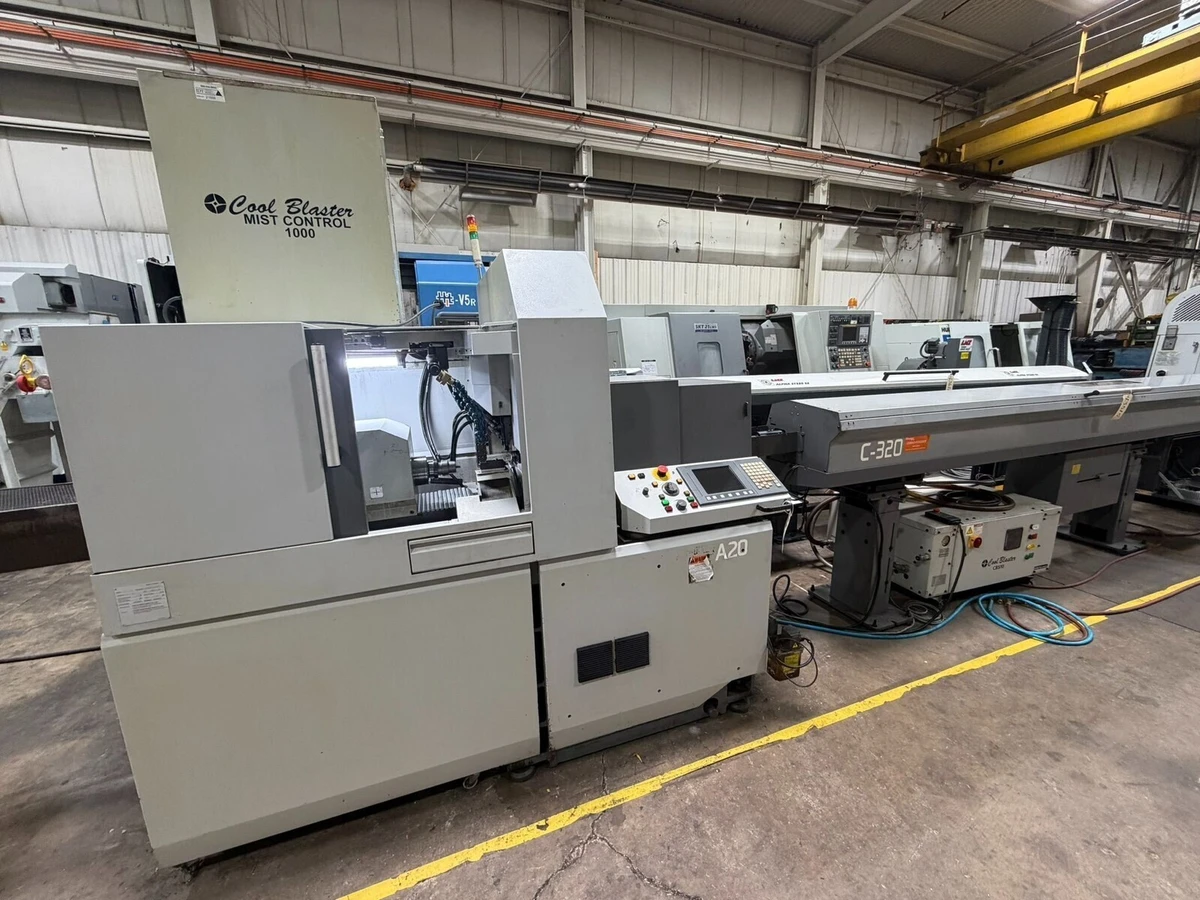
CITIZEN - A20-3F7
VIEW MACHINE -
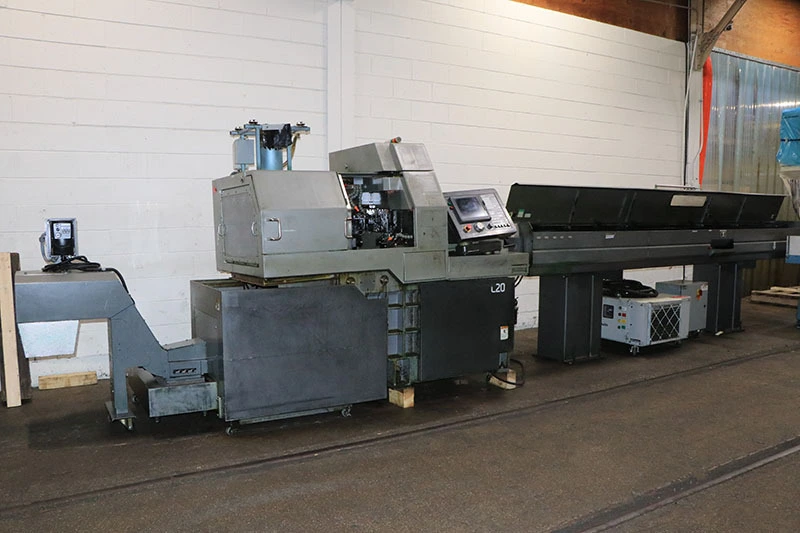
CITIZEN - L20VIII
VIEW MACHINE -
CITIZEN - L20VII 5M7
VIEW MACHINE -
CITIZEN - A20VII
VIEW MACHINE