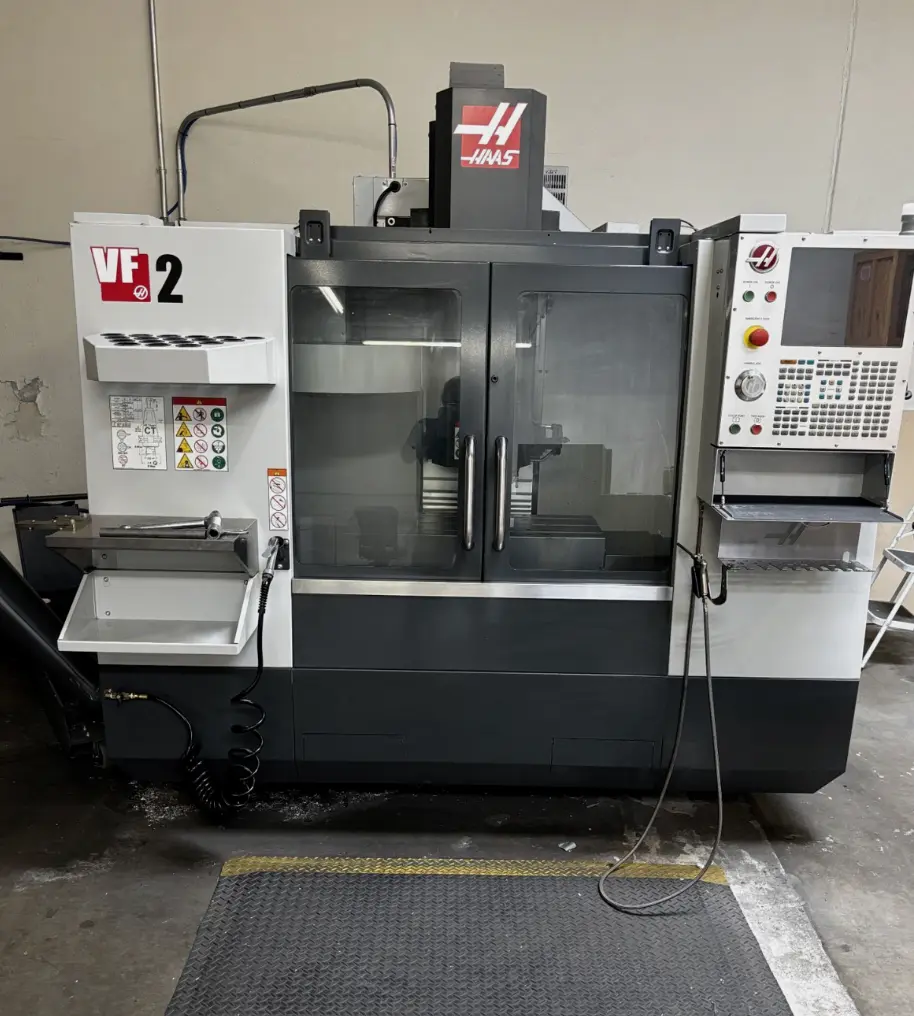
USED HAAS VF2 2018
The 2018 HAAS VF2 is a high-performance 3-axis Vertical Machining Center (VMC) engineered for precision machining, reliability, and maximum productivity. As the flagship model in the Haas VF Series, the VF2 combines a rigid cast-iron construction, precision linear guideways, an inline direct-drive spindle, and the advanced Haas Next Generation Control (NGC) to provide exceptional machining performance for both prototype and production environments. The 2018 HAAS VF2 is widely used in aerospace, automotive, medical, mold making, energy, electronics, and general manufacturing industries where accuracy, repeatability, and dependable operation are critical.
The machine offers 30 inches of X-axis travel, 16 inches of Y-axis travel, and 20 inches of Z-axis travel, providing an ideal work envelope for machining tooling, fixtures, production components, mold inserts, aerospace parts, and precision assemblies. Its rigid machine structure minimizes vibration during aggressive cutting operations, while oversized ballscrews and precision linear guideways ensure excellent positioning accuracy and repeatability. Whether machining aluminum, stainless steel, titanium, cast iron, engineering plastics, or hardened alloys, the 2018 HAAS VF2 consistently delivers outstanding surface finishes and tight machining tolerances.
Powering the machine is a 30 HP, 8,100 RPM CAT40 inline direct-drive spindle capable of producing approximately 90 ft-lb of torque. The standard 20-pocket automatic carousel tool changer provides reliable tool changes, while 1,000 IPM rapid traverse rates reduce non-cutting time and improve overall productivity. The 2018 HAAS VF2 also features the Next Generation Control, offering faster processing, a modern touchscreen-style interface, Ethernet networking, USB connectivity, Wi-Fi capability, HaasConnect remote monitoring, HaasDrop file transfer, and expanded program memory. Many used machines are equipped with valuable factory-installed options such as through-spindle coolant (TSC), Wireless Intuitive Probing System (WIPS), programmable coolant nozzle, chip conveyor, fourth-axis preparation, and rotary tables.
The intuitive Haas Next Generation Control simplifies programming and machine setup while improving machining efficiency. Combined with worldwide Haas parts availability and factory support, the 2018 HAAS VF2 continues to be one of the most desirable machining centers available in the used CNC market.
HAAS VF2 SPECIFICATIONS
HAAS VF2 – AXIS
| Specification | Value |
|---|---|
| Number of Axes | 3 Axis |
| X-Axis Travel | 30 in |
| Y-Axis Travel | 16 in |
| Z-Axis Travel | 20 in |
| Rapid Traverse (X/Y/Z) | 1,000 IPM |
HAAS VF2 – AXIS TRAVELS / WORK ENVELOPE
| Specification | Value |
|---|---|
| X Travel | 30 in (762 mm) |
| Y Travel | 16 in (406 mm) |
| Z Travel | 20 in (508 mm) |
| Spindle Nose to Table (Maximum) | 24 in |
| Spindle Nose to Table (Minimum) | 4 in |
HAAS VF2 – TABLE
| Specification | Value |
|---|---|
| Table Size | 36 × 14 in |
| Maximum Table Load | 3,000 lbs |
| T-Slots | 3 |
| T-Slot Width | 5/8 in |
HAAS VF2 – SPINDLE
| Specification | Value |
|---|---|
| Maximum Spindle Speed | 8,100 RPM |
| Spindle Power | 30 HP |
| Maximum Torque | 90 ft-lb @ 2,000 RPM |
| Spindle Taper | CAT40 |
| Drive Type | Inline Direct Drive |
HAAS VF2 – TOOL CHANGER
| Specification | Value |
|---|---|
| Tool Capacity | 20 Tools |
| Tool Changer Type | Automatic Carousel |
| Maximum Tool Diameter | 3.5 in |
| Maximum Tool Length | 16 in |
| Maximum Tool Weight | 12 lbs |
| Tool-to-Tool Time | 4.2 sec |
| Chip-to-Chip Time | 4.5 sec |
HAAS VF2 – CONTROL SYSTEM
| Specification | Value |
|---|---|
| CNC Control | Haas Next Generation Control |
| USB Interface | Standard |
| Ethernet Connectivity | Standard |
| Wi-Fi Connectivity | Standard |
| HaasConnect | Standard |
| HaasDrop | Standard |
| Rigid Tapping | Standard |
| Program Memory | 1 GB |
| Fourth-Axis Ready | Optional |
HAAS VF2 – COOLANT / CHIP MANAGEMENT
| Specification | Value |
|---|---|
| Flood Coolant | Standard |
| Coolant Tank Capacity | 55 gal |
| Through-Spindle Coolant | Optional |
| Programmable Coolant Nozzle | Optional |
| Chip Washdown | Standard |
| Chip Auger | Optional |
| Chip Conveyor | Optional |
HAAS VF2 – POWER REQUIREMENTS
| Specification | Value |
|---|---|
| Electrical Supply | 220V / 440V 3-Phase |
| Air Requirement | 100 PSI |
| Main Disconnect | Included |
HAAS VF2 – DIMENSIONS
| Specification | Value |
|---|---|
| Machine Footprint | Approx. 101 × 99 in |
| Machine Height | Approx. 101 in |
| Machine Weight | Approx. 7,800 lbs |
HAAS VF2 – GENERAL INFORMATION
| Specification | Value |
|---|---|
| Manufacturer | Haas Automation |
| Model | VF2 |
| Year | 2018 |
| Machine Type | Vertical Machining Center |
| Spindle Taper | CAT40 |
| CNC Control | Haas Next Generation Control |
| Primary Application | Precision Milling, Drilling & Tapping |
WHY BUY USED HAAS VF2 2018
Purchasing a used 2018 HAAS VF2 allows manufacturers to acquire a modern machining center equipped with the Next Generation Control while avoiding the cost of purchasing a new machine. The combination of proven mechanical reliability, advanced control technology, and a versatile machining envelope makes the VF2 suitable for virtually any machining application.
Many used machines are equipped with premium factory options including through-spindle coolant, Wireless Intuitive Probing System (WIPS), rotary tables, chip conveyors, programmable coolant nozzles, and fourth-axis preparation. These options improve productivity, reduce setup time, and increase machining flexibility. Haas machines are also known for affordable maintenance, readily available replacement parts, and strong worldwide service support, making the 2018 HAAS VF2 a smart long-term investment.
HOW MUCH DOES A USED HAAS VF2 2018 COST?
The price of a used 2018 HAAS VF2 depends on spindle hours, overall machine condition, installed options, tooling packages, automation equipment, and maintenance history. Machines equipped with through-spindle coolant, WIPS, rotary tables, chip conveyors, and documented service records generally command higher resale values.
Before purchasing, buyers should inspect spindle condition, machine geometry, linear guideways, lubrication system, tool changer operation, CNC diagnostics, and maintenance documentation. Machines with lower operating hours and complete maintenance records typically provide the greatest long-term value.
A used 2018 HAAS VF2 typically sells between $45,000 and $70,000, depending on spindle hours, tooling, installed options, machine condition, and maintenance history.
INDUSTRIES THAT USE HAAS VF2
- Aerospace Manufacturing
- Automotive Manufacturing
- Medical Device Manufacturing
- Mold & Die Industry
- Tool & Die Shops
- Industrial Equipment Manufacturing
- Electronics Manufacturing
- Energy Equipment Manufacturing
- Contract Manufacturing
- Precision Engineering
- General Manufacturing
- Research & Development
TYPICAL PARTS HAAS VF2 CAN PRODUCE
- Aerospace Components
- Medical Device Components
- Mold Inserts
- Tooling Plates
- Precision Fixtures
- Hydraulic Manifolds
- Automotive Components
- Electronic Housings
- Prototype Parts
- Production Fixtures
- Precision Machine Components
- Custom Machined Parts
WHY CHOOSE HAAS VF2 2018
The 2018 HAAS VF2 combines a rigid cast-iron structure, 30 HP inline direct-drive spindle, modern Haas Next Generation Control, and proven Haas engineering into one of the industry’s most versatile vertical machining centers. Its combination of machining accuracy, ease of operation, low maintenance requirements, and compatibility with numerous productivity-enhancing options makes it an excellent solution for both job shops and high-volume manufacturers.
Manufacturers continue to choose the HAAS VF2 because of its outstanding reliability, excellent parts availability, affordable operating costs, and strong resale value. Whether machining aerospace components, tooling, molds, medical parts, or precision production assemblies, the used 2018 HAAS VF2 delivers exceptional productivity, precision, and long-term return on investment.
HAAS VF-2 VS HAAS VF-2YT – STANDARD VF-2 VS EXTENDED Y-AXIS MODEL
The HAAS VF-2 and VF-2YT are closely related vertical machining centers, with the primary difference being the amount of Y-axis travel available. The standard VF-2 provides 30 inches of X-axis travel, 16 inches of Y-axis travel, and 20 inches of Z-axis travel. The VF-2YT increases Y-axis travel to 20 inches while retaining the same 30-inch X-axis and 20-inch Z-axis travel. Haas specifically identifies the VF-2YT as the extended-Y-axis version of the standard VF-2.
The additional four inches of Y-axis movement can make a meaningful difference when machining wider workpieces, larger fixtures, or components that require more positioning room. The VF-2’s 16-inch Y-axis envelope is adequate for many brackets, plates, housings, fixtures, and general-purpose machining jobs. However, a shop that frequently encounters parts approaching the limits of that workspace may benefit from the additional capacity of the VF-2YT.
The two machines are otherwise quite similar in their current standard configurations. Haas lists both with a 30-hp spindle, 8,100-rpm maximum spindle speed, 40-taper tooling, three axes, and a 20-tool carousel changer. Both also have a 36-inch-long table, although the VF-2YT’s table is wider to accommodate its additional Y-axis travel.
For a shop primarily machining compact components, the standard VF-2 can be the more efficient choice because its smaller work envelope requires less machine space. If wider components are common, the VF-2YT provides additional flexibility without moving into a substantially larger machine class.
Used-machine buyers should also remember that specifications can vary by production year and installed options. Inspect spindle condition, axis movement, backlash, tool changer operation, control condition, lubrication, and maintenance history before choosing between the two models.
HAAS VF-2 TOOL CHANGER NOT INDEXING – CAUSES AND REPAIRS
A HAAS VF-2 tool changer that refuses to index can prevent automatic tool changes and interrupt an entire machining cycle. Because indexing depends on coordinated mechanical movement, sensors, control commands, spindle orientation, and supporting systems, the problem should be diagnosed systematically rather than assuming that the carousel motor has failed.
Begin by checking the machine control for an active alarm. The alarm number and description can indicate whether the problem involves tool-changer positioning, a sensor, spindle orientation, an electrical fault, or another machine condition. Record the message before resetting the control, particularly if the failure occurs repeatedly.
Next, determine exactly what happens when an index command is initiated. If the carousel does not move at all, the investigation should focus on the command, drive or motor system, electrical supply, and related control signals. If the carousel begins moving but stops before reaching the next position, mechanical resistance, sensor feedback, or positioning problems may be involved.
The tool changer should be inspected for chips, coolant residue, damaged toolholders, and other obstructions. Foreign material can interfere with carousel movement or prevent a tool pocket from reaching its correct position. On machines that have experienced heavy use, mechanical wear or misalignment can also affect indexing accuracy.
Position sensors and switches are particularly important because the control needs confirmation that the carousel has reached the required location. A contaminated, damaged, incorrectly adjusted, or failed sensor may make the machine appear mechanically functional while preventing the control from completing the sequence.
Spindle orientation should also be considered. The tool changer and spindle must coordinate correctly during an automatic tool change. An orientation problem can therefore prevent the sequence from progressing even when the carousel itself is operational.
Repairs may involve cleaning, sensor replacement, mechanical adjustment, electrical troubleshooting, or replacement of worn components. The correct repair depends on the failed stage of the indexing sequence.
Avoid forcing the carousel or repeatedly commanding tool changes when the mechanism is jammed. Doing so can increase damage. A qualified technician should follow the machine’s service procedures when electrical, pneumatic, or mechanical components require intervention.
HAAS VF-2 SPARE PARTS AVAILABILITY AND WHERE TO SOURCE COMPONENTS
Spare parts availability is an important consideration when purchasing or maintaining a HAAS VF-2, particularly when evaluating an older used machine. The VF-2 has been produced in multiple configurations and generations, so the correct replacement component depends on the machine’s serial information, production details, control generation, and installed options. Haas itself notes that standard specifications can vary when optional equipment is installed.
Common replacement categories include spindle components, axis-system parts, tool changer components, lubrication equipment, coolant-system parts, sensors, switches, electrical components, belts, hoses, filters, seals, and other service items. Some parts are routine wear items, while others may only be required following a specific failure.
The first sourcing option should generally be the manufacturer or an authorized Haas service channel. This provides the best opportunity to identify the correct component for the specific machine configuration. Haas provides machine-specific documentation and service resources that can help technicians identify applicable components.
Specialized CNC parts suppliers can also be useful, particularly for commonly replaced wear items and components that have established aftermarket equivalents. However, buyers should verify compatibility carefully rather than purchasing solely because a component is described as fitting a “VF-2.” Machines carrying the same model name can differ substantially by year and configuration.
Used or refurbished components may provide another option when repairing older equipment. These can be particularly useful for reducing repair costs, but condition, testing, warranty coverage, and compatibility should be confirmed before purchase.
When sourcing a replacement, collect the machine model, serial number, control generation, production information, and details of the failed component. Photographs can also help identify mechanical or electrical parts, but they should not replace verification against the appropriate documentation.
For businesses operating used VF-2 machines, maintaining an inventory of commonly required consumables and wear items can reduce downtime. Keeping records of previous repairs is equally valuable because recurring failures may indicate an underlying mechanical, electrical, lubrication, or maintenance issue rather than an isolated bad component.
HOW MANY AXES DOES THE HAAS VF-2 HAVE?
The standard HAAS VF-2 is a 3-axis CNC vertical machining center. Haas lists the current VF-2 specification as three axes, with 30 inches of X-axis travel, 16 inches of Y-axis travel, and 20 inches of Z-axis travel.
The three primary axes provide the machine’s basic linear positioning capability. The X-axis controls movement across the table from side to side, the Y-axis provides front-to-back positioning, and the Z-axis controls vertical movement between the spindle and workpiece. Coordinated movement across these axes allows the VF-2 to perform a wide variety of milling operations.
This three-axis configuration is sufficient for many common machining applications. A VF-2 can perform face milling, pocketing, drilling, tapping, contouring, slotting, and other operations without requiring the workpiece itself to rotate. It is therefore suitable for many prismatic components used in industrial equipment, tooling, automotive applications, fabrication, and general manufacturing.
The machine can also be equipped with additional equipment that expands what can be accomplished. A rotary table or fourth-axis attachment can provide controlled rotational positioning of a workpiece, allowing additional faces or features to be machined with fewer manual setups. However, adding rotary equipment does not mean the base VF-2 itself is originally a four-axis machine.
The VF-2YT is also listed by Haas as a three-axis machine. Its primary difference from the standard VF-2 is increased Y-axis travel rather than an additional machining axis. The VF-2YT provides 30 inches of X travel, 20 inches of Y travel, and 20 inches of Z travel.
When evaluating a used VF-2, it is therefore important to distinguish between the machine’s standard three linear axes and any optional rotary equipment that may be included with a particular machine. The presence of a fourth-axis rotary unit can substantially expand production capability, but the exact configuration should be verified before purchasing.
WHY IS MY HAAS VF-2 TOOL CHANGER NOT WORKING?
A HAAS VF-2 tool changer that is not working can result from several different conditions, including sensor faults, mechanical interference, spindle-orientation problems, electrical issues, insufficient air pressure, incorrect positioning, or worn tool-changer components. The most effective troubleshooting method is to identify exactly where the automatic tool-change sequence stops.
Start by checking the CNC control for alarms. The displayed alarm can provide valuable information about what the machine believes has failed. Do not rely only on the general symptom of “tool changer not working.” Determine whether the problem occurs when the carousel rotates, when the tool arm moves, when the spindle releases a tool, or when the machine attempts to complete the tool-change sequence.
The carousel itself should be inspected for physical obstructions. Chips and coolant residue can accumulate around moving components and may interfere with proper movement. Tool pockets and toolholders should also be checked for damage or incorrect positioning.
If the carousel moves but does not stop at the correct pocket, the problem may involve indexing feedback, sensors, switches, mechanical adjustment, or the drive mechanism. A sensor that does not correctly report the carousel’s position can prevent the control from continuing the sequence.
Spindle orientation is another important consideration. Automatic tool changes require the spindle to reach the correct orientation before the tool can be released or exchanged. An orientation-related problem may therefore appear to be a tool-changer failure even when the actual issue is associated with the spindle system.
Air pressure and pneumatic functions should also be verified where applicable. The machine requires adequate air supply for certain functions, and Haas currently specifies a minimum air pressure of 80 psi for the VF-2.
Older VF-2 machines may additionally experience wear in mechanical components, sensors, switches, or electrical connections. Repairs can range from cleaning and adjustment to replacing a failed sensor or worn mechanical component.
Do not repeatedly force an unsuccessful tool change or manually override safety functions. If the tool changer remains in an abnormal position, follow the machine-specific recovery procedure or have a qualified CNC technician diagnose it. This approach reduces the risk of turning a relatively small tool-changer fault into damage involving the spindle, tooling, or carousel mechanism.
Related Products
-
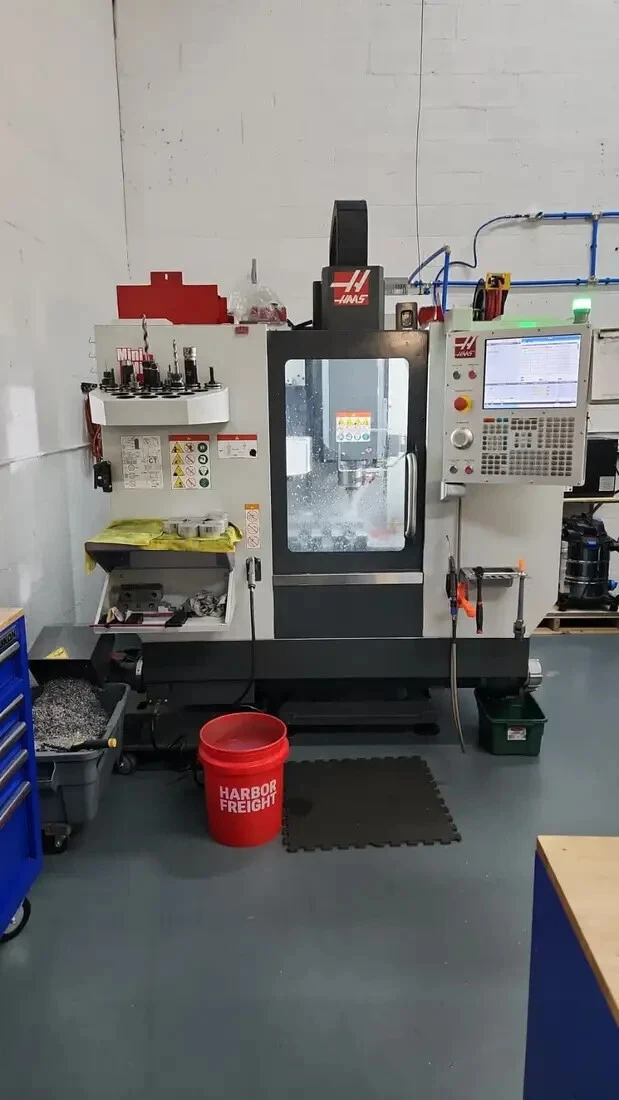
HAAS - MINI MILL
VIEW MACHINE -
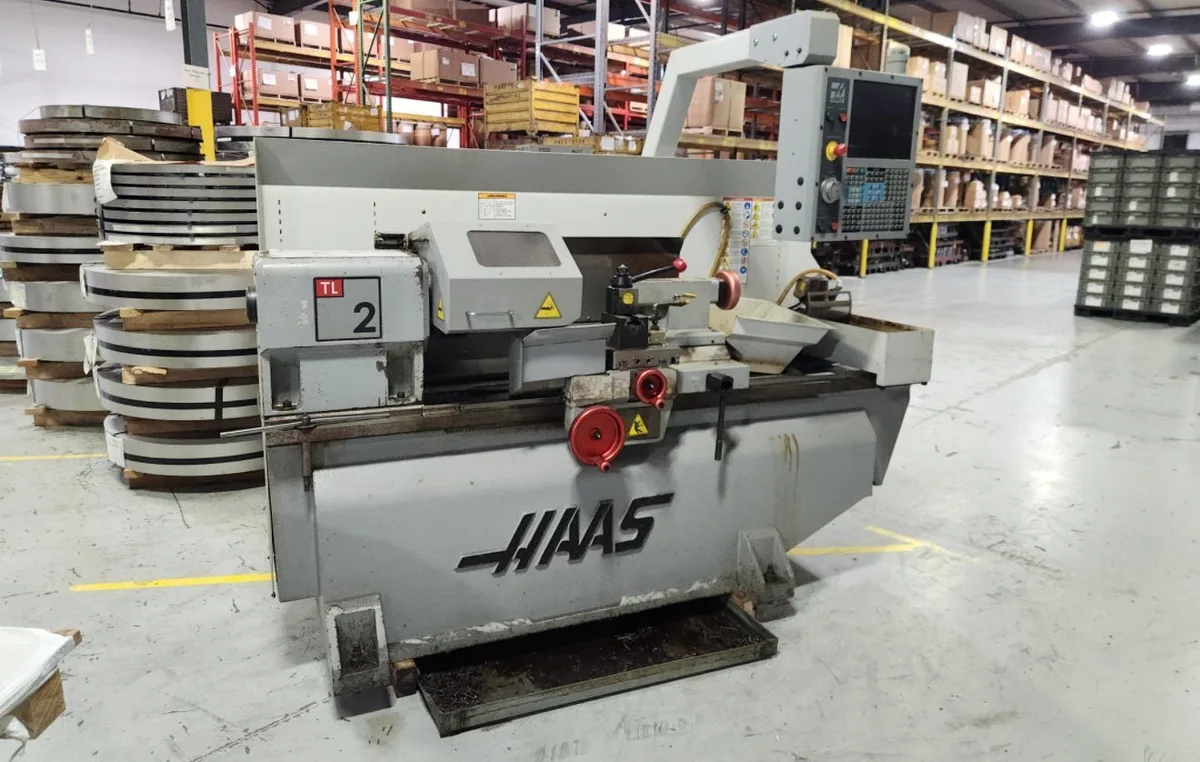
HAAS - TL2
VIEW MACHINE -
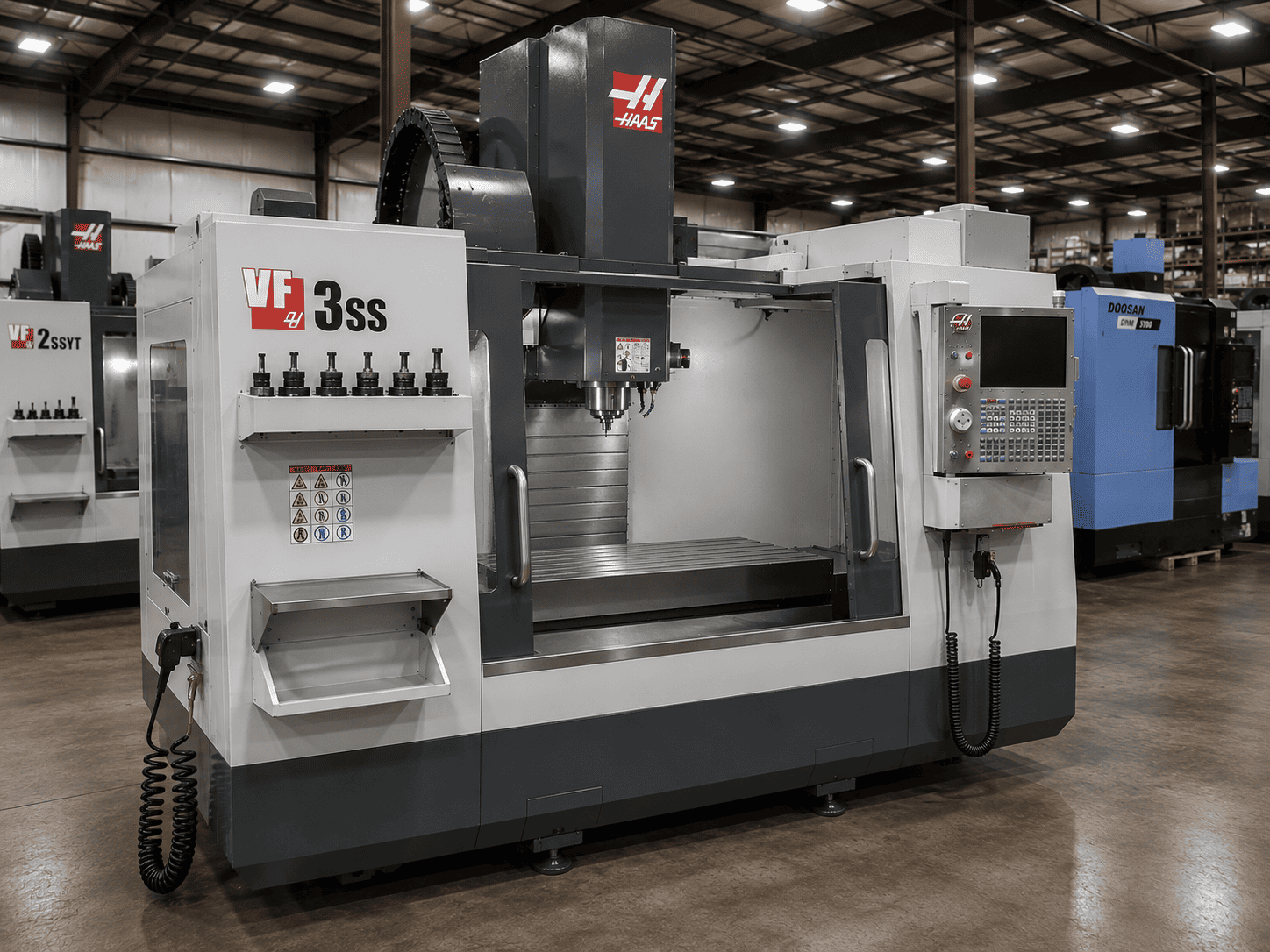
HAAS - VF3SS
VIEW MACHINE -
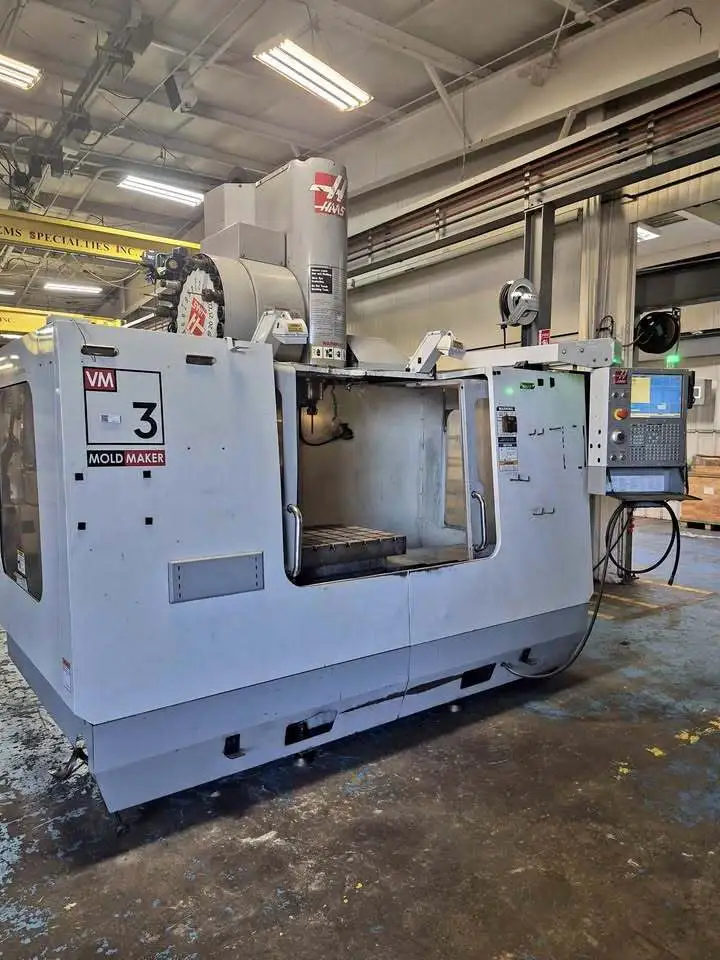
HAAS - VM3
VIEW MACHINE