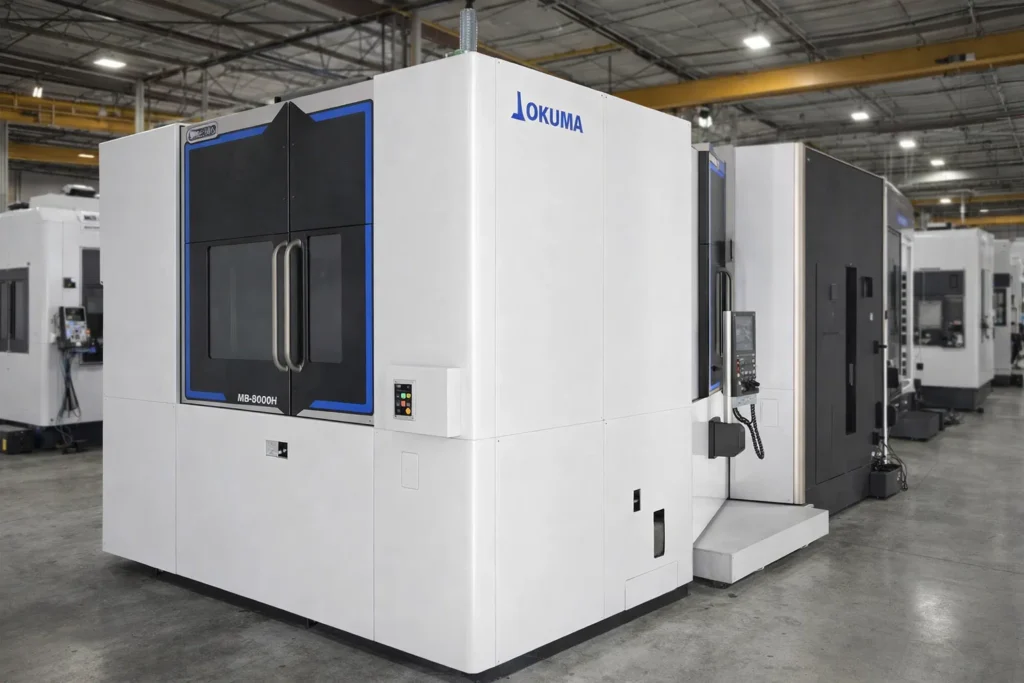
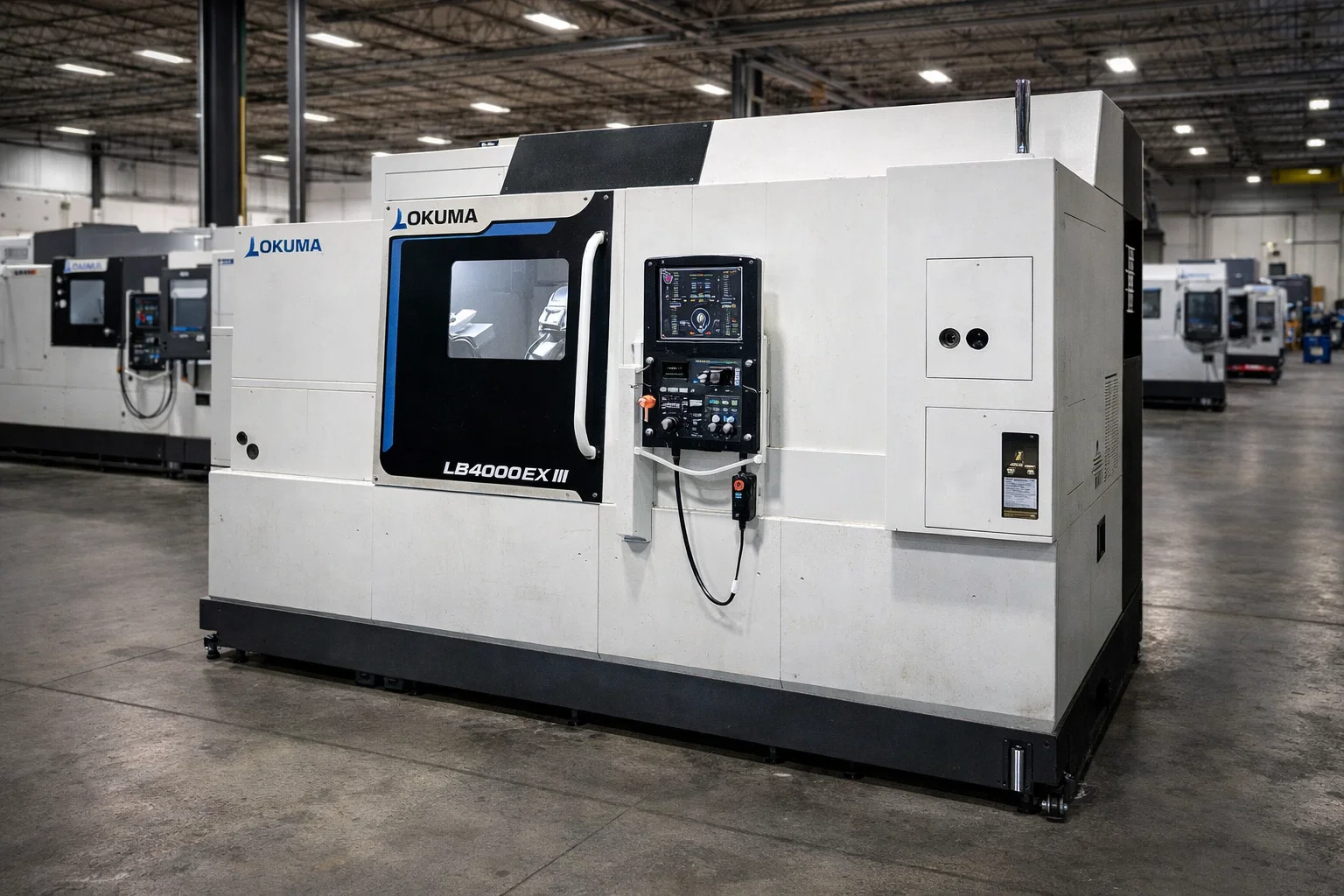
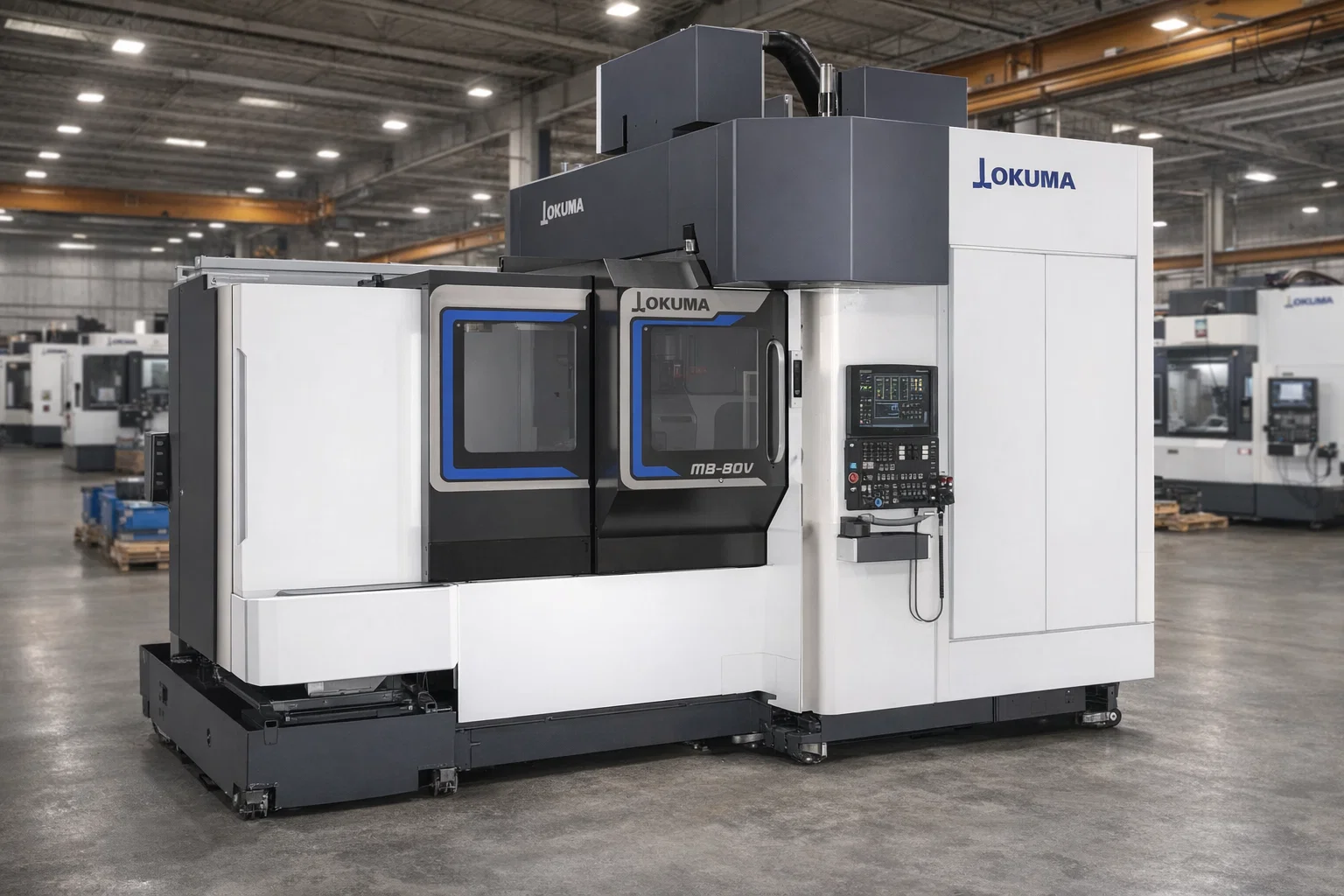
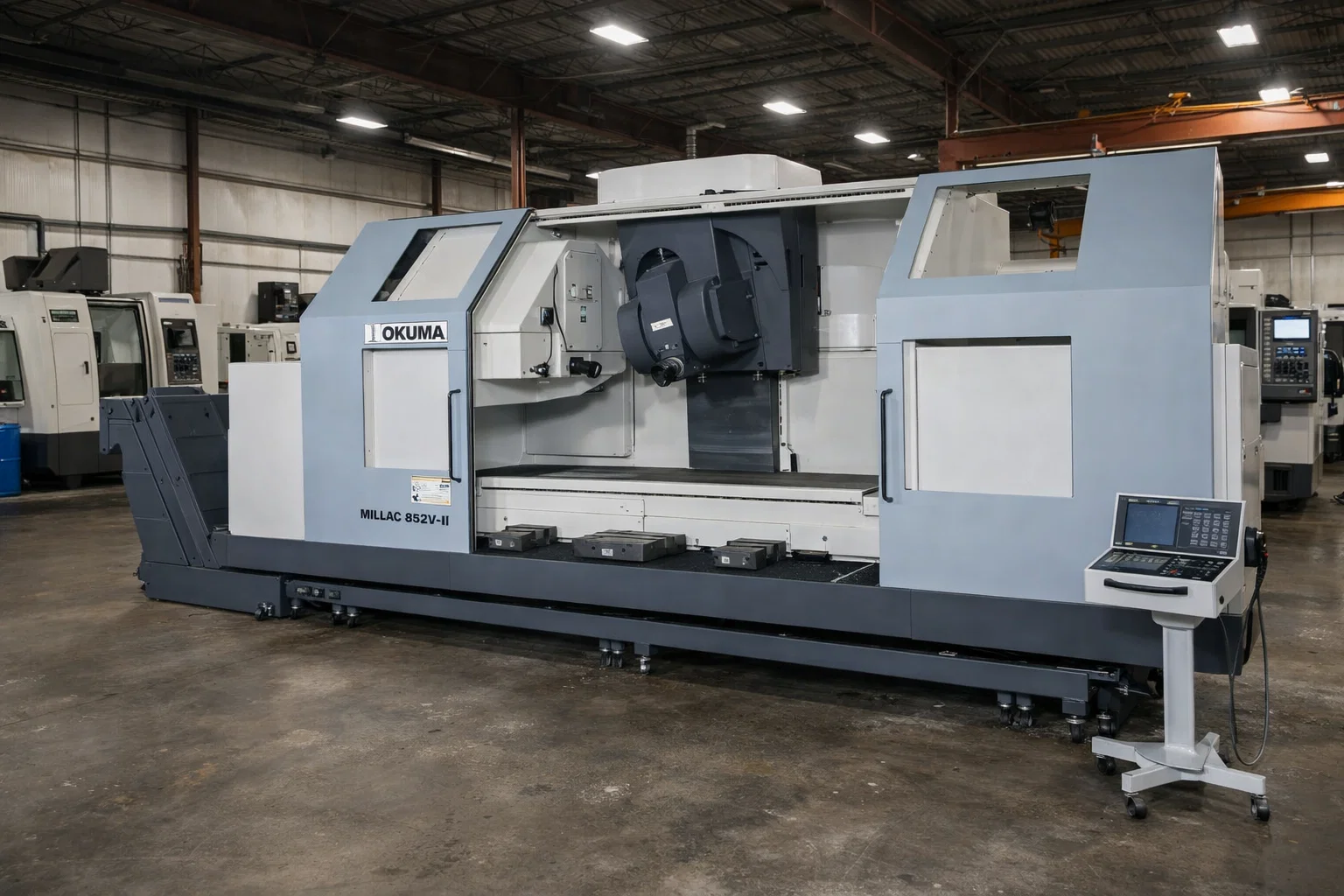
The Okuma MA-8000H is a large-format horizontal machining center (HMC) specifically engineered for machining medium-to-large components with high accuracy, rigidity, and productivity. As part of Okuma’s MA-H series, it is designed to handle demanding applications such as heavy equipment, aerospace structures, energy components, and large automotive parts. The machine features an 800 mm pallet size and a substantial work envelope, with axis travels of approximately 1,400 mm (X), 1,200 mm (Y), and 1,350 mm (Z), allowing it to accommodate large and complex workpieces.
A key strength of the MA-8000H is its versatility in cutting performance. It offers spindle options ranging from 6,000 rpm to 12,000 rpm, with high torque capabilities for heavy-duty cutting as well as sufficient speed for finishing operations. The machine is capable of handling a wide range of materials, from steel to aluminum and even difficult-to-machine alloys.
Thermal stability is a defining feature, supported by Okuma’s Thermo-Friendly Concept and double-sleeve spindle cooling system, which minimize thermal deformation and ensure consistent dimensional accuracy during long machining cycles. Additionally, the MA-8000H incorporates high-speed axis feeds of around 60 m/min and efficient chip evacuation systems, enabling extended cutting time with minimal interruption.
The machine is also highly automation-ready, supporting pallet changers, flexible manufacturing systems (FMS), and robotic integration. This makes it ideal for lights-out manufacturing where maximizing spindle uptime and cutting time is critical. With its combination of power, size, and advanced engineering, the MA-8000H is positioned as a high-capacity solution for manufacturers requiring consistent performance in large-part machining environments.
OKUMA MA-8000HSPECIFICATIONS
OKUMA MA-8000H – AXIS
X-Axis
Y-Axis
Z-Axis
B-Axis (Rotary Table)
OKUMA MA-8000H – AXIS TRAVELS
X-Axis Travel: 1,400 mm (55.12 in)
Y-Axis Travel: 1,200 mm (47.24 in)
Z-Axis Travel: 1,350 mm (53.15 in)
B-Axis Rotation: 1° Indexing (360°)
OKUMA MA-8000H – CAPACITY
Maximum Workpiece Diameter: 1,450 mm
Maximum Workpiece Height: 1,450 mm
Maximum Workpiece Weight: Up to 3,000 kg (optional capacity)
OKUMA MA-8000H – SPINDLE
Spindle Speed: 6,000 RPM (Standard)
Optional Speeds: 10,000 / 12,000 RPM
Spindle Taper: BT50 / CAT50
Spindle Motor Power: 30/22 kW (Standard), higher optional
Buying a used Okuma MA-8000H can be a highly strategic investment for manufacturers needing large-capacity machining without the significant capital cost of a new machine. Okuma machines are known for their robust construction, long operational life, and ability to maintain precision even after years of use, making them particularly attractive in the secondary market.
One of the primary benefits is cost savings. Large-frame HMCs like the MA-8000H represent a major investment when purchased new, especially when equipped with automation systems and large tool magazines. Purchasing a used unit allows businesses to access the same machining capacity—large work envelopes, high torque spindles, and automation compatibility—at a significantly reduced cost, improving capital efficiency.
Cutting time is one of the most important factors when evaluating a used MA-8000H. Machines with lower spindle hours generally retain better accuracy and require less immediate maintenance. For example, a machine from the early 2010s with moderate cutting time may provide more reliable performance than a newer machine that has been heavily used in continuous production. Components such as the spindle, guideways, and ball screws are directly affected by cutting time, making machine history critical.
Another advantage is scalability and upgrade potential. Many MA-8000H machines can be integrated with pallet pools or retrofitted with newer control systems, allowing them to meet modern production requirements. Okuma’s continued support and parts availability further reduce the risk associated with older equipment.
From a financial perspective, buying used significantly shortens the return-on-investment cycle. With lower upfront costs and the ability to sustain long cutting times, a used MA-8000H can quickly contribute to production output and profitability, especially in industries requiring large-part machining and continuous operation.
HOW MUCH DOES A USED OKUMA MA-8000HCOST?
The cost of a used Okuma MA-8000H varies depending on age, configuration, condition, and most importantly, cutting time (spindle hours). As one of the larger machines in the MA-H series, it typically commands higher prices than smaller HMCs, but also delivers significantly greater capacity and productivity.
Machines built before 2000 (or earlier-generation large Okuma HMCs comparable to the MA-8000H platform) generally range from $40,000 to $100,000. These machines are the most affordable but often come with older control systems and higher wear levels. Cutting time is critical in this category—machines with high spindle hours may require major refurbishment, while low-hour units can still be suitable for less demanding applications.
Models produced between 2000 and 2010 typically range from $100,000 to $220,000. This segment often offers the best balance between price and performance. These machines benefit from improved control systems, better thermal stability, and more efficient machining capabilities. Units with low to moderate cutting time are especially desirable, as they can deliver strong productivity with relatively lower maintenance risk.
Machines from 2010 to 2025 generally range from $220,000 to $500,000 or more, depending on configuration, spindle options, tool capacity, and automation integration. These newer machines include advanced features such as energy-efficient systems, improved chip management, and enhanced automation compatibility, making them ideal for continuous production environments.
Cutting time remains the most important pricing factor. A newer machine with excessive spindle hours may be less valuable than an older machine with minimal use. Buyers should carefully evaluate spindle hours, maintenance history, and machine condition to determine true value and ensure long-term reliability.