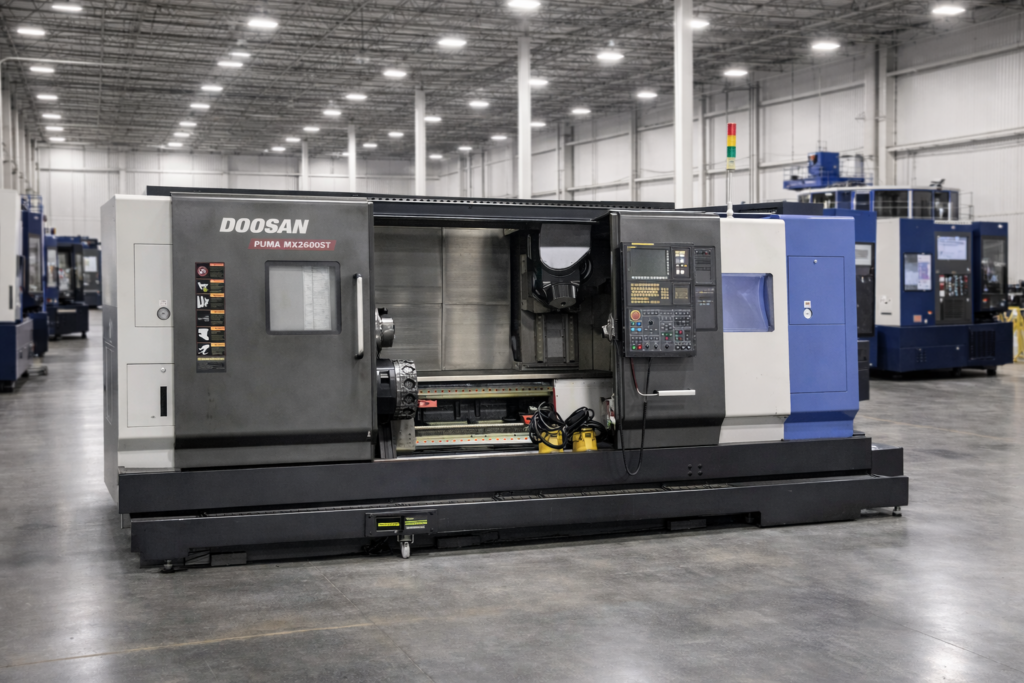
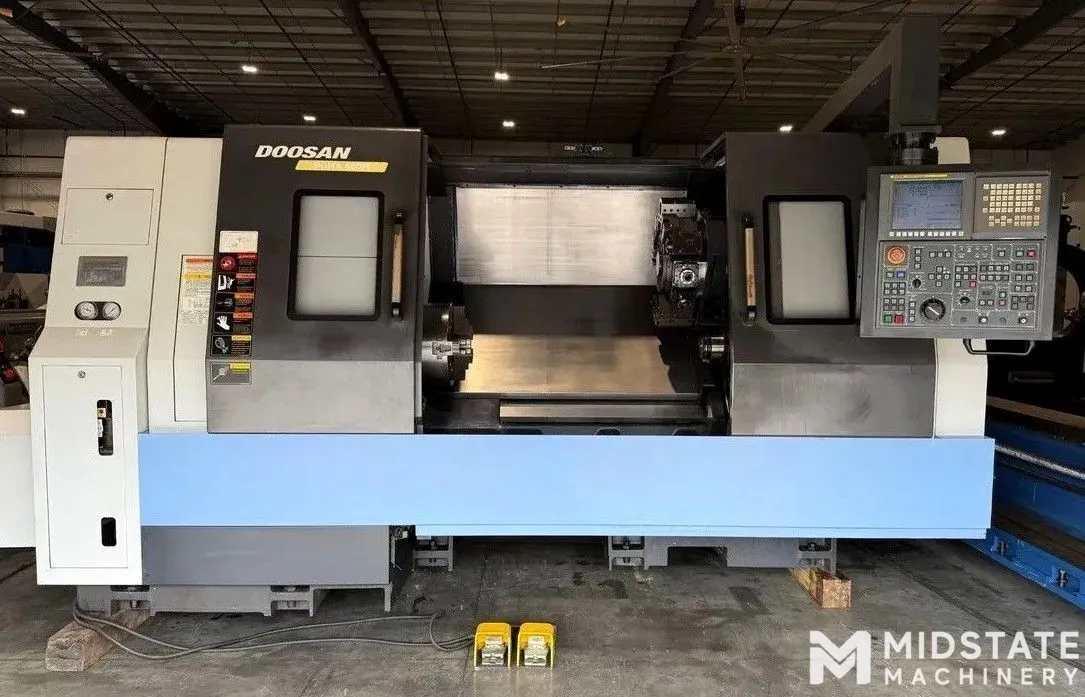
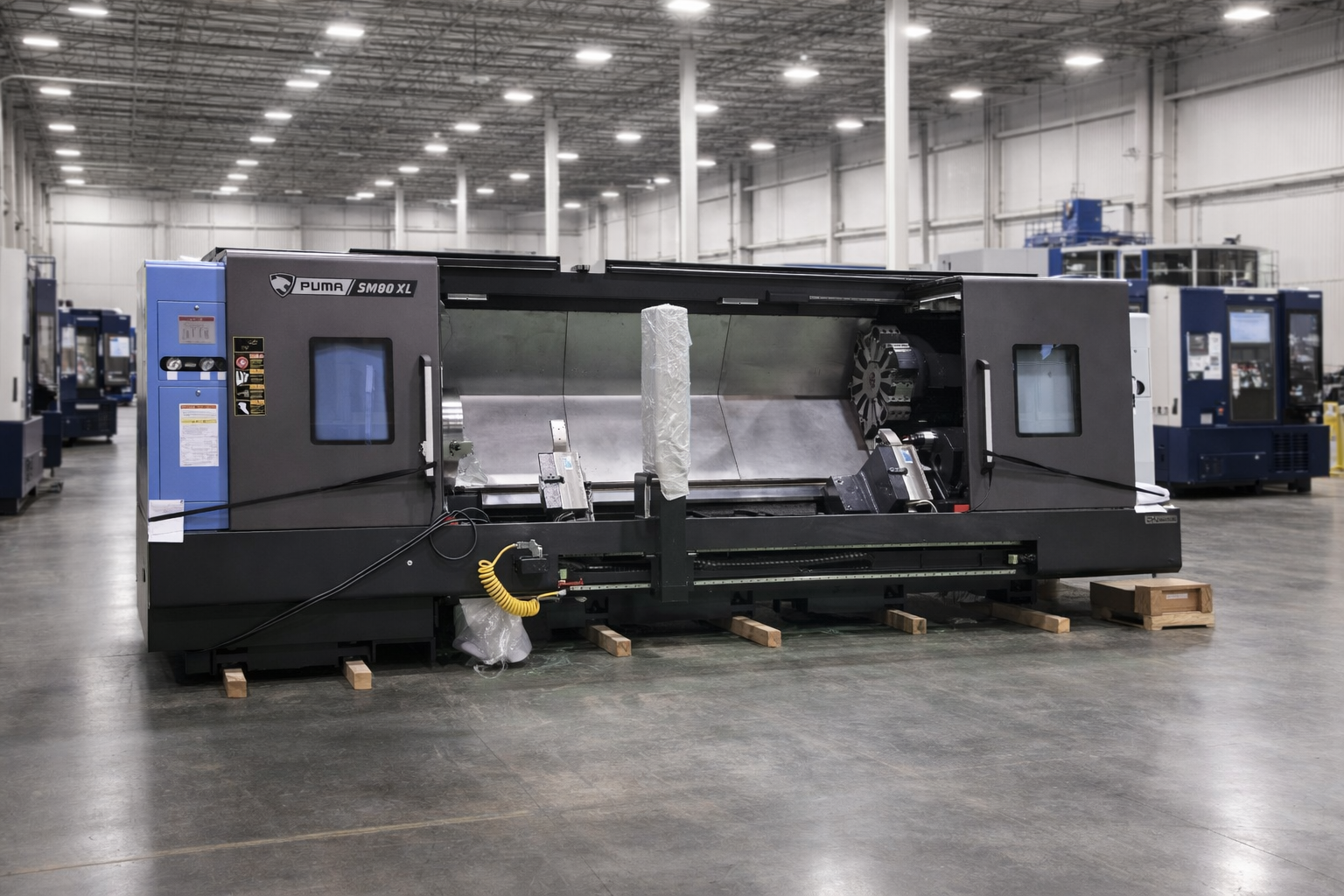
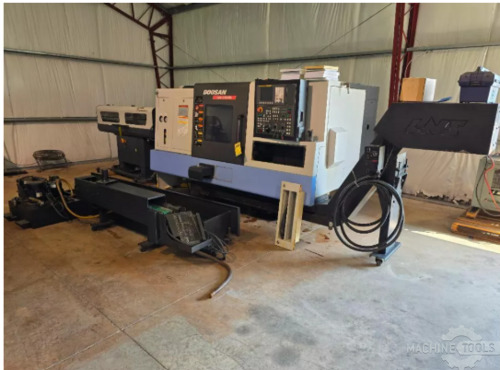
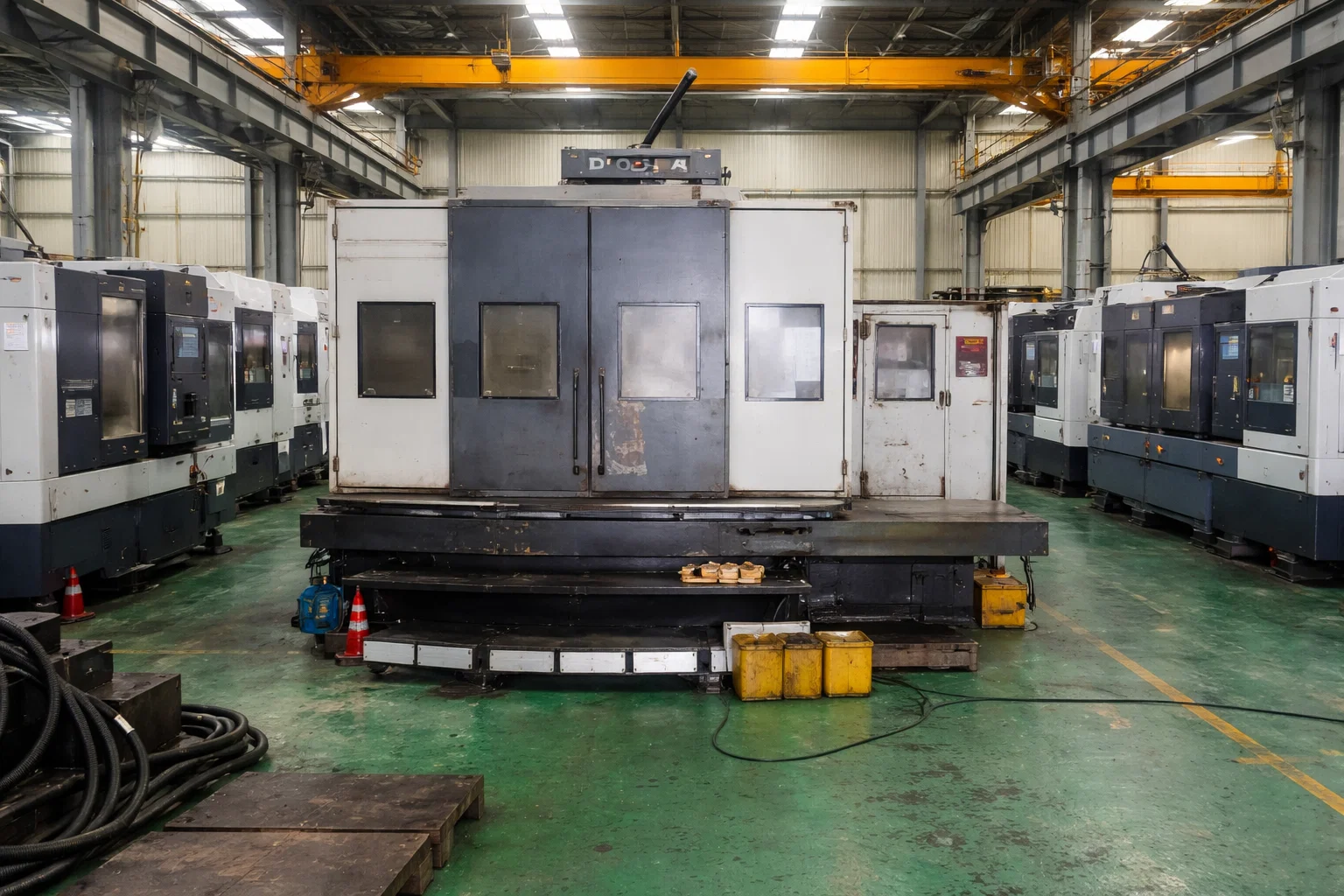
The Doosan Puma MX2600ST is a high-end multi-tasking CNC turning and milling center designed for complex, high-precision machining in a single setup. As part of Doosan’s advanced MX series, it integrates a main turning spindle, a high-speed B-axis milling spindle, and a sub-spindle, allowing full part completion without secondary operations. Built on a rigid slant-bed structure with box guideways, the machine delivers excellent stability, vibration control, and long-term accuracy, even under demanding cutting conditions.
The MX2600ST typically offers a maximum turning diameter of approximately 700–760 mm and a turning length of around 1,500–1,540 mm, making it ideal for medium-to-large complex components across industries such as aerospace, oil & gas, and precision engineering. The main and sub-spindles can reach speeds of up to 4,000 RPM, while the milling spindle operates at speeds up to 12,000 RPM, enabling efficient milling, drilling, and tapping operations.
Equipped with full C-axis control, a B-axis swiveling head with high positional accuracy, dual turrets, and a large tool magazine (often 40–80 tools), the MX2600ST supports highly complex geometries and multi-axis machining. Advanced CNC controls such as Fanuc or Siemens ensure ease of programming, high-speed processing, and reliable repeatability, making it a powerful solution for modern multi-tasking manufacturing.
Buying a used Doosan Puma MX2600ST is a strategic decision for manufacturers looking to access advanced multi-tasking machining capabilities at a significantly reduced cost. One of the biggest advantages is its ability to combine turning and milling operations in a single setup, reducing handling time, improving dimensional accuracy, and increasing overall productivity. This is especially valuable for complex, high-value components where multiple setups would otherwise be required.
Another key benefit is cost efficiency. Machines in the MX series represent a major capital investment when new, but purchasing a used MX2600ST allows businesses to access features such as B-axis contouring, sub-spindle functionality, and large tool capacity at a fraction of the original cost. Immediate availability is also a major advantage, as new machines often come with long lead times, while used machines can be quickly installed and integrated into production.
Cutting hours are one of the most critical factors when evaluating a used MX2600ST. Machines with lower spindle and B-axis usage typically retain better accuracy and require less maintenance. However, even higher-hour machines can still perform reliably due to their robust construction, provided they have been properly maintained. Many used units also include tooling packages, chip conveyors, and automation interfaces, adding further value and reducing additional investment requirements.
HOW MUCH DOES A USED DOOSAN PUMA MX2600STCOST?
The cost of a used Doosan Puma MX2600ST depends on factors such as year of manufacture, configuration, condition, and cutting hours. Machines manufactured before 2000 are not applicable, as the MX series is a modern multi-tasking platform introduced later.
Machines from approximately 2010 to 2015 typically range from $250,000 to $400,000. These units generally have moderate cutting hours and standard configurations, making them a cost-effective entry point into advanced multi-tasking machining.
Machines produced between 2015 and 2020 usually fall within the $400,000 to $700,000 range. These models often include improved CNC systems, higher spindle performance, and enhanced automation features, offering strong value for high-precision manufacturing environments.
Newer machines from 2020 to 2025 can range from $700,000 to $1,100,000 or more, depending on configuration, tooling, and condition. Machines with lower cutting hours command premium pricing due to better accuracy retention and reduced maintenance requirements, while higher-hour machines are more affordable but may require servicing or refurbishment. Overall, cutting time, machine configuration, and included tooling or automation systems remain the most critical factors influencing the final price.