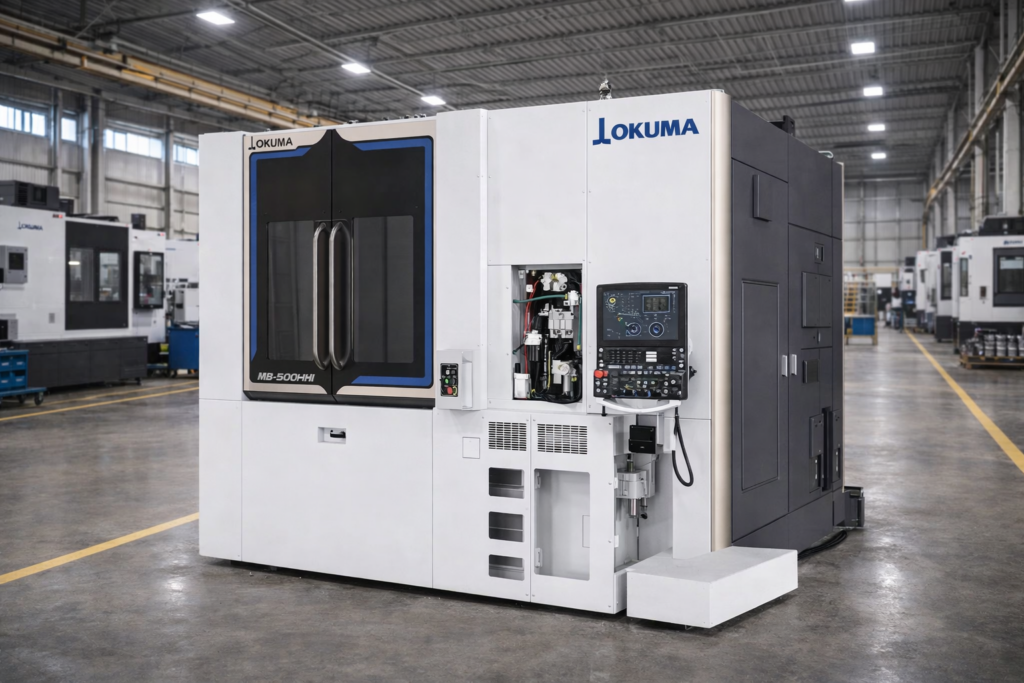
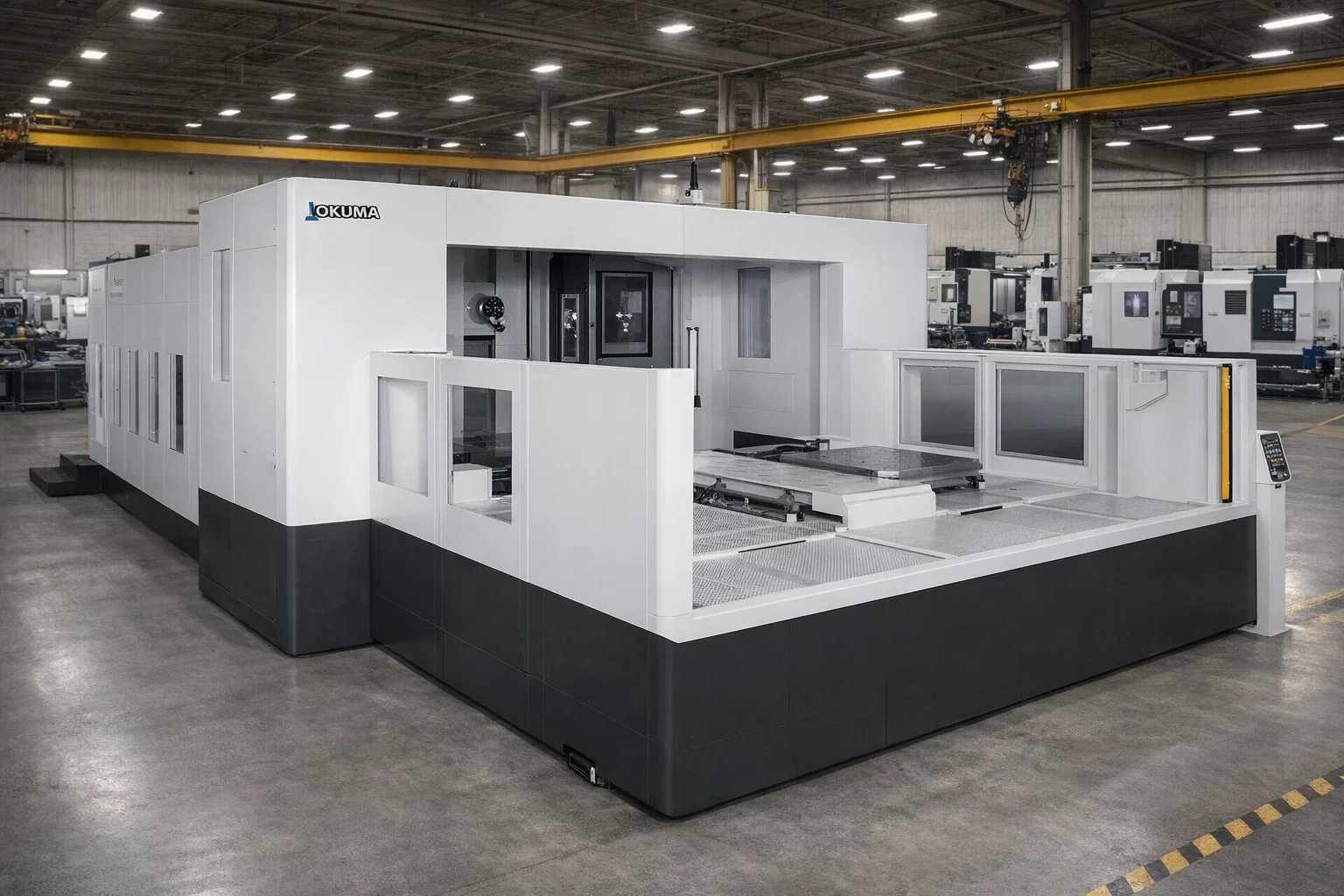
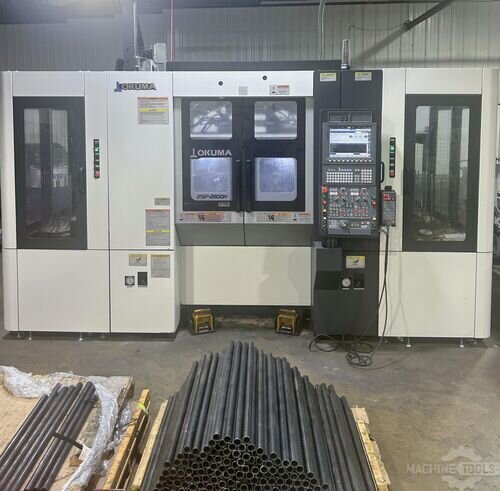
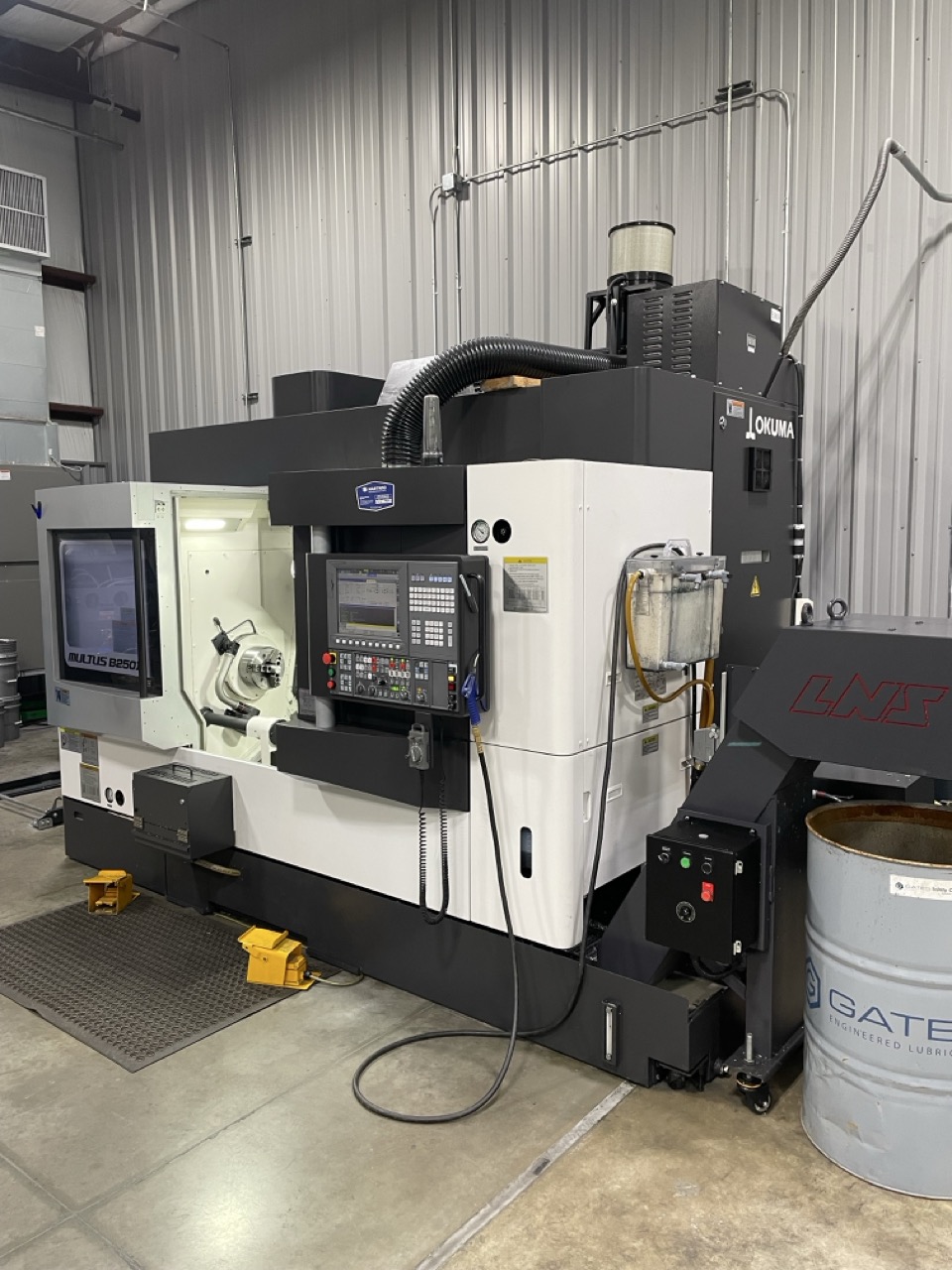
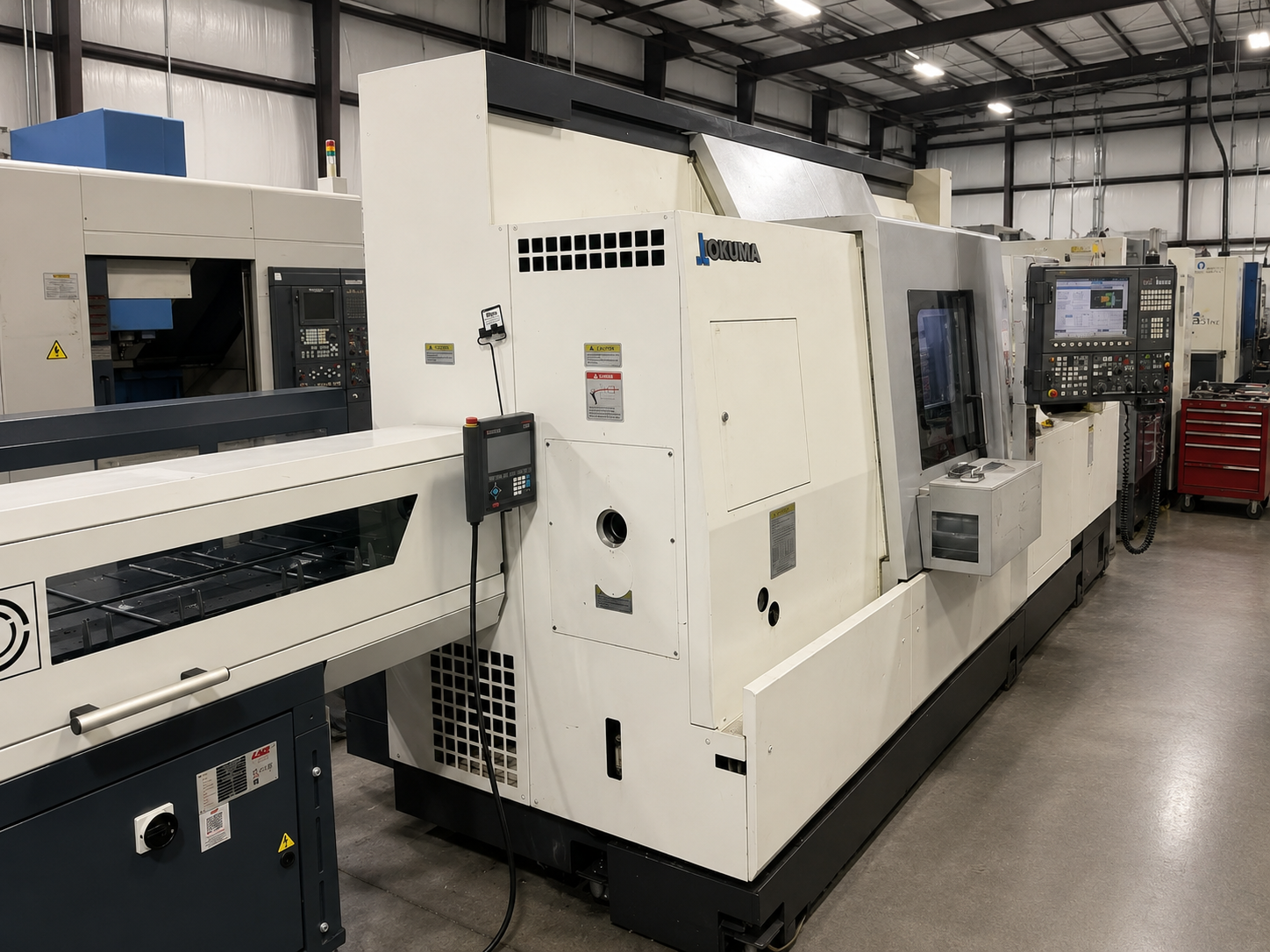
The Okuma MA-600HIII is a large-frame horizontal machining center (HMC) engineered for high-volume production, heavy-duty cutting, and extended unattended operation. As part of Okuma’s MA-H series, this model is designed to deliver a combination of rigidity, precision, and automation capability, making it suitable for industries such as aerospace, automotive, construction equipment, and energy. The machine features a 630 mm pallet size and a significantly larger work envelope compared to mid-size HMCs, with axis travels of approximately 1,050 mm (X), 900 mm (Y), and 1,000 mm (Z), enabling machining of large and complex components.
A key highlight of the MA-600HIII is its powerful spindle system, with a standard 10,000 rpm spindle and optional configurations up to 20,000 rpm. This flexibility allows the machine to handle both heavy material removal and high-speed finishing operations efficiently. The spindle is supported by advanced thermal control technologies such as Okuma’s Thermo-Friendly Concept, which maintains dimensional stability even during long machining cycles or fluctuating shop temperatures.
The machine is built for productivity and long cutting time utilization. With rapid traverse rates around 60 m/min and automatic tool change speeds under four seconds, the MA-600HIII minimizes idle time and maximizes spindle engagement. Its enhanced chip evacuation system and optional “sludgeless tank” further support uninterrupted operation by reducing maintenance downtime.
Additionally, the MA-600HIII is designed for automation integration, including pallet systems and robotic loading. This makes it ideal for lights-out manufacturing environments where continuous cutting time is critical. Overall, the MA-600HIII stands out as a robust, high-capacity machining center capable of delivering consistent accuracy, high throughput, and long-term reliability in demanding production settings.
OKUMA MA-600HIIISPECIFICATIONS
OKUMA MA-600HIII – AXIS
X-Axis
Y-Axis
Z-Axis
B-Axis (Rotary Table)
OKUMA MA-600HIII – AXIS TRAVELS
X-Axis Travel: 1,050 mm (41.34 in)
Y-Axis Travel: 900 mm (35.43 in)
Z-Axis Travel: 1,000 mm (39.37 in)
B-Axis Rotation: 1° Indexing (360°)
OKUMA MA-600HIII – CAPACITY
Maximum Workpiece Diameter: 1,050 mm
Maximum Workpiece Height: 1,200 mm
Maximum Workpiece Weight: Approx. 1,200 kg (typical for class)
Purchasing a used Okuma MA-600HIII can be a highly effective way to acquire a large-capacity horizontal machining center at a significantly reduced investment. These machines are known for their heavy-duty construction, long lifespan, and consistent machining accuracy, making them well-suited for resale markets. Even after years of operation, a properly maintained MA-600HIII can still deliver strong performance in demanding production environments.
One of the main advantages of buying used is cost savings without sacrificing capability. New machines in this size and class require substantial capital investment, especially when equipped with automation systems. A used MA-600HIII allows manufacturers to access similar machining capacity and spindle power at a fraction of the cost, improving return on investment and lowering financial risk.
Cutting time plays a critical role in determining the value of a used machine. Machines with lower spindle hours tend to retain higher accuracy and require less immediate maintenance. For example, a machine from the early 2010s with moderate cutting hours may outperform a newer unit that has been running continuously in a high-production environment. Evaluating spindle load history, maintenance logs, and wear on critical components such as ball screws and guideways is essential.
Another advantage is the machine’s compatibility with automation and upgrades. Even older MA-600HIII units can be integrated with pallet systems or retrofitted with updated controls, extending their productive life. Okuma’s long-term support and parts availability further reduce the risks associated with purchasing used equipment.
In practical terms, buying used enables faster payback. Since the upfront cost is lower, manufacturers can recover their investment more quickly through production output. For operations requiring large work envelopes and long cutting cycles, a used MA-600HIII offers an excellent balance of performance, durability, and cost efficiency.
HOW MUCH DOES A USED OKUMA MA-600HIIICOST?
The price of a used Okuma MA-600HIII varies significantly depending on the machine’s age, configuration, condition, and especially cutting time (spindle hours). Because this is a larger and more advanced HMC compared to models like the MA-4000H, it typically commands higher prices across all age ranges.
Machines built before 2000 are relatively rare in this exact model series, but earlier-generation large Okuma HMCs of comparable size generally fall in the range of $30,000 to $80,000. These machines may have outdated controls and higher wear, and high cutting time can significantly reduce their value due to potential spindle rebuilds and axis wear. However, refurbished units with low cutting hours can still be viable for less demanding applications.
Models from 2000 to 2010 typically range between $80,000 and $180,000. These machines often represent a strong value proposition, offering improved controls, better thermal stability, and higher efficiency compared to earlier models. Units with low to moderate cutting time are particularly desirable, as they can still deliver high productivity with manageable maintenance requirements.
Machines produced between 2010 and 2025 can range from $180,000 to $400,000 or more, depending on options such as spindle configuration, tool capacity, pallet systems, and automation integration. These newer machines benefit from advanced control systems, improved energy efficiency, and enhanced chip and coolant management, making them suitable for continuous, high-volume production.
Cutting time remains one of the most critical pricing factors. A newer machine with excessive cutting hours may be less valuable than an older unit with minimal use. Buyers should carefully evaluate spindle hours, maintenance history, and overall condition to determine the true market value and long-term reliability of the machine.