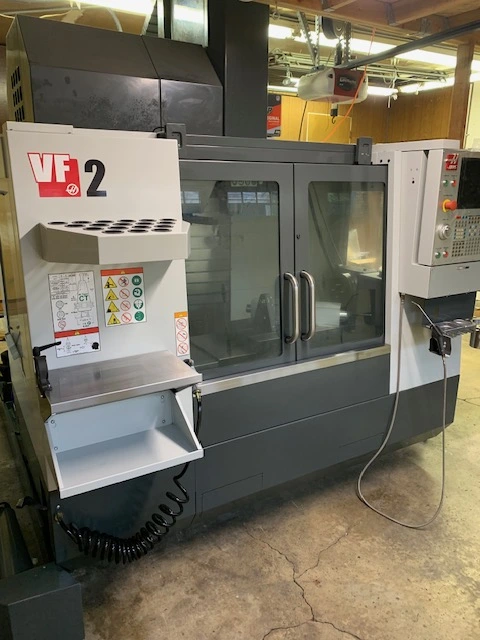
USED HAAS VF2 2020
The HAAS VF2 2020 is one of the world’s most popular CNC Vertical Machining Centers (VMCs), designed to deliver outstanding performance, precision, and reliability for a wide range of machining applications. As the flagship model in the Haas VF Series, the VF2 has earned a reputation for being a dependable production machine capable of handling everything from prototype work to high-volume manufacturing. The 2020 model benefits from Haas’ latest Next Generation Control (NGC), improved connectivity features, enhanced software capabilities, and modern operator interface, making it an excellent choice for today’s manufacturing environments. With its rigid cast-iron construction, inline direct-drive spindle, and customizable factory options, the HAAS VF2 2020 is widely used in aerospace, automotive, medical, mold making, industrial equipment, electronics, and precision contract machining.
The 2020 HAAS VF2 offers 30 inches (762 mm) of X-axis travel, 16 inches (406 mm) of Y-axis travel, and 20 inches (508 mm) of Z-axis travel, providing an ideal work envelope for machining medium-sized components with exceptional accuracy. The 36″ × 14″ (914 × 356 mm) precision-ground table supports workpieces weighing up to 3,000 lbs (1,361 kg). Standard machines feature an 8,100 RPM inline direct-drive spindle powered by a 30 HP (22.4 kW) vector drive motor with a CT40/CAT40 spindle taper, delivering an excellent balance of torque and cutting performance. Optional factory configurations include 10,000 RPM spindle, 12,000 RPM spindle, 15,000 RPM spindle, 2-speed gearbox, Through-Spindle Coolant (TSC), High-Speed Machining (HSM), probing systems, rotary tables, chip conveyor, and programmable coolant nozzle, allowing manufacturers to customize the machine for specific production requirements.
The 2020 VF2 comes standard with the Haas Next Generation Control (NGC), featuring a widescreen display, Ethernet connectivity, Wi-Fi capability, USB ports, HaasConnect remote monitoring, HaasDrop wireless file transfer, rigid tapping, advanced tool management, and expanded program memory. These modern control features significantly improve programming efficiency, machine monitoring, and production management compared to earlier generations. Purchasing a used HAAS VF2 2020 allows manufacturers to acquire a modern machining center with advanced technology while reducing capital investment compared to purchasing a new machine.
HAAS VF2 2020 – AXIS
| Specification | Value |
|---|---|
| X Axis | 762 mm (30″) |
| Y Axis | 406 mm (16″) |
| Z Axis | 508 mm (20″) |
| Number of Controlled Axes | 3 (4th & 5th Axis Ready) |
HAAS VF2 2020 – AXIS TRAVELS / WORK ENVELOPE
| Specification | Value |
|---|---|
| X Travel | 762 mm |
| Y Travel | 406 mm |
| Z Travel | 508 mm |
| Table Size | 914 × 356 mm (36″ × 14″) |
| Maximum Table Load | 1,361 kg (3,000 lbs) |
HAAS VF2 2020 – CAPACITY
| Specification | Value |
|---|---|
| Table Size | 914 × 356 mm |
| Maximum Workpiece Weight | 1,361 kg (3,000 lbs) |
| T-Slots | 3 |
| T-Slot Width | 15.9–16.0 mm |
HAAS VF2 2020 – SPINDLE
| Specification | Value |
|---|---|
| Maximum Spindle Speed | 8,100 RPM |
| Spindle Motor | 30 HP (22.4 kW) |
| Spindle Taper | CT40 / CAT40 |
| Spindle Type | Inline Direct Drive |
| Maximum Torque | 122 Nm (90 ft-lb) |
| Through Spindle Coolant | Optional |
| 2-Speed Gearbox | Optional |
HAAS VF2 2020 – TOOL CHANGER
| Specification | Value |
|---|---|
| Tool Capacity | 20 Tools |
| Tool Changer Type | Automatic Carousel |
| Tool Selection | Random Access |
| Tool-to-Tool Time | Approximately 4.2 Seconds |
| Chip-to-Chip Time | Approximately 4.5 Seconds |
HAAS VF2 2020 – CONTROL SYSTEM
| Specification | Value |
|---|---|
| CNC Control | Haas Next Generation Control (NGC) |
| Programming | ISO Standard G-Code |
| USB | Standard |
| Ethernet | Standard |
| Wi-Fi | Standard |
| HaasConnect | Standard |
| HaasDrop | Standard |
| Rigid Tapping | Standard |
| 4th & 5th Axis Drive & Wiring | Standard |
HAAS VF2 2020 – COOLANT / CHIP MANAGEMENT
| Specification | Value |
|---|---|
| Flood Coolant | Standard |
| Window Air Blast | Standard |
| Automatic Lubrication | Standard |
| Coolant Tank | 208 L (55 gal) |
| Chip Conveyor | Optional |
| Through Spindle Coolant | Optional |
HAAS VF2 2020 – POWER REQUIREMENTS
| Specification | Value |
|---|---|
| Electrical Supply | 220–440V Three Phase |
| Connected Load | Approximately 35 kVA |
| Air Requirement | 4 SCFM @ 100 PSI |
HAAS VF2 2020 – DIMENSIONS
| Specification | Value |
|---|---|
| Shipping Length | Approximately 2,570 mm (101″) |
| Shipping Width | Approximately 2,510 mm (99″) |
| Shipping Height | Approximately 2,570 mm (101″) |
| Machine Weight | Approximately 3,540 kg (7,800 lbs) |
HAAS VF2 2020 – GENERAL INFORMATION
| Item | Details |
|---|---|
| Manufacturer | Haas Automation |
| Model | VF2 |
| Year | 2020 |
| Machine Type | CNC Vertical Machining Center |
| CNC Control | Haas Next Generation Control |
| Spindle Taper | CT40 / CAT40 |
| Tool Capacity | 20 Tools |
| 4th & 5th Axis Ready | Yes |
INDUSTRIES THAT USE HAAS VF2 2020
The HAAS VF2 2020 is widely used in aerospace, automotive, medical device manufacturing, mold and die, industrial machinery, electronics, defense, energy, research laboratories, and precision contract machining. Its combination of rigidity, accuracy, and flexible spindle options makes it suitable for machining aluminum, steel, stainless steel, titanium, cast iron, brass, copper, and engineering plastics.
TYPICAL PARTS HAAS VF2 2020 CAN PRODUCE
The HAAS VF2 2020 commonly manufactures aerospace brackets, hydraulic manifolds, mold inserts, die components, tooling fixtures, valve bodies, gearbox housings, robotic components, aluminum enclosures, medical implants, production tooling, machine components, pump housings, electronic enclosures, and custom precision-machined parts.
The machine performs face milling, contour milling, pocket milling, drilling, tapping, boring, thread milling, engraving, interpolation, and high-precision finishing. When equipped with a rotary table or trunnion, it can efficiently machine complex multi-sided components in fewer setups.
WHY CHOOSE HAAS VF2 2020
The HAAS VF2 2020 combines proven mechanical reliability with the latest Haas control technology, making it one of the most productive vertical machining centers in its class. The Next Generation Control, high-performance spindle, rigid construction, and extensive factory options allow manufacturers to configure the machine for everything from prototype machining to continuous production. Its simple programming, low maintenance requirements, and worldwide service support continue to make the VF2 one of the best-selling machining centers available.
WHY BUY USED HAAS VF2 2020
Purchasing a used HAAS VF2 2020 allows manufacturers to obtain a modern machining center equipped with current-generation technology while significantly reducing capital costs. Many used machines include valuable options such as Through-Spindle Coolant, probing systems, rotary tables, chip conveyors, High-Speed Machining, 4th-axis packages, and extensive tooling, greatly increasing their value.
Before purchasing, buyers should inspect spindle condition, axis accuracy, lubrication system, tool changer operation, coolant equipment, machine geometry, spindle hours, maintenance records, and installed software options. Machines with documented service history and factory-installed options generally provide the best long-term value.
HOW MUCH DOES A USED HAAS VF2 2020 COST?
The value of a used HAAS VF2 2020 depends on spindle hours, maintenance history, installed options, tooling package, and overall machine condition. Machines equipped with Through-Spindle Coolant, probing, chip conveyor, rotary tables, 10,000 RPM or gearbox options, and low operating hours typically command higher resale prices.
Depending on machine condition, spindle hours, tooling, and installed factory options, a used HAAS VF2 2020 typically sells within an estimated price range of $45,000 to $75,000 USD. Premium machines with low spindle hours, extensive options, and complete maintenance documentation may exceed this range, while higher-hour machines with fewer options may sell below it. A properly maintained HAAS VF2 2020 provides outstanding machining performance, modern CNC capabilities, excellent reliability, and strong long-term value for manufacturers seeking a versatile CNC vertical machining center.
HAAS VF-2 VS HAAS VF-3 – WHICH VMC IS RIGHT FOR YOUR SHOP?
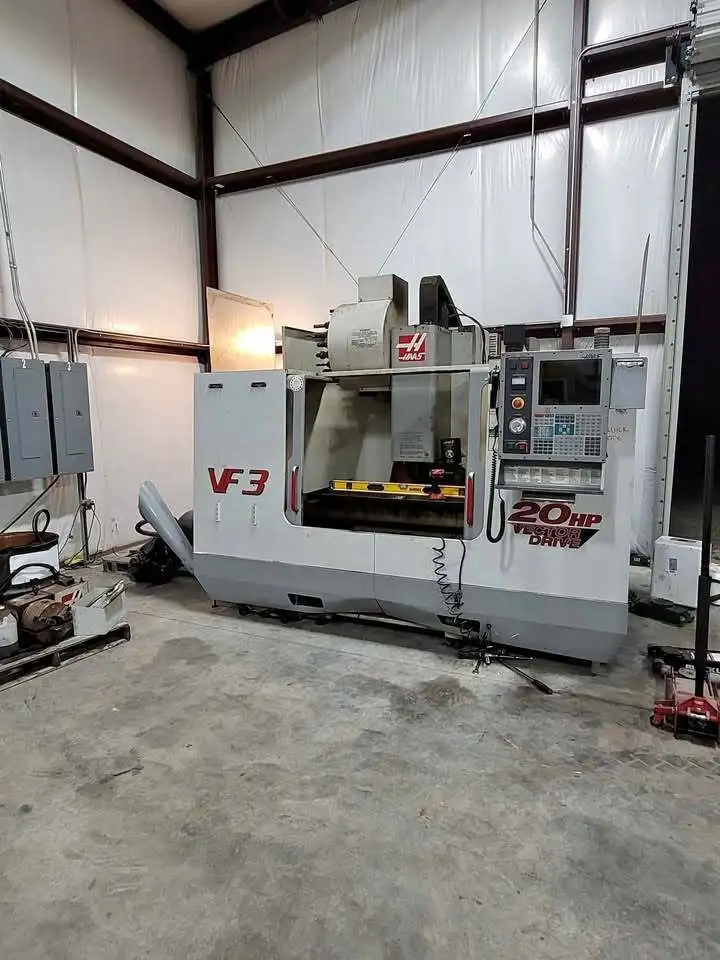
The HAAS VF-2 and HAAS VF-3 are both vertical machining centers designed for general-purpose metalworking, but the right choice depends largely on the size of your workpieces, required machining envelope, available floor space, and production requirements. While both machines share the same basic vertical machining concept, the VF-3 provides a larger work area and greater axis travel, making it more suitable for shops that regularly handle larger components.
The HAAS VF-2 is often selected by job shops and manufacturers that need a capable machining center without occupying excessive floor space. Its work envelope is well suited to brackets, fixtures, plates, housings, tooling components, and other small-to-medium-sized parts. The VF-2 can also be a practical choice for shops that perform frequent setups or produce a wide variety of relatively compact components.
The VF-3 moves into a larger capacity range. Its increased axis travel allows operators to accommodate larger workpieces and fixtures while providing additional flexibility for positioning. This can be particularly useful when machining large plates, molds, structural components, and parts requiring multiple operations within a single setup.
Floor space should also be considered. A VF-3 requires more room than a VF-2, so the larger model may not be practical for every facility. Power requirements, material-handling equipment, door access, and chip-management arrangements should also be evaluated before installation.
Production volume can influence the decision as well. If most jobs comfortably fit inside the VF-2’s machining envelope, choosing the smaller machine can reduce equipment and operating costs without sacrificing useful capability. However, purchasing a VF-2 that is too small for future work can create unnecessary setups or require outsourcing larger operations.
For used CNC buyers, machine condition should be compared alongside model size. A well-maintained VF-2 may be a better investment than a heavily worn VF-3. Inspect spindle performance, axis accuracy, ballscrews, tool changer operation, control condition, lubrication, coolant system, and maintenance history.
HAAS VF-2 SPINDLE OVERHEATING – COMMON CAUSES AND SOLUTIONS
Spindle overheating on a HAAS VF-2 can affect machining accuracy, surface finish, tool life, and overall machine reliability. A spindle that becomes excessively hot should not simply be operated until the problem becomes more severe. The source of the heat needs to be identified because overheating can result from operating conditions, lubrication problems, mechanical wear, cooling issues, or electrical faults.
One common cause is prolonged operation at high spindle speeds or heavy cutting loads. Running aggressive feeds, excessive depths of cut, or demanding tooling for extended periods can generate substantial heat. Reviewing cutting parameters and comparing them with the tooling and material being machined is an important first step.
Tooling can also contribute to excessive spindle load. A damaged tool, incorrect toolholder, poor balance, excessive tool stick-out, or improper clamping can increase vibration and cutting forces. These conditions may transfer additional heat into the spindle assembly.
Lubrication should be checked according to the machine’s maintenance requirements. Inadequate or incorrect lubrication can contribute to bearing friction and elevated temperatures. Lubrication alarms should never be ignored, particularly when spindle temperature has changed noticeably.
Cooling-related problems should also be investigated. Depending on the machine configuration, cooling systems and associated components can affect spindle temperature management. Blockages, failed components, contamination, or insufficient flow can reduce cooling effectiveness.
Worn spindle bearings are another possible cause, especially on older or heavily used VF-2 machines. Bearing problems may produce a combination of heat, unusual noise, vibration, and changes in surface finish. If these symptoms occur together, professional spindle inspection may be necessary.
Electrical problems can also produce abnormal spindle behavior. A spindle drive or related electrical component operating incorrectly may generate unusual conditions that require diagnostic testing.
The best solution depends on the actual cause. Operators should monitor when overheating occurs, including spindle speed, cutting load, machining duration, tooling, and material. Comparing temperature behavior during different operating conditions can help identify patterns. If overheating persists under normal loads, the machine should be inspected by a qualified CNC technician before continued production causes more extensive damage.
COMMON PROBLEMS AND TROUBLESHOOTING FOR THE HAAS VF-2
The HAAS VF-2 is designed for dependable machining across many applications, but problems can eventually develop because of normal component wear, heavy production, inadequate maintenance, coolant contamination, electrical aging, or incorrect operating practices. Troubleshooting should begin by identifying the symptoms rather than replacing components immediately.
Spindle problems are one area that deserves attention. Operators may notice excessive vibration, unusual noise, overheating, inconsistent speed, poor surface finish, or failure to start. These symptoms can have several possible causes, including tooling problems, spindle bearings, drive-related faults, wiring, feedback components, or incorrect operating conditions.
Axis performance is another important troubleshooting area. Backlash, positioning errors, rough movement, servo alarms, or inconsistent dimensional results may indicate wear or adjustment issues involving ballscrews, linear guides, encoders, servo components, or related mechanical systems. Comparing actual machine behavior against known-good parts and documented specifications can help isolate the problem.
Automatic tool changer issues can interrupt production even when the spindle and axes are operating correctly. Failed tool changes, incorrect tool positioning, unusual mechanical noise, or tool-release problems may be associated with sensors, mechanical adjustment, contamination, or worn components. The tool changer should be inspected rather than repeatedly forcing failed cycles.
Coolant problems are also common in heavily used machines. Poor coolant flow, leaking hoses, clogged lines, contaminated coolant, or pump problems can affect cutting performance and machine cleanliness. Coolant should be maintained according to the machine’s requirements.
Electrical faults can produce intermittent alarms and difficult-to-reproduce problems. Loose connections, damaged cables, switches, sensors, and aging electronic components should be investigated when alarms appear unexpectedly.
Lubrication issues should receive immediate attention. Inadequate lubrication can accelerate wear in moving components and potentially create expensive mechanical failures.
When troubleshooting a VF-2, record the exact alarm message, operating conditions, recent maintenance work, and circumstances under which the problem occurs. Determine whether the issue happens during startup, rapid movement, cutting, tool changes, or spindle operation. A structured diagnosis is usually much more effective than replacing parts based solely on symptoms.
WHAT TYPE OF CNC MACHINE IS THE HAAS VF-2?
The HAAS VF-2 is a CNC vertical machining center, commonly referred to as a VMC. It is designed primarily for milling operations in which a vertically oriented spindle holds a cutting tool and moves relative to a workpiece secured on the machine table. The VF-2 belongs to the HAAS VF Series and is widely used for machining metal components across job-shop, production, tooling, maintenance, and manufacturing applications.
Unlike a CNC lathe, which primarily rotates the workpiece while cutting tools remove material, the VF-2 generally keeps the workpiece secured to the table while the spindle rotates the cutting tool. This arrangement makes the machine suitable for operations such as face milling, pocketing, drilling, tapping, contouring, slotting, and other milling processes.
The VF-2 is considered a general-purpose vertical machining center because it can handle a broad range of component types. Typical applications include manufacturing brackets, fixtures, plates, housings, tooling components, machine parts, and other precision components. Depending on the machine’s configuration, additional equipment such as probing, coolant options, rotary tables, and other accessories can expand its capabilities.
One of the major characteristics of the VF-2 is its relatively compact footprint compared with larger VMCs. This makes it attractive to facilities where floor space is limited but a full CNC machining center is still required. At the same time, its machining envelope provides useful capacity for many small-to-medium-sized components.
The HAAS CNC control is another defining feature. The control system is designed around a practical operator interface and supports common CNC programming and machining functions. This familiarity can be valuable for shops already using other HAAS machines.
VF-2 specifications vary depending on the production year, control generation, spindle configuration, tool changer, coolant system, and factory-installed options. Consequently, buyers should verify the exact specifications of an individual machine rather than relying solely on the model name.
In the used CNC market, the VF-2 is popular because it combines versatility, manageable size, and broad application potential in one vertical machining center.
WHY IS MY HAAS VF-2 SPINDLE OVERHEATING?
A HAAS VF-2 spindle can become hot during normal machining, particularly during extended operation or high-speed cutting. However, excessive or rapidly increasing temperature may indicate a problem that requires investigation. Determining why the spindle is overheating requires looking at machining conditions, tooling, lubrication, cooling, mechanical components, and electrical systems.
Start by examining the machining parameters. High spindle speeds combined with heavy cutting loads can generate significant heat. Large depths of cut, aggressive feeds, difficult materials, or extended continuous cycles may push the spindle harder than intended. If overheating occurs primarily during demanding jobs but not during lighter cutting, operating parameters should be reviewed.
Tooling is another potential source. An unbalanced toolholder, damaged cutter, excessive tool extension, or poor workholding can increase vibration and cutting forces. These conditions may place additional stress on the spindle and cause temperatures to rise.
Spindle lubrication should also be considered. A lubrication problem can increase friction within the spindle assembly and contribute to overheating. Any lubrication alarm or abnormal indication should be investigated promptly rather than ignored.
The spindle bearings themselves can become a concern on older machines. Bearing wear may produce heat accompanied by unusual sounds, vibration, poor surface finish, or changes in spindle behavior. If the spindle becomes hot even during relatively light cutting, mechanical inspection may be necessary.
Cooling performance should be checked as well. Problems with cooling equipment, restricted flow, contamination, or other cooling-related components can reduce the machine’s ability to control operating temperatures.
Electrical problems can sometimes create abnormal spindle operation. If overheating occurs together with spindle alarms, speed fluctuations, unusual drive behavior, or other electrical symptoms, the spindle drive and associated circuitry should be professionally diagnosed.
Keep a record of when the overheating occurs. Note spindle RPM, cutting load, tool type, material, cycle duration, and whether the problem occurs during rapid or continuous operation. This information can help distinguish normal heat generation from an underlying mechanical or electrical fault.
If temperatures continue increasing under normal operating conditions, stopping production and arranging qualified inspection is preferable to risking spindle bearing or drive damage.
Related Products
-
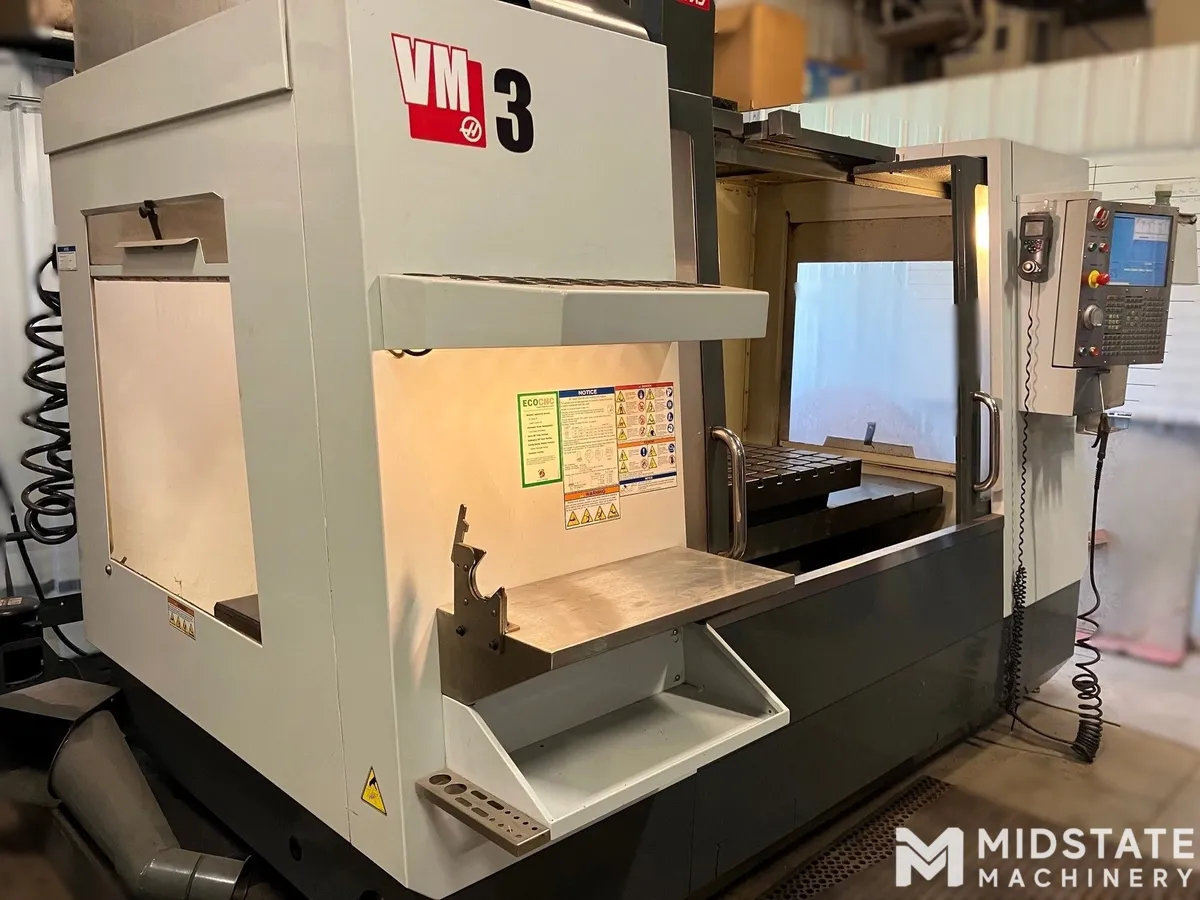
HAAS - VM3
VIEW MACHINE -
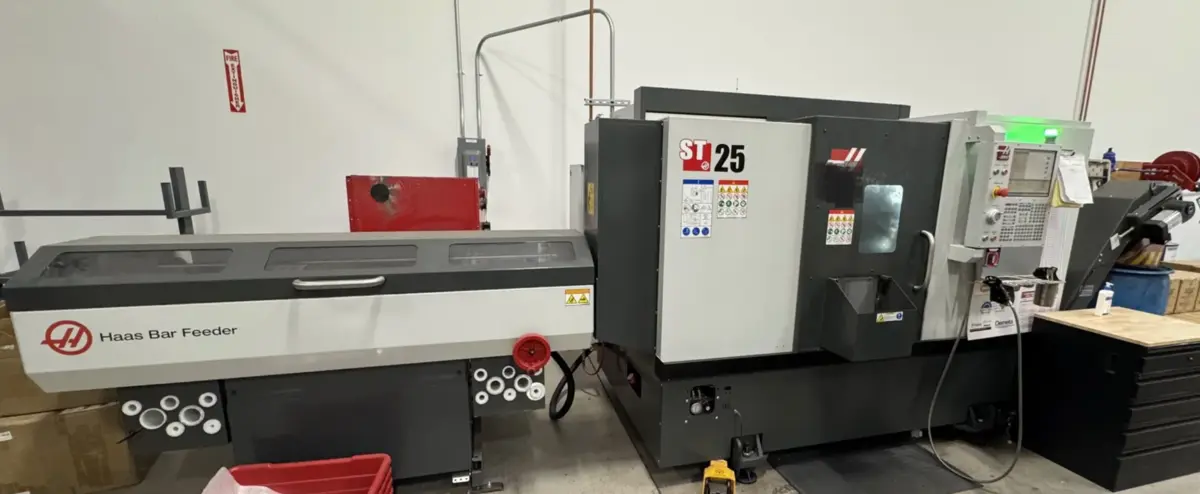
HAAS - ST25
VIEW MACHINE -
HAAS - VF3
VIEW MACHINE -
HAAS - VF7SS
VIEW MACHINE