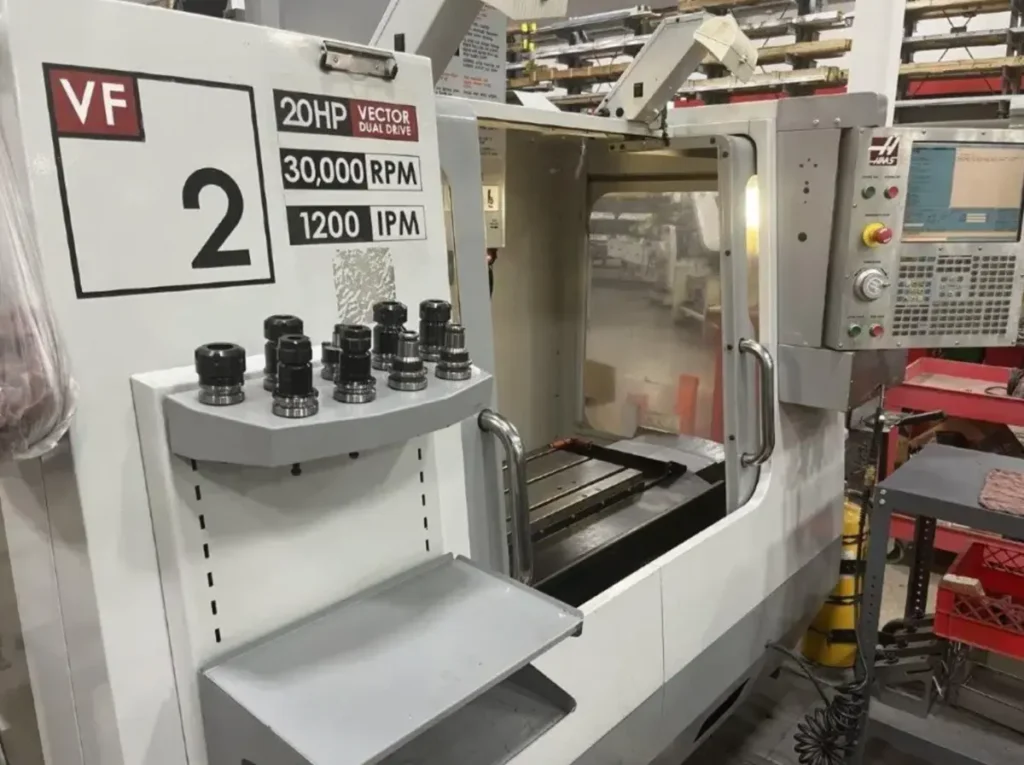
USED HAAS VF2 2008
The HAAS VF2 2008 is a highly reliable CNC Vertical Machining Center (VMC) designed for precision machining, production manufacturing, and general-purpose milling operations. As one of the best-selling models in the Haas VF Series, the VF2 has become a benchmark for machine shops worldwide due to its combination of rigid construction, dependable performance, and user-friendly operation. The 2008 model features the proven Classic Haas CNC Control, a rigid cast-iron frame, precision linear guideways, and an inline direct-drive spindle capable of delivering excellent accuracy and repeatability. Whether producing prototype components or running continuous production, the HAAS VF2 2008 offers exceptional versatility for machining aluminum, steel, stainless steel, cast iron, titanium, brass, and engineering plastics. Its affordability, simple maintenance, and extensive worldwide support continue to make it one of the most desirable machines on the used CNC market.
The 2008 HAAS VF2 provides 30 inches (762 mm) of X-axis travel, 16 inches (406 mm) of Y-axis travel, and 20 inches (508 mm) of Z-axis travel, making it suitable for a wide range of precision machining applications. The 36″ × 14″ (914 × 356 mm) precision-ground table supports workpieces weighing up to 3,000 lbs (1,361 kg). Standard machines were equipped with a 30 HP (22.4 kW) vector-drive spindle operating at 8,100 RPM with a CT40/CAT40 spindle taper. Factory options included 10,000 RPM spindle, 12,000 RPM spindle, 2-speed gearbox, Through-Spindle Coolant (TSC), High-Speed Machining (HSM), Renishaw probing, programmable coolant nozzle, chip conveyor, rotary tables, and expanded memory. Since Haas offered numerous factory-installed options, specifications may vary depending on the original machine configuration.
Purchasing a used HAAS VF2 2008 enables manufacturers to acquire a proven production machining center at a significantly lower cost than purchasing new equipment. With thousands of VF Series machines operating worldwide, owners benefit from excellent parts availability, experienced service technicians, affordable maintenance, and strong resale value. A properly maintained VF2 2008 continues to provide dependable machining performance for many years, making it an outstanding investment for job shops and production facilities alike.
HAAS VF2 2008 – AXIS
| Specification | Value |
|---|---|
| X Axis | 762 mm (30″) |
| Y Axis | 406 mm (16″) |
| Z Axis | 508 mm (20″) |
| Number of Controlled Axes | 3 (4th & 5th Axis Ready) |
HAAS VF2 2008 – AXIS TRAVELS / WORK ENVELOPE
| Specification | Value |
|---|---|
| X Travel | 762 mm |
| Y Travel | 406 mm |
| Z Travel | 508 mm |
| Table Size | 914 × 356 mm (36″ × 14″) |
| Maximum Table Load | 1,361 kg (3,000 lbs) |
HAAS VF2 2008 – CAPACITY
| Specification | Value |
|---|---|
| Table Size | 914 × 356 mm |
| Maximum Workpiece Weight | 1,361 kg (3,000 lbs) |
| T-Slots | 3 |
| T-Slot Width | 15.9–16.0 mm |
HAAS VF2 2008 – SPINDLE
| Specification | Value |
|---|---|
| Maximum Spindle Speed | 8,100 RPM |
| Spindle Motor | 30 HP (22.4 kW) Vector Drive |
| Spindle Taper | CT40 / CAT40 |
| Spindle Type | Inline Direct Drive |
| Maximum Torque | 122 Nm (90 ft-lb) |
| Through Spindle Coolant | Optional |
| 2-Speed Gearbox | Optional |
HAAS VF2 2008 – TOOL CHANGER
| Specification | Value |
|---|---|
| Tool Capacity | 20 Tools |
| Tool Changer Type | Automatic Carousel |
| Tool Selection | Random Access |
| Tool-to-Tool Time | Approximately 4.2 Seconds |
| Chip-to-Chip Time | Approximately 4.5 Seconds |
HAAS VF2 2008 – CONTROL SYSTEM
| Specification | Value |
|---|---|
| CNC Control | Classic Haas CNC Control |
| Programming | ISO Standard G-Code |
| USB | Standard |
| Ethernet | Optional |
| Rigid Tapping | Standard |
| User Macros | Optional |
| 4th & 5th Axis Drive & Wiring | Standard |
HAAS VF2 2008 – COOLANT / CHIP MANAGEMENT
| Specification | Value |
|---|---|
| Flood Coolant | Standard |
| Automatic Lubrication | Standard |
| Window Air Blast | Standard |
| Coolant Tank | 208 L (55 gal) |
| Chip Conveyor | Optional |
| Through Spindle Coolant | Optional |
HAAS VF2 2008 – POWER REQUIREMENTS
| Specification | Value |
|---|---|
| Electrical Supply | 220–440V Three Phase |
| Connected Load | Approximately 35 kVA |
| Air Requirement | 4 SCFM @ 100 PSI |
HAAS VF2 2008 – DIMENSIONS
| Specification | Value |
|---|---|
| Length | Approximately 2,570 mm (101″) |
| Width | Approximately 2,510 mm (99″) |
| Height | Approximately 2,570 mm (101″) |
| Machine Weight | Approximately 3,540 kg (7,800 lbs) |
HAAS VF2 2008 – GENERAL INFORMATION
| Item | Details |
|---|---|
| Manufacturer | Haas Automation |
| Model | VF2 |
| Year | 2008 |
| Machine Type | CNC Vertical Machining Center |
| CNC Control | Classic Haas CNC Control |
| Spindle Taper | CT40 / CAT40 |
| Tool Capacity | 20 Tools |
| 4th & 5th Axis Ready | Yes |
INDUSTRIES THAT USE HAAS VF2 2008
The HAAS VF2 2008 is widely used in aerospace, automotive, mold and die, medical device manufacturing, industrial machinery, electronics, defense, energy, and precision contract machining. Its rigid construction and dependable spindle make it ideal for machining aluminum, steel, stainless steel, titanium, cast iron, brass, and engineering plastics while maintaining high dimensional accuracy and excellent surface finishes.
TYPICAL PARTS HAAS VF2 2008 CAN PRODUCE
The HAAS VF2 2008 is commonly used to manufacture aerospace brackets, hydraulic manifolds, mold inserts, die components, gearbox housings, valve bodies, machine fixtures, robotic components, pump housings, tooling plates, medical device components, aluminum enclosures, and custom precision-machined production parts.
The machine performs face milling, contour milling, drilling, tapping, boring, pocket milling, thread milling, engraving, interpolation, and precision finishing operations. When equipped with an optional rotary table or trunnion, it can efficiently machine multiple sides of complex components while reducing setup time and increasing productivity.
WHY CHOOSE HAAS VF2 2008
The HAAS VF2 2008 remains one of the best values in the used CNC market because it combines proven mechanical reliability with excellent machining performance and affordable ownership costs. Its rigid cast-iron construction, powerful inline spindle, intuitive Haas control, and wide availability of replacement parts make it suitable for both small job shops and large production facilities. Even today, many manufacturers continue to rely on the VF2 for daily production because of its durability and ease of maintenance.
WHY BUY USED HAAS VF2 2008
Purchasing a used HAAS VF2 2008 allows manufacturers to acquire a dependable production machining center while significantly reducing capital investment. Many used machines are equipped with valuable factory-installed options including Through-Spindle Coolant, Renishaw probing, rotary tables, chip conveyor, High-Speed Machining software, programmable coolant nozzle, and tooling packages, substantially increasing their value.
Before purchasing, buyers should inspect spindle condition, spindle hours, lubrication system, ballscrews, guideways, tool changer operation, machine geometry, coolant equipment, electrical cabinet, and maintenance records. Machines with documented service history and lower operating hours generally provide the greatest long-term value. Experienced owners also recommend reviewing tool-change counts and maintenance history when evaluating older VF2 machines.
HOW MUCH DOES A USED HAAS VF2 2008 COST?
The value of a used HAAS VF2 2008 depends on spindle hours, machine condition, maintenance history, installed options, tooling package, and overall configuration. Machines equipped with Through-Spindle Coolant, probing systems, rotary tables, chip conveyor, low operating hours, and complete maintenance documentation generally command higher resale prices.
Depending on machine condition, spindle hours, tooling, and factory-installed options, a used HAAS VF2 2008 typically sells within an estimated price range of $24,000 to $42,000 USD. Premium machines with low operating hours, extensive options, and documented maintenance records may exceed this range, while higher-hour machines or those requiring refurbishment may sell below it. A properly maintained HAAS VF2 2008 continues to deliver dependable machining performance, excellent reliability, and outstanding long-term value for manufacturers seeking a versatile CNC vertical machining center.
HAAS VF-2 VS OKUMA MB-46V – WHICH VERTICAL MACHINING CENTER IS BETTER?
The HAAS VF-2 and Okuma MB-46V are both three-axis vertical machining centers designed for general-purpose production, but they approach machining from somewhat different perspectives. The VF-2 is known for its broad application range, straightforward operation, and relatively large work envelope for its footprint. The MB-46V is a compact production-oriented VMC with a rigid design and multiple spindle and tooling configurations. The better machine depends on the workpiece size, production requirements, spindle requirements, controls, and service support available to the shop.
The current HAAS VF-2 provides 30 inches of X-axis travel, 16 inches of Y-axis travel, and 20 inches of Z-axis travel. It has a 36-by-14-inch table, a 30-hp spindle, and an 8,100-rpm standard spindle. Haas also lists a 20-tool standard carousel.
The Okuma MB-46V II provides approximately 22.05 inches of X travel, 18.11 inches of Y travel, and 18.11 inches of Z travel in its standard configuration. Its table measures approximately 29.92 by 18.11 inches. Depending on configuration, Okuma lists spindle speeds ranging from 6,000 to 15,000 rpm and magazine capacities of 20, 32, or 48 tools.
The VF-2 therefore provides more X and Z travel, making it attractive for shops machining longer or taller components. The MB-46V offers slightly more Y-axis travel and a wider table relative to its compact machining envelope.
Spindle requirements can change the decision. The MB-46V is available with different spindle configurations, including higher-speed options, while the VF-2 emphasizes a 30-hp, 8,100-rpm standard spindle. For general-purpose machining and shops wanting a flexible workhorse, the VF-2 is an appealing choice. For applications where Okuma’s control platform, high-speed spindle options, or larger magazine configurations are important, the MB-46V may be preferable.
For used-machine buyers, condition should ultimately outweigh brand preference. Spindle condition, ballscrews, axis accuracy, tool changer operation, control condition, maintenance history, and available service support should all be evaluated before purchase.
HAAS VF-2 THROUGH-SPINDLE COOLANT PROBLEMS AND TROUBLESHOOTING
Through-spindle coolant, commonly called through-tool coolant, can significantly improve chip evacuation and cutting performance, particularly during deep-hole drilling, pocketing, and machining operations where conventional flood coolant cannot effectively reach the cutting edge. When the system on a HAAS VF-2 does not provide the expected pressure or flow, the cause can involve the pump, coolant supply, filtration, tooling, plumbing, or machine configuration.
The first step is determining whether the through-spindle coolant system is actually installed and configured on the particular VF-2. Haas offers different coolant and tooling options, and specifications vary by machine configuration and production generation. The standard current VF-2 is listed with a 55-gallon coolant tank and multi-stage coolant pump, but buyers should verify the exact equipment installed on a specific machine.
If the pump operates but coolant flow is weak, inspect the coolant tank for contamination and excessive chip accumulation. Restricted filters, clogged pickup areas, or contaminated coolant can reduce pump performance. Toolholders and coolant passages should also be checked because restrictions within the toolholder or cutting tool can reduce flow at the tool tip.
A leak in the coolant plumbing can create another problem. If pressure drops unexpectedly or coolant appears around fittings, hoses, or connections, inspect the system for damaged seals and loose connections.
Tooling compatibility should also be considered. Through-tool coolant requires appropriate toolholders, retention arrangements, and cutting tools. A machine can have a functioning coolant system while still producing poor flow because the tooling configuration is unsuitable.
Pump performance should be evaluated if the system produces little or no pressure despite an adequate coolant level and unrestricted flow path. Unusual pump noise, overheating, or repeated electrical protection trips can indicate mechanical or electrical problems.
Coolant concentration and cleanliness should be maintained according to the machine and coolant manufacturer’s requirements. Contaminated coolant can negatively affect pumps, filters, tooling, and internal coolant passages.
When troubleshooting, work from the coolant tank toward the spindle: verify coolant level, inspect contamination, check pump operation, examine filtration and plumbing, verify tooling, and then investigate pressure-related components. Avoid assuming that the pump is defective before checking the entire coolant path.
HAAS VF-2 UPGRADES, OPTIONS, AND ACCESSORIES GUIDE
The HAAS VF-2 can be configured with a wide range of options and accessories, allowing the machine to be adapted for general-purpose machining, production work, automation, probing, high-speed machining, and specialized applications. When purchasing a used VF-2, these installed options can have considerable practical value because adding equivalent equipment later can increase both cost and installation time.
One of the most useful upgrades for production shops is additional tool capacity. The standard current VF-2 uses a 20-tool carousel, while Haas also offers machines and configurations with larger tool-management options. The appropriate choice depends on the number of tools required for typical jobs and the complexity of production.
Spindle upgrades are another important category. The standard VF-2 has an 8,100-rpm spindle, while other VF-2 configurations can provide higher spindle speeds. Haas currently lists the VF-2SS with a 12,000-rpm spindle and 30+1 tool capacity, demonstrating how significantly configuration can change the machine’s capabilities.
Coolant upgrades can also improve production performance. Through-tool coolant, additional coolant management equipment, chip-management systems, and other coolant options can be valuable for drilling, deep-pocket machining, and applications where efficient chip evacuation is important.
Probing systems are useful when shops need automated workpiece measurement, tool setting, or setup verification. Rotary tables and fourth-axis equipment can further expand machining capability by allowing controlled rotational positioning of components.
Automation options can be particularly valuable for high-volume production. Depending on the machine generation and configuration, available equipment can include workholding automation, bar or pallet-related solutions, robotic integration, and other production accessories.
When evaluating a used VF-2, buyers should document every installed option. A machine equipped with probing, a larger tool changer, upgraded spindle, chip conveyor, rotary equipment, or advanced coolant system may provide substantially more production capability than a base machine.
However, options should be tested rather than accepted solely because they appear on an equipment list. Confirm that each accessory operates correctly and that its configuration is compatible with the machine’s control and production year.
WHAT IS THE TABLE SIZE OF THE HAAS VF-2?
The current standard HAAS VF-2 has a 36-inch-long by 14-inch-wide table, equivalent to approximately 914 mm by 356 mm. Haas lists the table with three standard T-slots and a maximum evenly distributed table load of 3,000 pounds, or approximately 1,361 kg.
The table dimensions are important when determining whether a particular workpiece and fixture combination can be accommodated. The 36-inch table length provides substantial room for positioning components along the X-axis, while the 14-inch table width corresponds with the machine’s 16-inch Y-axis travel.
The VF-2 table has three standard T-slots. Haas specifies a T-slot width of approximately 0.626 to 0.630 inch and a center distance of 4.92 inches. These dimensions are useful when selecting vises, clamps, fixtures, tombstones, and other workholding equipment.
The table’s maximum rated load is another consideration when planning large or heavy setups. Haas lists a 3,000-pound evenly distributed maximum for the current VF-2. This does not mean that every heavy component can automatically be placed anywhere on the table; the way the load is distributed and secured remains important.
When purchasing a used VF-2, inspect the table carefully. Look for deep gouges, damaged T-slots, excessive wear, crash marks, corrosion, and evidence of improper workholding. Damage around T-slots can make certain fixtures difficult to secure properly.
It is also important to distinguish table size from actual machining envelope. A 36-by-14-inch table does not mean that the machine can necessarily cut across the entire table surface simultaneously. Actual usable machining space is determined by the X, Y, and Z travels, spindle-to-table dimensions, tooling, workholding, and machine geometry.
For shops planning to use large vises, multiple fixtures, or rotary equipment, the physical table dimensions should be evaluated together with axis travel and spindle clearance. This provides a more accurate understanding of what the VF-2 can accommodate.
HOW OFTEN SHOULD THE HAAS VF-2 BE SERVICED?
The HAAS VF-2 should be maintained through a combination of daily operator checks, regular preventive-maintenance tasks, and periodic inspections of major mechanical, electrical, lubrication, coolant, and spindle systems. There is not one universal service interval that applies identically to every VF-2 because maintenance requirements depend on machine configuration, production hours, operating environment, coolant conditions, and machine age.
Daily care should include cleaning chips from the machine, checking coolant condition and level, inspecting lubrication indicators, and watching for leaks, unusual noises, vibration, or alarms. These simple checks can identify developing problems before they become major failures.
Lubrication deserves particular attention because insufficient lubrication can accelerate wear in moving components. The appropriate lubricant and replenishment interval should be determined from the machine’s specific maintenance documentation rather than using a generic interval.
Coolant should also be monitored regularly. Concentration, contamination, chip buildup, tramp oil, and coolant level can all affect machining performance and component life. The coolant tank and associated filtration should be maintained according to the machine and coolant manufacturer’s recommendations.
Periodic inspections should include the spindle, axis system, automatic tool changer, way covers, coolant system, lubrication system, electrical cabinet, and workholding surfaces. The spindle should be monitored for changes in noise, temperature, vibration, and surface-finish performance.
Axis accuracy should be evaluated when dimensional problems, backlash, servo alarms, or unusual movement appear. Haas identifies lubrication, ballscrew condition, bearings, couplings, alignment, motors, and encoder-related components as areas that can affect axis performance.
Older or heavily used VF-2 machines may require more frequent inspection than lightly used equipment. A machine operating multiple shifts in a demanding production environment will naturally experience more wear than one used occasionally for prototypes.
The best approach is to follow the maintenance schedule applicable to the exact VF-2 model and configuration, while also performing routine operator inspections. Keeping a written service log is highly recommended because it records lubrication, coolant maintenance, repairs, inspections, and replaced components.
Regular preventive maintenance is generally far less costly than allowing spindle, axis, tool changer, or coolant problems to develop into major production failures.
Related Products
-
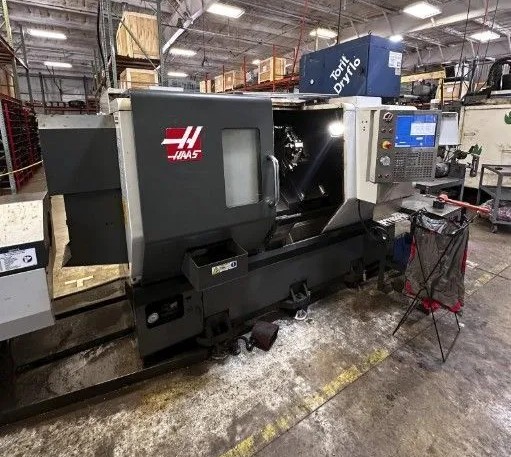
HAAS - ST25
VIEW MACHINE -
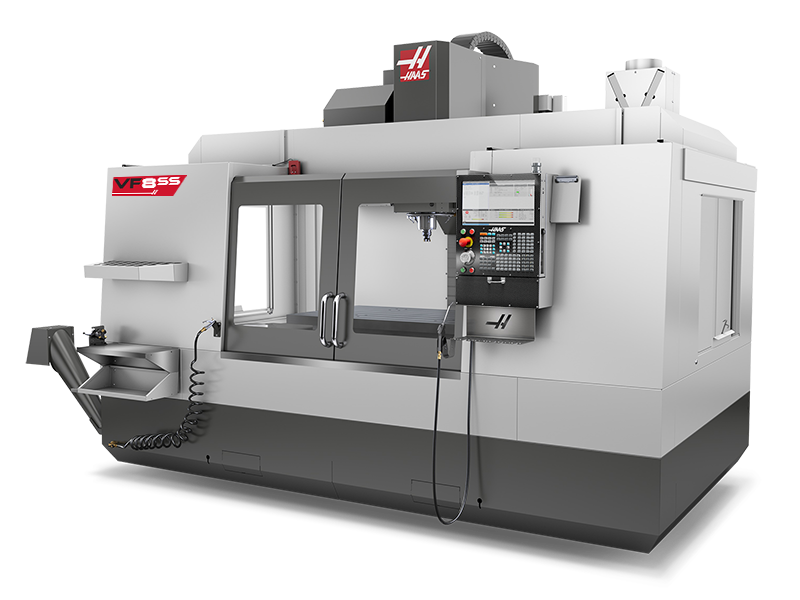
HAAS - VF8SS
VIEW MACHINE -
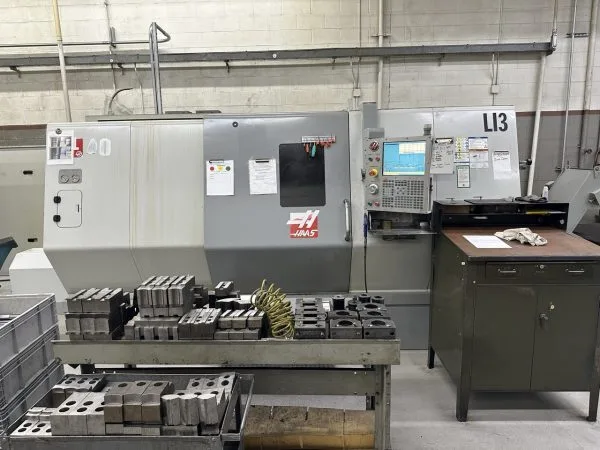
HAAS - SL40
VIEW MACHINE -
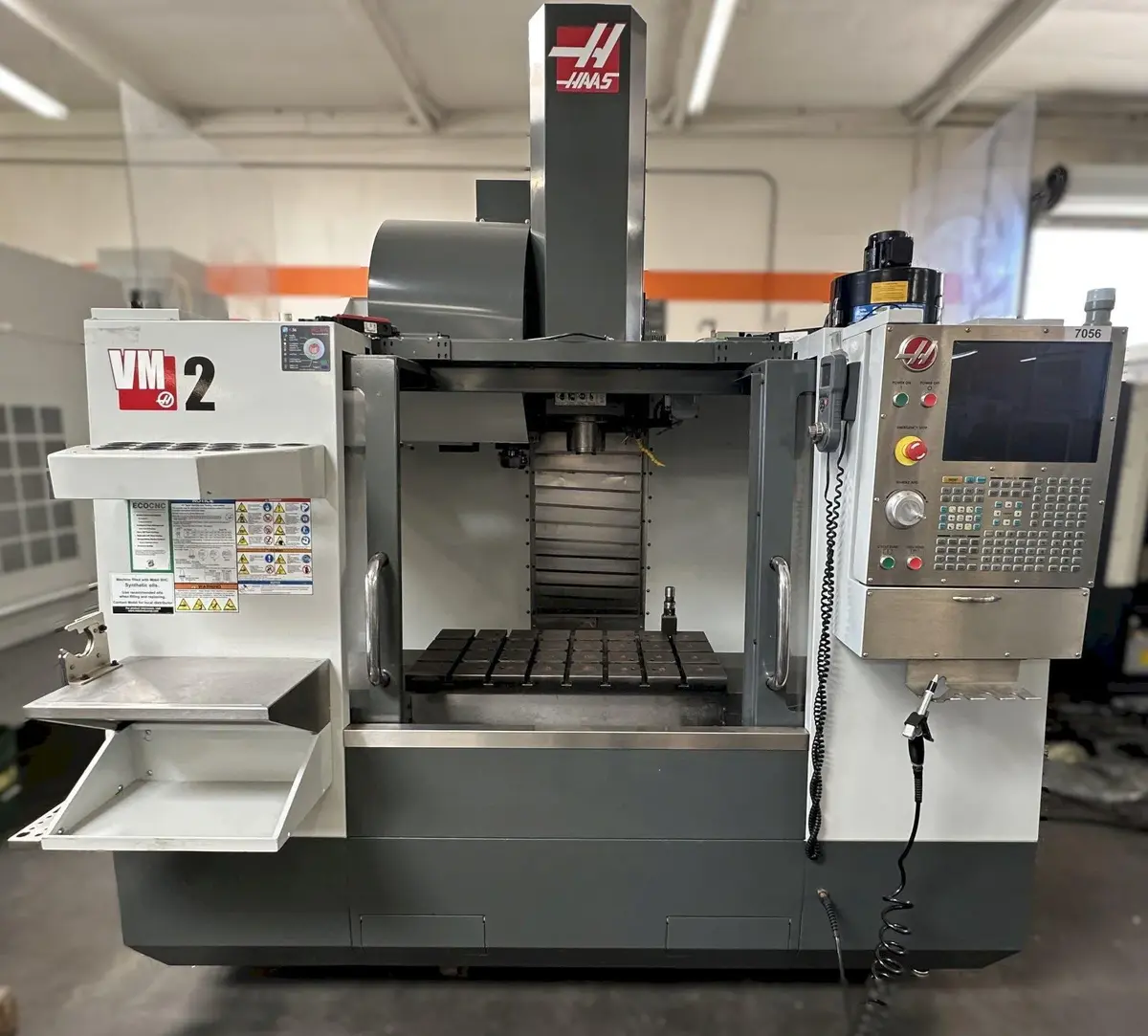
HAAS - VM2
VIEW MACHINE