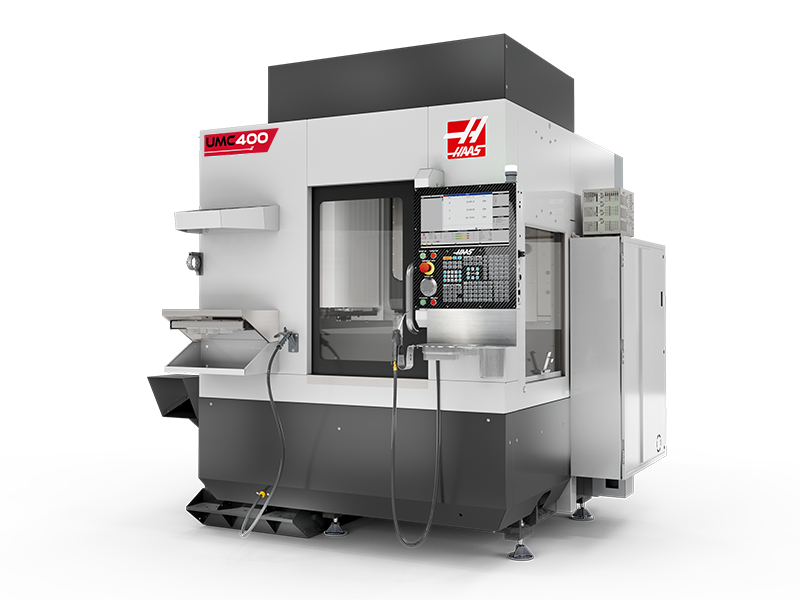
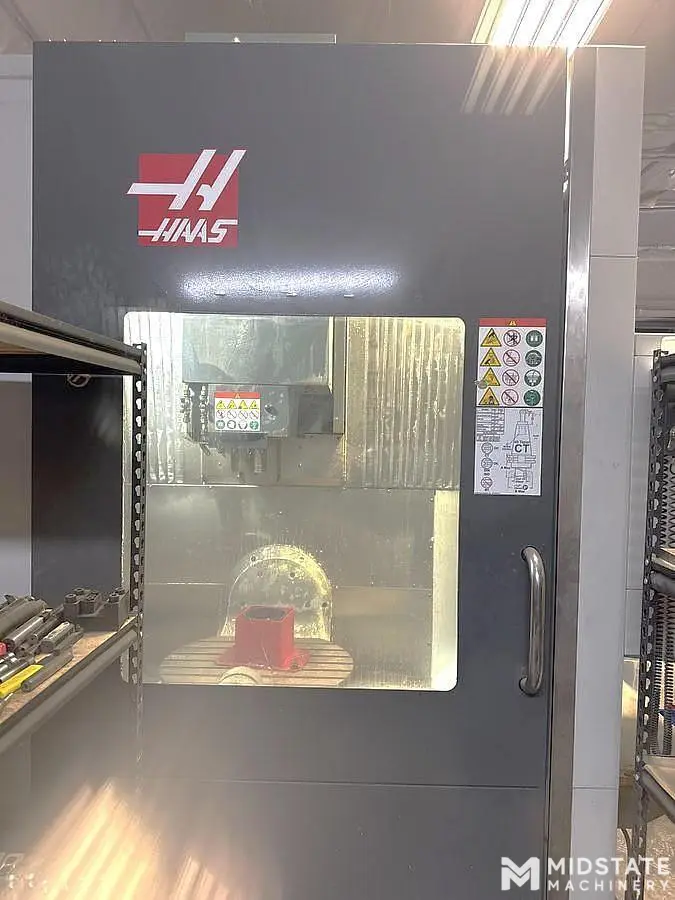
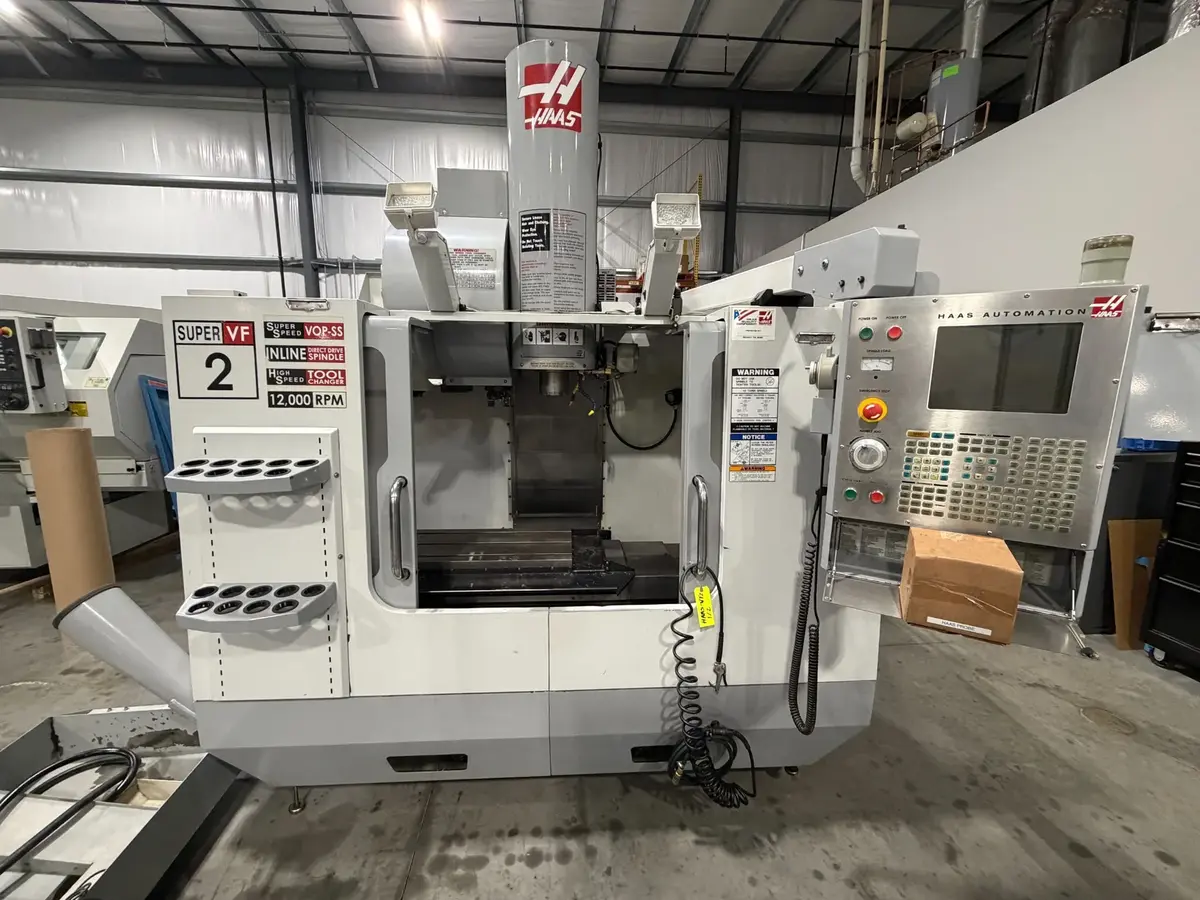
The used Haas UMC-400 is a compact 5-axis universal machining center built for shops that need true multi-sided machining without moving up to a much larger platform. It is especially useful for manufacturers producing smaller complex parts that benefit from fewer setups, better positional accuracy, and more efficient cycle planning. Because it combines a trunnion-style rotary system with a relatively compact footprint, the UMC-400 fits well in job shops, prototype environments, R&D departments, medical component manufacturing, aerospace support work, and precision subcontract machining.
One of the biggest advantages of the UMC-400 is that it gives users access to real 5-axis capability in a machine that remains approachable in both floor space and operating complexity. Shops can use it for indexed 3+2 machining or simultaneous 5-axis work, depending on the part geometry and programming approach. This makes it attractive for businesses wanting to reduce multiple setups on prismatic parts, improve feature-to-feature accuracy, and expand into more advanced part work without committing to a much larger machine class.
A used UMC-400 can be particularly appealing when the machine has been maintained properly and comes with desirable options such as probing, chip management, coolant upgrades, and rotary-related accessories. For buyers that want a modern Haas control, compact 5-axis footprint, and broad application flexibility, the UMC-400 represents a practical entry into advanced milling capability.
HAAS UMC-400SPECIFICATIONS
HAAS UMC-400 – AXIS TRAVELS
X-Axis Travel: 17 in
Y-Axis Travel: 11 in
Z-Axis Travel: 13 in
5-Axis Trunnion-Style Configuration
Designed for Small-Part Multi-Sided Machining
Suitable for Indexed and Simultaneous 5-Axis Work
HAAS UMC-400 – SPINDLE
Spindle Taper: 40 Taper
Maximum Spindle Speed: 10,000 rpm
Spindle Drive: Inline Direct-Drive
Spindle Orientation: Vertical
Built for Precision Milling and Complex Contouring
Suitable for Aluminum, Steel, and General Precision Materials
Minimum Air Pressure Required for Machine Operation
Exact Electrical Load May Vary by Options and Spindle Configuration
Verify Power Requirement Before Purchase or Installation
HAAS UMC-400 — GENERAL INFORMATION
Machine Type: 5-Axis CNC Vertical Machining Center
Machine Format: Compact Universal Machining Center
Spindle Taper: 40
Rotary Configuration: Integrated Trunnion
Ideal For: Complex Small Parts and Multi-Sided Components
Compact Footprint for Shops Needing 5-Axis Capability
INDUSTRIES THAT USE HAAS UMC-400
Aerospace Support Manufacturing
Medical Device Machining
Precision Job Shops
Tooling and Fixture Manufacturing
Prototype and R&D Departments
General Contract Manufacturing
TYPICAL PARTS HAAS UMC-400 CAN PRODUCE
Small Aerospace Brackets
Medical Components
Complex Prototype Parts
Multi-Sided Precision Housings
Tooling Components
Fixture Blocks and Custom Workholding Parts
WHY CHOOSE HAAS UMC-400
True 5-Axis Capability in a Compact Footprint
Reduces Multiple Setups on Complex Parts
Good Entry Point into Universal Machining
User-Friendly Haas Control
Well Suited for Smaller Precision Components
Strong Fit for Prototype and Short-Run Work
WHY BUY USED HAAS UMC-400
Buying a used Haas UMC-400 can be a smart move for shops that want to expand into 5-axis machining while keeping capital costs under control. A new 5-axis machine can be a major investment, especially when tooling, fixturing, CAM programming, installation, and training are added to the total project cost. A used unit often gives the buyer the same basic machine platform and capability at a significantly lower entry price, which can improve return on investment and reduce financial risk.
Another strong reason to buy used is flexibility. Many shops do not need a brand-new machine to begin benefiting from 5-axis work. If the goal is to machine smaller complex parts, reduce setups, or bring prototype work in-house, a properly maintained used UMC-400 can be more than sufficient. It allows a shop to test demand for 5-axis work, train operators, and build internal process knowledge before deciding whether to invest in a larger or newer model later.
Used machines can also offer better value when they include expensive options already installed. Features such as probing, coolant systems, high-speed machining functions, and chip evacuation equipment can add substantial value when purchased as part of the machine package rather than added later. For many buyers, the best used UMC-400 is not simply the cheapest one, but the one with solid maintenance history, reasonable cutting time, and a configuration that matches real production needs.
HOW MUCH DOES A USED HAAS UMC-400COST?
The cost of a used Haas UMC-400 depends heavily on build year, overall condition, installed options, machine location, and especially operating history such as spindle hours and actual cutting time. Machines with lower cutting time, lighter materials history, cleaner enclosures, and good service records usually command noticeably stronger prices than machines that have spent years in continuous production cutting harder materials. Rotary condition, probe functionality, spindle health, and tool changer reliability also play a major role in pricing.
For machines made before 2000, there is no realistic pricing range because the UMC-400 is a modern machine platform and did not exist in that period.
For machines made from 2000 to 2010, there is likewise no meaningful historical market range for this exact model, since it belongs to a later generation of Haas universal machining centers.
For machines made from 2010 to 2025, used-market pricing typically falls into a broad practical range based on hours and condition. Older, higher-hour examples with heavier cutting histories may trade in the lower end of the market, while newer machines with low cutting time, probing, chip conveyor, coolant upgrades, and clean maintenance records tend to bring much stronger values. In many cases, buyers can expect approximate used-market asking levels from around $90,000 to $190,000, with exceptionally clean, late-model, low-hour machines potentially trending higher. Machines with high cutting time, production wear, or missing options generally sit closer to the lower end of that range.