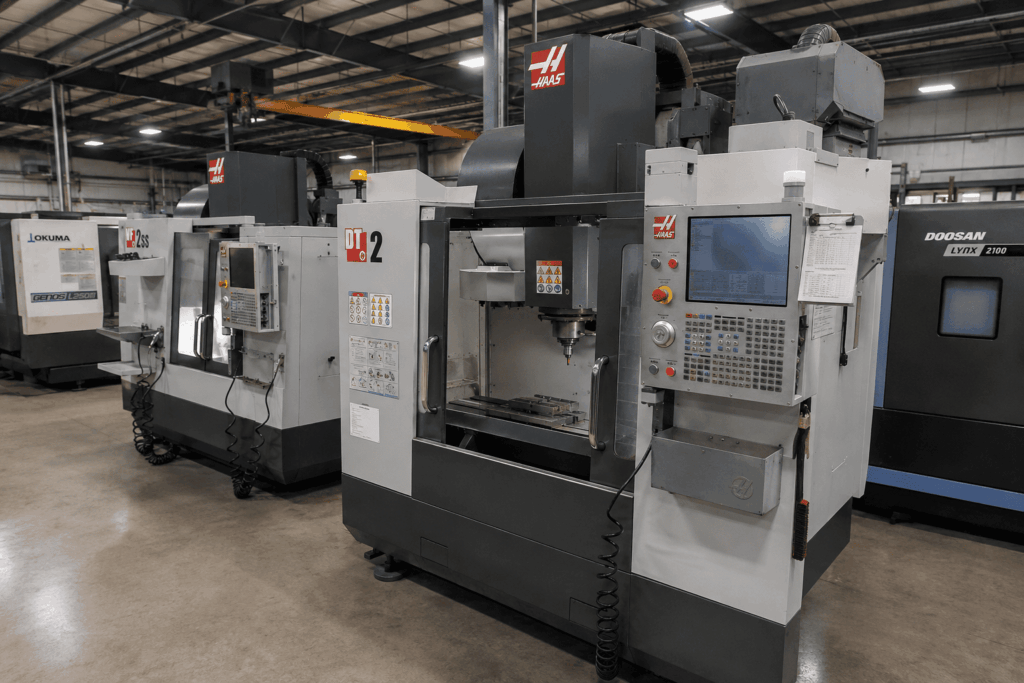
USED HAAS DT-2 – 2013
The 2013 Haas DT-2 is a high-speed CNC drill/tap machining center designed for manufacturers that require rapid production of small to medium-sized precision components. Manufactured by Haas Automation, the DT-2 combines fast spindle speeds, high acceleration rates, and ultra-fast tool changes to maximize productivity in demanding production environments. With a larger X-axis travel than the DT-1 while maintaining a compact footprint, the DT-2 is ideal for machine shops looking to increase throughput without sacrificing valuable floor space.
The 2013 Haas DT-2 features a rigid cast-iron construction and a BT30 inline direct-drive spindle, engineered specifically for high-speed machining applications. Its lightweight spindle design allows for rapid acceleration and deceleration, making it ideal for drilling, tapping, milling, engraving, and light-to-medium cutting operations. The machine is equipped with a 20+1 side-mount automatic tool changer, capable of extremely fast tool changes that help reduce non-cutting time and improve overall production efficiency. With rapid traverse rates of 2,400 ipm (61 m/min) and high axis acceleration, the DT-2 is capable of significantly reducing cycle times compared to conventional vertical machining centers.
Most 2013 Haas DT-2 machines are equipped with the Haas CNC Control, providing intuitive programming, USB connectivity, Ethernet networking, rigid tapping, and advanced tool management features. The machine is commonly configured with a 10,000 RPM spindle, while optional 15,000 RPM and 20,000 RPM spindle packages are available for applications requiring higher cutting speeds. The DT-2 is also compatible with optional 4th-axis rotary tables, expanding its capability for multi-sided machining and increasing production flexibility.
The Haas DT-2 is widely used throughout the aerospace, medical, electronics, automotive, mold and die, and precision manufacturing industries. Typical applications include aluminum housings, medical devices, electronic enclosures, brackets, fixtures, manifolds, precision plates, molds, and small mechanical components. Its combination of speed, repeatability, and compact size makes it especially well suited for high-volume production where short cycle times are essential.
Purchasing a used 2013 Haas DT-2 provides manufacturers with access to modern high-speed machining technology at a significantly lower investment than purchasing a new machine. Haas machines are recognized worldwide for their reliability, operator-friendly controls, readily available replacement parts, and affordable maintenance. A properly maintained DT-2 continues to deliver outstanding performance, excellent surface finishes, and dependable productivity, making it one of the most desirable compact drill/tap machining centers available on the used CNC market.
HAAS DT-2 – 2013 SPECIFICATIONS
Axis
| Specification | Value |
|---|---|
| Machine Type | CNC Drill/Tap Machining Center |
| Controlled Axes | 3 Axes |
| X-Axis Travel | 28.0 in (711 mm) |
| Y-Axis Travel | 16.0 in (406 mm) |
| Z-Axis Travel | 15.5 in (394 mm) |
Travels / Work Envelope
| Specification | Value |
|---|---|
| X-Axis Travel | 28.0 in (711 mm) |
| Y-Axis Travel | 16.0 in (406 mm) |
| Z-Axis Travel | 15.5 in (394 mm) |
| Spindle Nose to Table (Max) | 21.5 in (546 mm) |
| Spindle Nose to Table (Min) | 6.0 in (152 mm) |
Table
| Specification | Value |
|---|---|
| Table Size | 34 × 15 in (864 × 381 mm) |
| Maximum Table Load | 250 lbs (113 kg) |
| T-Slots | 3 |
| T-Slot Width | 0.63 in (16 mm) |
Spindle
| Specification | Value |
|---|---|
| Spindle Taper | BT30 |
| Standard Spindle Speed | 10,000 RPM |
| Optional Spindle Speed | 15,000 or 20,000 RPM |
| Spindle Motor | 15 HP (11.2 kW) |
| Drive System | Inline Direct Drive |
Tool Changer
| Specification | Value |
|---|---|
| Tool Changer Type | Side-Mount Automatic Tool Changer |
| Tool Capacity | 20+1 Tools |
| Maximum Tool Diameter | 2.0 in (51 mm) |
| Maximum Tool Length | 7.0 in (178 mm) |
| Average Chip-to-Chip Tool Change | 1.8 seconds |
CNC Control
| Specification | Value |
|---|---|
| CNC Control | Haas CNC Control |
| Programming | ISO G-Code |
| Rigid Tapping | Standard |
| Network Capability | Ethernet, USB, DNC |
Coolant / Chip Management
| Specification | Value |
|---|---|
| Coolant System | Flood Coolant |
| Coolant Tank Capacity | 45 gal (170 L) |
| Chip Removal | Auger or Optional Chip Conveyor |
| Through-Spindle Coolant | Optional |
Power Requirements
| Specification | Value |
|---|---|
| Electrical Supply | 220V, 3-Phase |
| Connected Load | Approx. 20 kVA |
| Pneumatic Supply | 100 PSI (6.9 bar) |
Dimensions
| Specification | Value |
|---|---|
| Floor Space | Approx. 112 × 83 in (2,845 × 2,108 mm) |
| Machine Height | Approx. 104 in (2,640 mm) |
| Machine Weight | Approx. 5,900 lbs (2,675 kg) |
General Information
| Specification | Value |
|---|---|
| Manufacturer | Haas Automation |
| Model | DT-2 |
| Year | 2013 |
| Machine Category | CNC Drill/Tap Machining Center |
| Materials Machined | Aluminum, Steel, Stainless Steel, Brass, Titanium, Plastics |
| Typical Applications | Medical Parts, Aerospace Brackets, Electronic Housings, Fixtures, Manifolds, Precision Components |
HOW MUCH DOES A USED HAAS DT-2 – 2013 COST?
A used 2013 Haas DT-2 typically sells for $30,000 to $55,000 USD, depending on spindle hours, machine condition, tooling package, and installed options such as a 15,000 or 20,000 RPM spindle, through-spindle coolant, probing system, rotary table, or chip conveyor. Machines with low operating hours, documented maintenance records, and factory-installed options generally command higher prices in the used CNC market.
Before purchasing a used Haas DT-2, buyers should inspect spindle condition, tool changer performance, axis accuracy, lubrication system, and machine geometry. A properly maintained DT-2 provides excellent value by delivering fast drilling, tapping, and milling performance, making it an ideal investment for manufacturers seeking high-speed machining capability at a fraction of the cost of a new machine.
HAAS DT-2 VS HAAS DT-1 – WHICH ONE TO BUY?
The Haas DT-2 and Haas DT-1 are both high-speed drill/tap/mill vertical machining centers designed for rapid production of small to medium-sized precision components. They share the same Haas control platform, fast tool changer design, and compact footprint, but the DT-2 offers a larger machining envelope than the DT-1. This additional travel allows the DT-2 to handle larger workpieces, more extensive fixtures, and multi-part setups while maintaining the speed and accuracy that make the DT Series popular in production environments.
The Haas DT-1 is ideal for shops focused on smaller components, electronics, medical parts, fixtures, and high-volume drilling and tapping applications. Its compact size makes it an excellent choice for manufacturers with limited floor space or those looking to maximize machine density on the shop floor.
The Haas DT-2 expands on the DT-1 by providing increased X-axis travel and a larger work area. This added capacity makes it better suited for aerospace components, larger fixtures, aluminum machining, production tooling, and multi-part pallet setups. Both machines feature a high-speed inline direct-drive spindle, rapid accelerations, and extremely fast tool changes, making them highly productive for short-cycle machining operations.
If your work primarily involves small parts and space efficiency is critical, the DT-1 offers excellent value and lower operating costs. However, if you need greater machining capacity, larger fixtures, and more production flexibility, the Haas DT-2 is the better long-term investment. The larger work envelope allows manufacturers to take on a broader range of jobs without sacrificing the speed and reliability associated with the Haas DT platform.
HAAS DT-2 SPINDLE NOT TURNING – CAUSES AND TROUBLESHOOTING
If the spindle on your Haas DT-2 is not turning, the issue is usually related to machine safety conditions, spindle drive faults, lubrication problems, electrical issues, or CNC programming errors rather than complete spindle failure. A systematic troubleshooting process can often identify the problem quickly and minimize production downtime.
Start by checking the Haas control for active alarms. Emergency stop activation, open enclosure doors, spindle drive alarms, lubrication warnings, thermal overloads, or servo faults can automatically disable spindle operation. Clear all alarms before attempting to restart the spindle.
Next, inspect the spindle drive system. Loose electrical connections, damaged encoder cables, faulty spindle amplifiers, blown fuses, or spindle motor overloads may prevent spindle rotation. Verify that spindle cooling, lubrication systems, compressed air supply, and machine power are functioning correctly, as these systems are critical for safe spindle operation.
Review the CNC program carefully. Missing M03 or M04 spindle commands, incorrect spindle speed settings, active spindle orientation commands, or interrupted tool change cycles can prevent spindle startup. If recent maintenance or battery replacement has been performed, verify machine parameters and reference positions.
If the spindle attempts to rotate but immediately stops, inspect for mechanical issues such as worn spindle bearings, damaged tool holders, contaminated spindle taper, excessive cutting load, or drawbar problems. Excessive vibration, overheating, or unusual spindle noise often indicates bearing wear requiring professional inspection.
Regular spindle inspections, proper lubrication, clean electrical cabinets, and maintenance of spindle cooling systems significantly reduce unexpected spindle failures. If spindle alarms persist after completing these checks, advanced diagnostics by an authorized Haas service technician are recommended.
HAAS DT-2 MAINTENANCE AND PREVENTIVE CARE GUIDE
The Haas DT-2 is designed for high-speed production machining, making preventive maintenance essential for maintaining accuracy, spindle performance, and long-term reliability. Following a structured maintenance schedule helps reduce downtime while extending the life of critical machine components.
Daily maintenance should include removing chips from the machine enclosure, spindle taper, tool changer, table, and guideways. Operators should inspect coolant levels, coolant concentration, lubrication oil, compressed air supply, and spindle cleanliness before starting production. Tool holders, pull studs, and workholding fixtures should also be checked for wear and contamination.
Weekly maintenance should include cleaning electrical cabinet filters, inspecting coolant pumps, chip trays, coolant nozzles, automatic lubrication systems, spindle air purge systems, and tool changer mechanisms. Automatic tool changer operation should be verified to ensure reliable tool exchanges during continuous production.
Monthly inspections should focus on spindle runout, tool retention force, ball screws, linear guideways, encoder cables, electrical connections, coolant filtration systems, lubrication lines, and machine leveling. Coolant tanks should be cleaned regularly to remove chips, sludge, and bacteria that may affect machining performance.
Additional preventive maintenance includes monitoring spindle vibration, checking backlash, inspecting spindle bearings, replacing worn filters, maintaining lubrication systems, and verifying machine geometry. Recording maintenance activities allows operators to identify recurring issues before they become major repairs. Shops that consistently follow preventive maintenance schedules typically experience longer spindle life, improved machining accuracy, better surface finishes, and significantly lower maintenance costs.
FAQ
What is the Haas DT-2?
The Haas DT-2 is a high-speed CNC vertical machining center in the Haas Drill/Tap Series. It features a direct-drive inline spindle, rapid tool changes, linear guideways, and a larger machining envelope than the DT-1. The machine is designed for high-production drilling, tapping, milling, and precision machining applications in industries such as aerospace, medical, electronics, automotive, and general manufacturing.
What are the most common problems with the Haas DT-2?
The most common problems include spindle alarms, automatic tool changer malfunctions, lubrication system warnings, encoder faults, servo drive alarms, coolant contamination, spindle orientation errors, tool retention issues, electrical communication faults, and chip evacuation problems. Most of these issues can be minimized through routine preventive maintenance, proper lubrication, scheduled inspections, coolant management, and timely replacement of wear components, helping ensure reliable long-term machine performance.
Related Products
-
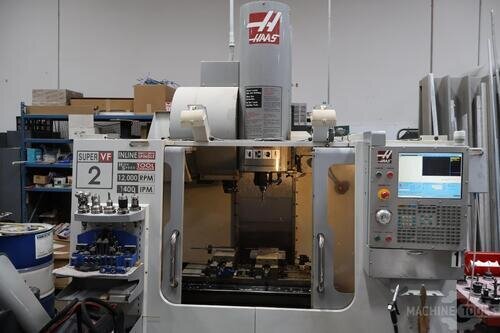
HAAS - VF2SS
VIEW MACHINE -
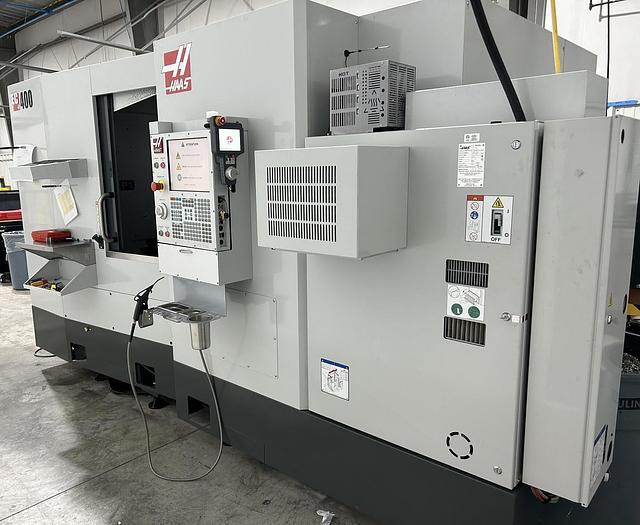
HAAS - EC400
VIEW MACHINE -
HAAS - VF12/50
VIEW MACHINE -
HAAS - EC300
VIEW MACHINE