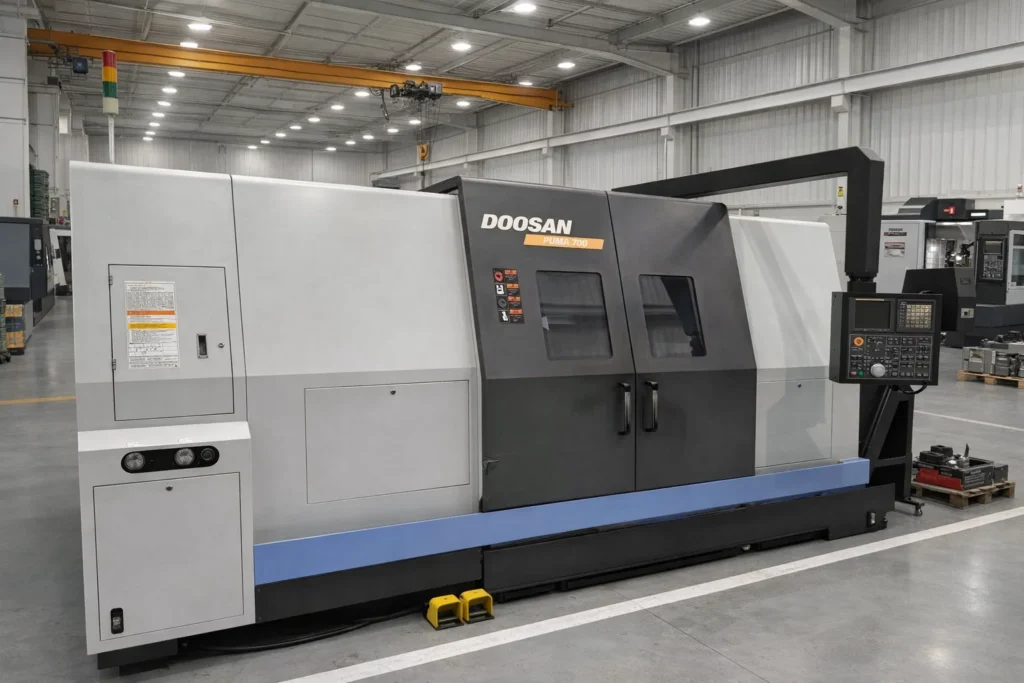
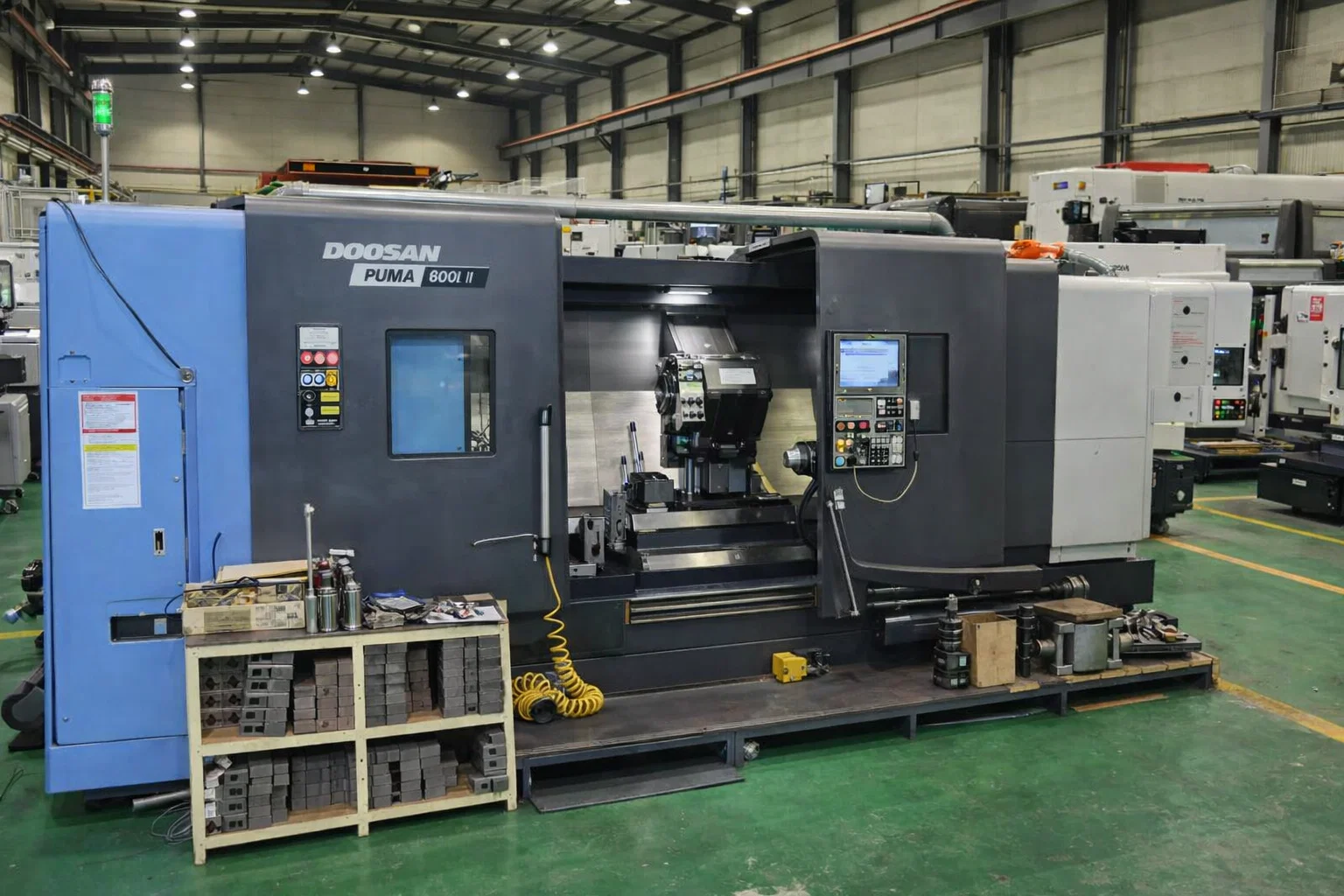
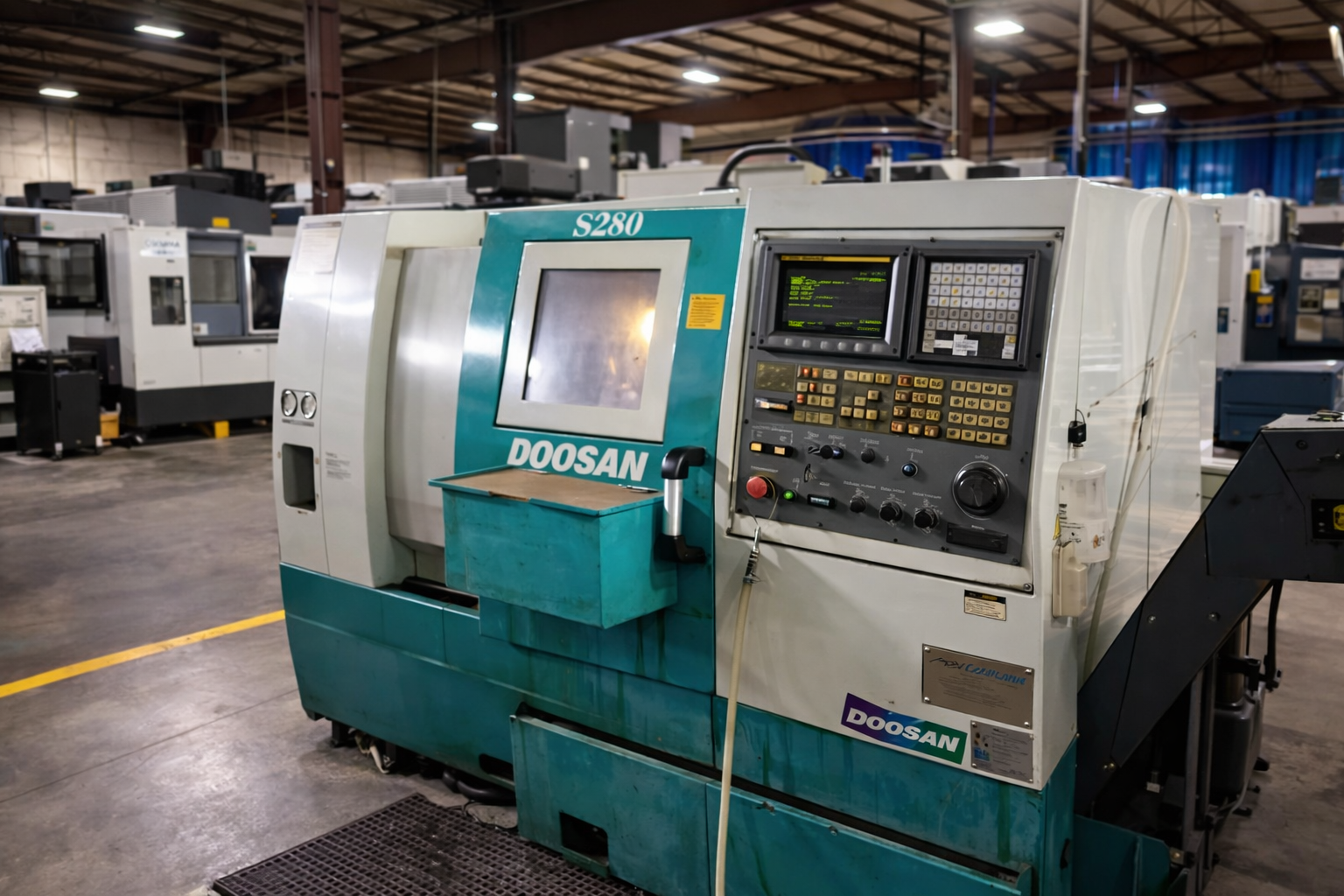
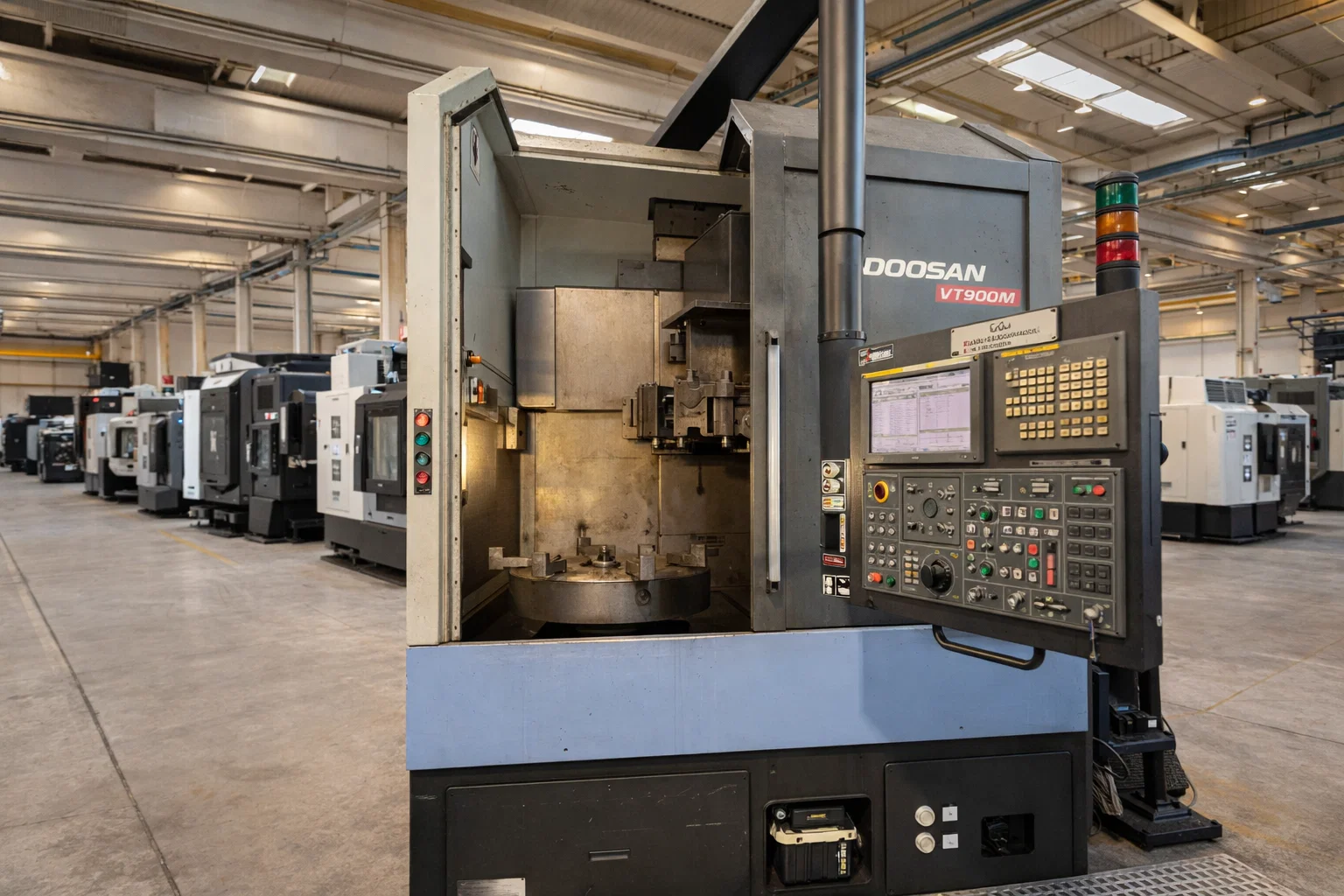
The Doosan Puma 700 is a large-capacity CNC turning center designed for machining heavy, oversized components with high precision and stability. Built with a rigid slant-bed structure and box guideways, the machine provides excellent vibration dampening and maintains accuracy even under extreme cutting conditions. It is equipped with a high-torque spindle delivering approximately 45 kW of power and speeds up to 1,500 RPM, enabling efficient roughing and finishing of tough materials.
The Puma 700 offers a substantial machining envelope, with a maximum turning diameter of around 900 mm and a turning length of approximately 1,600 mm, making it ideal for large shafts, flanges, and heavy cylindrical components. A standard 24-inch chuck and large bar capacity further enhance its ability to handle oversized workpieces. The machine typically features a 10- or 12-station turret and Fanuc CNC control, ensuring reliable programming, repeatability, and efficient operation.
Advanced configurations such as milling capability, Y-axis, and long-bed versions are also available within the Puma 700 series, allowing multi-tasking operations in a single setup. Known for its durability and high metal removal rates, the Puma 700 is widely used in industries such as oil & gas, power generation, and heavy engineering where large-part machining is required.
DOOSAN PUMA 700SPECIFICATIONS
DOOSAN PUMA 700 – AXIS
2 Axis CNC Turning Center
X Axis
Z Axis
DOOSAN PUMA 700 – AXIS TRAVELS
X-Axis Travel: Approx. 450 – 470 mm
Z-Axis Travel: Approx. 1,600 – 1,650 mm
DOOSAN PUMA 700 – CAPACITY
Maximum Turning Diameter: Approx. 900 mm
Maximum Turning Length: Approx. 1,600 mm
Maximum Swing Over Bed: Approx. 1,030 mm
Maximum Swing Over Carriage: Approx. 800 mm
DOOSAN PUMA 700 – SPINDLE
Spindle Nose: A1-15
Spindle Speed: Up to 1,500 RPM
Spindle Motor Power: Approx. 37 / 45 kW
High Torque Gearbox Spindle
Designed for Heavy Duty Cutting
DOOSAN PUMA 700 – TABLE
Heavy Duty Slant Bed Design
Box Guideways for High Rigidity
Stable Structure for Large Workpieces
DOOSAN PUMA 700 – TOOL TURRET
12 Station Turret
BMT Tooling System (Optional)
High Rigidity Tool Clamping
Fast Indexing
DOOSAN PUMA 700 – FEEDRATES
Rapid Traverse (X): Approx. 12 m/min
Rapid Traverse (Z): Approx. 16 m/min
High Precision Servo Feed System
DOOSAN PUMA 700 – COOLANT & CHIP MANAGEMENT
High Capacity Coolant System
Heavy Duty Chip Conveyor
Flood Coolant Standard
Optional High Pressure Coolant
DOOSAN PUMA 700 – CONTROL SYSTEM
FANUC CNC Control (21i / 0i / 31i Series)
User Friendly Interface
Advanced Programming Capabilities
Reliable and Widely Supported
DOOSAN PUMA 700 – POWER & AIR REQUIREMENTS
Power Requirement: Approx. 70 – 80 kVA
Air Supply Required for Tooling
Stable Power Recommended
DOOSAN PUMA 700 – DIMENSIONS
Machine Length: Approx. 6,000 – 7,000 mm
Machine Width: Approx. 2,500 mm
Machine Height: Approx. 2,700 mm
Machine Weight: Approx. 18,000 – 21,000 kg
DOOSAN PUMA 700 – GENERAL INFORMATION
Heavy Duty Large Frame CNC Turning Center
Designed for Large Diameter Components
High Rigidity and Stability
Suitable for Continuous Industrial Production
Excellent Surface Finish Capability
INDUSTRIES THAT USE DOOSAN PUMA 700
Oil & Gas Industry
Power Generation
Heavy Engineering
Automotive (Large Components)
Shipbuilding
TYPICAL PARTS DOOSAN PUMA 700 CAN PRODUCE
Large Shafts
Flanges
Valve Bodies
Oilfield Components
Heavy Cylindrical Parts
WHY CHOOSE DOOSAN PUMA 700
Extremely High Torque for Heavy Cutting
Large Diameter Machining Capability
Robust Box Guideway Construction
Proven Reliability in Heavy Industries
Ideal for Large and Complex Components
Long Machine Life
WHY BUY USED DOOSAN PUMA 700
Buying a used Doosan Puma 700 is a strong investment for manufacturers needing large-capacity turning capability at a significantly lower cost than new equipment. One of the biggest advantages is the machine’s heavy-duty construction, which ensures long service life even after extensive use. The rigid casting, box guideways, and powerful spindle allow the machine to maintain accuracy and performance over time, making it highly reliable in the used market.
Another key benefit is cost efficiency. The Puma 700 is a premium large-frame machine, and purchasing it used allows businesses to access its high-capacity machining capabilities—such as large chuck size, high torque, and extended turning capacity—at a fraction of the cost of a new unit. Immediate availability is also important, as new machines of this size often have long lead times, whereas used machines can be quickly installed and put into production.
Cutting hours are a critical factor when evaluating a used Puma 700. Machines with lower spindle usage typically offer better accuracy retention and lower maintenance costs. However, even machines with higher hours can still perform effectively due to their robust design, provided they have been properly maintained. Many used units also include valuable accessories such as steady rests, chip conveyors, and tooling, which further increase their overall value.
HOW MUCH DOES A USED DOOSAN PUMA 700COST?
The cost of a used Doosan Puma 700 varies depending on the year of manufacture, configuration, condition, and cutting hours. Machines manufactured before 2000 are relatively uncommon but typically range from approximately $20,000 to $40,000. These units often have older CNC controls and higher usage, making them more suitable for secondary operations or less demanding applications.
Machines produced between 2000 and 2010 generally fall within the $40,000 to $80,000 range. These models offer a good balance between cost and performance, often featuring Fanuc controls and moderate cutting hours. For many buyers, this category provides strong value, especially when supported by proper maintenance history.
Newer machines from 2010 to 2025 typically range from $80,000 to $180,000 or more, depending on configuration such as milling capability, Y-axis, or long-bed options. Listings for machines from the early 2010s have been seen exceeding $100,000, reflecting strong demand for well-maintained units. Machines with lower cutting hours command premium prices due to better accuracy retention and reduced maintenance needs, while high-hour machines are more affordable but may require refurbishment. Overall, cutting time, configuration, and included tooling remain the most important factors influencing the final price.