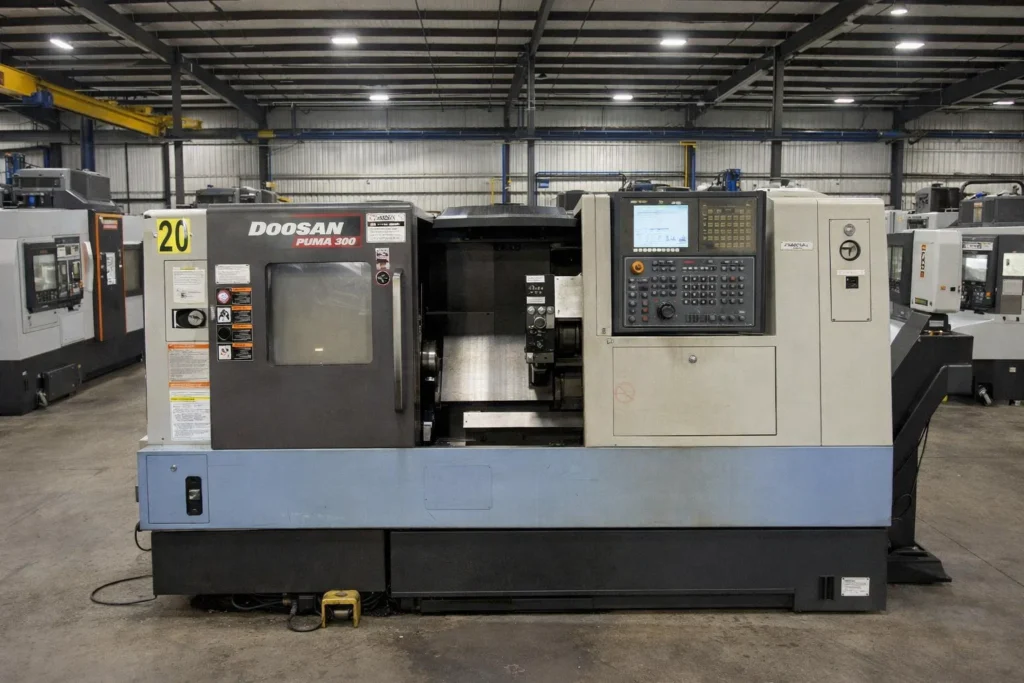
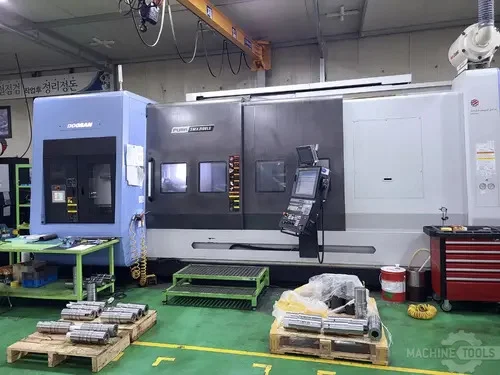
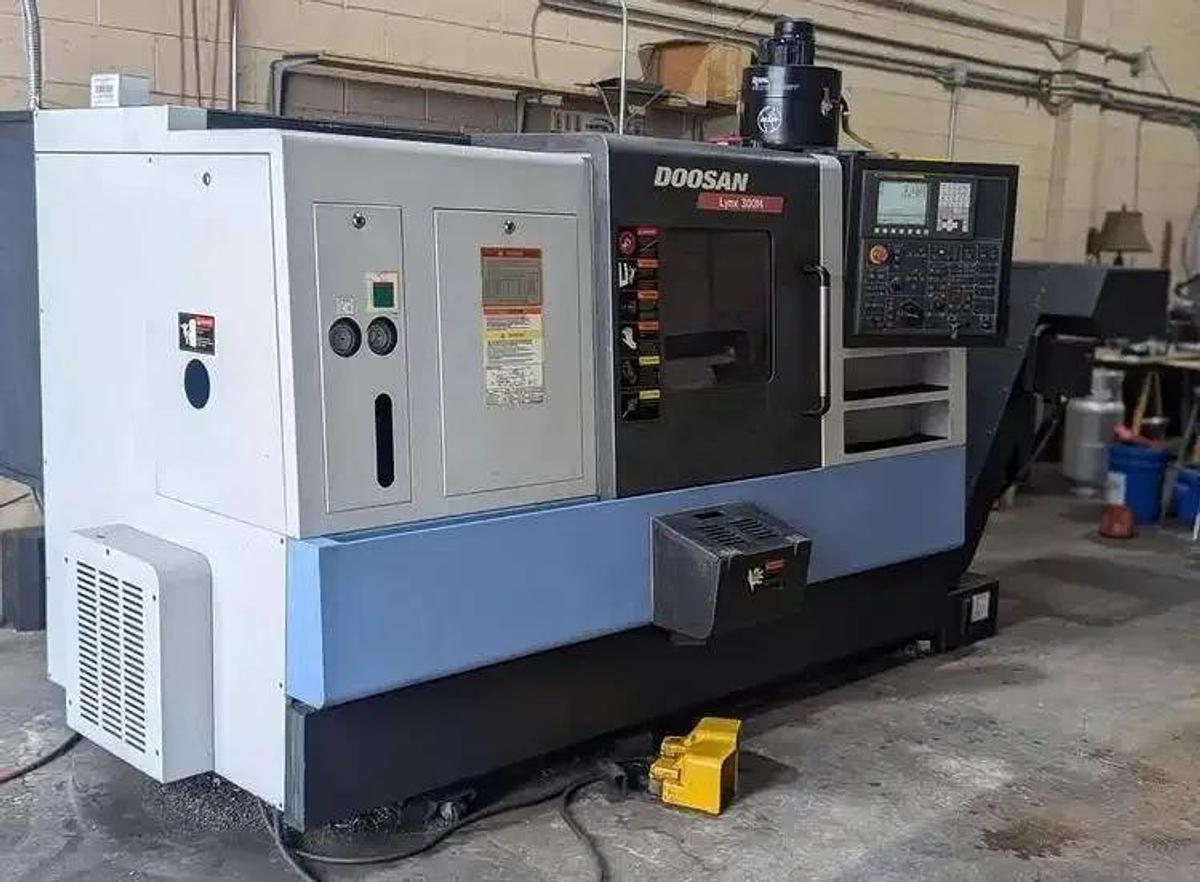
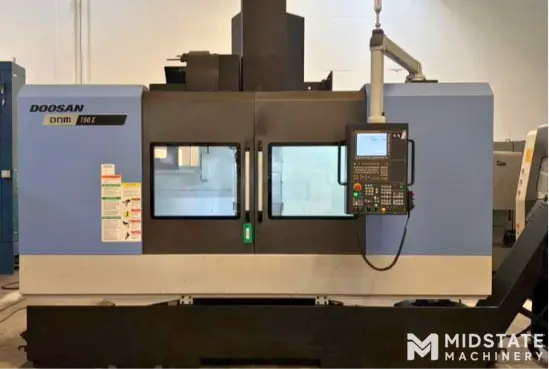
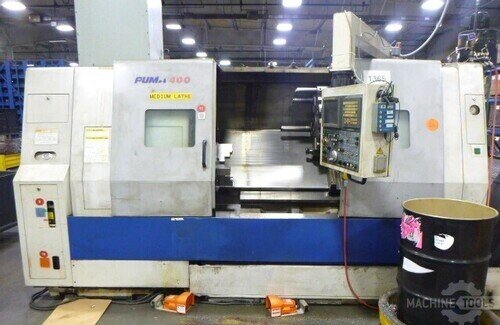
The Doosan Puma 300C is a heavy-duty CNC turning center designed for high-precision machining and large-part applications. Built with a rigid slant-bed structure and box guideways, the machine provides excellent stability, vibration damping, and long-term accuracy, making it well suited for demanding industries such as oil & gas, automotive, and general engineering. Its robust construction allows it to handle heavy cutting operations while maintaining consistent performance over extended production cycles.
The machine typically features a 12-inch chuck with a bar capacity of approximately 4 inches, supporting medium to large workpieces. It offers a maximum turning diameter of around 400 mm and a turning length of approximately 580–630 mm, providing flexibility for a wide range of machining applications. The spindle operates at speeds up to 2,800 RPM and is powered by a high-torque motor in the range of 26–35 HP, making it ideal for heavy material removal rather than high-speed finishing.
A 12-station turret is standard, allowing efficient multi-operation machining with quick indexing times. The machine is commonly equipped with a Fanuc CNC control, ensuring reliability, ease of programming, and compatibility with modern shop environments. Some configurations also include tailstock support, chip conveyors, and optional live tooling or sub-spindle setups, enhancing versatility. Overall, the Puma 300C is recognized for its strength, durability, and ability to handle larger turning applications with precision.
DOOSAN PUMA 300CSPECIFICATIONS
DOOSAN PUMA 300C – AXIS
2-Axis CNC Turning Center
Axes: X, Z
Designed for heavy-duty turning applications
DOOSAN PUMA 300C – AXIS TRAVELS
X-Axis Travel: ~250 mm
Z-Axis Travel: ~680 mm
Smooth and precise axis movement
DOOSAN PUMA 300C – CAPACITY
Maximum Turning Diameter: ~398 mm
Maximum Turning Length: ~580–630 mm
Bar Capacity: ~100–114 mm bore (~4”)
Swing Over Bed: ~589 mm
DOOSAN PUMA 300C – SPINDLE
Spindle Speed: Up to 2800 RPM
Spindle Motor Power: ~26 kW
Spindle Nose: A2-8 / A2-11
High torque spindle for heavy cutting
DOOSAN PUMA 300C – TABLE
Slant Bed Design
Chuck Size: 12 inch
Box guideways for rigidity
Suitable for heavy chucking work
DOOSAN PUMA 300C – TOOL TURRET
Turret Type: Servo Turret
Tool Capacity: 12 stations
Fast indexing system
Optional live tooling variants available
DOOSAN PUMA 300C – FEEDRATES
Rapid Traverse (X): ~20–24 m/min
Rapid Traverse (Z): ~24–30 m/min
Smooth and stable feed control
Optimized for heavy-duty machining
DOOSAN PUMA 300C – COOLANT & CHIP MANAGEMENT
Flood Coolant System
Chip Conveyor (standard/optional)
Efficient chip evacuation
High-pressure coolant option available
DOOSAN PUMA 300C – CONTROL SYSTEM
CNC Control: FANUC 21i / Oi Series
User-friendly interface
Reliable and widely used control
Supports advanced turning cycles
DOOSAN PUMA 300C – POWER & AIR REQUIREMENTS
Power Supply: ~35–45 kVA
Voltage: 3 Phase Industrial Supply
Air Pressure Requirement: ~5–6 bar
Stable power recommended
DOOSAN PUMA 300C – DIMENSIONS
Machine Length: ~3600 mm
Machine Width: ~1800 mm
Machine Weight: ~5700 kg
Heavy-duty machine structure
DOOSAN PUMA 300C – GENERAL INFORMATION
Type: CNC Turning Center
Manufacturer: Doosan Machine Tools
Designed for heavy-duty machining
Box guideway construction for rigidity
Suitable for batch and production work
INDUSTRIES THAT USE DOOSAN PUMA 300C
Automotive Industry
Aerospace Industry
Oil & Gas Industry
Heavy Engineering
Industrial Manufacturing
TYPICAL PARTS DOOSAN PUMA 300C CAN PRODUCE
Shafts and Bushings
Flanges
Valve Bodies
Heavy Cylindrical Components
Precision Turned Parts
WHY CHOOSE DOOSAN PUMA 300C
High torque for heavy-duty cutting
Strong box guideway construction
Reliable for long production runs
Large turning capacity
Easy-to-use FANUC control
Trusted CNC turning solution
WHY BUY USED DOOSAN PUMA 300C
Buying a used Doosan Puma 300C is a strong investment for shops that require heavy-duty turning capability without the cost of a new machine. One of the main advantages is its durability. The machine’s box guideway construction and rigid design allow it to maintain accuracy even after years of use, making it a dependable option in the used CNC market. This is particularly important for shops machining harder materials or larger components where machine rigidity is critical.
Another key benefit is its capability. The Puma 300C is designed for larger workpieces compared to smaller lathes, allowing shops to expand their machining capacity without investing in significantly larger or more expensive equipment. Its high torque spindle and stable cutting performance make it suitable for roughing operations as well as precision finishing.
Cost efficiency is also a major factor. A used Puma 300C offers strong performance, reliable spindle power, and proven CNC control systems at a fraction of the cost of a new machine. The widespread use of Fanuc controls ensures easy integration into existing shop environments, availability of spare parts, and access to experienced operators. Many used machines also come equipped with additional features such as tailstocks, chip conveyors, and tooling packages, further increasing productivity without additional investment.
For shops looking to handle larger parts or improve machining efficiency, the Puma 300C provides a reliable and cost-effective solution with proven industrial performance.
HOW MUCH DOES A USED DOOSAN PUMA 300CCOST?
The cost of a used Doosan Puma 300C depends on several factors, including manufacturing year, machine condition, configuration, and most importantly, cutting hours. Since this machine is often used in heavy-duty applications, cutting time plays a significant role in determining wear on critical components such as the spindle, turret, and guideways.
Machines manufactured before 2000 are relatively uncommon but typically fall within the range of $12,000 to $25,000. These units often have high cutting hours exceeding 25,000–40,000 hours and may require refurbishment, particularly in spindle assemblies and turret mechanisms.
Machines built between 2000 and 2010 are the most commonly available in the market and generally range from $25,000 to $60,000. These machines typically have cutting hours between 10,000 and 25,000 hours. Units with lower usage, proper maintenance history, and additional features such as tailstocks or chip conveyors tend to command higher prices within this range.
For newer machines from 2010 to 2025, prices typically range from $60,000 to $120,000 or more, especially for machines with lower cutting hours under 8,000–12,000 hours and upgraded configurations such as enhanced controls, tooling packages, or automation-ready features.
Ultimately, the best value comes from balancing age with cutting hours, as a well-maintained machine with moderate usage often provides better long-term reliability than a newer machine that has been heavily used in continuous production environments.