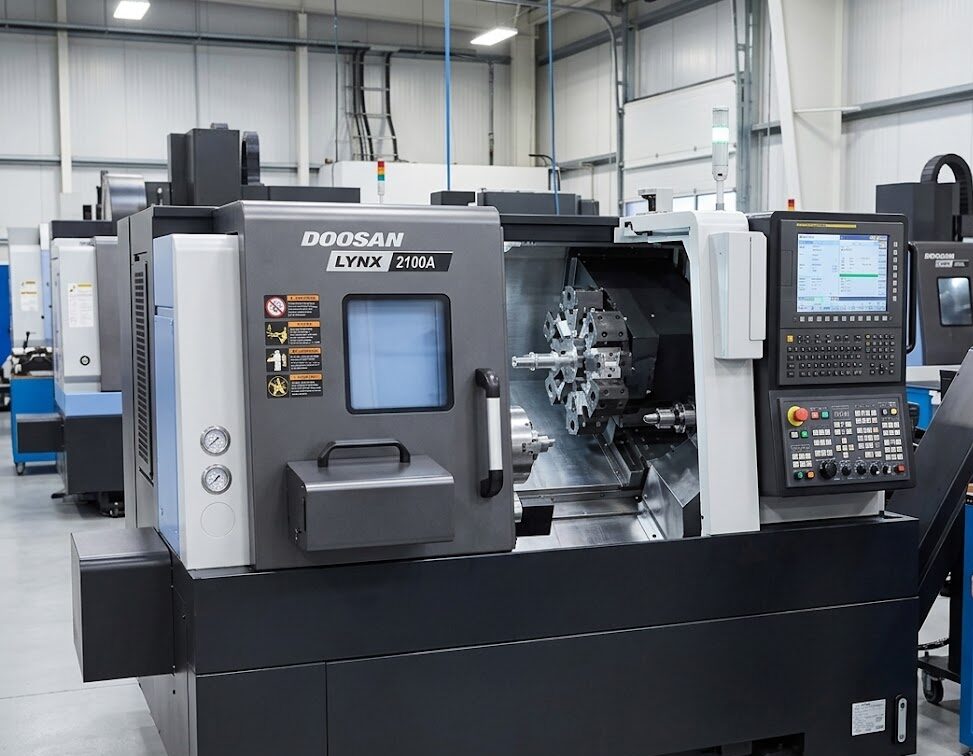
DOOSAN LYNX 2100A – 2002
USED DOOSAN LYNX 2100A – 2002
The 2002 Doosan Lynx 2100A is a compact, high-performance CNC turning center engineered for precision turning applications in both job shop and high-volume production environments. Manufactured by Doosan Machine Tools (now DN Solutions), the Lynx series has earned a strong reputation for reliability, machining accuracy, and long-term durability. Even after more than two decades, the 2002 Lynx 2100A remains a popular choice in the used CNC market thanks to its rigid construction, dependable performance, and cost-effective operation.
Designed with a heavy-duty 30-degree slant-bed casting, the Lynx 2100A provides exceptional rigidity and vibration damping, allowing it to maintain excellent surface finishes and tight tolerances during demanding machining operations. The machine is equipped with a powerful high-speed spindle, precision linear guideways, and a servo-driven turret that delivers rapid indexing and reduced non-cutting time. These features make it well suited for machining a wide variety of materials, including aluminum, carbon steel, stainless steel, brass, cast iron, and engineering plastics.
The 2002 Lynx 2100A is commonly fitted with a FANUC CNC control, offering intuitive programming, proven reliability, and compatibility with standard G-code programming. The machine supports turning, facing, grooving, threading, drilling, and boring operations, enabling manufacturers to produce high-quality precision components with minimal setup time. Its compact footprint also makes it an excellent solution for machine shops with limited floor space while still delivering impressive productivity.
Industries such as automotive, aerospace, oil and gas, medical, agriculture, hydraulic equipment, and general manufacturing continue to utilize the Doosan Lynx 2100A for precision production. Typical parts include shafts, bushings, hydraulic fittings, threaded components, bearing housings, valve bodies, couplings, adapters, flanges, and custom machined parts. The machine’s ability to consistently maintain dimensional accuracy has made it a trusted platform for both short-run and production machining.
Purchasing a used 2002 Doosan Lynx 2100A provides manufacturers with an affordable way to add dependable CNC turning capacity without the cost of new equipment. Doosan machines are known for their robust mechanical construction, readily available replacement parts, and excellent serviceability, allowing many older machines to remain productive for years. For machine shops seeking a reliable CNC lathe with proven performance and low operating costs, the used Doosan Lynx 2100A continues to be one of the best values in the used CNC equipment market.
DOOSAN LYNX 2100A – 2002 SPECIFICATIONS
Axis
| Specification | Value |
|---|---|
| Machine Type | CNC Turning Center |
| Controlled Axes | 2 Axes (X, Z) |
| X-Axis | Yes |
| Z-Axis | Yes |
| C-Axis | Optional (configuration dependent) |
Travels / Work Envelope
| Specification | Value |
|---|---|
| X-Axis Travel | 8.1 in (205 mm) |
| Z-Axis Travel | 13.4 in (340 mm) |
| Maximum Turning Diameter | 13.8 in (350 mm) |
| Maximum Turning Length | 13.0 in (330 mm) |
Table / Workholding
| Specification | Value |
|---|---|
| Chuck Size | 6 in |
| Maximum Bar Capacity | 2.0 in (51 mm) |
| Spindle Nose | A2-5 |
| Tailstock | Optional |
Spindle
| Specification | Value |
|---|---|
| Maximum Spindle Speed | 6,000 RPM |
| Spindle Motor | 20 HP (15 kW) |
| Spindle Bore | 2.4 in (61 mm) |
| Maximum Torque | 93.6 ft-lb (127 Nm) |
Tool Changer
| Specification | Value |
|---|---|
| Turret Capacity | 12 Stations |
| Turret Type | Servo Indexing |
| Maximum Boring Bar Diameter | 1.57 in (40 mm) |
| Tool Shank Size | 1.0 × 1.0 in (25 × 25 mm) |
CNC Control
| Specification | Value |
|---|---|
| CNC Control | FANUC 0i-T (common configuration) |
| Programming | ISO G-Code |
| Conversational Programming | Doosan EZ Guide (configuration dependent) |
Coolant / Chip Management
| Specification | Value |
|---|---|
| Coolant System | Flood Coolant |
| Chip Removal | Chip Conveyor (optional) |
| Coolant Tank | Integrated |
Power Requirements
| Specification | Value |
|---|---|
| Electrical Supply | 220V, 3-Phase |
| Connected Load | Approx. 24 kVA |
| Pneumatic Supply | 80–100 PSI (5.5–7 bar) |
Dimensions
| Specification | Value |
|---|---|
| Floor Space | Approx. 91 × 63 in (2,320 × 1,595 mm) |
| Machine Height | Approx. 67 in (1,693 mm) |
| Machine Weight | Approx. 6,850 lbs (3,100 kg) |
General Information
| Specification | Value |
|---|---|
| Manufacturer | Doosan Machine Tools (DN Solutions) |
| Model | Lynx 2100A |
| Year | 2002 |
| Machine Category | CNC Turning Center |
| Materials Machined | Steel, Stainless Steel, Aluminum, Brass, Cast Iron, Plastics |
| Typical Applications | Shafts, Bushings, Valve Bodies, Hydraulic Fittings, Flanges, Couplings, Precision Turned Components |
HOW MUCH DOES A USED DOOSAN LYNX 2100A – 2002 COST?
A used 2002 Doosan Lynx 2100A typically sells for $12,000 to $30,000 USD, depending on the machine’s condition, operating hours, maintenance history, tooling package, and included accessories such as a chip conveyor, tailstock, bar feeder, or parts catcher. Machines that have been regularly serviced and include modern FANUC controls, additional tooling, or upgraded options generally command higher prices.
When purchasing a used Lynx 2100A, buyers should evaluate spindle condition, turret accuracy, axis backlash, maintenance records, and overall machine geometry. A well-maintained machine can continue to deliver reliable, high-precision turning performance for many years, making it an excellent investment for machine shops seeking an affordable and dependable CNC lathe.
DOOSAN LYNX 2100A VS DOOSAN LYNX 220 – WHICH ONE TO BUY?
The Doosan Lynx 2100A and the Doosan Lynx 220 are both compact CNC turning centers designed for high-speed, high-precision production. While they share many similarities, the Lynx 220 represents the newer generation with improvements in rigidity, control technology, ergonomics, and overall machining efficiency. Both machines are excellent choices for manufacturers producing automotive parts, hydraulic fittings, aerospace components, medical devices, valves, bushings, and general precision turned parts.
The Doosan Lynx 2100A is a proven production lathe known for its compact footprint, rigid box construction, reliable spindle performance, and excellent value in the used machine market. With a maximum spindle speed of 6,000 RPM, a 12-station turret, and rapid traverse rates designed for high productivity, it delivers dependable performance for medium to high-volume production.
The Doosan Lynx 220 builds upon the success of the 2100A by offering improved machine rigidity, enhanced thermal stability, faster processing capabilities, newer Fanuc controls, and better operator accessibility. Shops looking for greater productivity, improved surface finishes, and compatibility with modern automation systems often prefer the Lynx 220 despite its higher purchase price.
If your budget is limited and you need a reliable machine with a proven service history, the Lynx 2100A remains an excellent investment. However, if you are purchasing a newer machine for long-term production with improved efficiency, reduced maintenance, and better automation capabilities, the Doosan Lynx 220 offers greater future value. Both machines are capable of delivering excellent machining accuracy, but the final decision should be based on production volume, budget, and the complexity of your parts.
DOOSAN LYNX 2100A SPINDLE NOT TURNING – CAUSES AND TROUBLESHOOTING
If the spindle on your Doosan Lynx 2100A does not rotate, the problem may be related to machine safety systems, electrical components, hydraulic pressure, spindle drive faults, or programming errors. Most spindle problems can be diagnosed systematically without immediately assuming a major mechanical failure.
Start by checking the CNC control for active alarms. Emergency stop activation, safety door interlocks, lubrication alarms, hydraulic pressure warnings, spindle drive alarms, or servo faults will automatically prevent spindle rotation. Verify that all alarms have been cleared before attempting to restart the machine.
Next, inspect the spindle drive system. Loose electrical connections, damaged encoder cables, blown fuses, faulty spindle amplifiers, or overloaded spindle motors can interrupt spindle operation. Also confirm that hydraulic pressure, lubrication systems, coolant flow, and pneumatic supplies are functioning correctly, as these systems directly affect spindle safety and operation.
Review the CNC program carefully. Missing M03 or M04 commands, incorrect spindle speed settings, interrupted tool change sequences, or improper work offsets may prevent spindle startup. After power interruptions or battery replacement, machine parameters or spindle reference settings may also require verification before production can resume.
If the spindle attempts to rotate but immediately stops, inspect for mechanical issues such as worn spindle bearings, seized chuck mechanisms, excessive workpiece load, damaged belts (where applicable), or tooling interference. Excessive spindle vibration, unusual noise, or overheating are common signs of bearing wear requiring professional inspection.
Routine lubrication, regular spindle inspections, clean electrical cabinets, and scheduled preventive maintenance significantly reduce unexpected spindle failures. If spindle alarms remain active after completing these checks, advanced diagnostics by a qualified service technician are recommended to prevent further damage.
DOOSAN LYNX 2100A MAINTENANCE AND PREVENTIVE CARE GUIDE
Regular preventive maintenance is essential for maintaining the accuracy, reliability, and productivity of the Doosan Lynx 2100A. Designed for continuous production environments, the machine performs best when lubrication systems, spindle components, turret assemblies, and coolant systems are maintained according to schedule.
Daily maintenance should include cleaning chips from the machine enclosure, chuck, turret, and guideways. Operators should verify coolant levels, coolant concentration, lubrication oil, hydraulic pressure, pneumatic pressure, and spindle cleanliness before beginning production. Tool holders, jaws, and workholding devices should also be inspected for wear and damage.
Weekly maintenance should include cleaning electrical cabinet filters, inspecting coolant pumps, chip conveyors, coolant nozzles, automatic lubrication systems, and hydraulic components. Operators should verify proper turret indexing and inspect spindle taper surfaces and chuck clamping performance for consistent machining accuracy.
Monthly maintenance should focus on checking spindle runout, turret alignment, ball screws, linear guideways, encoder cables, electrical connections, coolant filtration systems, and machine leveling. Hydraulic hoses, lubrication lines, coolant tanks, and chip removal systems should also be inspected for leaks or contamination.
Preventive maintenance also includes monitoring spindle vibration, checking backlash, replacing worn filters, inspecting chuck cylinders, maintaining lubrication systems, and verifying machine geometry. Recording maintenance activities allows operators to identify recurring issues before they become costly repairs. Shops that consistently follow preventive maintenance schedules typically experience improved machine reliability, longer spindle life, higher machining accuracy, better surface finishes, and significantly reduced production downtime.
FAQ
What is the Doosan Lynx 2100A?
The Doosan Lynx 2100A is a compact 2-axis CNC turning center designed for high-speed precision turning operations. It features a rigid machine structure, 6-inch chuck, 6,000 RPM main spindle, 12-station turret, and Fanuc-based CNC control. The machine is widely used in automotive, aerospace, medical, oil and gas, hydraulic, and general precision manufacturing industries for producing high-quality turned components efficiently.
What are the most common problems with the Doosan Lynx 2100A?
The most common problems include spindle alarms, hydraulic pressure faults, turret indexing errors, lubrication system warnings, coolant contamination, encoder faults, servo alarms, chuck clamping issues, tool offset errors, chip conveyor malfunctions, and occasional electrical communication faults. Like most production CNC lathes, these issues are largely preventable through routine maintenance, proper lubrication, scheduled inspections, coolant management, and timely replacement of wear components.
Related Products
-
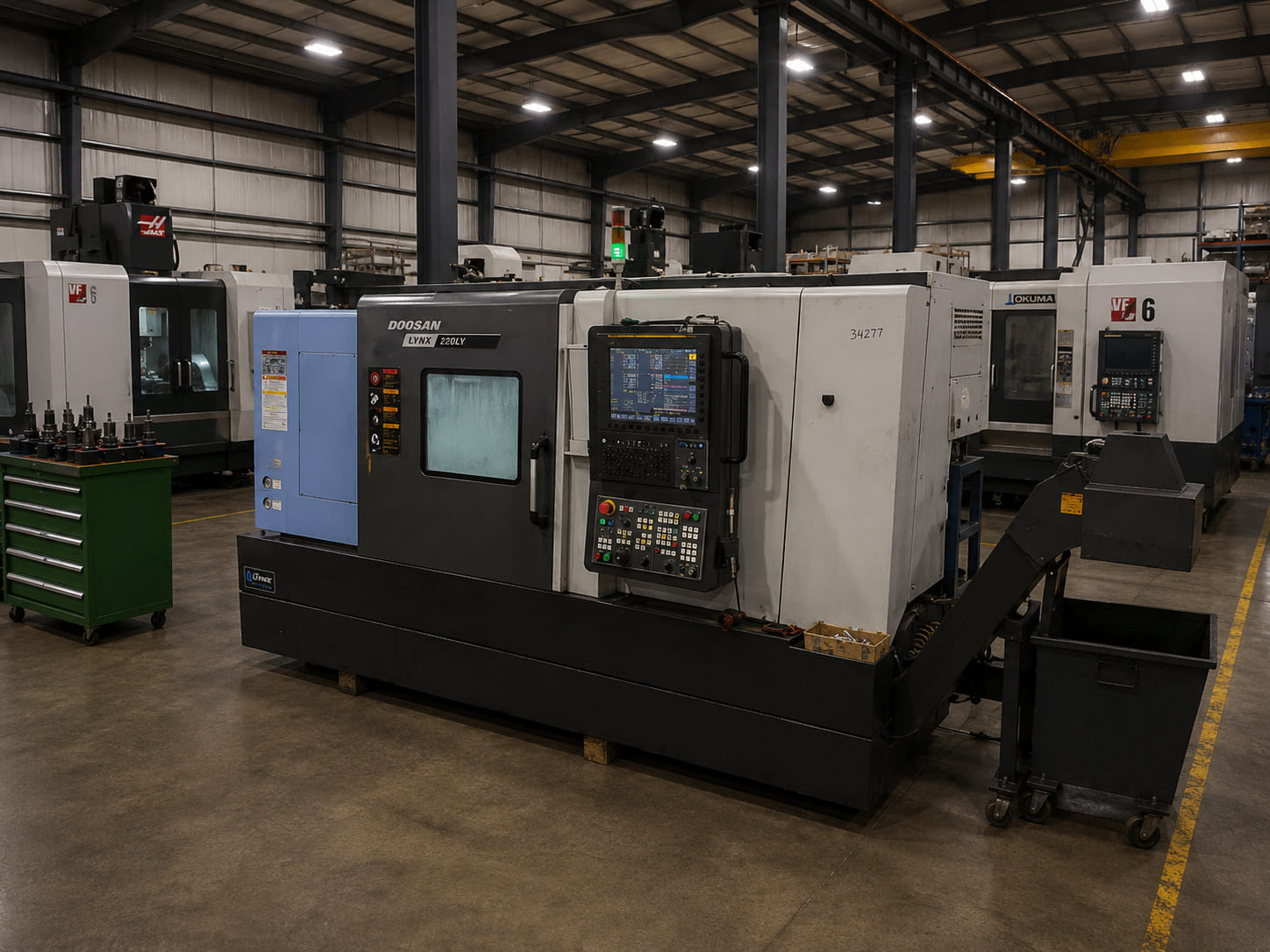
DOOSAN - LYNX 2100LSYB
VIEW MACHINE -
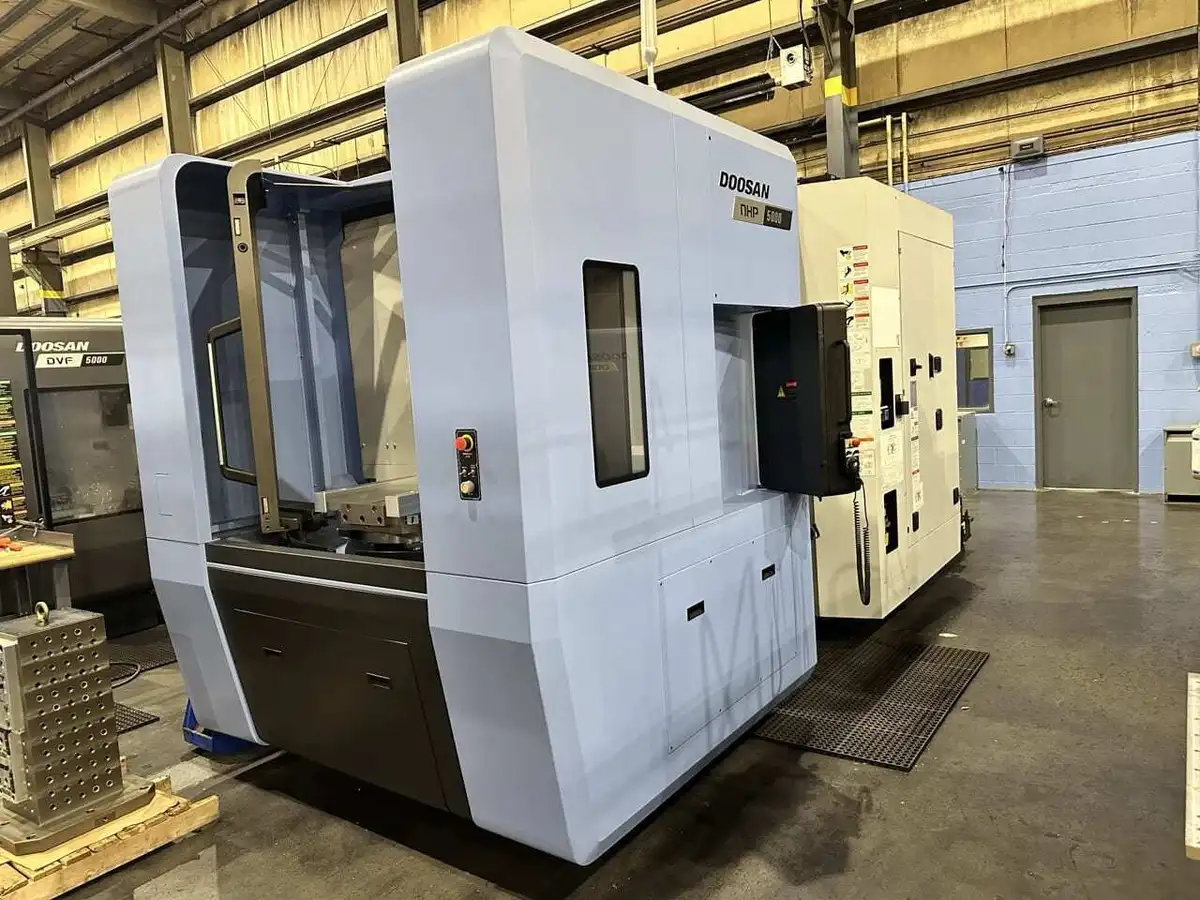
DOOSAN - NHP 5000
VIEW MACHINE -
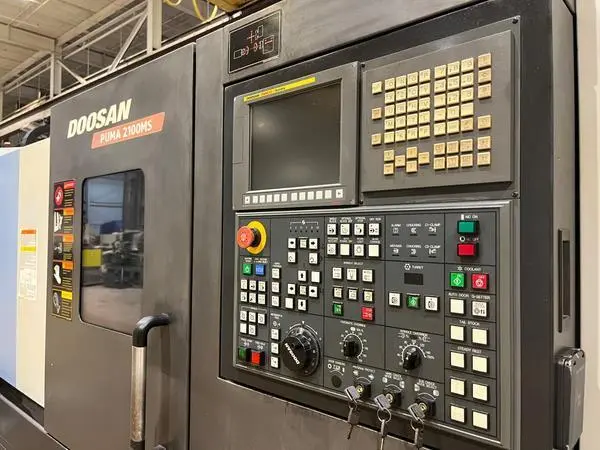
DOOSAN - PUMA 2100MS
VIEW MACHINE -
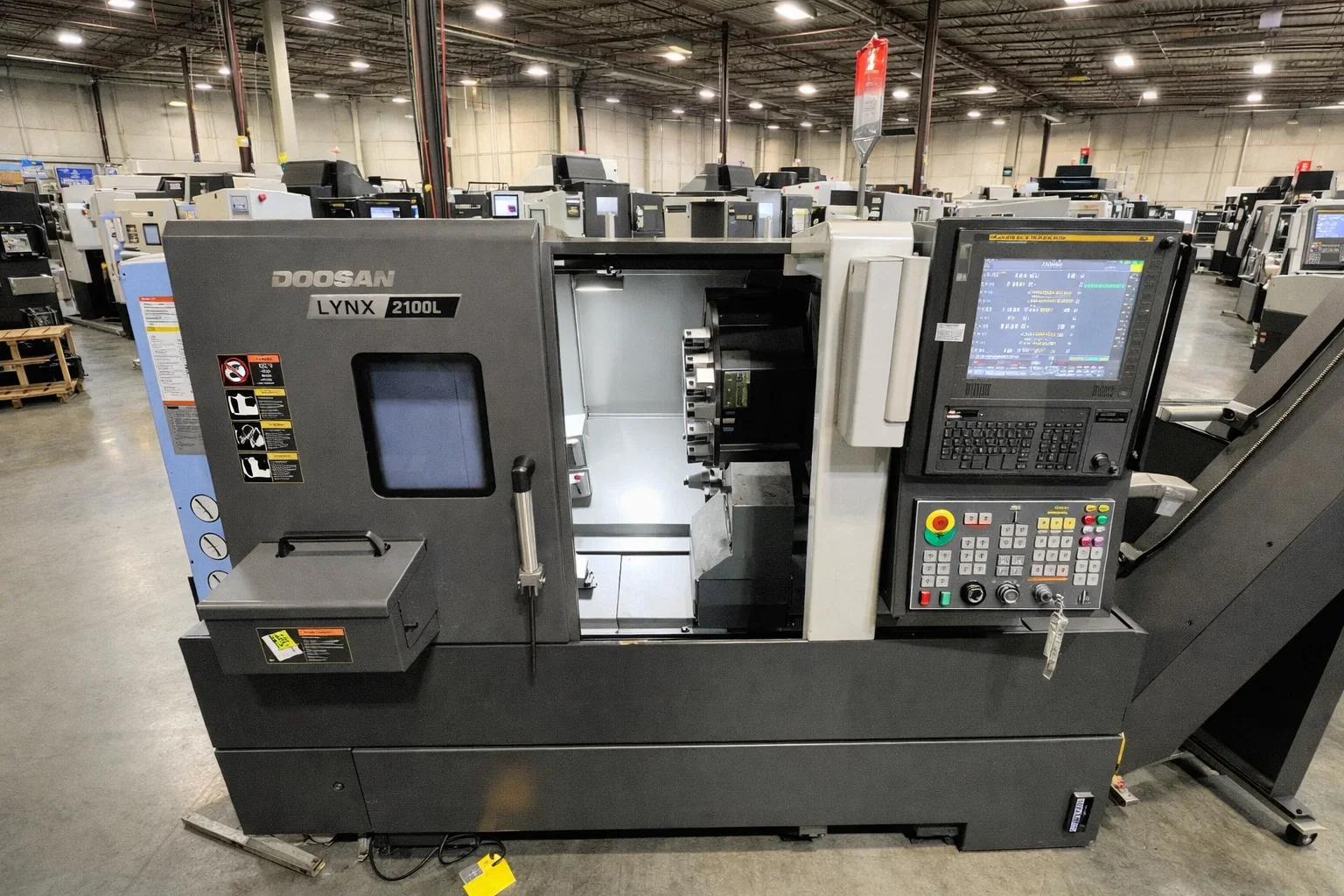
DOOSAN - LYNX 2100L
VIEW MACHINE