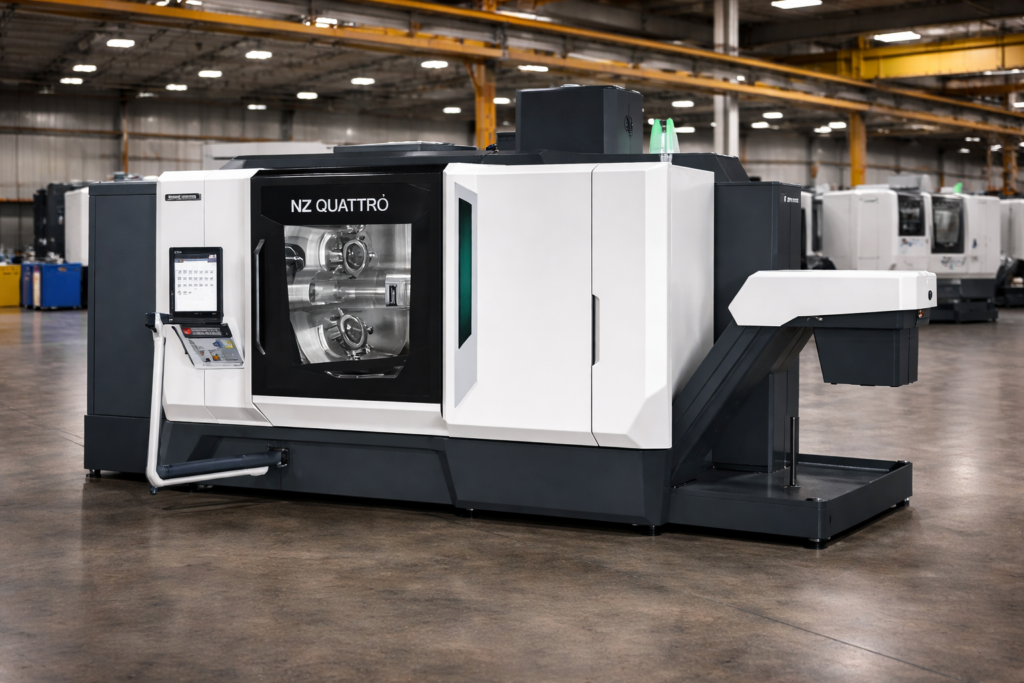
DMG MORI NZ QUATTRO
USED DMG MORI NZ QUATTRO
The DMG MORI NZ QUATTRO is one of the most advanced high-production multi-tasking turning centers in the NZ platform, designed specifically for mass production of complex components with extremely short cycle times. What sets this machine apart is its four-turret configuration, each equipped with a Y-axis and optional B-axis, enabling simultaneous multi-sided machining and significantly increasing productivity compared to conventional dual-turret machines.
The NZ QUATTRO supports workpieces up to approximately 1,290 mm in length with a bar capacity of 72 mm, making it suitable for a wide range of medium-sized production parts. Its turnMASTER main and counter spindles can reach speeds of up to 7,000 rpm with high torque output, enabling efficient material removal even in demanding production environments.
A key strength of this machine is its ability to perform true parallel machining. With four turrets working simultaneously, multiple operations can be carried out at the same time on one or two spindles, dramatically reducing cycle time per part. Each turret is equipped with live tooling capabilities, with milling speeds up to 12,000 rpm, allowing turning, milling, and drilling operations to be completed in a single setup.
The optional B-axis on all four turrets allows for 5-axis simultaneous machining, enabling the production of highly complex geometries without secondary operations. Additionally, the twin-spindle configuration enables full 6-sided machining in two independent work zones, further improving efficiency and flexibility.
The NZ QUATTRO is also designed for automation, supporting gantry loaders, robotic systems, and integrated production lines for continuous 24/7 operation. Advanced control systems such as MAPPS and CELOS enhance usability, simulation, and digital integration.
Overall, the NZ QUATTRO is a flagship production machine that delivers extreme productivity, flexibility, and precision, making it ideal for high-volume manufacturing environments where cycle time reduction is critical.
DMG MORI NZ QUATTRO SPECIFICATIONS
| DMG MORI NZ QUATTRO – AXIS |
|---|
| X-Axis (Upper Turret 1 – Radial Movement) |
| Z-Axis (Upper Turret 1 – Longitudinal Movement) |
| Y-Axis (Upper Turret 1 – Off-center milling) |
| X2-Axis (Upper Turret 2 – Radial Movement) |
| Z2-Axis (Upper Turret 2 – Longitudinal Movement) |
| Y2-Axis (Upper Turret 2 – Milling capability) |
| X3-Axis (Lower Turret 1 – Radial Movement) |
| Z3-Axis (Lower Turret 1 – Longitudinal Movement) |
| Y3-Axis (Lower Turret 1 – Milling capability) |
| X4-Axis (Lower Turret 2 – Radial Movement) |
| Z4-Axis (Lower Turret 2 – Longitudinal Movement) |
| Y4-Axis (Lower Turret 2 – Milling capability) |
| C-Axis (Main Spindle Indexing) |
| C2-Axis (Second Spindle Indexing) |
| DMG MORI NZ QUATTRO – AXIS TRAVELS |
|---|
| X-Axis Travel: approx. 200–260 mm |
| Z-Axis Travel: approx. 500–700 mm |
| Y-Axis Travel: approx. ±40–60 mm |
| X2 / X3 / X4 Travel: approx. 200–260 mm |
| Z2 / Z3 / Z4 Travel: approx. 500–700 mm |
| Y2 / Y3 / Y4 Travel: approx. ±40–60 mm |
| C-Axis Rotation: 360° continuous |
| C2-Axis Rotation: 360° continuous |
| DMG MORI NZ QUATTRO – CAPACITY |
|---|
| Maximum Turning Diameter: approx. 250–320 mm |
| Maximum Turning Length: approx. 500–700 mm |
| Maximum Bar Capacity: approx. 51–65 mm |
| Maximum Workpiece Weight: approx. 100–180 kg |
| DMG MORI NZ QUATTRO – SPINDLE |
|---|
| Main Spindle Speed: up to 5,000–6,000 rpm |
| Second Spindle Speed: up to 5,000–6,000 rpm |
| Main Spindle Power: approx. 15–22 kW |
| Second Spindle Power: approx. 15–22 kW |
| High-performance synchronized spindles |
| DMG MORI NZ QUATTRO – TABLE / WORKHOLDING |
|---|
| Chuck Size: approx. 150–210 mm |
| Dual Spindle Configuration |
| Hydraulic Chuck System |
| Bar Feeder Compatibility |
| Automatic part transfer between spindles |
| DMG MORI NZ QUATTRO – TOOL TURRET |
|---|
| Quad Turret Configuration (4 Turrets) |
| Number of Tool Stations: approx. 12 per turret |
| Live Tooling with full Y-axis on all turrets |
| High-speed indexing turrets |
| Simultaneous 4-tool machining capability |
| DMG MORI NZ QUATTRO – FEEDRATES |
|---|
| Rapid Traverse: up to 30–40 m/min |
| Multi-channel simultaneous machining |
| Extremely high productivity |
| Reduced cycle times with parallel operations |
| DMG MORI NZ QUATTRO – COOLANT & CHIP MANAGEMENT |
|---|
| Flood Coolant System |
| Optional High-pressure Coolant |
| Chip Conveyor |
| Optimized chip evacuation for continuous production |
| DMG MORI NZ QUATTRO – CONTROL SYSTEM |
|---|
| Control System: Mitsubishi / FANUC |
| Advanced multi-channel CNC control |
| 4-turret synchronization capability |
| User-friendly interface |
| DMG MORI NZ QUATTRO – POWER & AIR REQUIREMENTS |
|---|
| Power Requirement: approx. 60–90 kVA |
| Air Supply: approx. 5–6 bar |
| Energy-efficient design |
| DMG MORI NZ QUATTRO – DIMENSIONS |
|---|
| Machine Length: approx. 4,000–5,500 mm |
| Machine Width: approx. 2,500–3,200 mm |
| Machine Height: approx. 2,400–3,000 mm |
| Machine Weight: approx. 9,000–14,000 kg |
| DMG MORI NZ QUATTRO – GENERAL INFORMATION |
|---|
| Machine Type: Dual Spindle, Quad Turret CNC Turning Center |
| Full Y-axis on all turrets |
| Designed for ultra-high productivity |
| Ideal for mass production |
| Supports complete machining in one setup |
| INDUSTRIES THAT USE DMG MORI NZ QUATTRO |
|---|
| Automotive |
| Aerospace |
| Medical Devices |
| Electronics |
| High-volume Manufacturing |
| TYPICAL PARTS DMG MORI NZ QUATTRO CAN PRODUCE |
|---|
| High-volume precision components |
| Automotive shafts and fittings |
| Medical device parts |
| Complex turned and milled components |
| Small to medium intricate parts |
| WHY CHOOSE DMG MORI NZ QUATTRO |
|---|
| Quad Turret for Maximum Productivity |
| Simultaneous 4-tool Machining |
| Reduced Cycle Times |
| Ideal for Mass Production |
| High Precision and Reliability |
WHY BUY USED DMG MORI NZ QUATTRO
Purchasing a used NZ QUATTRO is a strategic move for manufacturers aiming to maximize production output while minimizing capital investment. As one of the most advanced production turning machines available, it is engineered for durability and continuous operation, making it highly suitable for the used machinery market.
One of the biggest advantages is the exceptional cost-to-output ratio. The four-turret configuration allows simultaneous machining operations, meaning multiple tools can cut at the same time. This dramatically reduces cycle time and increases throughput, even when the machine is pre-owned. In many cases, a used NZ QUATTRO can outperform multiple standard CNC lathes combined.
Cutting time is the most critical factor when evaluating a used NZ QUATTRO. Because these machines are typically used in high-volume production environments, accumulated hours can be high. Machines with lower cutting time—ideally under 20,000–25,000 hours—offer better long-term value. Units with low usage (under 10,000–15,000 hours) command premium pricing due to reduced wear on spindles, turrets, and guideways.
Another key benefit is access to advanced features such as four turrets, twin spindles, Y-axis machining on all stations, and optional B-axis capability at a fraction of the cost of a new machine. These features enable manufacturers to handle complex, high-volume parts efficiently without investing in new equipment.
Additionally, DMG MORI machines benefit from strong global support, including spare parts availability and service networks. The NZ platform’s modular design also makes maintenance and upgrades more manageable, helping extend the machine’s operational life.
In summary, a used NZ QUATTRO offers unmatched productivity, advanced multi-tasking capability, and cost efficiency, making it an ideal investment for manufacturers focused on high-volume, high-precision production.
HOW MUCH DOES A USED DMG MORI NZ QUATTRO COST?
The cost of a used NZ QUATTRO depends on several factors, including year of manufacture, configuration (number of turrets, B-axis options, automation), condition, and most importantly, total cutting time. As one of the most advanced production machines in its class, it commands a premium compared to standard CNC lathes.
For machines manufactured before 2000, there are no direct NZ QUATTRO models, but comparable high-end production lathes typically range from $80,000 to $180,000. These machines lack multi-turret configurations, Y-axis capability on all stations, and advanced automation features.
Machines produced between 2000 and 2010 (early multi-turret or twin-spindle production lathes) generally fall within the $200,000 to $400,000 range. These models offer improved CNC controls and higher productivity but do not match the performance and flexibility of the NZ QUATTRO. Units with lower cutting time—typically under 20,000–25,000 hours—are priced toward the higher end.
For actual NZ QUATTRO machines manufactured between 2015 and 2025, used prices typically range from $400,000 to $900,000 depending on configuration, automation systems, and tooling capacity. Machines equipped with B-axis functionality on all turrets and advanced automation setups command significantly higher prices.
Cutting time plays a decisive role in valuation. Due to continuous production usage, machines with high accumulated hours may require maintenance on spindles, turrets, and linear systems. Machines with low cutting time (under 10,000–15,000 hours) are priced at the higher end due to longer remaining service life and better precision retention.
Buyers should carefully evaluate maintenance records, turret synchronization accuracy, and spindle condition rather than relying solely on age. A well-maintained machine with moderate usage can still deliver exceptional productivity.
Overall, the cost of a used NZ QUATTRO is determined by a combination of age, configuration, and actual usage, with cutting time being the most critical factor in assessing long-term value and performance.
Related Products
-
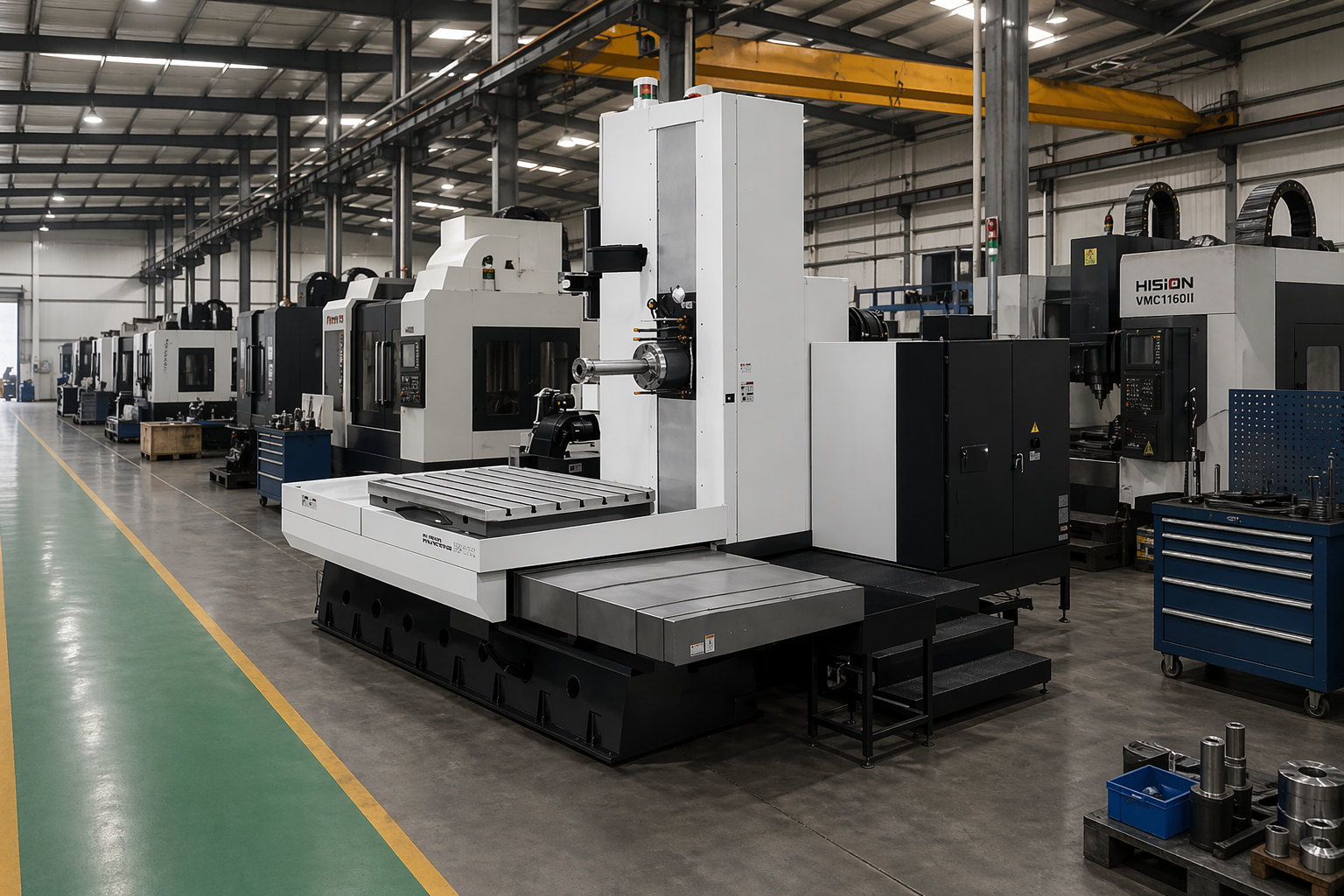
DMG MORI - KBT 11EZ
VIEW MACHINE -
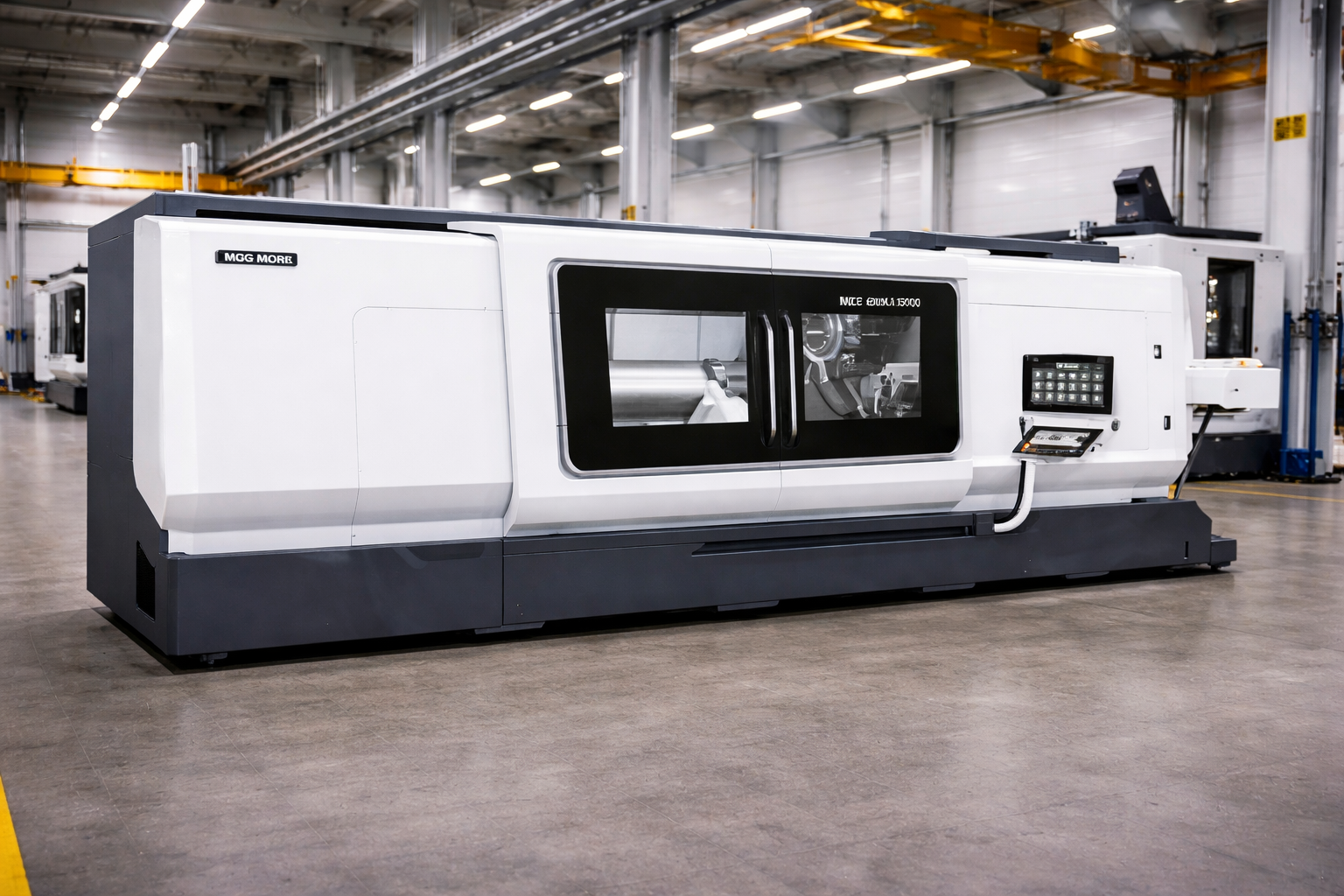
DMG MORI - NZX 4000
VIEW MACHINE -
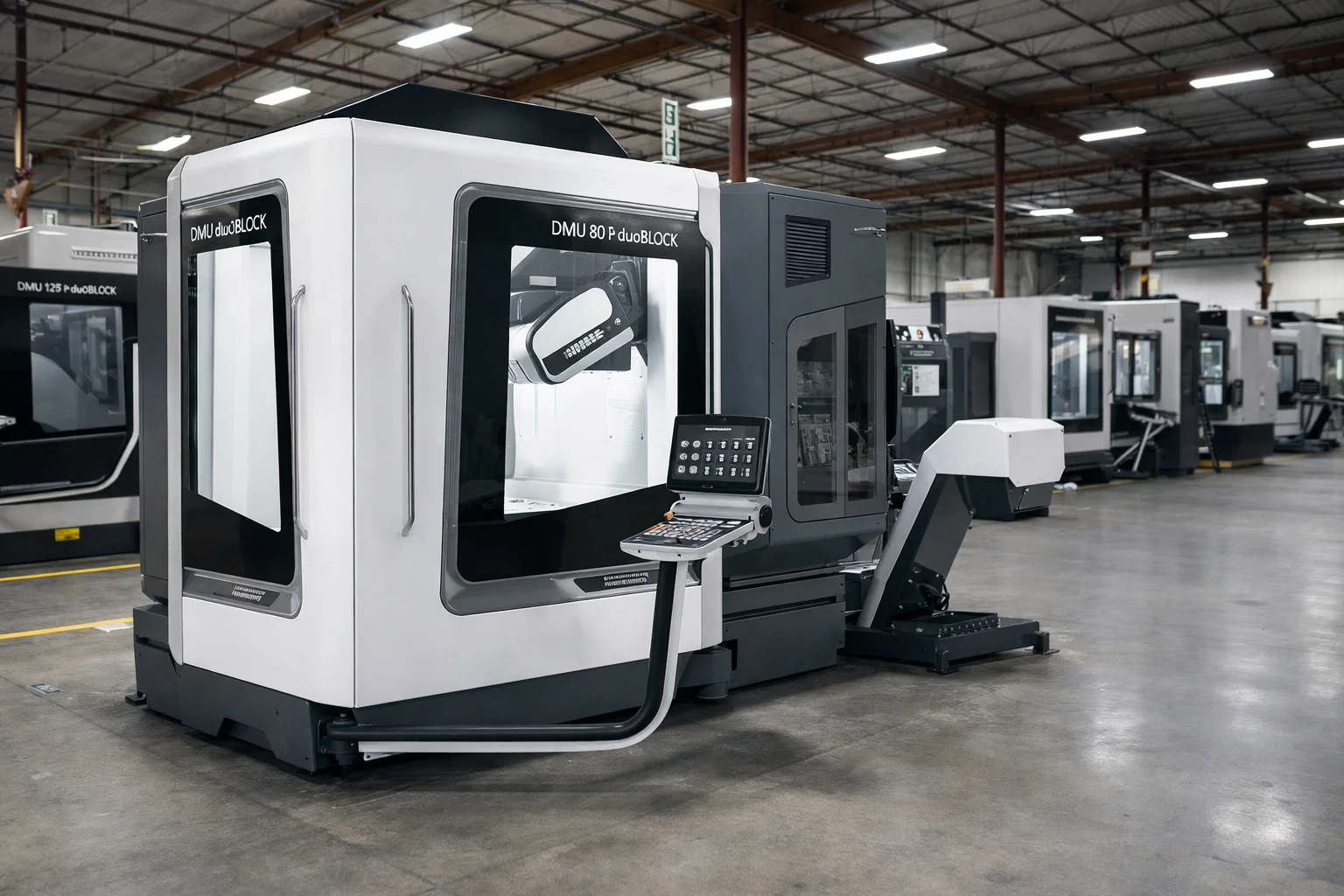
DMG MORI - DMU 80P (FD) duoBLOCK
VIEW MACHINE -
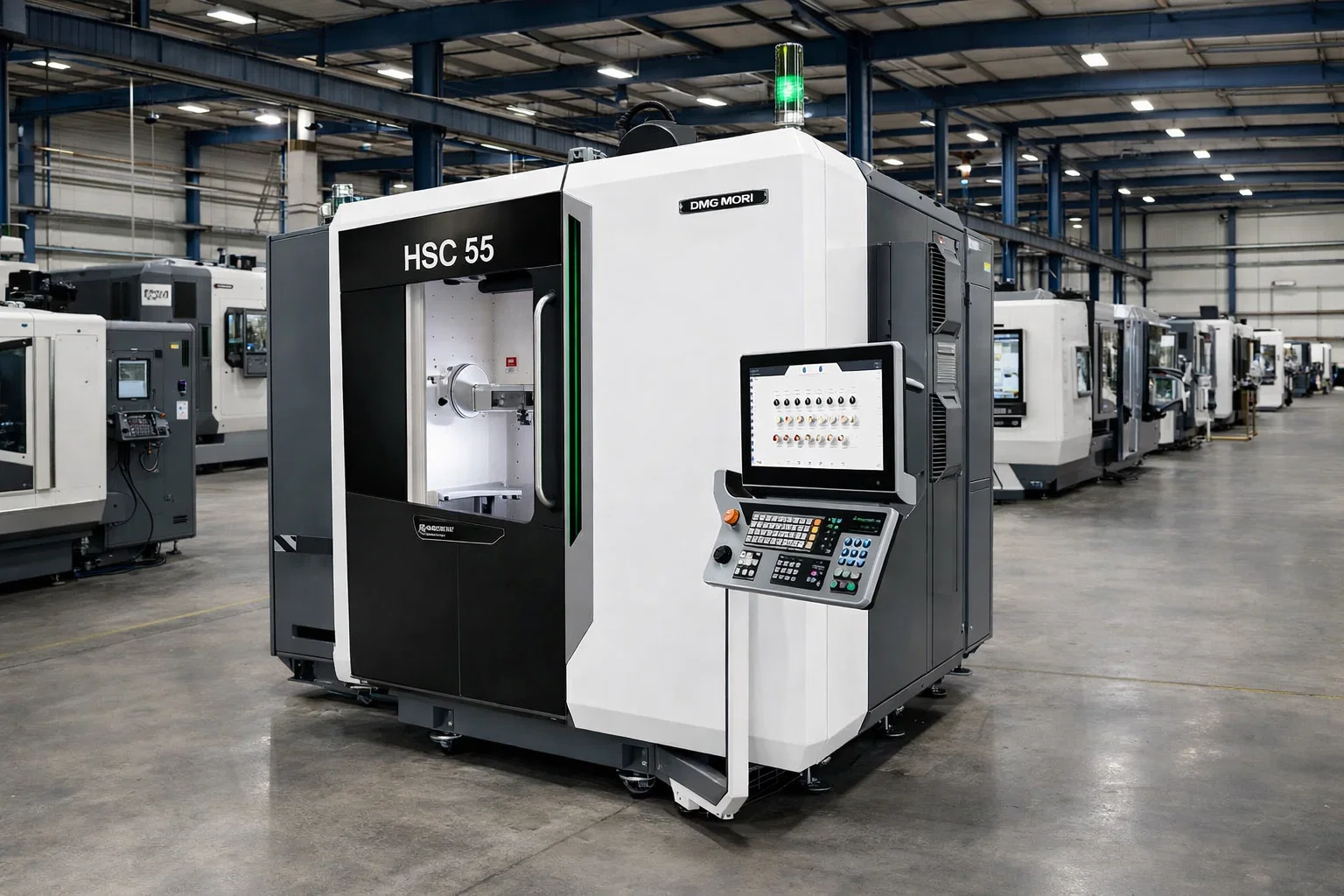
DMG MORI - HSC 55 linear
VIEW MACHINE