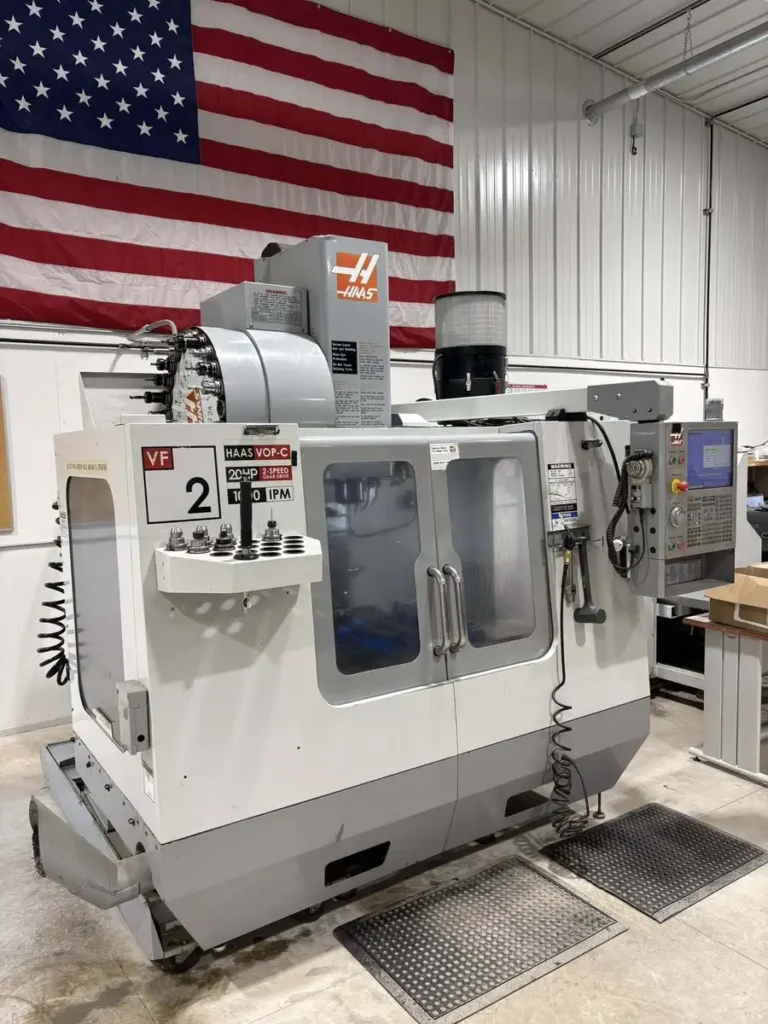
USED HAAS VF2 2006
The HAAS VF2 2006 is a proven CNC Vertical Machining Center (VMC) built for precision machining, production manufacturing, and general-purpose milling applications. As one of the most successful machines in the Haas VF Series, the VF2 has earned a reputation for durability, ease of programming, and dependable performance in machine shops around the world. The 2006 model features a rigid cast-iron construction, precision linear guideways, and the reliable Classic Haas CNC Control, making it well suited for machining aluminum, steel, stainless steel, cast iron, brass, titanium, and engineering plastics. Its combination of machining accuracy, low maintenance requirements, and strong aftermarket support continues to make the HAAS VF2 2006 one of the most desirable used CNC machining centers available.
The 2006 HAAS VF2 provides 30 inches (762 mm) of X-axis travel, 16 inches (406 mm) of Y-axis travel, and 20 inches (508 mm) of Z-axis travel, giving manufacturers an ideal work envelope for machining precision components, tooling, fixtures, molds, and production parts. The 36″ × 14″ (914 × 356 mm) precision-ground table supports workpieces weighing up to 3,000 lbs (1,361 kg). Standard machines were equipped with an 8,100 RPM inline direct-drive spindle powered by a 30 HP (22.4 kW) vector drive motor featuring a CT40/CAT40 spindle taper. Factory options included 10,000 RPM spindle, 12,000 RPM spindle, 2-speed gearbox, Through-Spindle Coolant (TSC), High-Speed Machining (HSM), Renishaw probing, programmable coolant nozzle, chip auger, chip conveyor, rotary tables, and expanded memory. Since Haas offered numerous factory-installed options, actual specifications may vary depending on the original machine configuration.
Purchasing a used HAAS VF2 2006 allows manufacturers to acquire a dependable production machining center at a fraction of the cost of a comparable new machine. With thousands of Haas VF machines still operating worldwide, owners benefit from excellent parts availability, experienced service technicians, simple maintenance, and strong resale value. A properly maintained VF2 2006 can continue delivering accurate and reliable production for many years, making it an outstanding investment for job shops, educational institutions, and manufacturing facilities.
HAAS VF2 2006 – AXIS
| Specification | Value |
|---|---|
| X Axis | 762 mm (30″) |
| Y Axis | 406 mm (16″) |
| Z Axis | 508 mm (20″) |
| Number of Controlled Axes | 3 (4th & 5th Axis Ready) |
HAAS VF2 2006 – AXIS TRAVELS / WORK ENVELOPE
| Specification | Value |
|---|---|
| X Travel | 762 mm |
| Y Travel | 406 mm |
| Z Travel | 508 mm |
| Table Size | 914 × 356 mm (36″ × 14″) |
| Maximum Table Load | 1,361 kg (3,000 lbs) |
HAAS VF2 2006 – CAPACITY
| Specification | Value |
|---|---|
| Table Size | 914 × 356 mm |
| Maximum Workpiece Weight | 1,361 kg (3,000 lbs) |
| T-Slots | 3 |
| T-Slot Width | 15.9–16.0 mm |
HAAS VF2 2006 – SPINDLE
| Specification | Value |
|---|---|
| Maximum Spindle Speed | 8,100 RPM |
| Spindle Motor | 30 HP (22.4 kW) Vector Drive |
| Spindle Taper | CT40 / CAT40 |
| Spindle Type | Inline Direct Drive |
| Maximum Torque | 122 Nm (90 ft-lb) |
| Through Spindle Coolant | Optional |
| 2-Speed Gearbox | Optional |
HAAS VF2 2006 – TOOL CHANGER
| Specification | Value |
|---|---|
| Tool Capacity | 20 Tools |
| Tool Changer Type | Automatic Carousel |
| Tool Selection | Random Access |
| Tool-to-Tool Time | Approximately 4.2 Seconds |
| Chip-to-Chip Time | Approximately 4.5 Seconds |
HAAS VF2 2006 – CONTROL SYSTEM
| Specification | Value |
|---|---|
| CNC Control | Classic Haas CNC Control |
| Programming | ISO Standard G-Code |
| USB | Standard |
| Ethernet | Optional |
| Rigid Tapping | Standard |
| User Macros | Optional |
| 4th & 5th Axis Drive & Wiring | Standard |
HAAS VF2 2006 – COOLANT / CHIP MANAGEMENT
| Specification | Value |
|---|---|
| Flood Coolant | Standard |
| Automatic Lubrication | Standard |
| Window Air Blast | Standard |
| Coolant Tank | 208 L (55 gal) |
| Chip Auger | Optional |
| Chip Conveyor | Optional |
| Through Spindle Coolant | Optional |
HAAS VF2 2006 – POWER REQUIREMENTS
| Specification | Value |
|---|---|
| Electrical Supply | 220–440V Three Phase |
| Connected Load | Approximately 35 kVA |
| Air Requirement | 4 SCFM @ 100 PSI |
HAAS VF2 2006 – DIMENSIONS
| Specification | Value |
|---|---|
| Length | Approximately 2,570 mm (101″) |
| Width | Approximately 2,510 mm (99″) |
| Height | Approximately 2,570 mm (101″) |
| Machine Weight | Approximately 3,540 kg (7,800 lbs) |
HAAS VF2 2006 – GENERAL INFORMATION
| Item | Details |
|---|---|
| Manufacturer | Haas Automation |
| Model | VF2 |
| Year | 2006 |
| Machine Type | CNC Vertical Machining Center |
| CNC Control | Classic Haas CNC Control |
| Spindle Taper | CT40 / CAT40 |
| Tool Capacity | 20 Tools |
| 4th & 5th Axis Ready | Yes |
INDUSTRIES THAT USE HAAS VF2 2006
The HAAS VF2 2006 is widely used in aerospace, automotive, mold and die, medical device manufacturing, industrial machinery, electronics, defense, energy, and precision contract machining. Its rigid machine structure and dependable spindle allow efficient machining of aluminum, steel, stainless steel, cast iron, titanium, brass, and engineering plastics while maintaining excellent dimensional accuracy and surface finish.
TYPICAL PARTS HAAS VF2 2006 CAN PRODUCE
The HAAS VF2 2006 commonly manufactures aerospace brackets, hydraulic manifolds, valve bodies, mold inserts, die components, gearbox housings, production fixtures, robotic components, pump housings, aluminum enclosures, tooling plates, medical device components, machine parts, and custom precision-machined products.
The machine performs face milling, contour milling, drilling, tapping, boring, pocket milling, thread milling, engraving, interpolation, and precision finishing operations. When equipped with an optional rotary table, it can efficiently machine multiple sides of complex components in a single setup, improving accuracy while reducing cycle times.
WHY CHOOSE HAAS VF2 2006
The HAAS VF2 2006 remains one of the best values in the used CNC market because it combines proven mechanical reliability with excellent machining capability and affordable ownership costs. Its rigid cast-iron construction, powerful inline spindle, intuitive Classic Haas Control, and extensive aftermarket support make it suitable for both small job shops and large manufacturing facilities. Even after years of production use, properly maintained VF2 machines continue to provide consistent accuracy and dependable daily performance.
WHY BUY USED HAAS VF2 2006
Purchasing a used HAAS VF2 2006 allows manufacturers to reduce capital investment while acquiring a machine capable of many more years of productive service. Many used machines include valuable factory-installed options such as Through-Spindle Coolant, probing systems, chip conveyor, rotary tables, High-Speed Machining software, programmable coolant nozzle, and tooling packages, substantially increasing their overall value.
Before purchasing, buyers should inspect spindle condition, spindle hours, ballscrews, guideways, lubrication system, tool changer operation, coolant equipment, electrical cabinet, machine geometry, and maintenance history. Machines with documented service records and lower operating hours generally provide the greatest long-term value.
HOW MUCH DOES A USED HAAS VF2 2006 COST?
The value of a used HAAS VF2 2006 depends on spindle hours, maintenance history, tooling package, installed options, and overall machine condition. Machines equipped with Through-Spindle Coolant, probing systems, rotary tables, chip conveyor, low spindle hours, and complete maintenance documentation generally command higher resale prices.
Depending on machine condition, spindle hours, tooling, and installed factory options, a used HAAS VF2 2006 typically sells within an estimated price range of $22,000 to $40,000 USD. Premium machines with low operating hours, extensive options, and documented maintenance history may exceed this range, while higher-hour machines requiring refurbishment may sell below it. A properly maintained HAAS VF2 2006 continues to deliver dependable machining performance, excellent reliability, and outstanding long-term value for manufacturers seeking a versatile CNC vertical machining center.
HAAS VF2 VS MAZAK VCN-530C – WHICH VERTICAL MACHINING CENTER IS BETTER?
The HAAS VF2 and MAZAK VCN-530C are both highly capable CNC vertical machining centers, but they are designed with somewhat different priorities. Both machines can perform milling, drilling, tapping, boring, and contouring operations for industries ranging from general manufacturing to aerospace and automotive production. Choosing between them depends on factors such as budget, production requirements, desired spindle performance, automation needs, operator experience, and long-term ownership costs.
The HAAS VF2 is widely known for its affordability, straightforward operation, and strong presence in the CNC machining market. It is commonly used by job shops, prototype manufacturers, educational institutions, and production facilities. One of its main advantages is the HAAS CNC control, which is generally considered easy to learn and operate. The VF2 also benefits from a large installed base, making used machines, experienced operators, tooling, and replacement parts relatively accessible.
The MAZAK VCN-530C is generally positioned as a more premium and production-oriented vertical machining center. MAZAK machines are known for rigid construction, advanced engineering, and strong capabilities in demanding manufacturing environments. Depending on the configuration, the VCN-530C may offer high-performance spindle options, rapid axis movement, advanced control features, and automation capabilities designed to support efficient production.
Machine rigidity is an important consideration when comparing these two models. The MAZAK VCN-530C is typically selected by manufacturers that require consistent performance during demanding machining operations and longer production cycles. The HAAS VF2, however, offers excellent versatility for general machining and can be a highly productive machine when properly configured and operated within its capabilities.
The initial investment can also influence the decision. A HAAS VF2 may provide a lower-cost entry into CNC machining, particularly in the used equipment market. The MAZAK VCN-530C may require a greater investment but can offer advantages for shops focused on advanced manufacturing, higher production demands, and premium machine construction.
Neither machine is automatically better for every application. A job shop looking for affordability, simple programming, and versatility may prefer the HAAS VF2. A manufacturer requiring greater production capability, rigidity, and advanced machine features may find the MAZAK VCN-530C to be the stronger choice. The best decision should be based on the specific machine configuration, condition, application, and total cost of ownership.
HAAS VF2 AXIS NOT MOVING – X, Y, OR Z AXIS TROUBLESHOOTING
When the X, Y, or Z axis on a HAAS VF2 does not move, the problem can originate from several mechanical, electrical, control, or safety-related systems. The axis may fail to move completely, move only in one direction, stop unexpectedly, or generate an alarm. Proper troubleshooting is important because repeatedly attempting to force machine movement without identifying the cause can result in additional damage.
The first step is to check the machine control for alarms or error messages. Servo, overtravel, motor, encoder, lubrication, or drive-related alarms can provide valuable information about the affected system. The emergency stop condition and machine operating mode should also be verified. In some situations, an axis may not move because the machine is not properly referenced or because an operating condition is preventing motion.
Overtravel conditions are another common cause of axis movement problems. If an axis has reached or exceeded its allowable travel limit, the machine may prevent further movement in that direction. The operator should carefully follow the appropriate recovery procedure rather than attempting to force the axis.
Servo motors and drive systems should also be considered. A failed servo motor, damaged cable, faulty amplifier, encoder issue, or electrical connection problem can prevent the axis from moving. Depending on the fault, the machine may generate a specific alarm or show unusual servo behavior.
Mechanical problems can also cause axis movement failure. Ball screw damage, bearing failure, coupling problems, linear guideway damage, or severe chip contamination can create excessive resistance. In some cases, a machine crash may damage mechanical components and cause the axis to bind.
The lubrication system should not be overlooked. Inadequate lubrication can contribute to excessive friction and mechanical wear. If an axis has been operating without proper lubrication, damage may extend beyond the original lubrication problem.
Troubleshooting should proceed systematically. Record all alarms, determine whether the problem affects one axis or multiple axes, inspect for visible obstructions, and evaluate mechanical movement before replacing components. Complex electrical and servo repairs should generally be performed by a qualified CNC service technician.
Correctly identifying the root cause is essential. Replacing a servo motor when the actual problem is a damaged ball screw or mechanical obstruction can result in unnecessary cost and extended downtime.
HAAS VF2 INSTALLATION AND SHOP SETUP GUIDE
Proper installation of a HAAS VF2 is important for machine accuracy, reliability, operator safety, and long-term performance. Before the machine arrives, the shop should be prepared to handle the machine’s physical dimensions, weight, electrical requirements, air supply, coolant needs, and material handling requirements. Careful planning can prevent installation delays and reduce the risk of damage during rigging and startup.
The first consideration is the machine location. The HAAS VF2 should be placed on a suitable floor capable of supporting the machine and associated equipment. The installation area should provide adequate space for operator access, maintenance, loading materials, opening electrical cabinets, servicing the spindle area, and handling tooling. Sufficient clearance is also needed for chip removal equipment, coolant tanks, automation systems, and other accessories.
The machine should be positioned and leveled according to the manufacturer’s installation procedures. Proper leveling is important because machine geometry and axis movement can be affected by an improperly supported machine. The floor condition should also be evaluated before installation, particularly when placing the machine in an older building or an area with questionable concrete thickness or structural capacity.
Electrical preparation is another major requirement. The shop must provide the correct voltage, phase, grounding, disconnect equipment, and electrical capacity for the machine. These requirements should be confirmed for the exact VF2 configuration before installation because electrical specifications can vary depending on the machine’s age and options.
A clean and properly regulated compressed air supply is also necessary for machine functions that depend on pneumatic systems. Air quality and pressure should be maintained according to the machine requirements. Moisture and contamination can contribute to premature wear or pneumatic component problems.
The shop should also prepare for coolant and chip management. A suitable coolant system, proper concentration, regular maintenance, and an effective chip removal strategy can improve machining performance and reduce cleanup requirements.
After installation, the machine should be inspected, leveled, powered correctly, and tested before production begins. Axis movement, spindle operation, tool changer performance, safety systems, and coolant functions should all be verified.
A properly planned HAAS VF2 installation creates the foundation for reliable operation. Preparing the shop before delivery can reduce downtime, improve safety, and help ensure that the machine begins production with the correct utilities, working space, and support systems in place.
WHAT INDUSTRIES USE THE HAAS VF2?
The HAAS VF2 is used across a broad range of industries because of its versatility and ability to perform multiple machining operations on a relatively compact CNC vertical machining center. The machine can be configured for prototype work, low-volume production, repeat manufacturing, and general precision machining. Its combination of CNC capability, accessible operation, and flexible tooling makes it suitable for companies ranging from small job shops to larger manufacturing organizations.
General machine shops are among the most common users of the HAAS VF2. These facilities often produce components for multiple customers and industries, requiring a machine that can quickly change between different part types. The VF2 can machine fixtures, brackets, housings, plates, shafts, tooling components, and other precision parts.
The aerospace industry also uses vertical machining centers for producing components, fixtures, tooling, prototypes, and support equipment. Depending on the material and part design, the HAAS VF2 can be used to machine aluminum, steel, stainless steel, and other engineering materials commonly found in aerospace manufacturing.
Automotive and transportation manufacturers use CNC vertical machining centers for prototype components, production fixtures, molds, tooling, and precision mechanical parts. The VF2 can be useful for both development work and production support, particularly where flexibility is more important than dedicated high-volume automation.
Medical manufacturing is another industry where precision CNC machining is important. Machine shops producing surgical instruments, fixtures, device components, and manufacturing tooling may use machines such as the HAAS VF2, depending on the required tolerances and material specifications.
The electronics and technology industries use CNC machining for enclosures, heat sinks, brackets, prototype parts, and specialized manufacturing equipment. Aluminum and engineering plastics are commonly machined for these applications.
Tool and die shops can also use the HAAS VF2 for machining molds, dies, fixtures, electrodes, and custom tooling. Its ability to perform detailed contouring and precision milling makes it useful for a variety of tooling applications.
Educational institutions and technical training centers frequently use HAAS machines because the control interface can provide students with practical CNC operating and programming experience.
Overall, the HAAS VF2 is used in aerospace, automotive, medical, electronics, defense-related manufacturing, general engineering, mold and die work, energy, robotics, education, and many other sectors. Its versatility allows it to support a wide range of machining requirements.
HOW DO I MAINTAIN THE SPINDLE ON A HAAS VF2?
Proper spindle maintenance is essential for maintaining the performance, accuracy, and reliability of a HAAS VF2. The spindle is one of the machine’s most important and expensive components, and excessive wear or damage can result in costly repairs and extended downtime. Although the spindle assembly itself is largely a precision unit that should not be unnecessarily disassembled by the operator, several daily operating and preventive maintenance practices can help extend its service life.
One of the most important practices is keeping the spindle taper clean. Chips, coolant residue, oil, and other contamination can prevent proper contact between the toolholder and spindle taper. This can contribute to poor tool retention, runout problems, vibration, and potential damage. The spindle taper and toolholder should be inspected and cleaned using appropriate procedures before tools are loaded.
Toolholders should also be maintained carefully. Damaged, dirty, or unbalanced toolholders can create excessive vibration, particularly at higher spindle speeds. Pull studs must be compatible with the spindle and installed correctly. Using incorrect or damaged retention components can affect tool clamping and may cause serious spindle damage.
Operators should pay attention to unusual spindle noises and vibration. Grinding, rumbling, excessive whining, or changes in normal operating sound can indicate potential bearing or mechanical problems. These issues should be investigated early rather than allowing the machine to continue operating under questionable conditions.
Proper cutting parameters are also important. Excessive tool loads, aggressive cuts beyond the machine’s capabilities, unbalanced cutting forces, and repeated crashes can shorten spindle life. Selecting appropriate tooling, spindle speeds, feed rates, and machining strategies can reduce unnecessary stress.
Warm-up procedures can be beneficial, particularly after extended periods of inactivity or when operating in changing temperature conditions. Gradually increasing spindle speed allows the spindle to reach normal operating conditions before demanding machining begins.
Coolant and chip contamination should also be controlled. The machine should be cleaned regularly, and damaged seals or covers should be repaired promptly to prevent contaminants from reaching sensitive components.
Regular inspection and preventive maintenance can help identify problems before major spindle failure occurs. By keeping the taper clean, maintaining tooling, monitoring spindle behavior, using appropriate machining parameters, and addressing unusual conditions promptly, HAAS VF2 owners can improve spindle reliability and extend the productive life of the machine.
Related Products
-
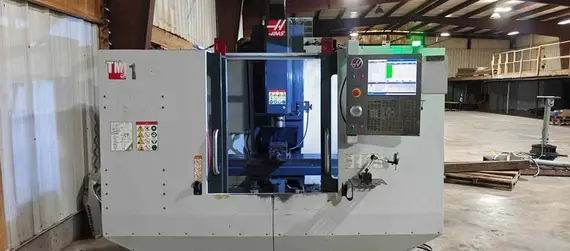
HAAS - TM1P
VIEW MACHINE -
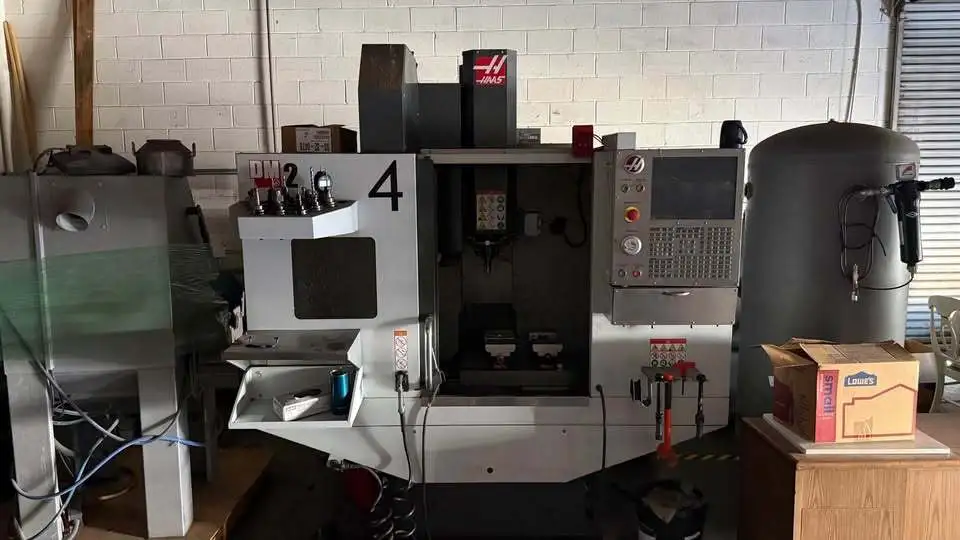
HAAS - DM2
VIEW MACHINE -
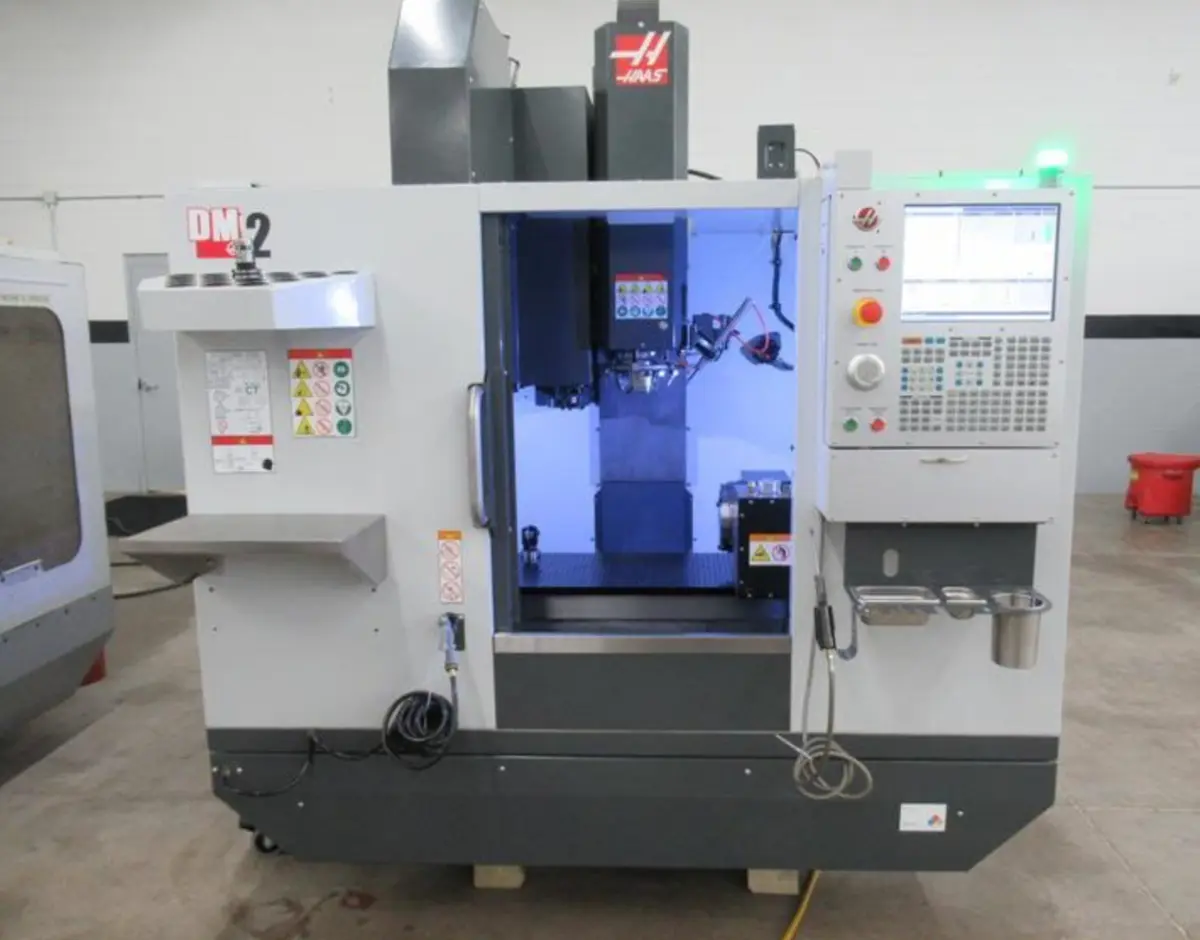
HAAS - DM2
VIEW MACHINE -
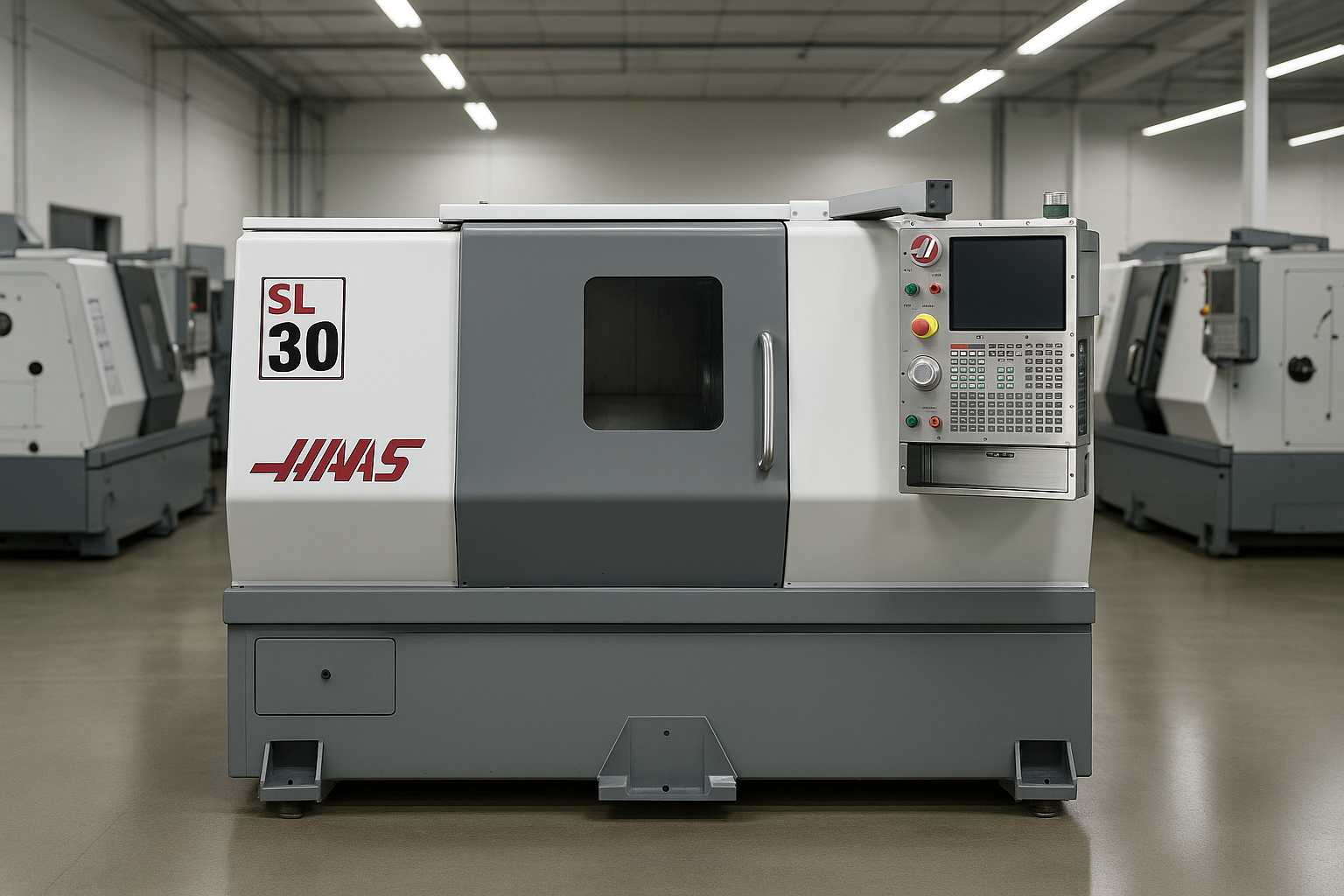
HAAS - SL30
VIEW MACHINE