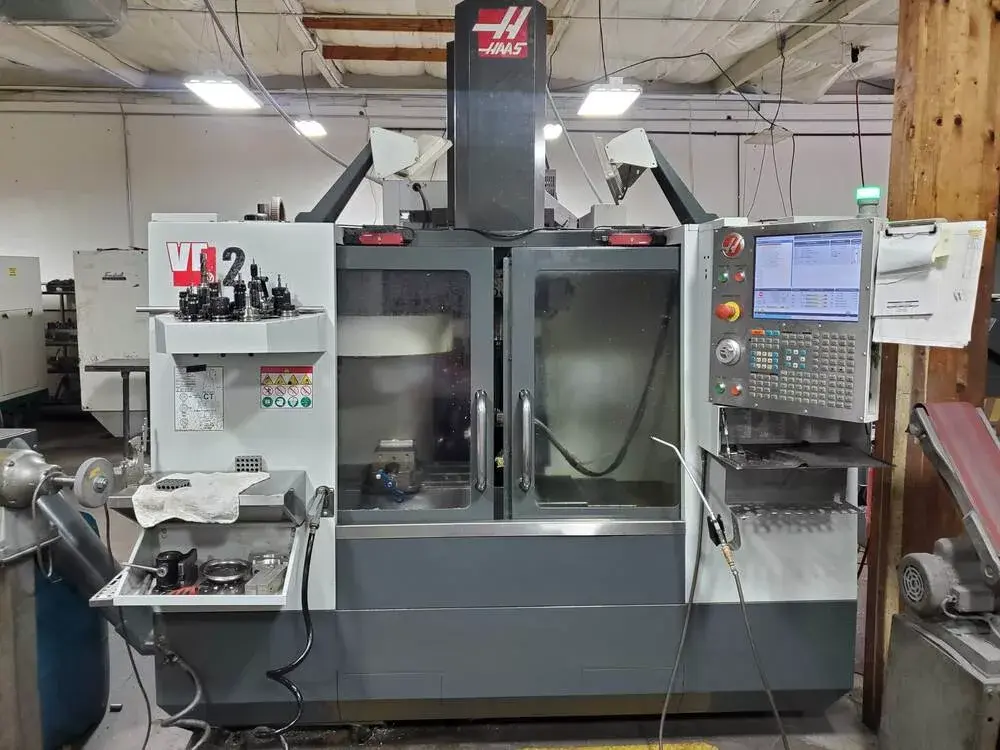
USED HAAS VF2 2016
The HAAS VF2 2016 is a CNC vertical machining center designed for precision milling, drilling, tapping, pocketing, contouring, and general production machining. The VF2 is one of Haas Automation’s most established vertical machining centers and is widely used because of its practical work envelope, compact footprint, versatile tooling system, and straightforward CNC operation.
A documented 2016 HAAS VF2 provides approximately 30 inches of X-axis travel, 16 inches of Y-axis travel, and 20 inches of Z-axis travel, with a 36 × 14 inch table. A 2016 used-machine listing specifies a 30 HP spindle, 8,100 RPM maximum spindle speed, 20-tool automatic tool changer, CT/BT40 taper, and approximately 7,800 lb machine weight. Some 2016 machines were also configured with fourth-axis capability, chip augers or conveyors, probing, and other production options.
The HAAS VF2 2016 is suitable for job shops, aerospace, automotive, defense, medical, electronics, tooling, mold and die, robotics, and general contract manufacturing. Its 30 × 16 × 20 inch work envelope makes it suitable for many small and medium-sized components, while the 30 HP spindle provides substantial capacity for production milling.
A used HAAS VF2 2016 can be an attractive option for manufacturers wanting a relatively modern VF-series machine without paying the cost of new equipment. Buyers should verify spindle hours, power-on hours, control generation, machine options, axis accuracy, spindle condition, tool changer operation, and maintenance records.
HAAS VF2 2016 – AXIS
| Specification | Value |
|---|---|
| X Axis | 762 mm (30″) |
| Y Axis | 406 mm (16″) |
| Z Axis | 508 mm (20″) |
| Controlled Axes | 3 |
| 4th Axis | Optional / Configuration Dependent |
HAAS VF2 2016 – AXIS TRAVELS / WORK ENVELOPE
| Specification | Value |
|---|---|
| X Travel | 30″ |
| Y Travel | 16″ |
| Z Travel | 20″ |
| Spindle Nose to Table Minimum | 4″ |
| Spindle Nose to Table Maximum | 24″ |
| Table Length | 36″ |
| Table Width | 14″ |
The VF2’s 30 × 16 × 20 inch travel envelope provides useful capacity for a broad range of machining applications.
HAAS VF2 2016 – CAPACITY
| Specification | Value |
|---|---|
| Table Size | 36″ × 14″ |
| Maximum Table Load | 3,000 lbs |
| Number of Standard T-Slots | 3 |
| T-Slot Width | Approximately 0.626″–0.630″ |
| T-Slot Center Distance | Approximately 4.92″ |
| Spindle Taper | CT40 / BT40 |
| Workholding | Vises, Fixtures, Rotary Equipment |
The worktable accommodates common CNC vises, fixture plates, clamps, and rotary equipment.
HAAS VF2 2016 – SPINDLE
| Specification | Value |
|---|---|
| Spindle Type | Inline Direct Drive |
| Maximum Spindle Speed | 8,100 RPM |
| Spindle Power | 30 HP |
| Maximum Torque | 90 ft-lb @ 2,000 RPM |
| Spindle Taper | CT40 / BT40 |
| Spindle Cooling | Liquid Cooled |
| Bearing Lubrication | Air / Oil Injection |
| Through Spindle Coolant | Option Dependent |
The 2016 VF2 configuration is associated with an 8,100 RPM, 30 HP direct-drive spindle. Haas’s VF2 platform specifies 90 ft-lb maximum torque at 2,000 RPM.
HAAS VF2 2016 – TOOL CHANGER
| Specification | Value |
|---|---|
| Tool Changer Type | Automatic Carousel |
| Tool Capacity | 20 |
| Tool Taper | CT40 / BT40 |
| Maximum Tool Diameter | Approximately 3.5″ |
| Maximum Tool Weight | Approximately 12 lbs |
| Average Tool-to-Tool Time | 4.2 seconds |
| Average Chip-to-Chip Time | 4.5 seconds |
The 20-position automatic tool changer allows multiple machining operations to be completed without manual tool changes between operations.
HAAS VF2 2016 – FEEDRATES
| Specification | Value |
|---|---|
| X Rapid Traverse | 1,000 IPM |
| Y Rapid Traverse | 1,000 IPM |
| Z Rapid Traverse | 1,000 IPM |
| Maximum Cutting Feed | 650 IPM |
| X Maximum Thrust | 2,550 lbf |
| Y Maximum Thrust | 2,550 lbf |
| Z Maximum Thrust | 4,200 lbf |
These rapid traverse rates help reduce non-cutting time during positioning and production cycles.
HAAS VF2 2016 – CONTROL SYSTEM
| Specification | Value |
|---|---|
| CNC Control | Haas CNC Control |
| Control Generation | Next Generation Control / Configuration Dependent |
| Programming | G-Code |
| Rigid Tapping | Configuration Dependent |
| Spindle Orientation | Standard / Configuration Dependent |
| Ethernet | Configuration Dependent |
| USB | Configuration Dependent |
| 4th Axis Control | Option Dependent |
| Probing | Option Dependent |
| Wireless Connectivity | Configuration Dependent |
The specific control configuration should be verified from the machine’s serial number and control screen. The 2016 model year is also significant because Haas transitioned machines toward its Next Generation Control platform around this period.
HAAS VF2 2016 – COOLANT / CHIP MANAGEMENT
| Specification | Value |
|---|---|
| Coolant Capacity | Approximately 55 gal |
| Coolant Capacity | Approximately 208 L |
| Flood Coolant | Standard |
| Coolant Pump | Configuration Dependent |
| Chip Washdown | Configuration Dependent |
| Chip Auger | Option Dependent |
| Chip Conveyor | Option Dependent |
| Through Spindle Coolant | Option Dependent |
| Oil Skimmer | Option Dependent |
Coolant and chip-management options should be verified on the specific used machine because they can substantially affect its production capability and resale value.
HAAS VF2 2016 – POWER REQUIREMENTS
| Specification | Value |
|---|---|
| Standard Input Voltage | 220 VAC |
| Phase | Three Phase |
| Full Load Amps | Approximately 70 A |
| Compressed Air | Approximately 4 SCFM @ 100 PSI |
| Minimum Air Pressure | Approximately 80 PSI |
| High-Voltage Configuration | Option Dependent |
Exact electrical requirements should always be verified from the machine’s electrical documentation before installation. Haas’s current VF2 specification lists 220 VAC three-phase operation and 70 A full-load current for the low-voltage configuration.
HAAS VF2 2016 – DIMENSIONS
| Specification | Approximate Value |
|---|---|
| Machine Length | Configuration Dependent |
| Machine Width | Configuration Dependent |
| Machine Height | Configuration Dependent |
| Weight | Approximately 7,800 lbs |
| Weight | Approximately 3,539 kg |
A documented 2016 VF2 listing specifies approximately 7,800 lbs. Actual shipping dimensions and weight can vary depending on chip conveyors, rotary equipment, coolant systems, probing, and other options.
HAAS VF2 2016 – GENERAL INFORMATION
| Item | Details |
|---|---|
| Manufacturer | Haas Automation |
| Model | VF2 |
| Year | 2016 |
| Machine Type | CNC Vertical Machining Center |
| CNC Control | Haas CNC Control |
| Spindle Type | Inline Direct Drive |
| Spindle Power | 30 HP |
| Spindle Speed | 8,100 RPM |
| Spindle Taper | CT40 / BT40 |
| Tool Capacity | 20 |
| X Travel | 30″ |
| Y Travel | 16″ |
| Z Travel | 20″ |
| Table Size | 36″ × 14″ |
| Maximum Table Load | 3,000 lbs |
| Controlled Axes | 3 |
| 4th Axis | Optional |
| Machine Weight | Approximately 7,800 lbs |
The specifications above are based on Haas’s VF2 platform specifications and a documented 2016 VF2 used-machine listing.
INDUSTRIES THAT USE HAAS VF2 2016
The HAAS VF2 2016 is suitable for aerospace, automotive, defense, medical, electronics, robotics, industrial equipment, tooling, mold and die, maintenance, and general contract machining.
Its 30 × 16 × 20 inch work envelope allows shops to manufacture a wide range of small and medium-sized components without requiring a larger vertical machining center.
TYPICAL PARTS HAAS VF2 2016 CAN PRODUCE
A HAAS VF2 2016 can manufacture aerospace brackets, automotive components, fixture plates, tooling, manifolds, housings, machine components, molds, robotics parts, medical components, and general precision-machined parts.
Typical operations include milling, drilling, tapping, boring, pocketing, contouring, chamfering, engraving, and finishing.
When equipped with fourth-axis equipment, the machine can also perform indexed machining around multiple sides of a workpiece with fewer manual repositioning steps.
WHY CHOOSE HAAS VF2 2016
The HAAS VF2 2016 combines a practical 30 × 16 × 20 inch machining envelope, 30 HP direct-drive spindle, 8,100 RPM maximum speed, 20-tool automatic tool changer, and CT40/BT40 tooling.
Its relatively compact footprint makes it suitable for job shops where floor space is important, while the 30 HP spindle provides enough capacity for a wide variety of aluminum, steel, stainless steel, and other material applications.
The machine can also be configured with useful production options such as probing, fourth-axis equipment, chip augers, chip conveyors, through-spindle coolant, and programmable coolant.
WHY BUY USED HAAS VF2 2016
Buying a used HAAS VF2 2016 can give manufacturers access to a relatively modern CNC vertical machining center without the investment required for new equipment.
Compared with much older VF2 models, the 2016 machine can provide newer electronics, more modern control capabilities, improved connectivity, and a wider selection of production options. The 2016 model year is also appealing to buyers looking for a machine from the later VF2 generation.
Used-market listings show 2016 VF2 machines equipped with features such as fourth-axis capability, chip augers or conveyors, probing, and other options.
Before buying, inspect the spindle for noise, vibration, and temperature issues; check axis backlash and positioning accuracy; test the tool changer; inspect ballscrews and linear guides; verify coolant and lubrication systems; and review power-on, spindle, and cutting hours.
HOW MUCH DOES A USED HAAS VF2 2016 COST?
The price of a used HAAS VF2 2016 depends on machine condition, spindle hours, power-on hours, control configuration, options, tooling, fourth-axis equipment, coolant systems, and location.
A documented 2016 VF2 currently listed on the used market includes 30 × 16 × 20 inch travels, 30 HP, 8,100 RPM, 20-tool ATC, CT/BT40 taper, 14 × 36 inch table, and fourth-axis equipment. The listing specifically notes that options should be verified against the machine’s serial number and inspection.
For used-equipment listing purposes, a reasonable estimated market range for a HAAS VF2 2016 is approximately $25,000 to $40,000 USD, depending on condition, hours, options, tooling, and accessories. A low-hour machine with probing, fourth-axis equipment, chip conveyor, through-spindle coolant, and extensive tooling may command more, while a high-hour machine or one requiring spindle, axis, control, or electrical repairs may sell for less.
As a general market reference, a 2025 discussion of a used Haas VF2 reported a purchase around $22,000 for a beat-up machine, illustrating how condition can materially affect used VF2 pricing.
For a HAAS VF2 2016, buyers should therefore evaluate the actual machine under power and verify spindle condition, axis accuracy, control operation, tool changer performance, coolant system, maintenance history, machine hours, and included options before establishing its final market value.
HAAS VF2 VS DOOSAN DNM 4500 – COMPARING CNC VERTICAL MACHINING CENTERS
The HAAS VF2 and DOOSAN DNM 4500 are both popular CNC vertical machining centers designed for a wide range of milling, drilling, tapping, and contouring applications. While they serve similar markets, the machines differ in design philosophy, spindle performance, rigidity, control systems, and overall ownership considerations. Comparing these two machines can help manufacturers determine which platform better fits their production requirements, available budget, and preferred operating environment.
The HAAS VF2 is known for its straightforward design, user-friendly CNC control, broad availability in the used machinery market, and relatively simple maintenance requirements. It is commonly found in job shops, prototype departments, educational facilities, and production environments. The machine offers a practical balance of travels, spindle capability, tooling capacity, and automation options. One of its major advantages is the familiarity of the HAAS control, which many machinists can learn quickly.
The DOOSAN DNM 4500, depending on its configuration and year of manufacture, is generally positioned as a more heavily built machining center with strong rigidity and production-oriented capabilities. DOOSAN machines are often selected for demanding applications involving tougher materials, higher metal removal rates, and extended production cycles. The DNM 4500 typically offers a robust casting structure, linear guideways, and spindle options suitable for high-performance machining.
When comparing the machines, buyers should consider more than spindle horsepower or travel dimensions. Factors such as machine condition, spindle hours, maintenance history, control preference, available tooling, service accessibility, and replacement part costs can significantly affect the final purchasing decision. A newer DOOSAN DNM 4500 may offer advanced performance and rigidity, while a HAAS VF2 can provide excellent value, easier operation, and a strong aftermarket support network.
Ultimately, the best choice depends on the application. Shops focused on versatility, affordability, and operator familiarity may prefer the HAAS VF2. Manufacturers requiring greater rigidity and production-focused performance may find the DOOSAN DNM 4500 more suitable. Evaluating the specific machine configuration is essential before making a final decision.
HAAS VF2 BALL SCREW WEAR – SYMPTOMS AND REPLACEMENT
Ball screws are critical components in the HAAS VF2 because they convert rotary motion from the servo motors into precise linear movement along the machine axes. Over time, normal use, inadequate lubrication, contamination, crashes, or heavy machining loads can cause ball screw assemblies to wear. Excessive wear can reduce positioning accuracy, increase backlash, and negatively affect the overall machining quality of the CNC vertical machining center.
One of the most common symptoms of ball screw wear is increasing backlash or lost motion. Operators may notice dimensional inconsistencies when machining features from opposite directions. Circular interpolation may also become less accurate, resulting in out-of-round conditions or other geometry errors. In some cases, surface finish can deteriorate because excessive mechanical play affects the stability and movement of the axis.
Unusual noises are another potential warning sign. Grinding, knocking, clicking, or rough movement during axis travel may indicate problems with the ball screw, ball nut, support bearings, or related drive components. However, these symptoms should not automatically be attributed to the ball screw itself. Proper troubleshooting should include inspection of lubrication systems, thrust bearings, couplings, servo motors, and axis alignment.
Replacing a worn ball screw typically involves removing the associated axis components, disconnecting the drive system, carefully removing the old ball screw assembly, and installing the replacement unit according to proper mechanical alignment procedures. Depending on the axis involved, access and labor requirements can vary significantly.
After installation, the machine should be checked for smooth travel, correct lubrication, proper backlash, and positioning accuracy. Compensation values may also need to be verified or adjusted where appropriate. Because incorrect installation can create alignment problems or premature component failure, many owners choose to have ball screw replacement performed by an experienced CNC technician.
Preventive maintenance remains the best way to extend ball screw life. Maintaining proper lubrication, keeping chips and coolant contamination under control, avoiding crashes, and periodically monitoring backlash can help identify problems before they become major repairs.
HAAS VF2 OPERATING COSTS AND COST OF OWNERSHIP
The HAAS VF2 is widely considered an economical CNC vertical machining center to operate, particularly when compared with larger or more complex machining platforms. However, the actual cost of ownership depends on machine age, operating hours, production workload, maintenance practices, labor rates, electrical consumption, tooling requirements, and the condition of major mechanical and electrical components.
Initial ownership costs begin with the purchase price, transportation, rigging, installation, electrical connection, and any required accessories. A used HAAS VF2 may also require additional investment in toolholders, vises, probing systems, chip management equipment, compressors, or CAM software. Buyers should consider these expenses when calculating the total acquisition cost rather than focusing only on the advertised machine price.
Routine operating expenses include electricity, cutting tools, coolant, lubricants, air supply, filters, and regular maintenance items. Tooling can represent a substantial portion of production costs, especially when machining stainless steel, titanium, hardened alloys, or other difficult materials. Efficient programming, proper speeds and feeds, and appropriate tool selection can significantly reduce tool consumption and cycle times.
Maintenance costs vary based on machine condition and age. Regular preventive maintenance may include lubrication system servicing, spindle inspections, way cover maintenance, coolant system cleaning, filter replacement, and periodic checks of belts, bearings, electrical components, and axis performance. Older machines may eventually require larger investments such as spindle rebuilding, ball screw replacement, servo repairs, or control-related components.
Labor is another important ownership consideration. The HAAS VF2 benefits from a relatively easy-to-learn control interface, which can reduce operator training time and simplify daily machine operation. Shops with multiple HAAS machines may also benefit from standardized programming and familiar operating procedures.
Downtime can be one of the most expensive ownership costs. A machine that is unavailable for production can create scheduling delays and lost revenue. For this reason, purchasing a well-maintained HAAS VF2 and following a preventive maintenance program can be financially beneficial.
Overall, the HAAS VF2 can offer a competitive cost of ownership when properly maintained. Its combination of accessibility, straightforward operation, and broad use throughout the manufacturing industry makes it an attractive option for many CNC machine shops.
WHAT CNC CONTROL DOES THE HAAS VF2 USE?
The HAAS VF2 uses a proprietary HAAS CNC control system designed specifically for HAAS machine tools. One of the defining characteristics of the VF2 is the integration between the machine hardware and the control platform. Because the CNC, machine functions, diagnostics, and operator interface are designed as part of the same overall system, operators can access many machining and machine-management functions directly through the control.
The exact generation and capabilities of the control depend on the year of manufacture. Older HAAS VF2 machines may use earlier generations of HAAS controls with different screen layouts, memory capacity, graphics, and communication features. Newer machines typically incorporate more modern control hardware and software with improved processing capability, networking options, visual interfaces, and expanded programming functions.
The HAAS control is generally known for being relatively straightforward for operators who are familiar with G-code programming. Standard machining functions such as milling, drilling, tapping, tool changes, work offsets, tool offsets, and canned cycles are accessed through an organized interface. The control also supports conversational-style programming features that can simplify certain machining operations without requiring the operator to manually write every line of code.
Depending on the machine configuration and control generation, additional features may include probing cycles, high-speed machining functions, Ethernet connectivity, USB program transfer, remote monitoring capabilities, macros, custom programming options, and advanced tool management functions.
One advantage of using a proprietary control is consistency across many HAAS machines. Operators who regularly work with HAAS vertical machining centers may find it easier to move between different models because the programming structure and control layout remain familiar. This can reduce training requirements and improve shop flexibility.
When purchasing a used HAAS VF2, it is important to identify the exact control generation installed on the machine. Buyers should also verify available software options, memory capacity, communication capabilities, and compatibility with their existing programming workflow.
The HAAS CNC control remains one of the key reasons the VF2 is popular among job shops and manufacturers seeking a machine that combines CNC capability with relatively simple operation and programming.
WHERE CAN I BUY HAAS VF2 REPLACEMENT PARTS?
Replacement parts for the HAAS VF2 can be purchased through several sources, depending on the age of the machine, the specific component required, and whether the buyer prefers new, rebuilt, or used parts. Before ordering any component, it is important to confirm the exact machine model, serial number, manufacturing year, and part number. HAAS VF2 machines have been produced in multiple generations, and components may differ between earlier and later versions.
One of the primary sources for replacement parts is the official HAAS service and distribution network. This can be particularly useful when purchasing critical components such as electrical assemblies, control-related parts, motors, sensors, lubrication components, switches, and machine-specific mechanical parts. Working with an authorized source can help ensure proper compatibility.
Independent CNC machine parts suppliers are another option. These companies may stock new, surplus, refurbished, or aftermarket components for HAAS machines. Depending on the part, buyers may find ball screws, servo motors, spindle components, belts, bearings, way covers, pumps, electrical components, and other replacement items at competitive prices.
Used machinery dealers and CNC machine dismantlers can also be valuable sources for older HAAS VF2 machines. When a machine is dismantled for parts, usable components may become available at a lower cost than purchasing new replacements. This option can be particularly useful for discontinued or difficult-to-source components. However, buyers should carefully evaluate the condition of used parts and confirm compatibility before purchasing.
Spindle repairs and rebuilding services provide another solution when a complete replacement spindle is not necessary. Depending on the condition of the spindle, rebuilding may involve replacing bearings, restoring critical components, balancing, and testing the unit before installation.
Online industrial marketplaces may also offer HAAS VF2 replacement parts, but caution is important. Buyers should verify the seller, confirm part numbers, review photographs, and understand warranty or return policies.
The best approach is to diagnose the problem accurately before ordering. Replacing the wrong component can create unnecessary downtime and expense. Recording the machine serial number, alarm information, and exact component identification can help ensure that the correct HAAS VF2 replacement part is purchased.
Related Products
-
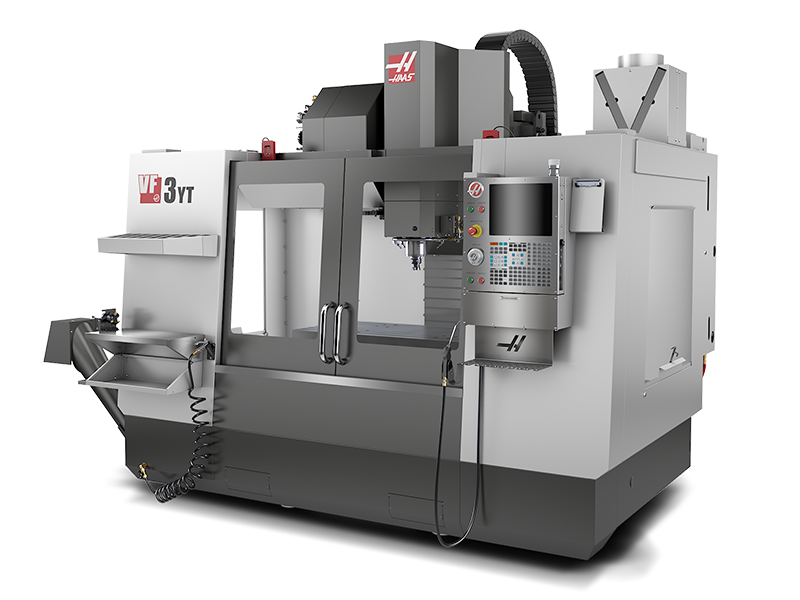
HAAS - VF3YT
VIEW MACHINE -
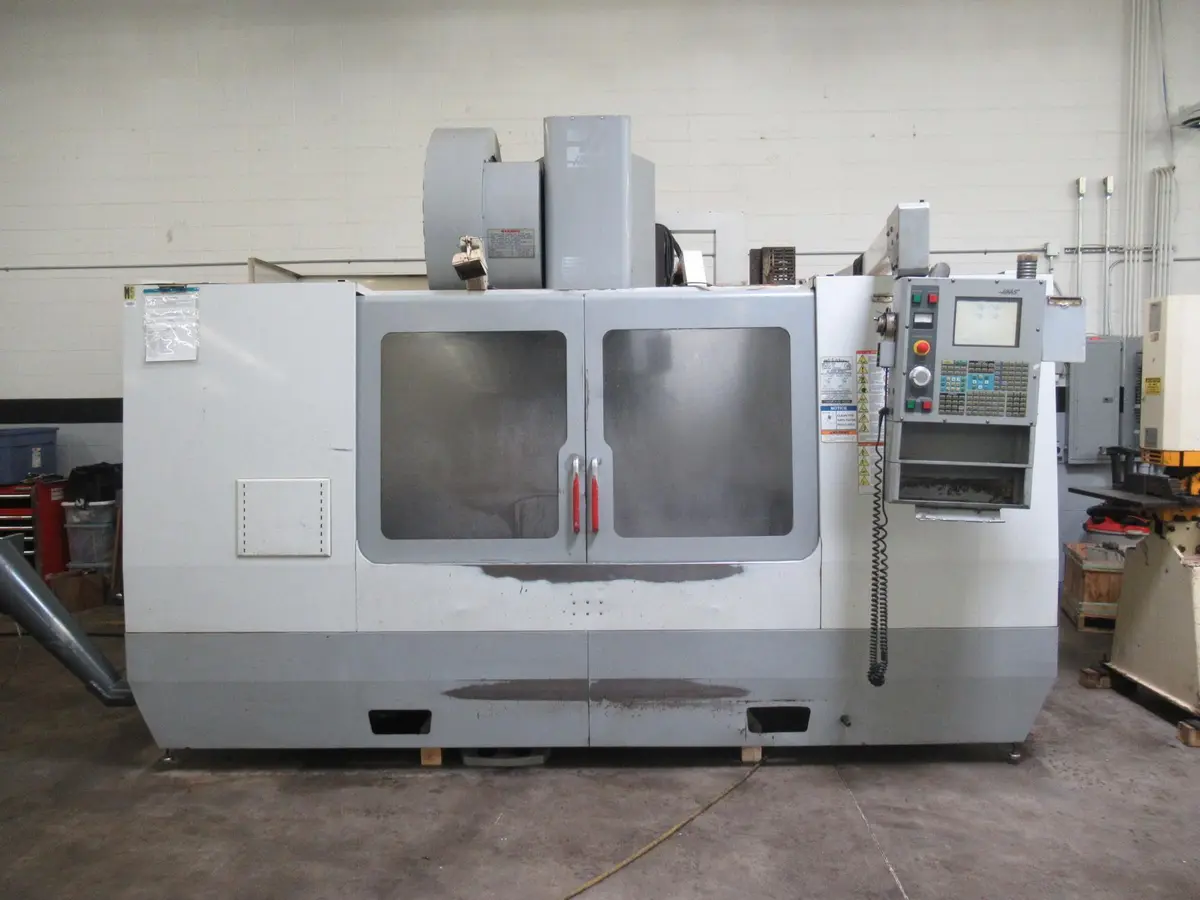
HAAS - VF6/50
VIEW MACHINE -
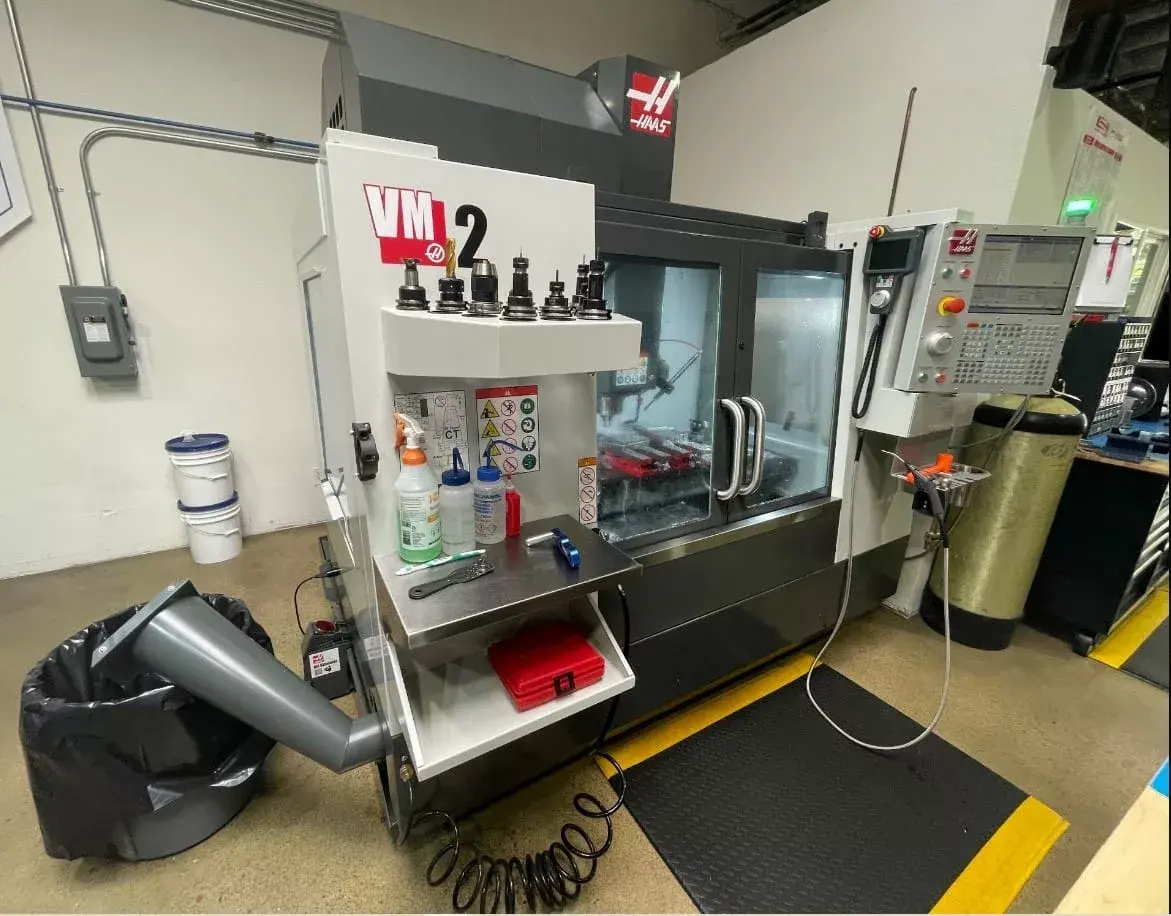
HAAS - VM2
VIEW MACHINE -
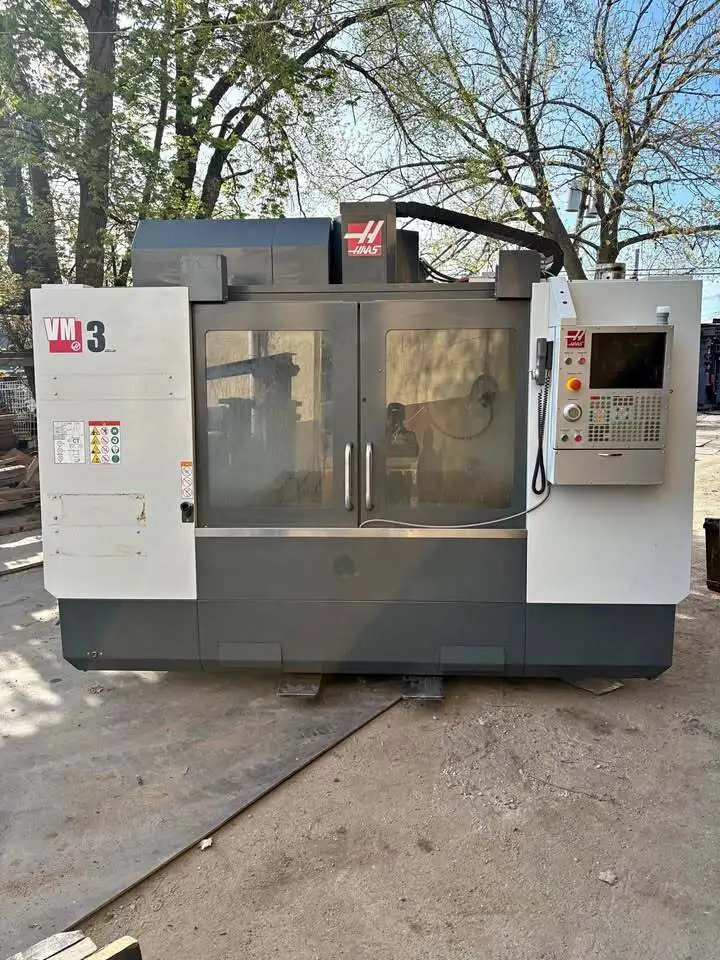
HAAS - VM3
VIEW MACHINE