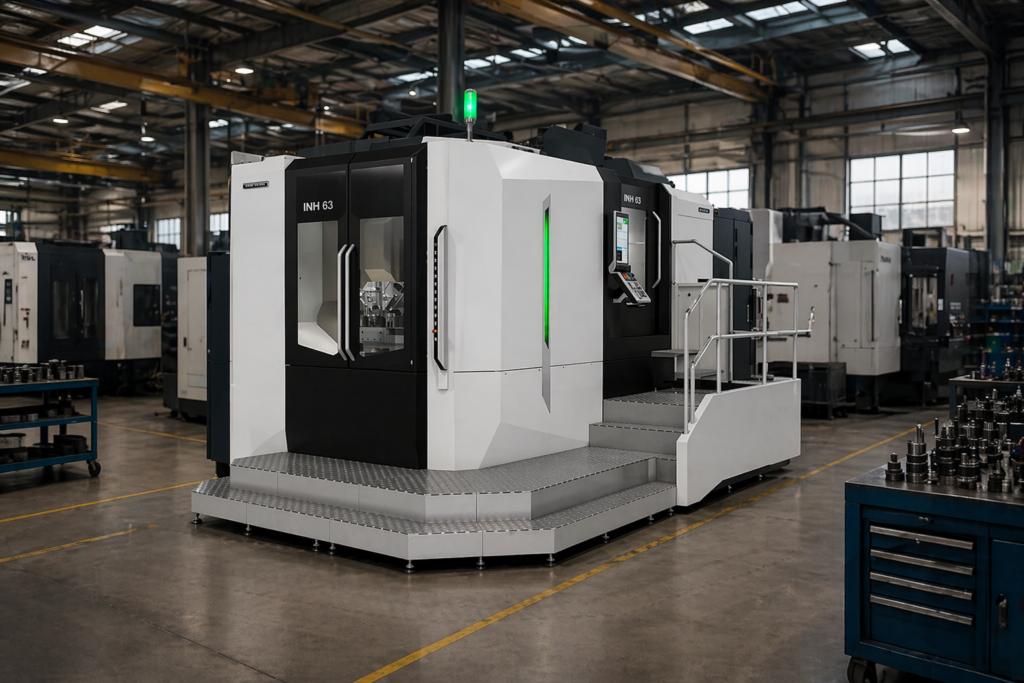
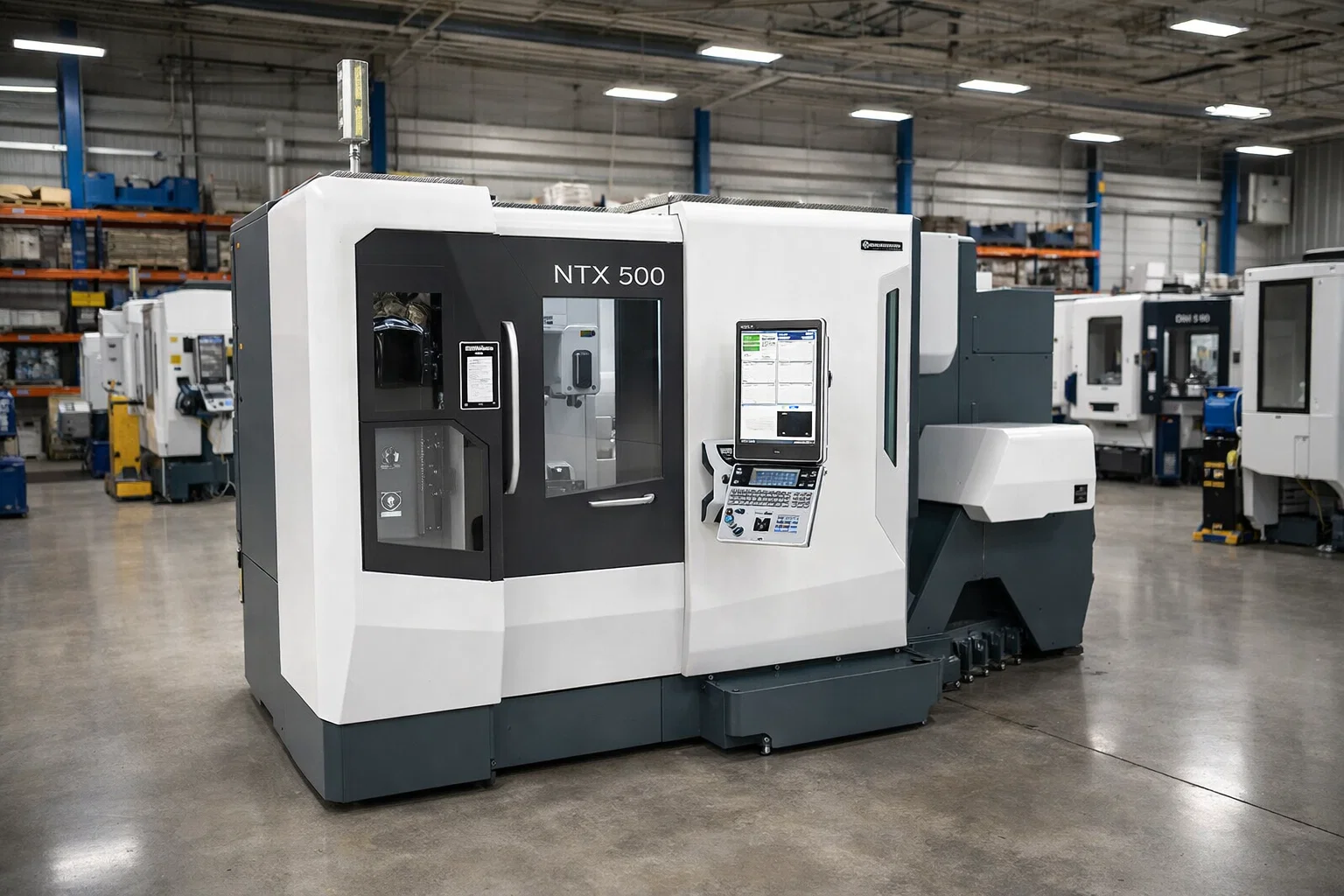
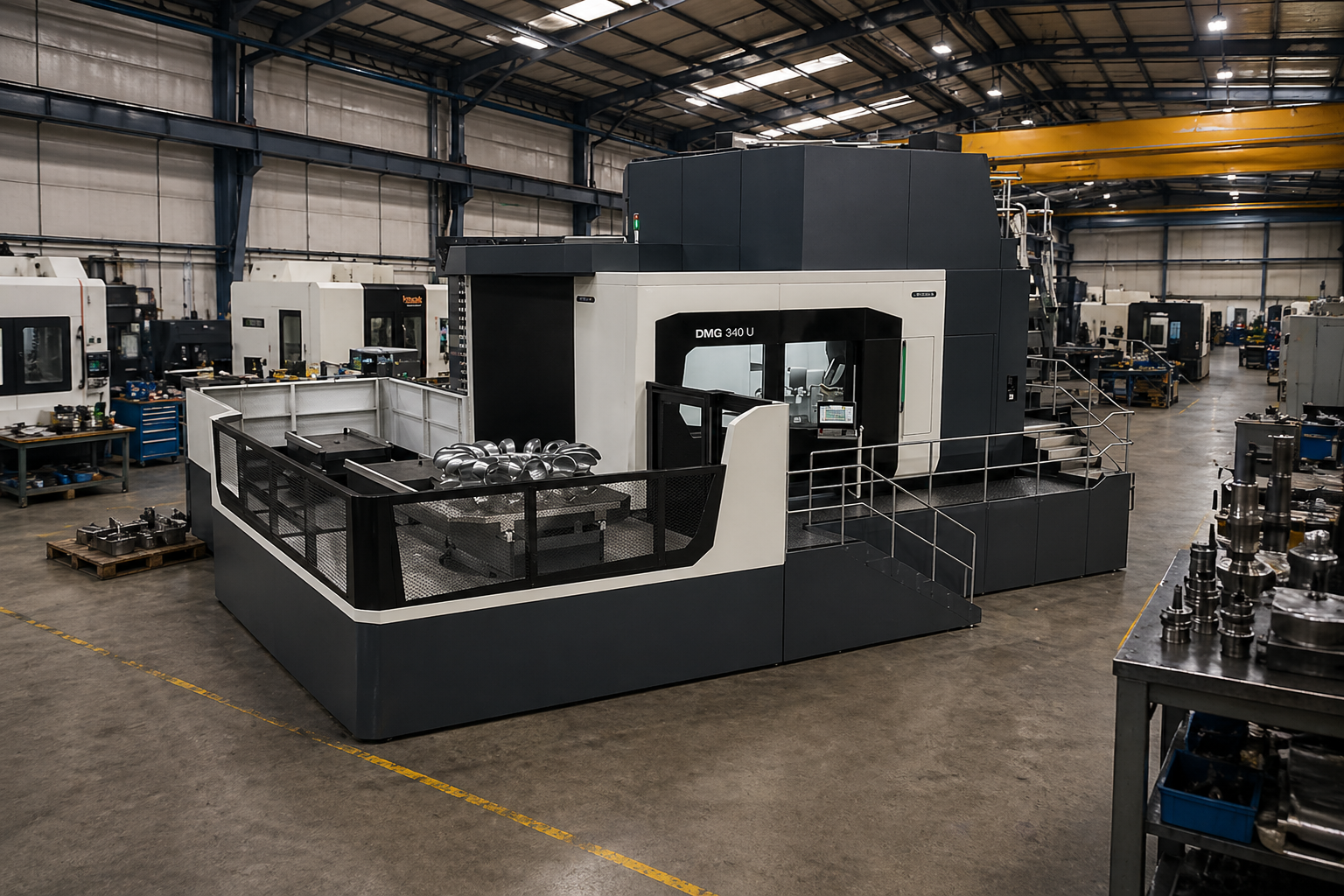
The DMG MORI INH 63 is a high-performance horizontal machining center designed for precision, productivity, and reliability in demanding industrial environments. Built with a rigid cast iron structure, the machine offers excellent stability during heavy-duty cutting operations, making it well-suited for industries such as automotive, aerospace, and general engineering. The INH 63 typically features a pallet size of 630 mm and is equipped with a high-torque spindle capable of handling a wide range of materials, from aluminum to hardened steel. Its advanced CNC control system ensures accurate machining, repeatability, and efficient cycle management.
One of the key strengths of the INH 63 is its ability to deliver consistent cutting performance over long production runs. The machine is often integrated with an automatic pallet changer, allowing operators to reduce idle time and improve throughput. Tool magazine capacities vary depending on configuration, but most models are equipped to handle complex machining tasks with minimal manual intervention. The machine’s design also emphasizes thermal stability, ensuring dimensional accuracy even during extended operation.
In terms of cutting time, the INH 63 is optimized for high material removal rates while maintaining precision. This balance makes it an ideal choice for both batch production and continuous manufacturing setups. Machines manufactured after 2010 often include upgraded control systems, faster spindle speeds, and improved automation capabilities, while older models still maintain solid mechanical reliability. Overall, the DMG MORI INH 63 is recognized as a dependable machining solution that combines durability, efficiency, and advanced engineering to meet modern manufacturing demands.
DMG MORI INH 63SPECIFICATIONS
DMG MORI INH 63 – AXIS
X-Axis (Longitudinal)
Y-Axis (Vertical)
Z-Axis (Cross)
B-Axis (Rotary Table – Indexing)
DMG MORI INH 63 – AXIS TRAVELS
X-Axis Travel: ~1,000 mm
Y-Axis Travel: ~800 mm
Z-Axis Travel: ~750 mm
B-Axis Rotation: 360° (Indexing, typically 1° or finer)
DMG MORI INH 63 – CAPACITY
Maximum Workpiece Diameter: ~1,000 mm
Maximum Workpiece Height: ~1,000 mm
Maximum Workpiece Weight: ~1,200 kg
DMG MORI INH 63 – SPINDLE
Spindle Taper: BT50 / HSK-A100
Spindle Speed: Up to ~6,000 RPM (optional higher)
Spindle Power: ~30–45 kW
Spindle Torque: High torque for heavy-duty cutting
Air Consumption: Moderate, for tool change and automation
DMG MORI INH 63 – DIMENSIONS
Machine Footprint: ~4,500 x 3,500 mm
Machine Height: ~3,000 mm
Machine Weight: ~18,000–22,000 kg
DMG MORI INH 63 – GENERAL INFORMATION
Machine Type: Horizontal Machining Center (HMC)
Structure: Rigid box-type construction
Application: Heavy-duty and precision machining
Automation: Pallet changer and optional automation systems
INDUSTRIES THAT USE DMG MORI INH 63
Automotive
Aerospace
Heavy Equipment Manufacturing
Energy & Power Generation
General Engineering
TYPICAL PARTS DMG MORI INH 63 CAN PRODUCE
Engine Blocks
Gear Housings
Pump Bodies
Transmission Components
Structural Machine Parts
WHY CHOOSE DMG MORI INH 63
High rigidity for heavy cutting
Excellent accuracy and repeatability
Efficient pallet-changing system
High productivity with automation compatibility
Reliable performance for large batch production
WHY BUY USED DMG MORIINH 63
Purchasing a used DMG MORI INH 63 can be a highly strategic investment for manufacturers looking to balance performance with cost efficiency. One of the primary advantages is the significant reduction in capital expenditure compared to buying a new machine. Despite being pre-owned, many INH 63 machines retain their structural integrity and machining accuracy due to their robust build quality and engineering standards. This makes them a reliable option for businesses aiming to expand production capacity without incurring excessive costs.
Another key benefit lies in the machine’s proven performance history. Unlike new equipment, a used INH 63 has an established track record, allowing buyers to assess its reliability, maintenance history, and actual cutting performance. Machines from the 2000–2010 period, for example, often strike a strong balance between affordability and capability, offering solid CNC controls and efficient cutting times suitable for most industrial applications. Older machines manufactured before 2000 may have slower cutting speeds and less advanced controls, but they remain valuable for less complex or lower-volume production tasks.
Used models produced after 2010 are particularly attractive due to their enhanced automation features, improved spindle technology, and reduced cycle times. These machines can deliver near-modern performance at a fraction of the cost of new equipment. Additionally, spare parts and service support for DMG MORI machines are widely available, which reduces downtime and ensures long-term usability.
From a productivity standpoint, a well-maintained used INH 63 can still achieve competitive cutting times, especially when properly tooled and programmed. This makes it a practical choice for businesses seeking to maximize return on investment while maintaining high production standards.
HOW MUCH DOES A USED DMG MORIINH 63COST?
The cost of a used DMG MORI INH 63 varies significantly depending on factors such as year of manufacture, machine condition, spindle hours, level of automation, and overall cutting performance. Machines manufactured before 2000 are typically the most affordable, with prices generally ranging from $20,000 to $50,000. These older units may have higher cutting times due to slower spindle speeds and less advanced CNC systems, but they can still be suitable for basic machining tasks or secondary operations.
Models produced between 2000 and 2010 usually fall within the range of $50,000 to $120,000. These machines often feature improved control systems, better tooling capabilities, and more efficient cutting performance compared to earlier versions. Their cutting times are generally more competitive, making them a popular choice for small to medium-sized manufacturers seeking a balance between cost and productivity.
For machines manufactured between 2010 and 2025, prices can range from $120,000 to $250,000 or more, depending on specifications and condition. These newer models benefit from advanced CNC technology, faster spindle speeds, enhanced automation, and reduced cycle times. As a result, they offer significantly improved cutting efficiency and are capable of handling complex, high-precision tasks with shorter production cycles.
Cutting time plays a crucial role in determining value. Machines with lower spindle hours and better-maintained components tend to deliver faster and more consistent performance, which can justify a higher price. Additionally, features such as pallet changers, larger tool magazines, and upgraded controls can further influence cost. Ultimately, the right choice depends on production requirements, budget constraints, and the desired balance between initial investment and long-term operational efficiency.