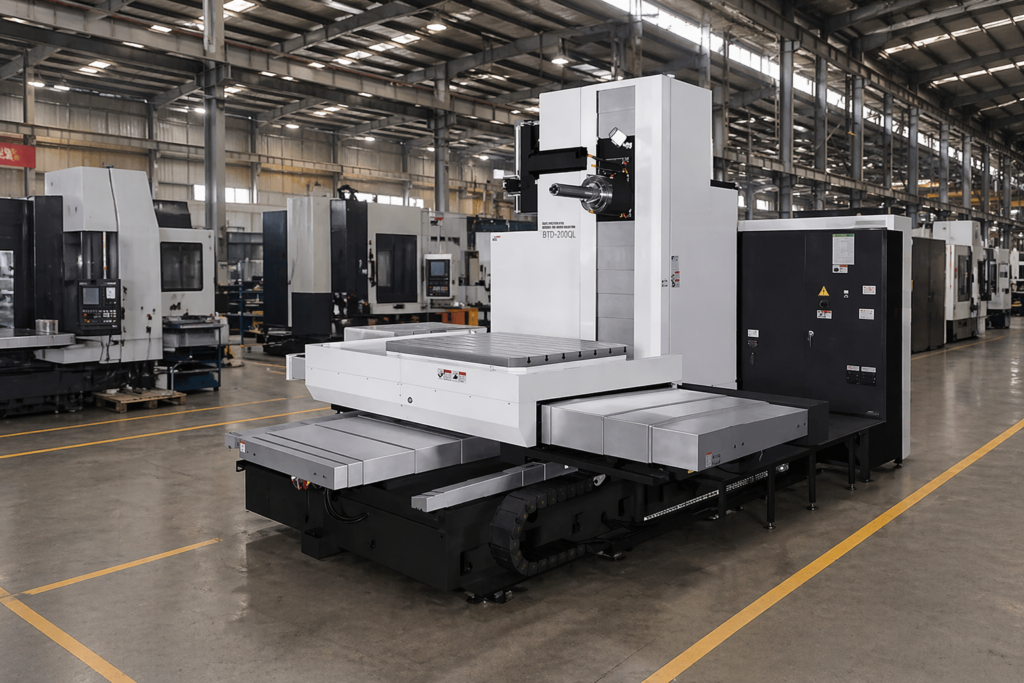
USED DMG MORI KBT 11 A
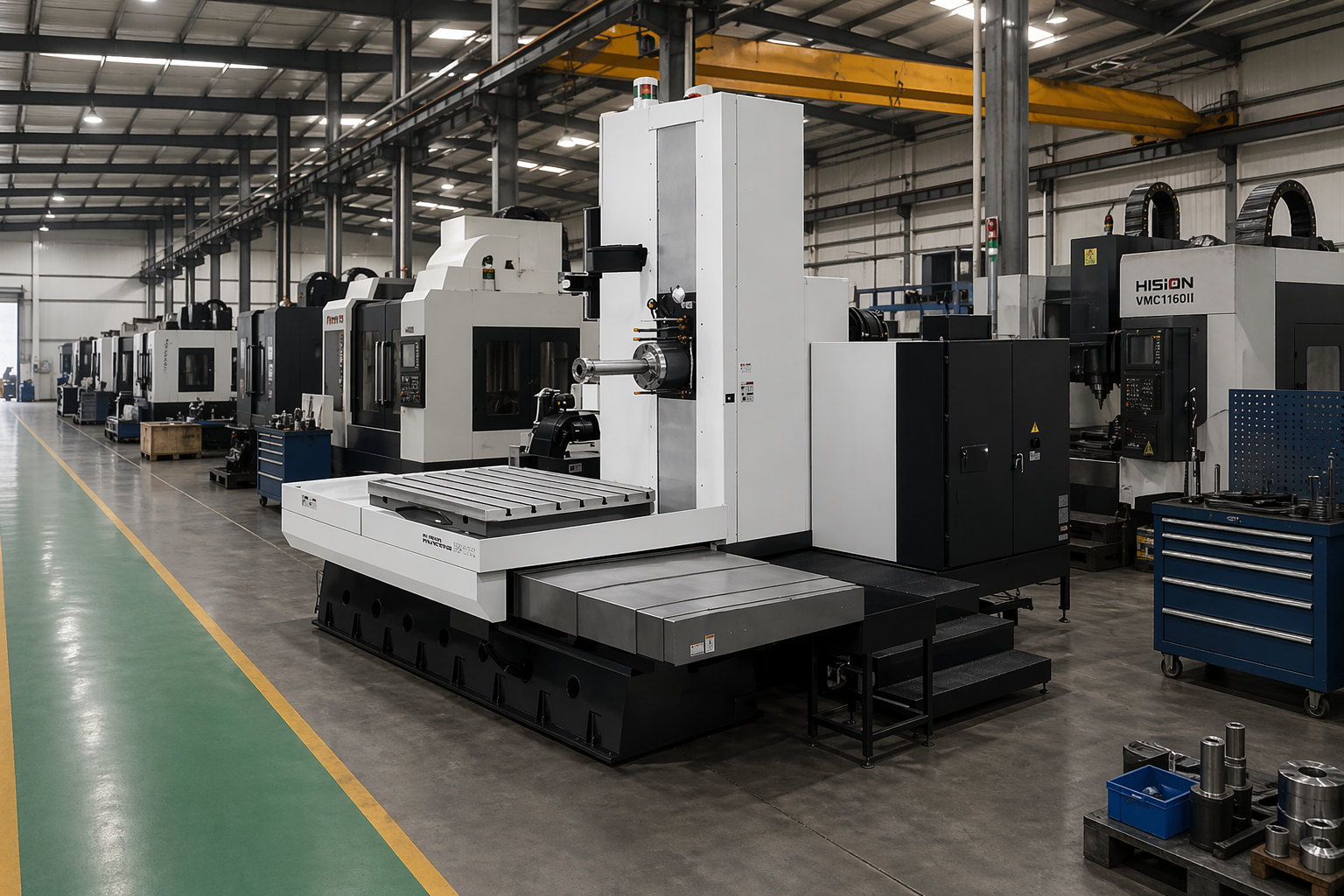
The DMG MORI KBT 11 A is a heavy-duty horizontal boring and milling machine designed for large-scale, high-torque machining applications. It belongs to DMG MORI’s KBT series, which is known for its rigidity, stability, and capability to handle extremely large and heavy workpieces. The KBT 11 A is built around a robust structure with a spindle diameter of 110 mm and is engineered for demanding industries such as energy, shipbuilding, construction equipment, and heavy engineering.
The machine offers a generous working envelope with axis travels of approximately 1,700 mm in X, 1,500 mm in Y, and 1,150 mm in Z, allowing it to process large components with high precision. It also supports a table size of around 1,200 × 1,400 mm and can handle heavy loads up to 5,000 kg, making it suitable for massive structural parts and precision boring operations.
A key highlight of the KBT 11 A is its high-torque geared spindle system. It delivers strong cutting force through a 3-step gearbox, enabling deep boring, milling, and heavy material removal operations. The machine is also designed with large-diameter spindle bearings and a rigid column structure, ensuring stability even under extreme cutting loads.
In terms of cutting time, the KBT 11 A is optimized for heavy-duty rough machining rather than high-speed finishing. While it does not focus on rapid traverse like modern high-speed machining centers, its strength lies in sustained, powerful cutting with minimal tool deflection. This results in efficient material removal for large components, even if cycle times are longer compared to lighter CNC machines.
Machines in this category typically use robust CNC systems such as FANUC or CELOS, with strong emphasis on reliability and long-term durability. Overall, the KBT 11 A is built for maximum rigidity, torque, and stability in large-scale machining environments.
DMG MORI KBT 11 A SPECIFICATIONS
| DMG MORI KBT 11 A – AXIS |
|---|
| X-Axis (Longitudinal) |
| Y-Axis (Vertical) |
| Z-Axis (Cross) |
| W-Axis (Spindle Quill Movement) |
| B-Axis (Rotary Table – indexing) |
| DMG MORI KBT 11 A – AXIS TRAVELS |
|---|
| X-Axis Travel: ~1,600 mm |
| Y-Axis Travel: ~1,400 mm |
| Z-Axis Travel: ~1,450 mm |
| W-Axis Travel: ~500–600 mm |
| B-Axis Rotation: 360° (indexing table) |
| DMG MORI KBT 11 A – CAPACITY |
|---|
| Maximum Workpiece Diameter: ~1,600 mm |
| Maximum Workpiece Height: ~1,400 mm |
| Maximum Workpiece Weight: ~3,000–4,000 kg |
| DMG MORI KBT 11 A – SPINDLE |
|---|
| Spindle Type: Built-in motor spindle |
| Spindle Speed: Up to ~6,000 RPM |
| Spindle Power: High torque spindle for heavy-duty cutting |
| Spindle Torque: Optimized for large component machining |
| DMG MORI KBT 11 A – TABLE |
|---|
| Table Size: ~1,100 x 1,100 mm |
| Table Type: Rotary indexing table |
| Table Indexing: 360° indexing (high precision) |
| Maximum Table Load: ~3,000–4,000 kg |
| DMG MORI KBT 11 A – TOOL TURRET |
|---|
| Tool Magazine Capacity: 40–120 tools |
| Tool Type: Automatic Tool Changer (ATC) |
| Maximum Tool Length: ~600–800 mm |
| Maximum Tool Weight: ~25–30 kg |
| DMG MORI KBT 11 A – FEEDRATES |
|---|
| Rapid Traverse (X/Y/Z): ~30–40 m/min |
| Cutting Feedrate: Up to ~20,000 mm/min |
| Acceleration: Optimized for heavy-duty machining |
| DMG MORI KBT 11 A – COOLANT & CHIP MANAGEMENT |
|---|
| Coolant System: High-capacity flood coolant system |
| Coolant Options: Through-spindle coolant available |
| Chip Conveyor: Heavy-duty automatic chip conveyor |
| Chip Management: Designed for large chip removal |
| DMG MORI KBT 11 A – CONTROL SYSTEM |
|---|
| Control Options: FANUC / SIEMENS |
| User Interface: Advanced CNC interface |
| Features: Tool monitoring, diagnostics, automation compatibility |
| DMG MORI KBT 11 A – POWER & AIR REQUIREMENTS |
|---|
| Power Supply: ~80–120 kVA |
| Compressed Air: ~6 bar |
| Air Consumption: Moderate |
| DMG MORI KBT 11 A – DIMENSIONS |
|---|
| Machine Footprint: ~6,000 x 7,000 mm |
| Machine Height: ~4,000 mm |
| Machine Weight: ~25,000–35,000 kg |
| DMG MORI KBT 11 A – GENERAL INFORMATION |
|---|
| Machine Type: Horizontal Boring Mill (HBM) |
| Structure: Heavy-duty rigid construction |
| Application: Large-part machining with high precision |
| Automation: Compatible with pallet systems and automation |
| INDUSTRIES THAT USE DMG MORI KBT 11 A |
|---|
| Energy & Power |
| Heavy Engineering |
| Oil & Gas |
| Construction Equipment |
| Shipbuilding |
| TYPICAL PARTS DMG MORI KBT 11 A CAN PRODUCE |
|---|
| Large Gear Housings |
| Turbine Components |
| Pump & Valve Bodies |
| Structural Heavy Parts |
| Machine Frames |
| WHY CHOOSE DMG MORI KBT 11 A |
|---|
| Designed for large and heavy workpieces |
| High torque spindle for heavy cutting |
| Excellent rigidity and stability |
| Large work envelope with high load capacity |
| Reliable performance for heavy industries |
WHY BUY USED DMG MORI KBT 11 A
Purchasing a used DMG MORI KBT 11 A is a practical decision for manufacturers dealing with large, heavy components that require deep boring and high-torque machining. One of the main advantages is its extremely rigid mechanical structure, which ensures long-term durability even after years of heavy-duty operation. This makes it highly reliable for industries where machine stability is more important than ultra-fast cycle times.
Cost efficiency is a major factor. New heavy horizontal boring machines require significant investment due to their size, power, and industrial-grade construction. A used KBT 11 A allows manufacturers to access the same high-torque cutting capability and large work envelope at a significantly reduced cost, making it attractive for heavy engineering and job-shop environments.
Older machining centers (pre-2000) generally lack the structural rigidity and torque required for deep boring operations and have longer cutting times with lower stability under load. Machines from 2000 to 2010 improved in control systems and spindle power but still cannot match the heavy-duty cutting stability of the KBT series.
Used KBT 11 A machines from 2010 onward are particularly valuable because they retain full structural integrity while benefiting from improved CNC systems, better thermal stability, and more efficient operation control. These improvements help reduce downtime and improve machining consistency, even if cutting speed remains focused on torque rather than rapid cycle times.
From a cutting-time perspective, this machine is designed for consistent heavy cutting rather than fast machining cycles. A well-maintained used unit can still deliver excellent productivity in large-part manufacturing due to its ability to remove large volumes of material efficiently in a single setup. Combined with strong DMG MORI support, it remains a long-term industrial asset.
HOW MUCH DOES A USED DMG MORI KBT 11 A COST?
The cost of a used DMG MORI KBT 11 A depends on factors such as machine condition, year of manufacture, spindle hours, tooling configuration, and overall maintenance history. As a large horizontal boring machine designed for heavy industrial use, it falls into a specialized mid-to-high industrial price segment.
Machines comparable to older pre-2000 heavy boring mills typically range from $40,000 to $120,000. These machines often have lower rigidity, older spindle systems, and longer cutting times due to less efficient control systems, making them less suitable for modern heavy-duty production requirements.
Models manufactured between 2000 and 2010 generally fall in the range of $120,000 to $250,000. These machines offer improved CNC systems, better spindle torque control, and enhanced machining stability. Their cutting times are more consistent, but they still lack some of the efficiency and digital monitoring features of newer systems.
For KBT 11 A machines produced between 2010 and 2025, prices typically range from $250,000 to $500,000 or more depending on configuration and condition. These machines retain excellent structural integrity and benefit from updated control systems, improved reliability, and better process monitoring, making them highly desirable for heavy manufacturing operations.
Cutting time is not the primary cost driver for this machine; instead, value is based on torque capacity, structural condition, and load-handling capability. Machines with lower wear on spindle bearings, stable alignment, and well-maintained gear systems command higher resale value due to their ability to perform sustained heavy cutting operations.
Ultimately, the KBT 11 A remains a strong investment for industries requiring powerful, stable, and large-scale machining rather than high-speed cycle optimization.
Related Products
-
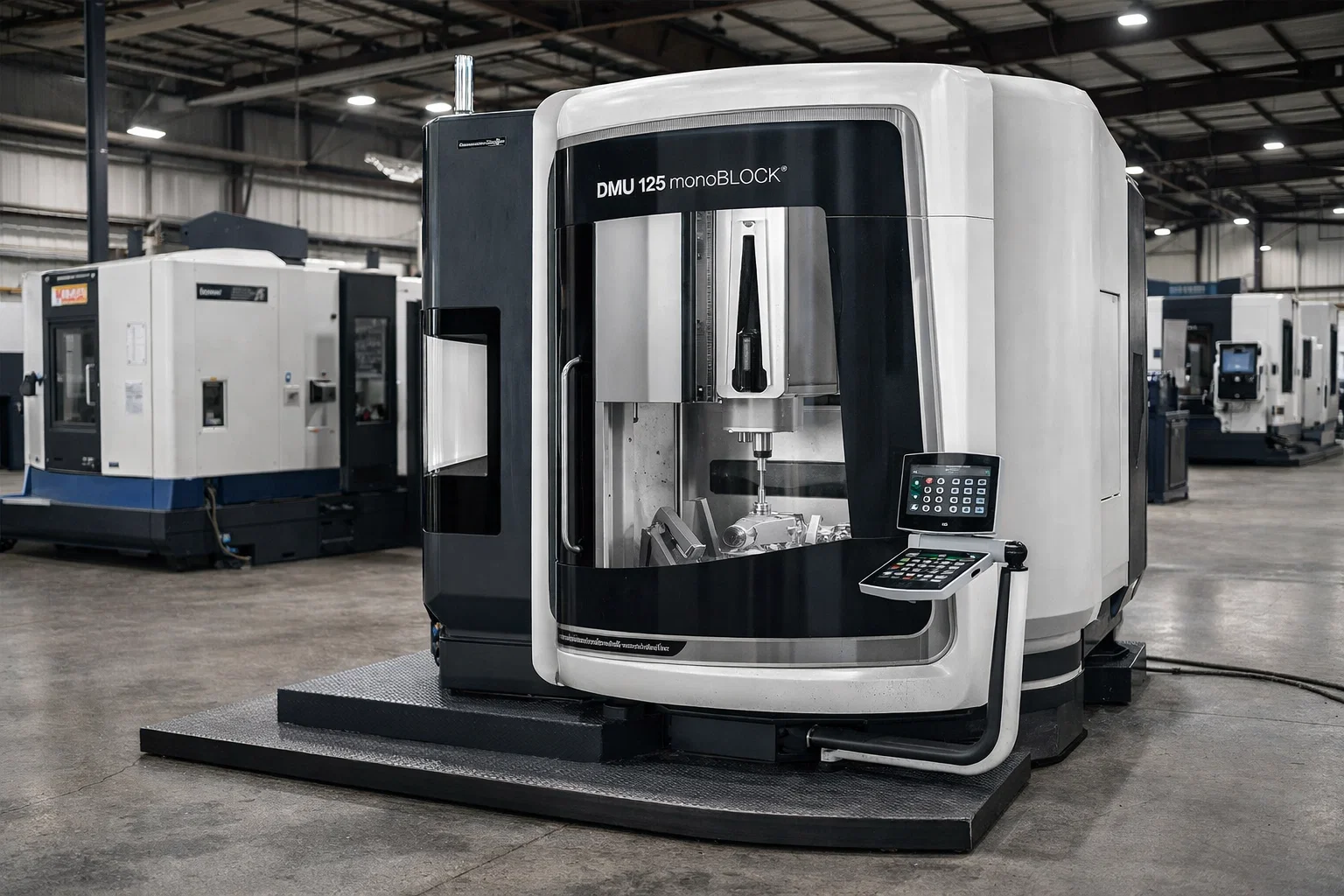
DMG MORI - DMU 125 (FD) monoBLOCK
VIEW MACHINE -
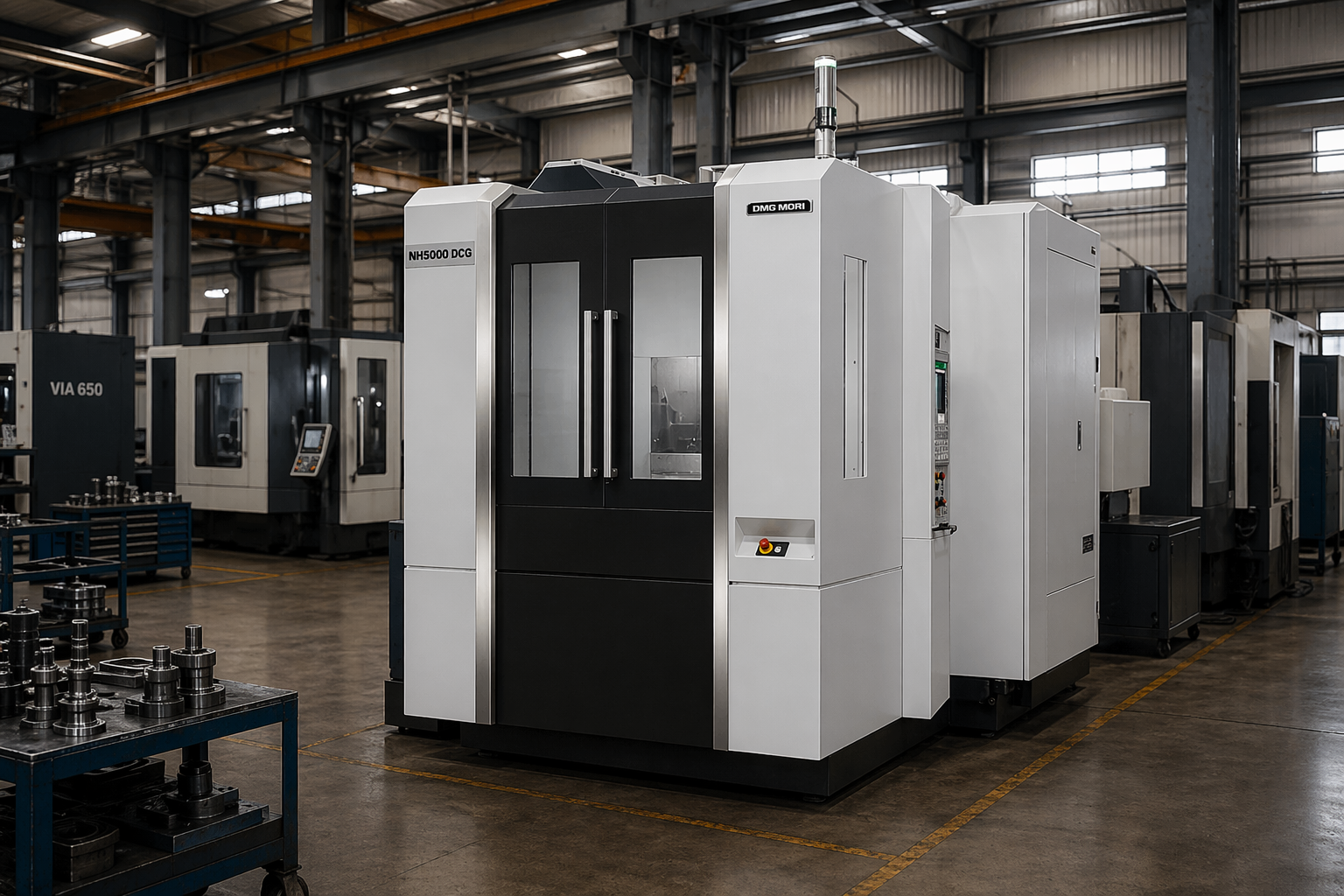
DMG MORI - NH 5000 DCG
VIEW MACHINE -
DMG MORI - KBT 11EZ
VIEW MACHINE -
DMG MORI - DMC 85 (FD) monoBLOCK
VIEW MACHINE