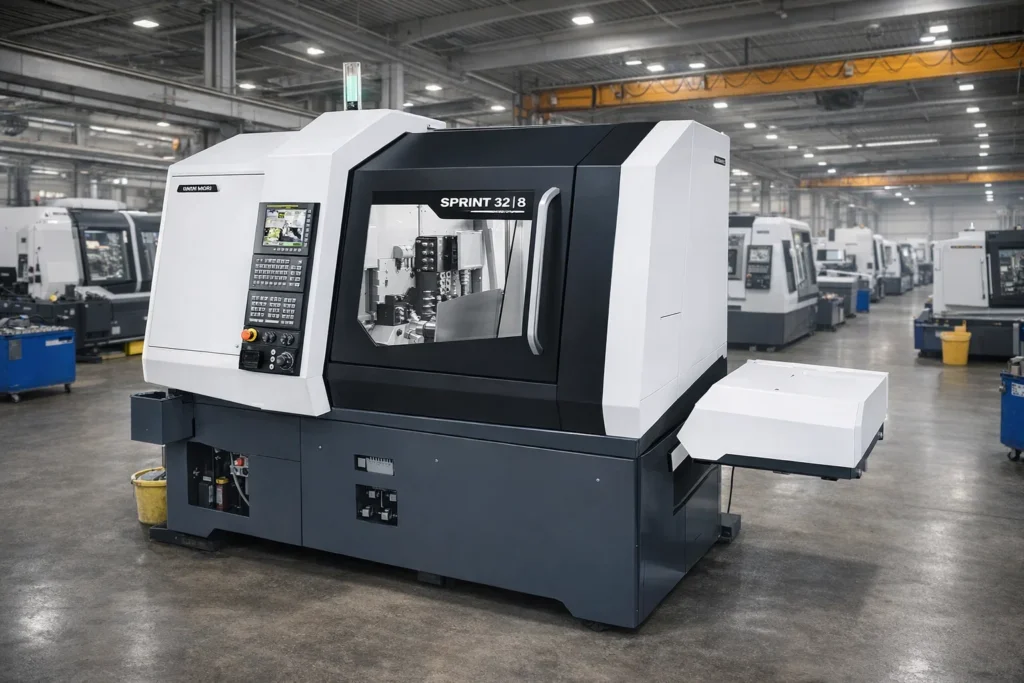
DMG MORI SPRINT 32|9
USED DMG MORI SPRINT 32|9
The DMG MORI SPRINT 32|9 is an advanced, ultra-high-axis production turning center designed for extremely complex, high-volume machining of bar-fed components up to 32 mm diameter. It represents an extended configuration of the SPRINT 32 platform, going beyond the SPRINT 32|8 by adding additional axis and tool-path flexibility for highly demanding precision manufacturing applications.
Like other machines in the 32-series, it is built for compact, fully automated production cells, with a footprint typically under 3 m², making it suitable for high-density factory layouts where productivity per square meter is critical. The machine is optimized for long-term unattended operation with bar feeders and robotic unloading systems.
The SPRINT 32|9 configuration is engineered with expanded multi-axis capability (typically 6+ linear axes with multiple C-axes and additional machining flexibility), allowing more simultaneous tool engagement compared to lower configurations like 32|5 and 32|8. Based on the SPRINT platform architecture, spindle systems typically support up to 8,500 rpm main and counter spindles, enabling fast cycle times for small precision parts.
A defining feature of the SPRINT 32|9 is its multi-turret, multi-tool carrier architecture, which allows highly complex machining such as multi-side milling, deep drilling, and synchronized back-working operations in a single setup. This reduces cycle time dramatically and eliminates the need for secondary operations.
The machine is designed around thermally stable, FEM-optimized cast construction, ensuring high accuracy during continuous production runs. High-pressure coolant systems and optimized chip evacuation help maintain stable machining conditions even during long unmanned cycles.
The FANUC-based dual-channel control system enables synchronized multi-axis programming and high-speed cycle execution. Automation integration is a core design principle, making the machine suitable for lights-out manufacturing environments.
Overall, the SPRINT 32|9 is a top-tier compact production turning system designed for maximum complexity handling, extreme cycle-time reduction, and fully automated high-volume manufacturing of precision components.
DMG MORI SPRINT 32|9 SPECIFICATIONS
| DMG MORI SPRINT 32|9 – AXIS |
|---|
| 9 Linear Axes |
| X1, Y1, Z1 (Main Spindle Axes) |
| X2, Y2, Z2 (Counter Spindle Axes) |
| C1, C2 (Spindle Indexing) |
| Dual Channel Control |
| DMG MORI SPRINT 32|9 – AXIS TRAVELS |
|---|
| X1-Axis Travel: 70 mm |
| Y1-Axis Travel: 405 mm |
| Z1-Axis Travel: 240 mm |
| X2-Axis Travel: 70 mm |
| Y2-Axis Travel: 405 mm |
| Z2-Axis Travel: 240 mm |
| DMG MORI SPRINT 32|9 – CAPACITY |
|---|
| Maximum Turning Diameter: 32 mm |
| Maximum Turning Length: 240 mm |
| Bar Capacity: 32 mm (up to ~38 mm optional) |
| Designed for highly complex precision parts |
| DMG MORI SPRINT 32|9 – SPINDLE |
|---|
| Main Spindle Speed: up to 8,500 rpm |
| Counter Spindle Speed: up to 8,500 rpm |
| Main Spindle Power: approx. 5.5 kW |
| Counter Spindle Power: approx. 2.2 kW |
| Integrated motor spindles |
| DMG MORI SPRINT 32|9 – TABLE / WORKHOLDING |
|---|
| Bar feeder compatible |
| Automatic part transfer (main → counter spindle) |
| Automatic unloading system |
| Continuous production capable |
| DMG MORI SPRINT 32|9 – TOOL SYSTEM |
|---|
| Total Tool Stations: up to 30 |
| Driven Tool Stations: up to 9 |
| Driven Tool Speed: up to 6,000 rpm |
| Independent machining on both spindles |
| DMG MORI SPRINT 32|9 – FEEDRATES |
|---|
| High-speed synchronized machining |
| Dual-channel operation |
| Reduced cycle times for mass production |
| DMG MORI SPRINT 32|9 – COOLANT & CHIP MANAGEMENT |
|---|
| Vertical machine layout |
| Efficient chip evacuation |
| Ideal for long unattended runs |
| DMG MORI SPRINT 32|9 – CONTROL SYSTEM |
|---|
| Control System: Fanuc 32i-B Plus |
| Dual-channel CNC system |
| Advanced synchronization control |
| Tool monitoring (optional) |
| DMG MORI SPRINT 32|9 – POWER & AIR REQUIREMENTS |
|---|
| Power Requirement: approx. 30–40 kVA |
| Air Supply: approx. 5–6 bar |
| DMG MORI SPRINT 32|9 – DIMENSIONS |
|---|
| Compact footprint (< 3 m²) |
| Optimized for shop floor space efficiency |
| DMG MORI SPRINT 32|9 – GENERAL INFORMATION |
|---|
| Machine Type: Automatic CNC Turning Center |
| 9-axis configuration for maximum flexibility |
| Suitable for complex multi-operation parts |
| High productivity and precision |
| INDUSTRIES THAT USE DMG MORI SPRINT 32|9 |
|---|
| Automotive |
| Medical |
| Electronics |
| Aerospace |
| TYPICAL PARTS DMG MORI SPRINT 32|9 CAN PRODUCE |
|---|
| Complex shafts |
| Medical implants |
| Electrical connectors |
| Precision turned-milled components |
| WHY CHOOSE DMG MORI SPRINT 32|9 |
|---|
| Maximum Axis Configuration for Complex Parts |
| Full Front & Back Simultaneous Machining |
| High Productivity for Mass Production |
| Excellent Precision for Small Components |
WHY BUY USED DMG MORI SPRINT 32|9
Buying a used DMG MORI SPRINT 32|9 is ideal for manufacturers aiming to achieve maximum machining capability in a compact automated production system without the cost of a new high-end multi-axis cell.
The biggest advantage is extreme process integration. Even in used condition, the SPRINT 32|9 is designed to perform multiple machining operations simultaneously across several tool carriers. This drastically reduces cycle time and allows complex parts to be completed in a single setup.
Cutting time is the most important evaluation factor. These machines are typically used in continuous 24/7 automated production environments, meaning wear depends heavily on workload intensity. Machines with lower cutting time (under 20,000–25,000 hours) generally offer better long-term reliability. Units under 10,000–15,000 hours are especially valuable because spindle synchronization accuracy, turret indexing systems, and axis wear remain close to original performance levels.
Another advantage is high automation dependency already built into the system. The SPRINT 32|9 is designed for bar-fed production with robotic or conveyor-based unloading, meaning it is already optimized for lights-out manufacturing even in used condition.
Additionally, DMG MORI’s global service network ensures availability of spare parts and technical support. Many used systems can also be upgraded with modern CNC controls or automation enhancements, extending machine life and productivity.
While it is not intended for heavy-duty machining or large parts, it excels in complex geometry, micro-precision, and extremely high production throughput.
In summary, a used SPRINT 32|9 offers outstanding value for manufacturers needing maximum output density, extreme cycle time reduction, and full automation capability in a compact footprint.
HOW MUCH DOES A USED DMG MORI SPRINT 32|9 COST?
The cost of a used DMG MORI SPRINT 32|9 depends heavily on configuration complexity, automation level, manufacturing year, condition, and especially total cutting time.
Because the SPRINT 32|9 is an advanced, high-axis expansion of the SPRINT 32 platform, it is less common in the used market, and pricing tends to be higher than standard 32|5 or 32|8 configurations.
For machines manufactured before 2000 (conceptual equivalents or early high-axis builds), comparable advanced automatic turning systems typically range from $40,000 to $90,000, depending on condition and retrofit level.
Machines produced between 2000 and 2010 generally fall within the $90,000 to $180,000 range, depending on spindle condition, turret systems, and automation integration. Units with lower cutting time (under 20,000–25,000 hours) are priced higher due to better mechanical condition.
For SPRINT 32|9-class machines from 2010–2025, used prices typically range from $180,000 to $400,000+, especially when equipped with full automation (bar feeders, unloading systems, tool monitoring, and high-pressure coolant systems).
Cutting time is a critical valuation factor. Since these machines operate in continuous production environments, wear can occur in spindles, guideways, and multi-turret synchronization systems. Machines with low cutting time (under 10,000–15,000 hours) are considered premium due to higher precision retention and lower maintenance risk.
Buyers should always inspect maintenance records, spindle vibration data, axis backlash, and automation system performance rather than relying solely on age or appearance.
Overall, the cost of a used SPRINT 32|9 is determined by configuration complexity, automation level, and usage history, with cutting time being the most important factor in determining real market value and long-term production reliability.
Related Products
-
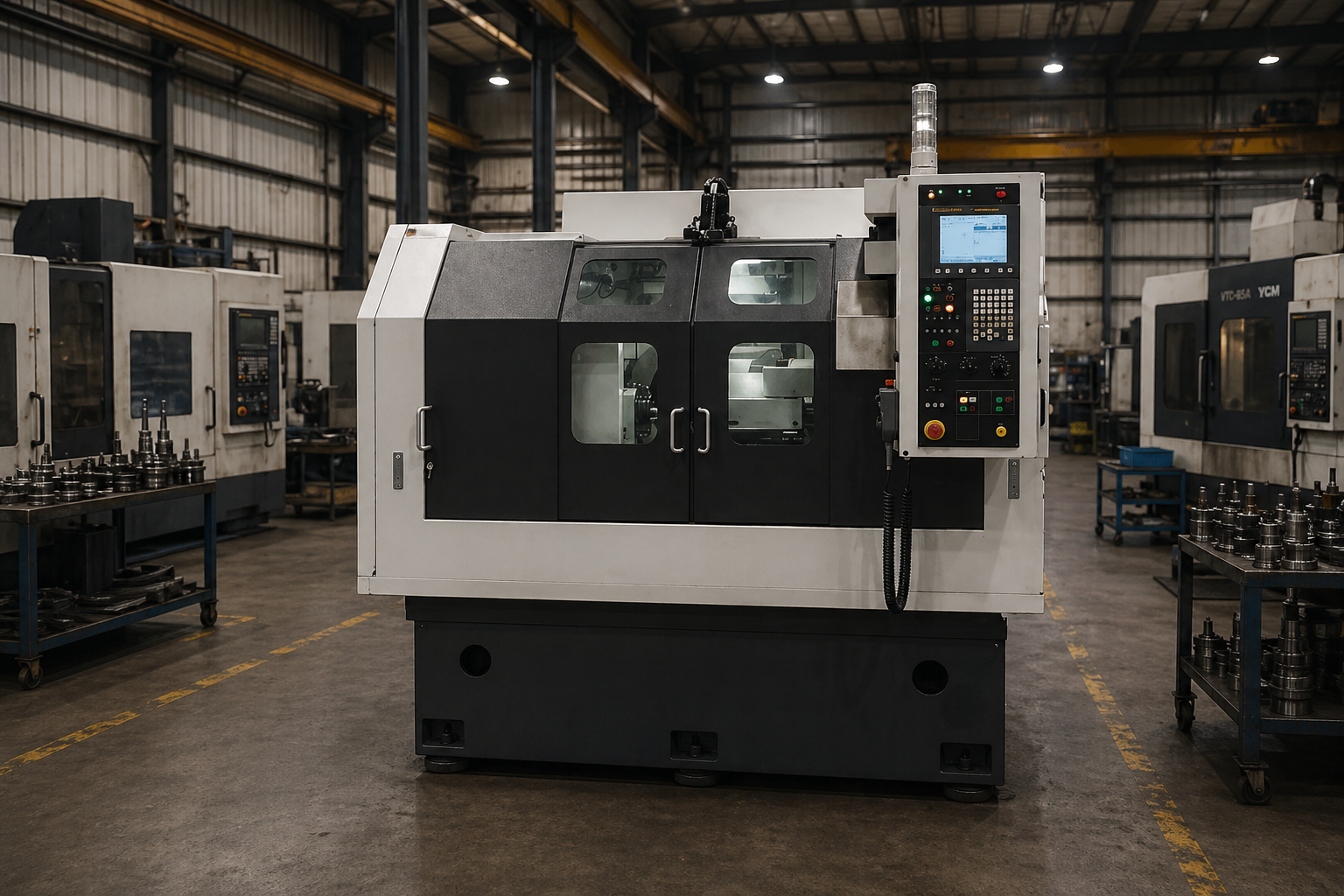
DMG MORI - TGN 30/30
VIEW MACHINE -
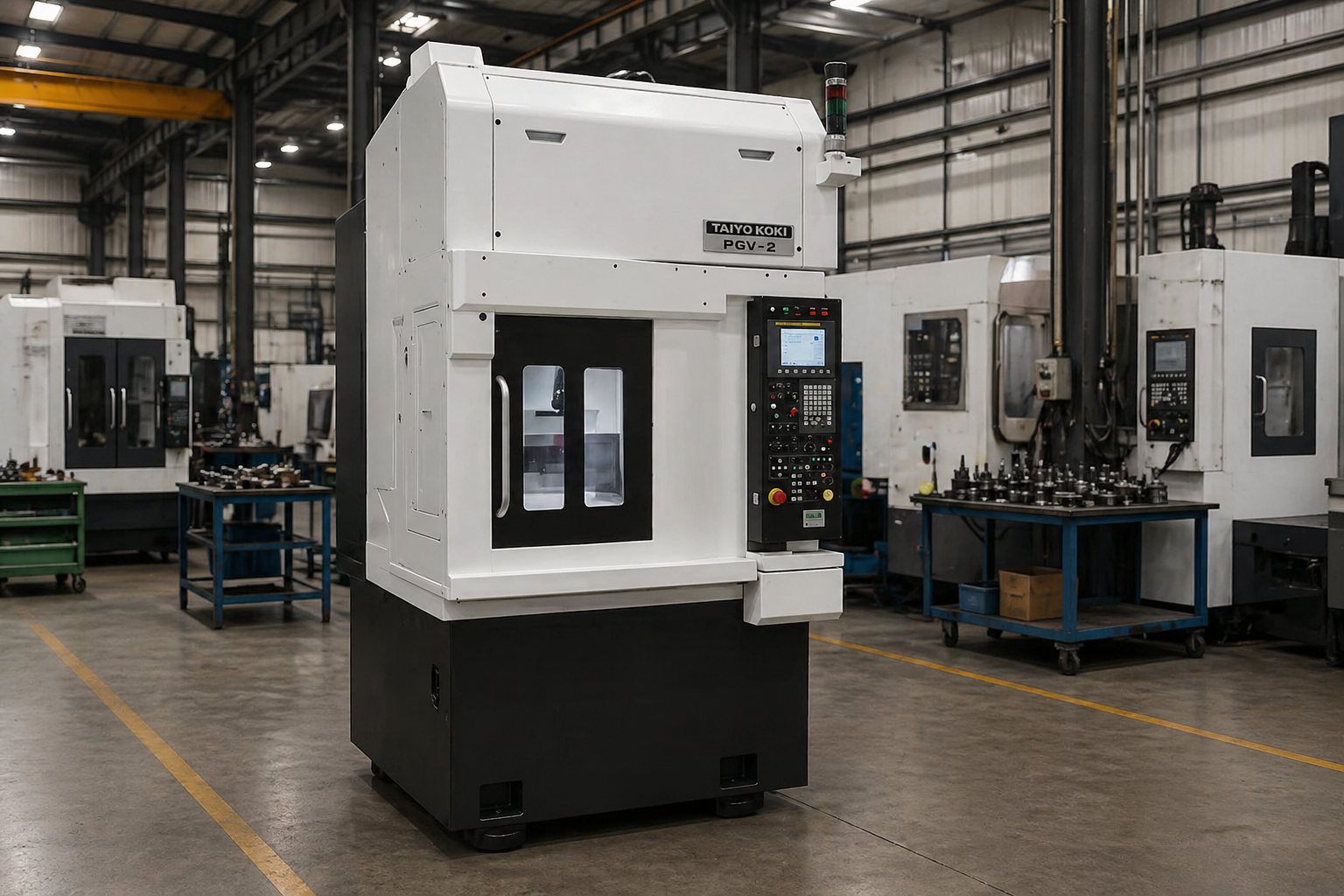
DMG MORI - PGV 2
VIEW MACHINE -
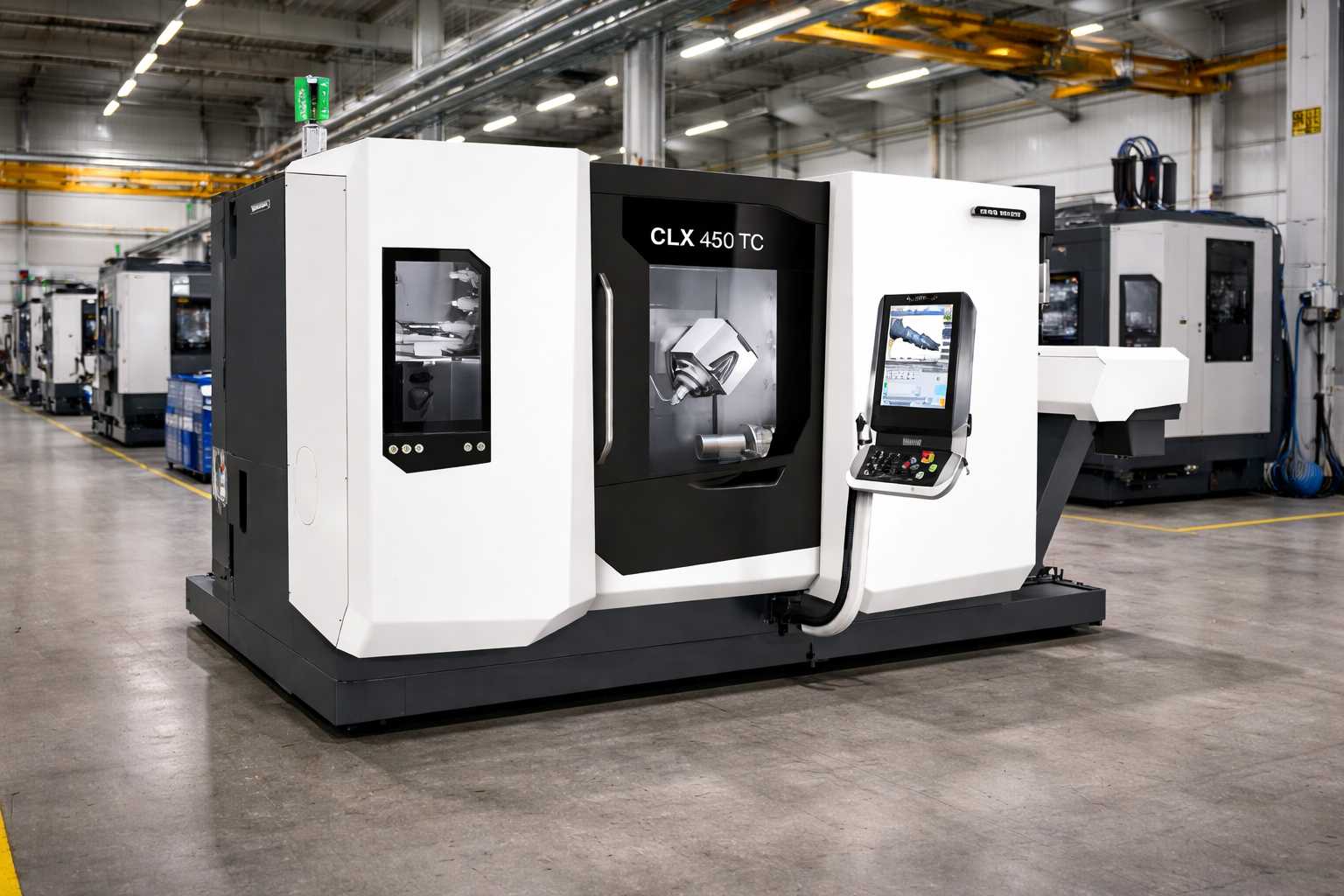
DMG MORI - CLX450TC
VIEW MACHINE -
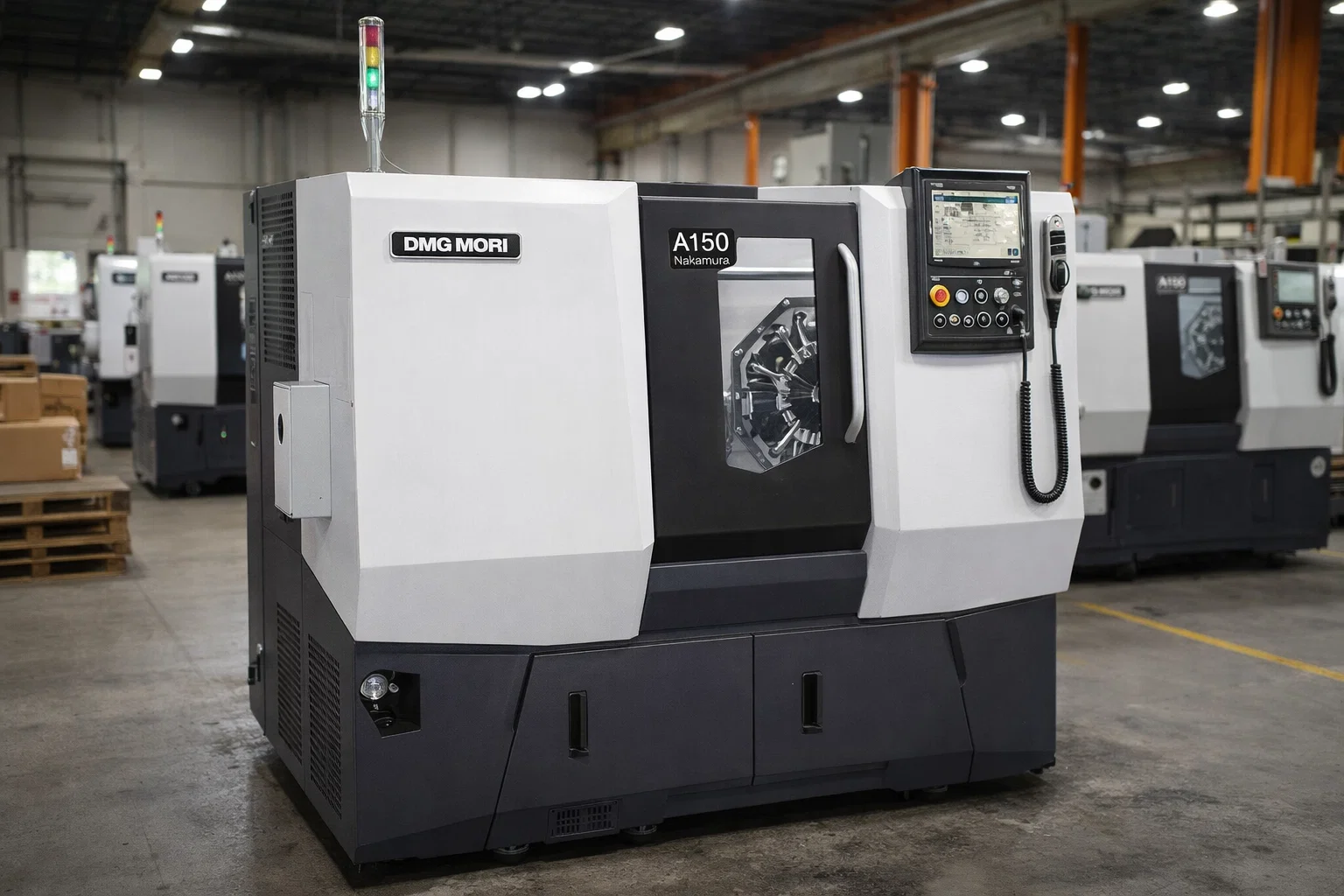
DMG MORI - WASINO A 150Y | 18
VIEW MACHINE