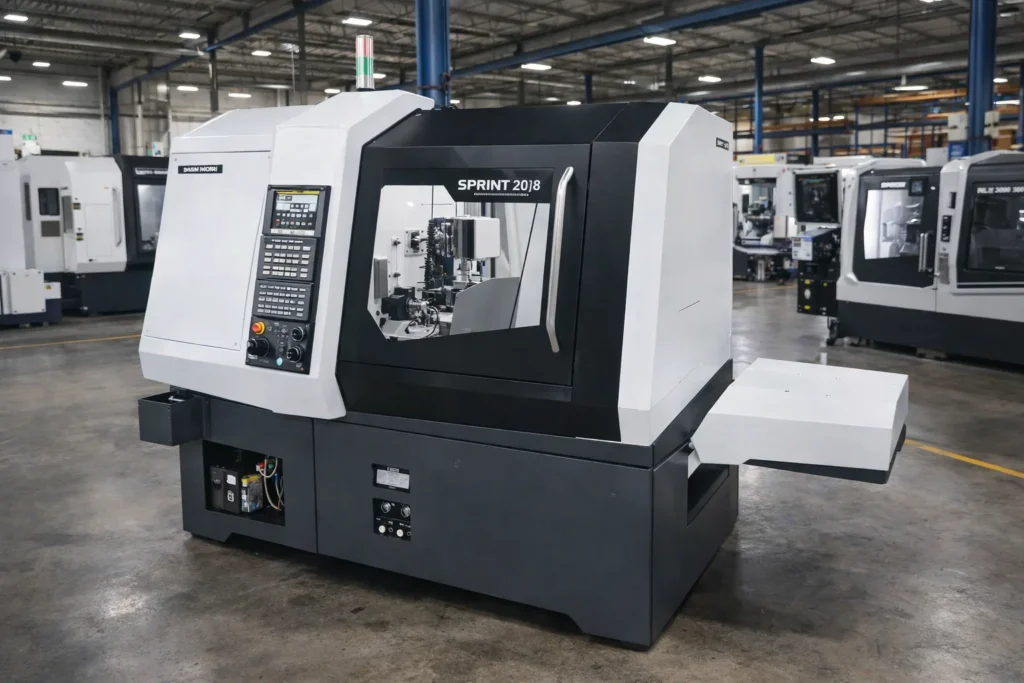
DMG MORI SPRINT 20|8
USED DMG MORI SPRINT 20|8
The DMG MORI SPRINT 20|8 is a highly advanced compact production turning center designed for ultra-high-precision and ultra-high-volume machining of small components from bar stock. It belongs to the SPRINT series, which focuses on maximizing output through multi-axis, multi-tool, and dual-spindle automation in a very small footprint. The “20|8” configuration typically represents a highly expanded axis and tooling setup designed for more complex micro-components compared to lower configurations like the 20|5.
The machine is built for bar capacities up to 20 mm, making it ideal for small precision parts such as medical components, connectors, miniature shafts, and high-accuracy automotive pins. Its working envelope is optimized for short-cycle production, where speed, repeatability, and automation are more important than part size.
A key feature of the SPRINT 20|8 is its high axis count and expanded simultaneous machining capability, allowing multiple tools to operate in parallel across the main and counter spindle. Depending on configuration, it supports complex synchronized machining operations where turning, drilling, milling, and cross-machining can be completed in a single setup without manual intervention. This reduces cycle time significantly and improves production efficiency.
The machine typically includes a main spindle and counter spindle, enabling full front-and-back machining in one continuous process. High-speed driven tools and compact turret systems allow for fast tool changes and reduced non-cutting time, which is essential in mass production environments.
The rigid machine structure is designed for thermal stability and vibration damping, ensuring consistent accuracy even during long unattended production cycles. The compact vertical or inclined bed design helps with chip evacuation and keeps the machining area stable and clean.
The SPRINT 20|8 is also fully designed for automation integration, supporting bar feeders and robotic unloading systems for lights-out manufacturing. Control systems are optimized for high-speed cycle programming and production monitoring.
Overall, the SPRINT 20|8 is a high-end micro-production turning system built for maximum complexity handling, ultra-fast cycle times, and full automation in small-part manufacturing environments.
DMG MORI SPRINT 20|8 SPECIFICATIONS
| DMG MORI SPRINT 20|8 – AXIS |
|---|
| 6 Linear Axes |
| X-Axis (Radial Movement) |
| Y-Axis (Vertical Movement) |
| Z-Axis (Longitudinal Movement) |
| Up to 2 C-Axes (Main & Counter Spindle) |
| Dual Channel Control |
| DMG MORI SPRINT 20|8 – AXIS TRAVELS |
|---|
| X-Axis Travel: 50 mm |
| Y-Axis Travel: 325 mm |
| Z-Axis Travel: 60 mm |
| DMG MORI SPRINT 20|8 – CAPACITY |
|---|
| Maximum Turning Diameter: 20 mm |
| Maximum Turning Length: 180 mm |
| Bar Capacity: 20 mm |
| Suitable for high-precision small components |
| DMG MORI SPRINT 20|8 – SPINDLE |
|---|
| Main Spindle Speed: up to 10,000 rpm |
| Counter Spindle Speed: up to 10,000 rpm |
| Main Spindle Power: approx. 2.2 kW |
| Counter Spindle Power: approx. 1.5 kW |
| Integrated spindle motors for high precision |
| DMG MORI SPRINT 20|8 – TABLE / WORKHOLDING |
|---|
| Bar feeder compatible |
| Automatic part transfer (main to sub spindle) |
| Supports Swiss-type machining (optional) |
| Designed for unmanned production |
| DMG MORI SPRINT 20|8 – TOOL SYSTEM |
|---|
| Total Tool Stations: 25 |
| Driven Tool Stations: 8 |
| Driven Tool Speed: up to 6,000 rpm |
| Up to 3 tools can work simultaneously |
| DMG MORI SPRINT 20|8 – FEEDRATES |
|---|
| High-speed production feedrates |
| Optimized for ultra-fast cycle times |
| Multi-tool simultaneous machining |
| DMG MORI SPRINT 20|8 – COOLANT & CHIP MANAGEMENT |
|---|
| Vertical design for free chip fall |
| Efficient chip evacuation |
| Optional high-pressure coolant |
| Designed for continuous production |
| DMG MORI SPRINT 20|8 – CONTROL SYSTEM |
|---|
| Control System: Fanuc 32i |
| Dual-channel CNC control |
| Tool monitoring system (optional) |
| Conversational programming support |
| DMG MORI SPRINT 20|8 – POWER & AIR REQUIREMENTS |
|---|
| Power Requirement: approx. 20–30 kVA |
| Air Supply: approx. 5–6 bar |
| DMG MORI SPRINT 20|8 – DIMENSIONS |
|---|
| Footprint: under 2 m² |
| Compact production design |
| Space-efficient layout |
| DMG MORI SPRINT 20|8 – GENERAL INFORMATION |
|---|
| Machine Type: Automatic CNC Turning Center |
| Designed for small-diameter bar machining |
| 6 linear axes + dual spindle architecture |
| Built for high-volume precision production |
| INDUSTRIES THAT USE DMG MORI SPRINT 20|8 |
|---|
| Medical |
| Automotive |
| Electronics |
| Precision Engineering |
| TYPICAL PARTS DMG MORI SPRINT 20|8 CAN PRODUCE |
|---|
| Pins |
| Micro shafts |
| Connectors |
| Fasteners |
| Medical components |
| WHY CHOOSE DMG MORI SPRINT 20|8 |
|---|
| Higher Tool Capacity vs 20|5 (25 tools) |
| Simultaneous Multi-Tool Machining |
| Swiss-Type + Fixed Head Flexibility |
| Extremely High Productivity in Small Parts |
WHY BUY USED DMG MORI SPRINT 20|8
Buying a used DMG MORI SPRINT 20|8 is a strong investment choice for manufacturers focused on high-complexity micro-part production at extremely low cycle times. Since the machine is designed for continuous automated operation, it retains strong productivity even in used condition if it has been properly maintained.
The biggest advantage is maximum output in minimal space. The SPRINT 20|8 is designed to perform multiple machining operations simultaneously, meaning several tools can cut at the same time across different axes. Even in used condition, this significantly reduces per-part cycle time and increases throughput compared to conventional CNC lathes.
Cutting time is the most important factor when evaluating a used machine. These systems are often deployed in 24/7 high-volume production environments, so accumulated usage can vary widely. Machines with lower cutting time (under 20,000–25,000 hours) generally offer better long-term reliability. Units under 10,000–15,000 hours are especially valuable because spindle synchronization accuracy, axis backlash, and tool wear are typically minimal.
Another advantage is high automation dependency built into the design. The SPRINT 20|8 is intended for bar-fed, unattended production with robotic unloading systems, making it ideal for manufacturers scaling toward lights-out manufacturing without major additional investment.
Additionally, DMG MORI’s global support network ensures long-term availability of spare parts and service support. Many used machines can also be upgraded with newer CNC control systems or enhanced automation modules, extending usable life.
While it is not designed for large parts or heavy cutting, the SPRINT 20|8 excels in precision micro-components, complex geometries, and extremely high repeatability production environments.
In summary, a used SPRINT 20|8 delivers excellent value through extreme productivity density, automation readiness, and high-precision performance for small-part mass manufacturing.
HOW MUCH DOES A USED DMG MORI SPRINT 20|8 COST?
The cost of a used DMG MORI SPRINT 20|8 depends on manufacturing year, configuration complexity, automation level, condition, and most importantly, total cutting time.
For machines manufactured before 2000, comparable advanced Swiss-type or micro-production CNC systems typically range from $30,000 to $70,000, depending on condition and retrofit status. These older machines usually lack modern multi-axis synchronization, high-speed tooling systems, and advanced automation integration.
Machines produced between 2000 and 2010 typically fall within the $70,000 to $150,000 range. These units offer improved CNC systems, better spindle performance, and higher reliability. Machines with lower cutting time (under 20,000–25,000 hours) are priced toward the upper end due to better mechanical condition and accuracy retention.
For SPRINT 20|8 machines from 2010–2025, used prices typically range from $150,000 to $350,000+, depending on turret configuration, number of axes, driven tooling systems, and automation integration such as bar feeders or robotic unloading units. Fully equipped production cells command the highest prices in this range.
Cutting time is a critical valuation factor. Since these machines operate in continuous high-speed production environments, wear can occur in spindles, guideways, and tool indexing systems. Machines with low cutting time (under 10,000–15,000 hours) are considered premium due to better long-term precision and reduced maintenance risk.
Buyers should always inspect maintenance logs, spindle vibration levels, axis backlash, and automation system performance rather than relying solely on machine age or appearance.
Overall, the cost of a used SPRINT 20|8 is determined by configuration complexity, automation level, and usage history, with cutting time being the most important factor in determining true market value and long-term production reliability.
Related Products
-
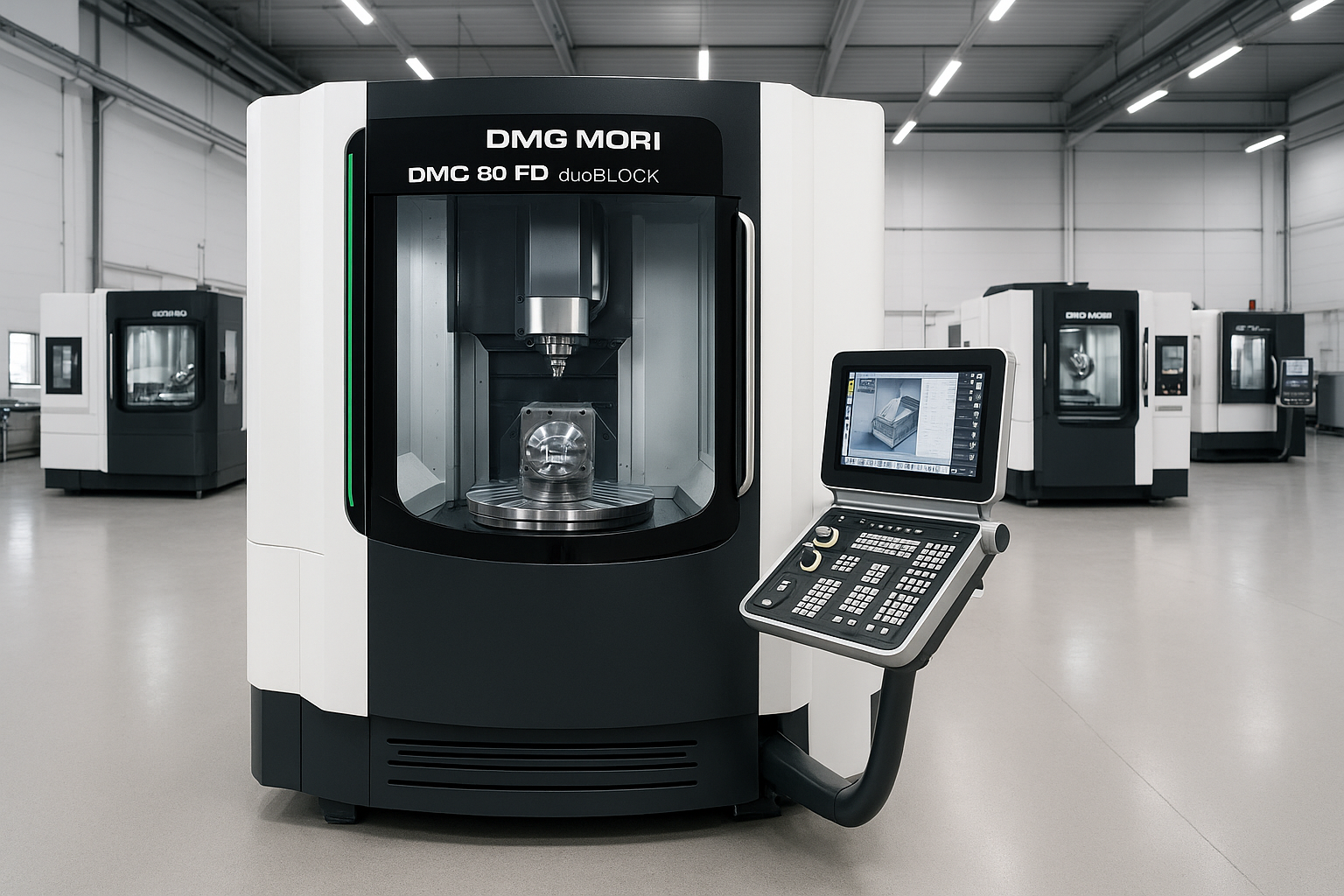
DMG MORI - DMC 80 FD DUOBLOCK
VIEW MACHINE -
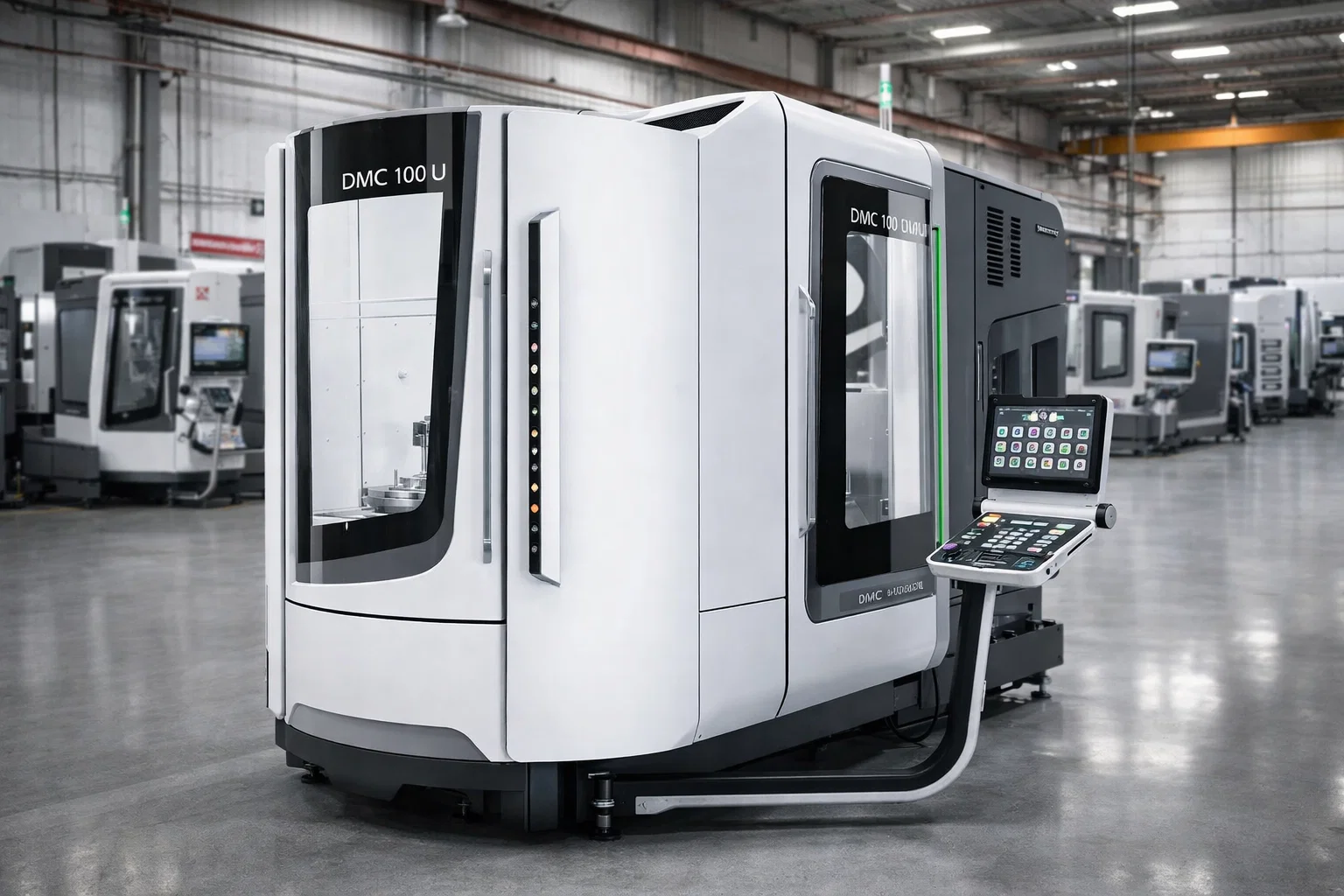
DMG MORI - DMC 100U (FD) duoBLOCK
VIEW MACHINE -
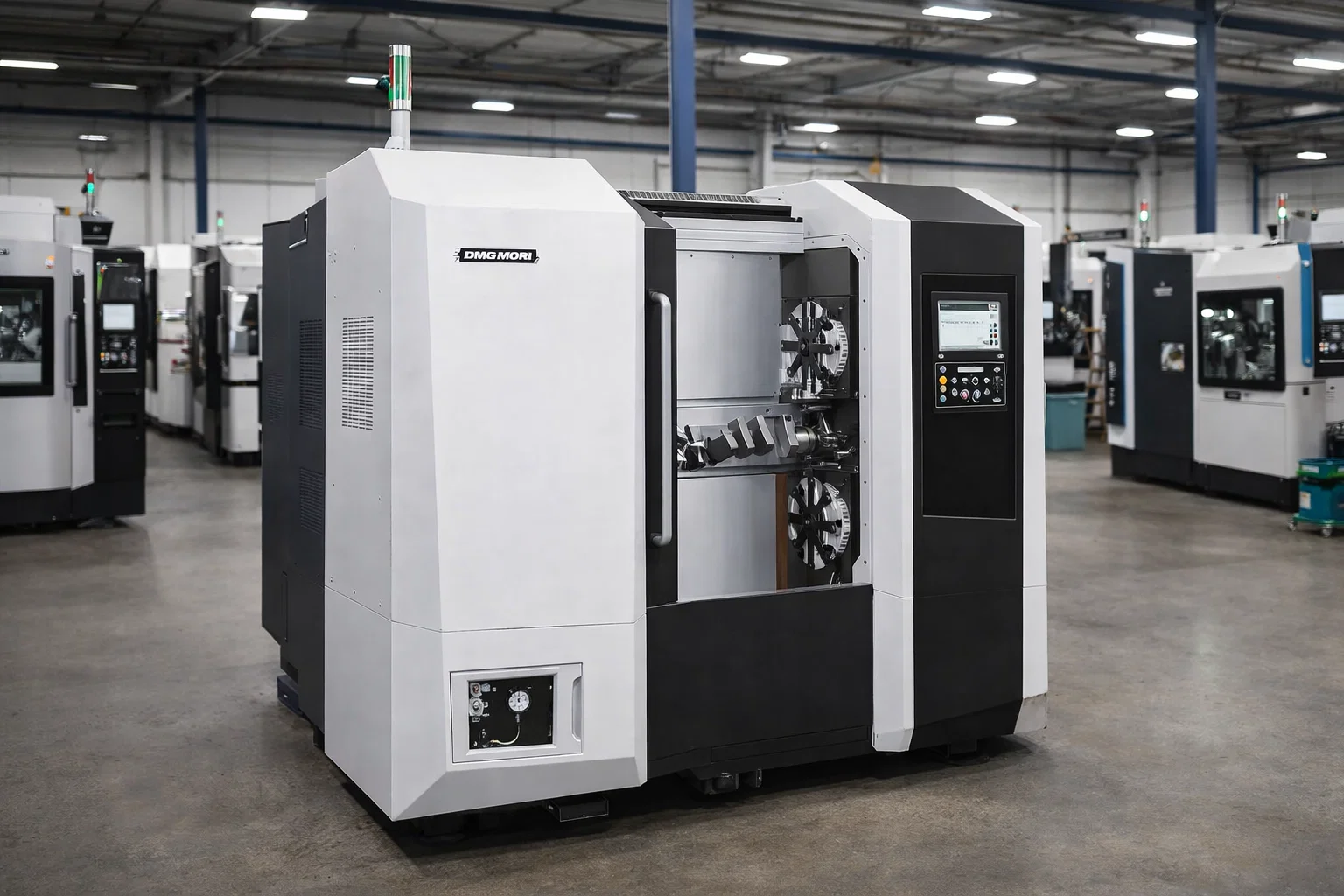
DMG MORI - NZX-S 2500
VIEW MACHINE -
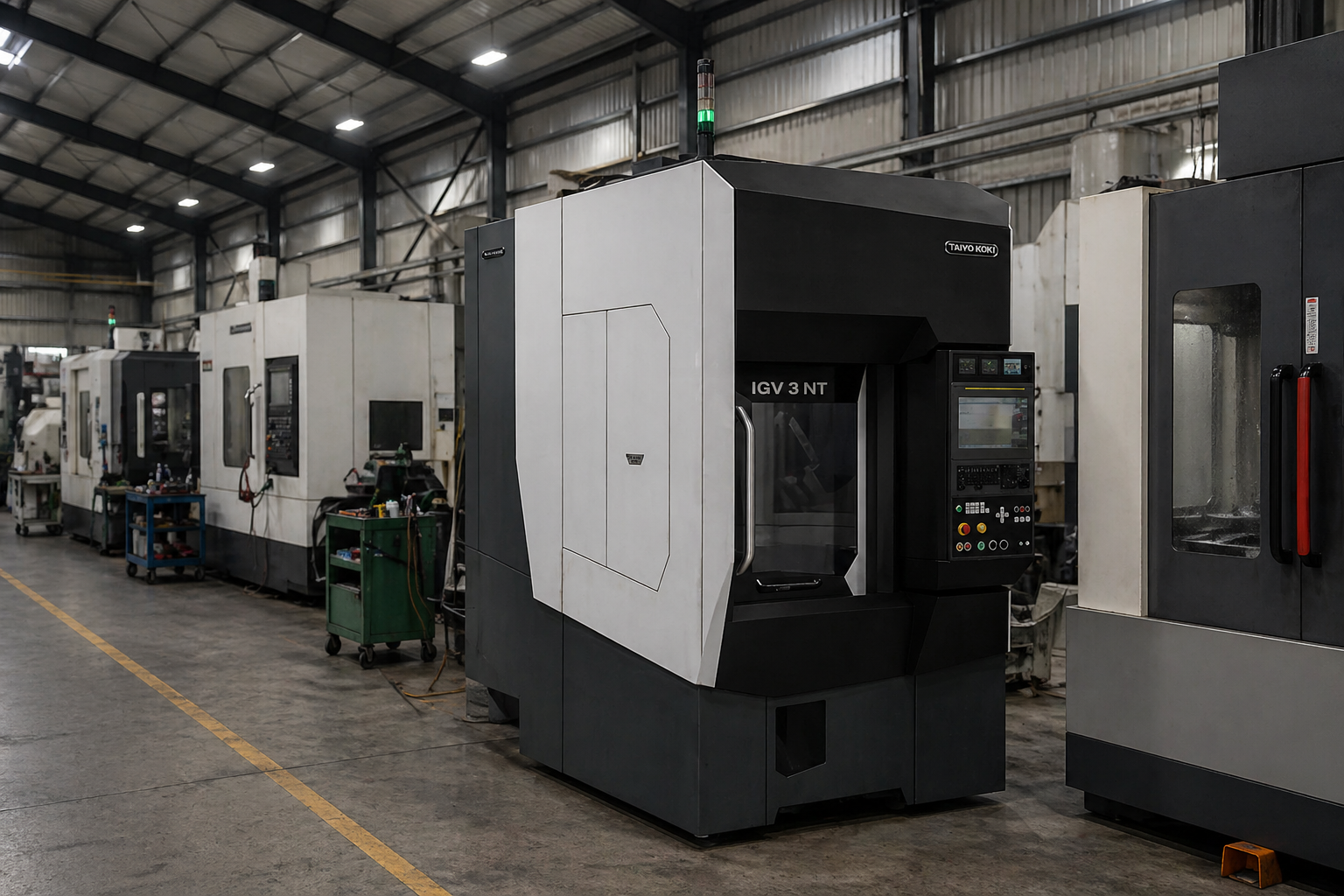
DMG MORI - IGV-3NT
VIEW MACHINE