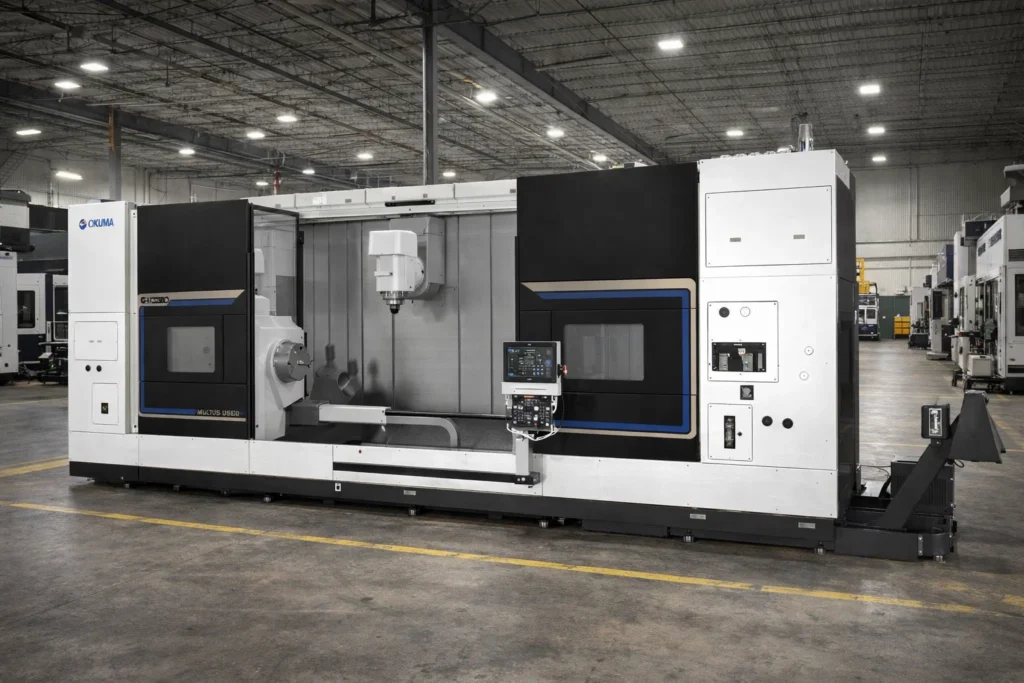
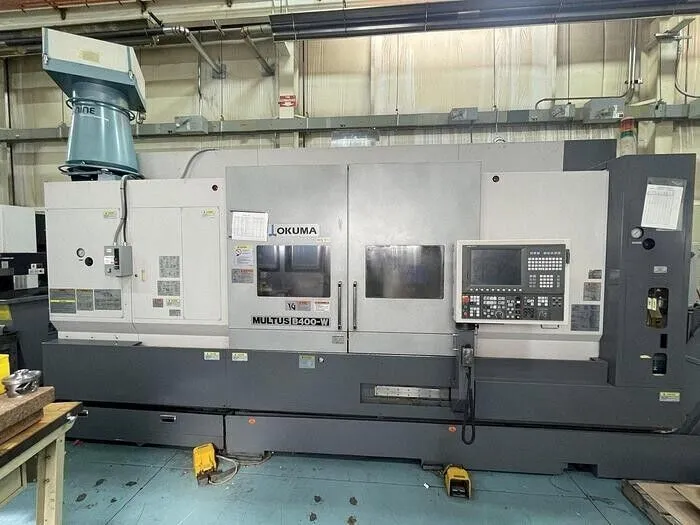
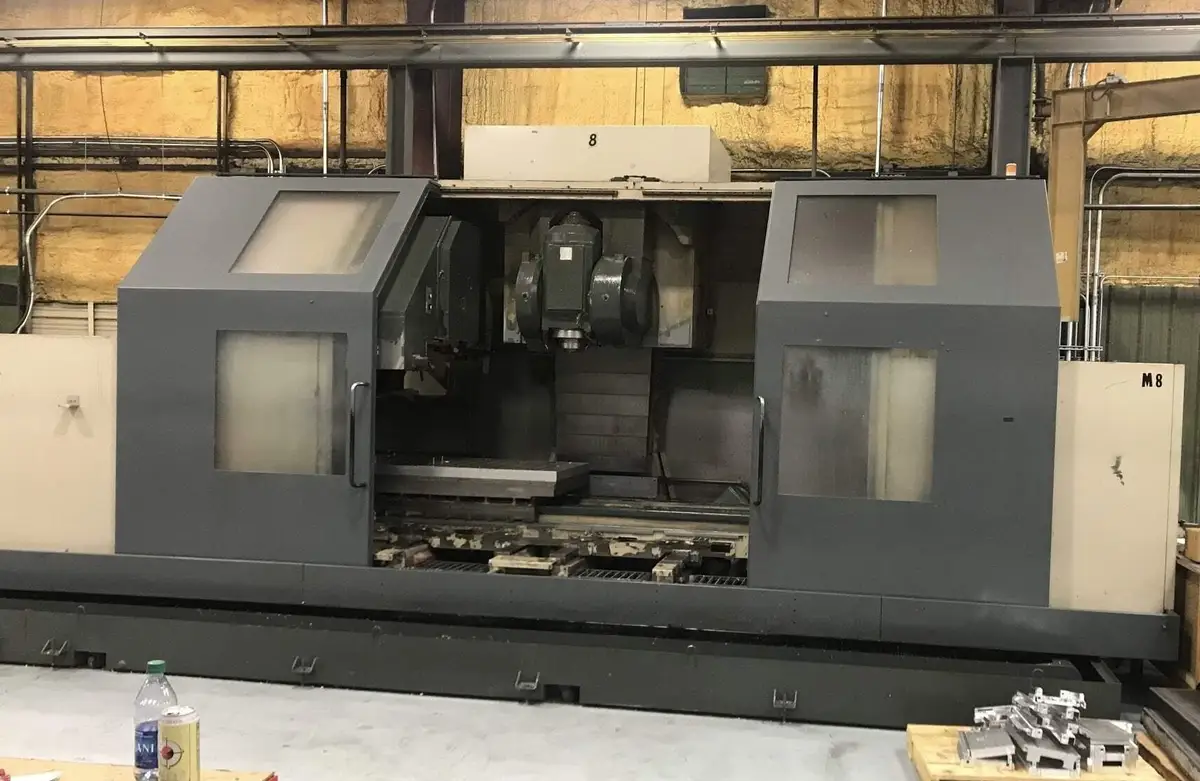
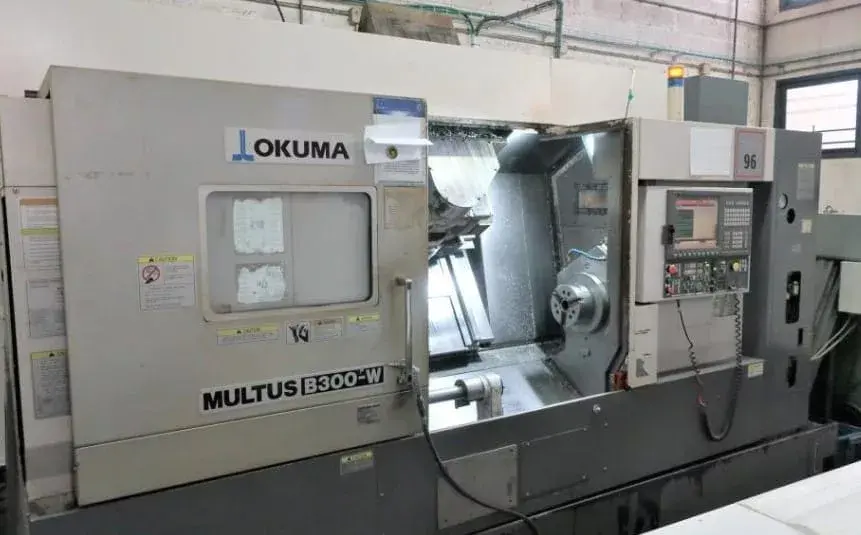
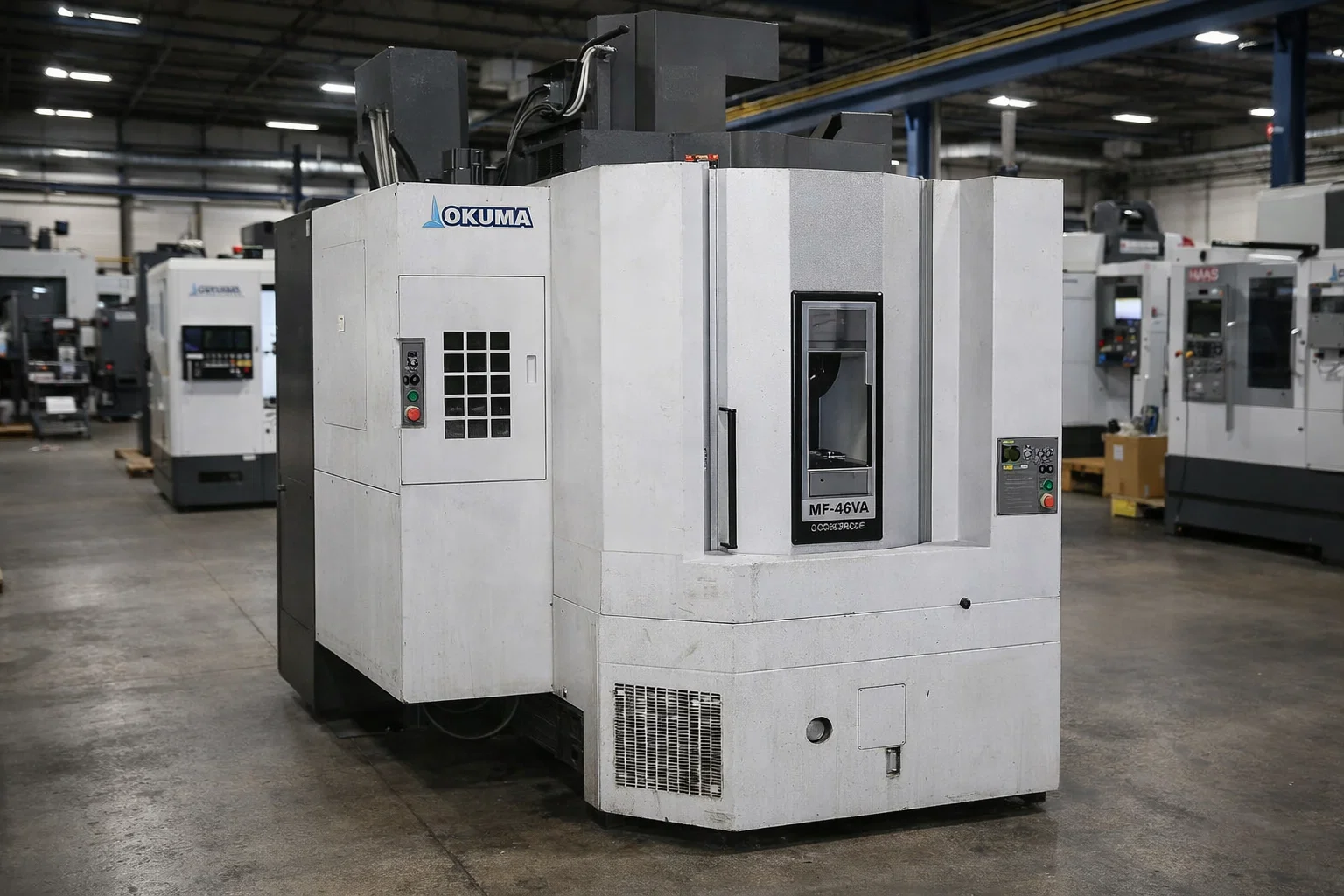
The Okuma MULTUS B750 is the largest and most powerful model in Okuma’s MULTUS B-series, designed for full-process machining of extremely large and complex components in a single setup. This multi-tasking CNC machine integrates turning, milling, drilling, and boring operations, allowing manufacturers to significantly reduce setup time and improve overall productivity. It is built with a highly rigid structure and incorporates Okuma’s Thermo-Friendly Concept, ensuring stable accuracy even during long and demanding machining cycles.
The machine features a B-axis milling head and a high-torque spindle system capable of handling heavy-duty machining tasks. It supports a maximum turning diameter of approximately 1,050 mm and turning lengths ranging from 3,000 mm up to 6,000 mm depending on configuration, making it ideal for industries such as oil & gas, aerospace, and heavy engineering. Spindle speeds typically reach up to 2,000 rpm with powerful motor output, enabling both large-scale roughing and precision finishing.
The MULTUS B750 also includes a large automatic tool changer (40 tools standard, expandable), optional sub-spindle (W configuration), and advanced OSP control with Collision Avoidance System, which simulates machining processes to prevent errors. Overall, it is designed for maximum capacity, flexibility, and precision in heavy-duty machining environments.
OKUMA MULTUS B750SPECIFICATIONS
OKUMA MULTUS B750 – AXIS
Multi-Axis CNC Turn-Mill Center
X, Z, Y Linear Axes
B-Axis (tilting milling spindle head – 240° range)
C-Axis (main spindle contouring)
Optional W-Axis (sub-spindle movement if equipped)
Buying a used Okuma MULTUS B750 is a strategic investment for manufacturers that require extreme machining capacity without the significant cost of a new machine. As the largest model in the MULTUS lineup, it is engineered with heavy-duty construction, high-torque spindles, and advanced thermal stability systems, allowing it to maintain precision even after years of demanding use.
Cutting time (spindle hours) is one of the most critical factors when evaluating a used unit. Machines with low cutting hours—typically under 5,000–7,000 hours—are considered lightly used and can perform close to new condition. Units with moderate usage (7,000–18,000 hours) remain reliable for most heavy machining applications if properly maintained. Machines exceeding 18,000–30,000 hours may require servicing of major components such as the B-axis head, milling spindle, or drive systems, but they can still provide strong value for less intensive workloads.
A key advantage of the MULTUS B750 is its ability to consolidate multiple machining processes into a single setup. Even older units retain features such as large tool capacity, sub-spindle configurations, and advanced simulation controls, reducing labor costs and increasing efficiency.
For manufacturers handling large, high-value components, a used MULTUS B750 offers unmatched capacity, flexibility, and productivity at a significantly reduced investment.
HOW MUCH DOES A USED OKUMA MULTUS B750COST?
The cost of a used Okuma MULTUS B750 varies significantly based on manufacturing year, configuration, condition, and especially cutting time. As one of the largest and most advanced multi-tasking machines available, it commands a premium price even in the used market.
For early-generation machines (2008–2013), prices typically range from $200,000 to $350,000. These units often have higher cutting hours (15,000–30,000+) and may require refurbishment, but they still offer full multi-tasking capability for very large components.
Machines built between 2014 and 2019 generally fall in the $350,000 to $550,000 range. These represent the most active segment of the used market and typically include moderate cutting hours (8,000–18,000), along with improved controls and automation compatibility.
For newer machines from 2020 to 2025, prices can range from $550,000 to over $900,000 depending on configuration, tooling packages, and automation systems. These machines usually have low cutting hours (under 5,000) and are close to new condition.
Cutting time is a major pricing factor—machines with lower spindle hours command significantly higher values regardless of age. Buyers should also evaluate machine size, tooling capacity, and automation features to determine the true overall investment and long-term return.