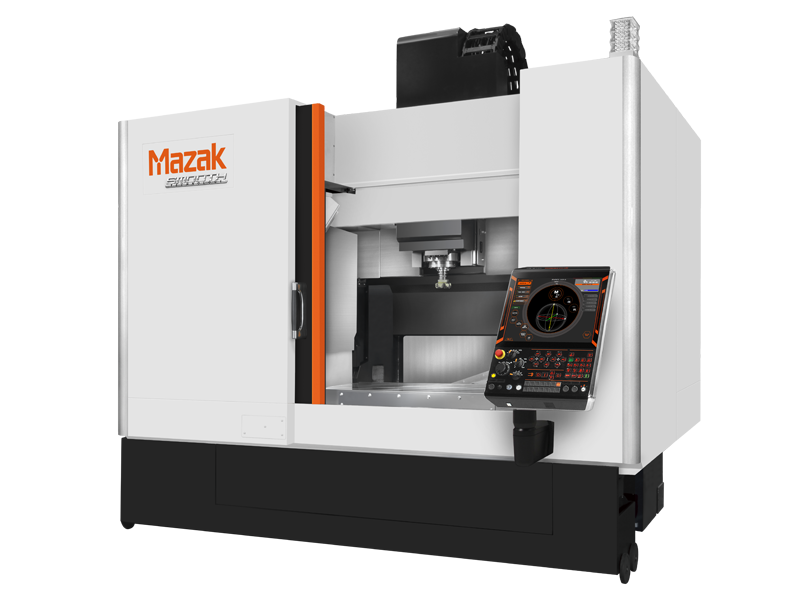
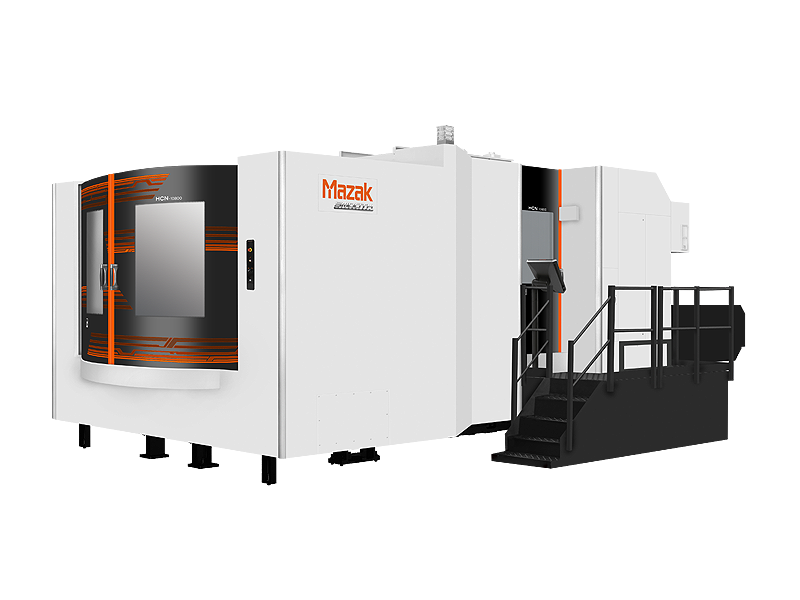
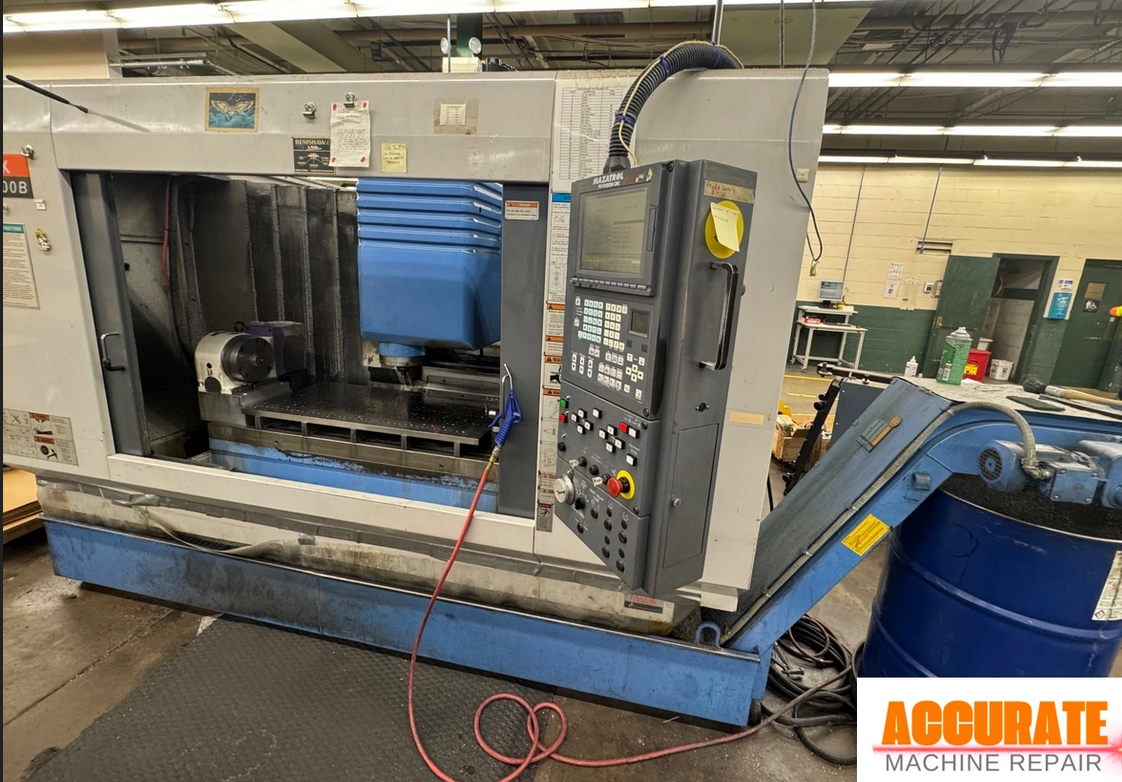
The Mazak FJV-200 is a double-column (gantry-style) vertical machining center designed for high-precision machining of large and heavy workpieces. As part of Mazak’s FJV series, it is engineered for maximum rigidity, stability, and accuracy, making it suitable for demanding industries such as aerospace, energy, and mold and die manufacturing. The machine features a BT50 spindle, typically offering speeds up to 6,000–10,000 RPM depending on configuration, delivering high torque for efficient machining of steel, cast iron, and other tough materials.
The FJV-200 provides a large working envelope, with X-axis travel typically around 2,000 mm and a wide table capable of handling large plates, fixtures, and structural components. Its double-column construction eliminates the overhang found in C-frame machines, ensuring consistent accuracy across the entire machining area and reducing vibration during heavy cutting operations.
The machine is commonly equipped with a 30- to 60-tool automatic tool changer and Mazak’s MAZATROL CNC control, allowing efficient programming and operation. Optional attachments such as angle heads or multi-surface machining capabilities further enhance flexibility by enabling machining on multiple faces in a single setup. Overall, the FJV-200 is built for heavy-duty machining, long cycle stability, and high-precision large-part production.
MAZAK FJV-200SPECIFICATIONS
MAZAK FJV-200 – AXIS
Number of Axes: 3 Axes
Axis Configuration: Double Column (Gantry Type) Vertical Machining Center
Axis Movement Type: Linear X, Y, Z axes
Design: Compact double-column structure for high precision
Design Advantage: Eliminates spindle overhang for accuracy
Application: High-precision, high-speed machining
Build: Thermally stable and rigid construction
INDUSTRIES THAT USE MAZAK FJV-200
Aerospace
Electronics & Semiconductor
Tool & Die
Automotive
Precision Engineering
TYPICAL PARTS MAZAK FJV-200 CAN PRODUCE
Molds and dies
Aerospace components
Precision housings
Small to medium mechanical parts
Aluminum and steel components
WHY CHOOSE MAZAK FJV-200
High precision due to double-column design
Excellent thermal stability for consistent accuracy
High-speed spindle for productivity
Compact footprint with strong rigidity
Ideal for precision and mold machining applications
WHY BUY USED MAZAK FJV-200
Buying a used Mazak FJV-200 is a practical solution for manufacturers requiring large-part machining capability at a significantly lower cost than a new double-column machine. These machines are built with heavy-duty construction and precision engineering, allowing them to maintain performance and accuracy over long periods when properly maintained.
One of the key advantages is rigidity and stability. The double-column design minimizes vibration and ensures consistent machining accuracy, especially during heavy cutting operations or long production cycles. This makes the FJV-200 ideal for industries such as aerospace, power generation, and heavy equipment manufacturing where precision and reliability are critical.
From a productivity standpoint, the machine offers a powerful spindle, large work envelope, and the ability to handle heavy components efficiently. Optional multi-surface machining attachments allow multiple operations to be completed in a single setup, reducing downtime and improving throughput.
Cost savings are a major benefit, with used machines typically available at 40–70% less than new models. Machines with moderate cutting hours (10,000–20,000 hours) generally provide the best balance between cost and remaining lifespan. However, cutting time is crucial—machines with high hours (20,000+) may require spindle or axis refurbishment. A well-maintained, low-hour machine can still deliver strong performance and excellent return on investment.
HOW MUCH DOES A USED MAZAK FJV-200COST?
The cost of a used Mazak FJV-200 varies depending on manufacturing year, condition, configuration, and most importantly, cutting hours. As a large double-column machining center, it is priced higher than standard vertical machining centers but remains far more affordable than new gantry machines.
Machines manufactured before 2000 typically range from $35,000 to $90,000. These machines often have high cutting hours (20,000–40,000+) and may require refurbishment, particularly in spindle assemblies, guideways, and ball screws.
Models from 2000–2010 generally fall between $90,000 and $200,000. This segment offers the best value, especially for machines with 10,000–20,000 cutting hours and good maintenance records. Machines equipped with larger tool magazines, upgraded controls, or additional attachments tend to command higher prices.
Newer machines from 2010–2025 typically range from $200,000 to $400,000+, depending on condition, features, and usage. Low-hour machines (under 10,000 cutting hours), particularly those used in lighter machining applications, can achieve premium pricing due to reduced wear.
Ultimately, cutting time is more important than age. A heavily used newer machine may be less valuable than an older, well-maintained one, making spindle condition, maintenance history, and overall machine health critical factors in determining true market value.