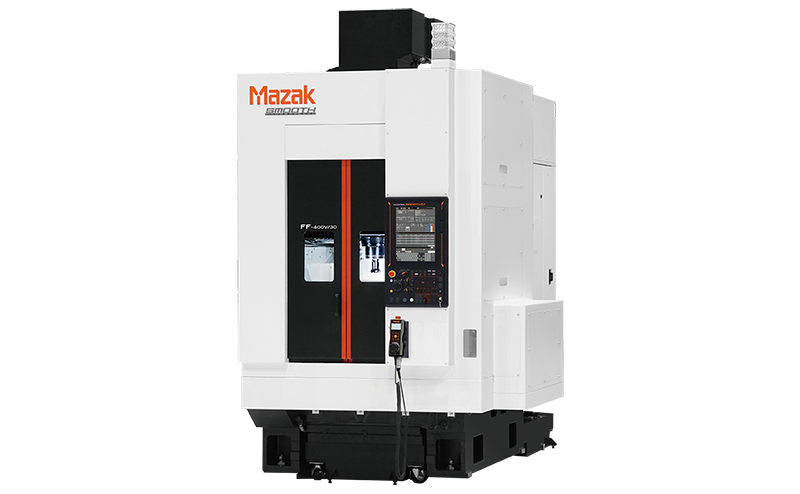
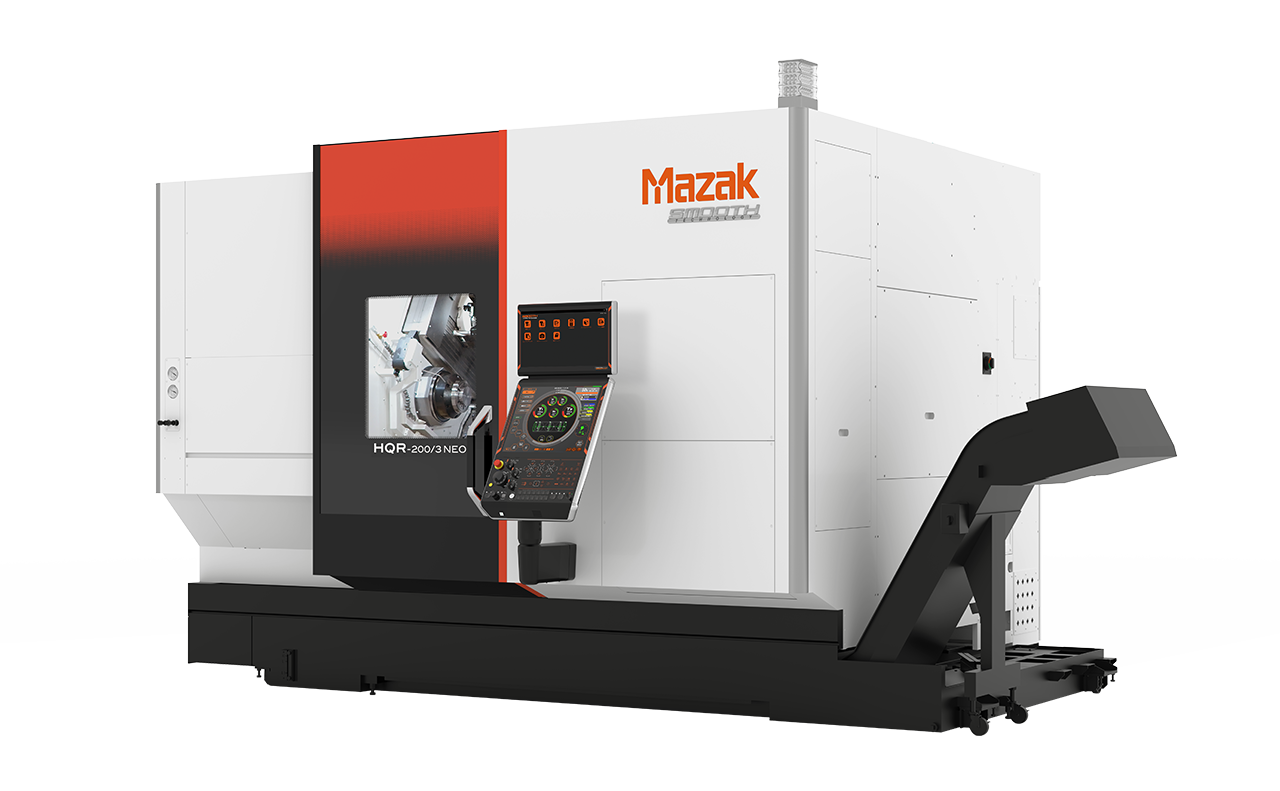
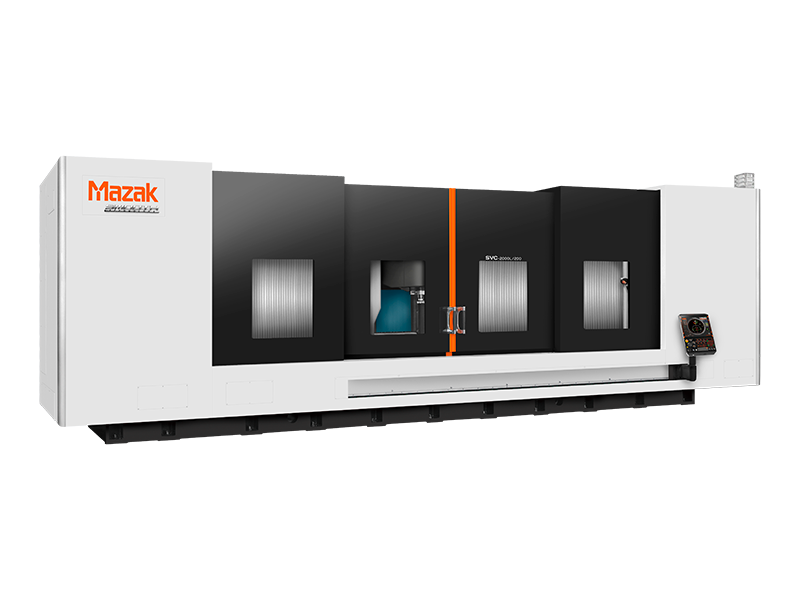
The Mazak FF-400V/30 is a high-performance BT30 vertical machining center designed primarily for high-speed, high-accuracy machining of small to medium-sized components. Built as part of Mazak’s FF (Flexible Fast) series, the machine emphasizes productivity, compact footprint, and multi-surface machining capability. It features a standard 12,000 RPM spindle, with optional high-speed configurations reaching 20,000 RPM, making it suitable for industries such as automotive, electronics, and precision component manufacturing.
The machine offers X/Y/Z travels of approximately 500 × 400 × 400 mm and rapid traverse rates up to 60 m/min across all axes, significantly reducing non-cutting time and improving cycle efficiency. A key advantage is its optional A- and C-axis rotary table, enabling simultaneous 4-axis machining and indexing for complex geometries in a single setup.
Equipped with Mazak’s MAZATROL Smooth CNC control, the FF-400V/30 provides intuitive programming and process simulation, helping operators optimize machining strategies. The machine also includes a high-speed tool changer with 14–26 tool capacity and ergonomic design features for ease of operation. Overall, it is engineered to deliver consistent precision, reduced cycle times, and flexible production capability in a compact vertical machining platform.
MAZAK FF-400V/30SPECIFICATIONS
MAZAK FF-400V/30 – AXIS
Number of Axes: 3
Axis Configuration: Vertical Machining Center
Axis Movement Type: Linear Axes (X, Y, Z)
MAZAK FF-400V/30 – AXIS TRAVELS
X-Axis Travel: 560 mm (22.05 in)
Y-Axis Travel: 400 mm (15.75 in)
Z-Axis Travel: 330 mm (12.99 in)
MAZAK FF-400V/30 – CAPACITY
Maximum Table Load: 300 kg (661 lbs)
Workpiece Size Capability: Suitable for small to medium precision components
Table to Spindle Nose Distance: Approx. 150 – 480 mm
Buying a used Mazak FF-400V/30 is a strategic decision for shops looking to access high-end Japanese machining performance at a significantly reduced capital cost. Mazak machines are known for their rigidity, accuracy, and advanced control systems, which retain value even after years of operation. A used unit allows smaller shops or expanding manufacturers to enter high-speed, multi-axis machining without the premium cost of a new machine.
One of the biggest advantages is productivity per dollar. Even older FF-series machines maintain fast rapids (60 m/min) and high spindle speeds, meaning they can still compete with many newer mid-range machines in cycle time performance. For buyers focused on ROI, machines with lower cutting hours (e.g., under 10,000–15,000 hours) often deliver strong reliability while costing a fraction of new pricing.
Additionally, Mazak’s MAZATROL control is widely adopted, making it easier to find trained operators and integrate the machine into existing workflows. Spare parts and service support are also relatively accessible globally.
However, cutting time is critical: a lightly used 10-year-old machine may outperform a heavily used 5-year-old one. Buyers should evaluate spindle condition, axis wear, and maintenance history carefully. When chosen correctly, a used FF-400V/30 can provide near-new performance at 40–70% lower cost, making it a highly efficient investment.
HOW MUCH DOES A USED MAZAK FF-400V/30COST?
The cost of a used Mazak FF-400V/30 varies significantly based on manufacturing year, condition, configuration (3-axis vs 4/5-axis), and most importantly, cutting hours. While exact listings fluctuate, pricing typically follows a structured depreciation pattern across three main age groups.
Machines manufactured before 2000 are rare for this model category but comparable older BT30 vertical machining centers generally fall in the range of $8,000 to $20,000, depending heavily on rebuild status and spindle condition. These machines usually have high cutting hours (20,000+), and buyers should expect potential refurbishment costs.
Units from 2000–2010 typically range between $20,000 and $45,000. Machines in this category with moderate cutting hours (10,000–20,000 hours) and good maintenance records offer the best value balance between price and performance. Adding a rotary table or upgraded control can push prices higher.
Modern machines from 2010–2025 generally command $45,000 to $90,000+, depending on features, automation, and usage. Low-hour machines (under 10,000 cutting hours) with advanced MAZATROL controls and 4-axis capability can approach the upper end of this range.
Ultimately, cutting time is often more important than age. A newer machine with excessive usage may be less valuable than an older, well-maintained unit, making inspection and service history critical in determining true market value.